HELP! - How to make images really really pop!

Marcus Geezer

Suspended / Banned
Messages
3,522
Name
Marcus
Edit My Images
Yes
Hi everyone,

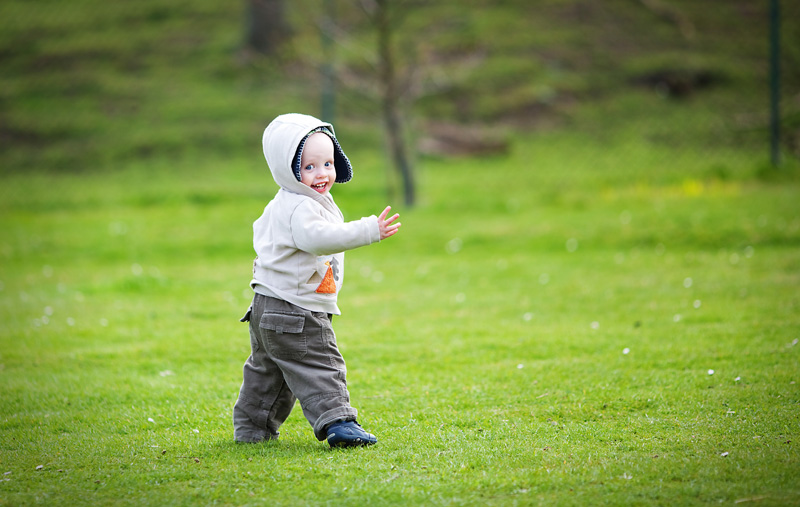
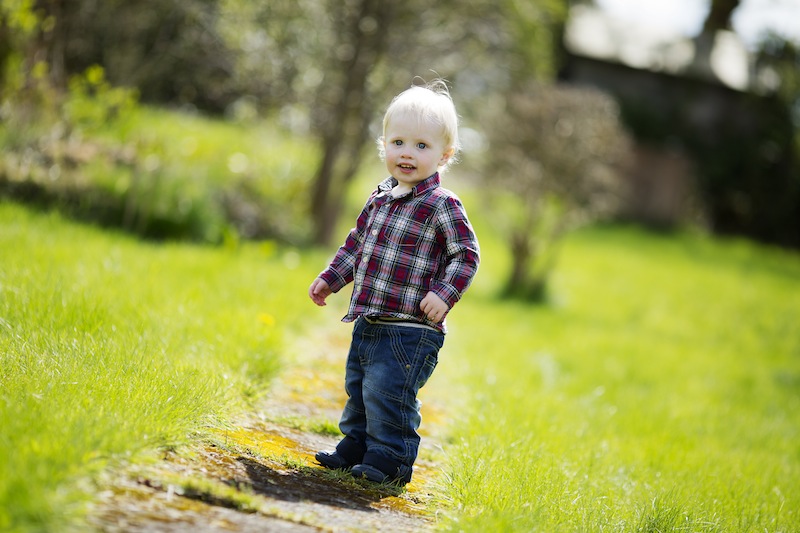
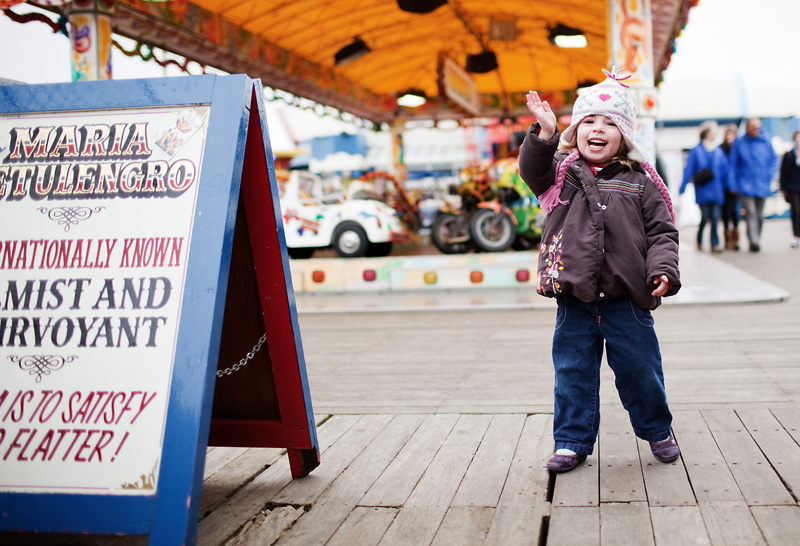
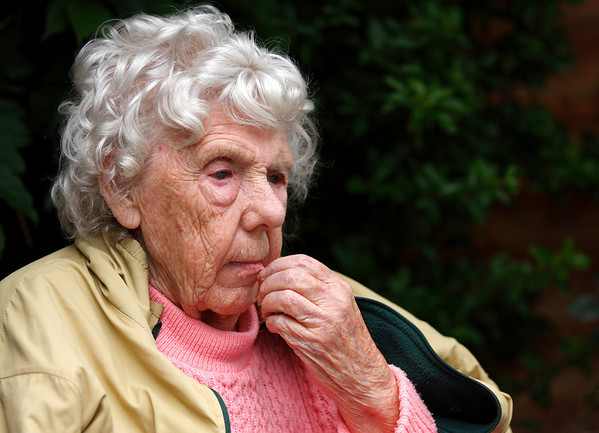
I've seen some great images produced from some very talented photographers and there seems to be something about them which makes them pop out of the screen and seem so alive. I've been thinking and thinking and applying all that I know and before I start investing in kit and possibly additional training I just wanted to see if I'm on the right track.

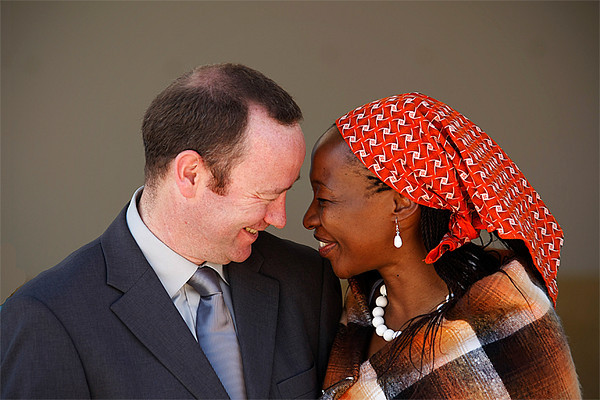
I hope he doesn't mind but one example I can give is here, and by our friend Aleksandras Babi, who is kind enough to post up his fantastic work for us to see in the people and portraits section.

http://meninenuotrauka.lt/lt/family/2012/adriano_krikstynos/

My initial thoughts are full frame camera's with primes at very wide apertures (F1.2? F2?) and then some processing to bring out selective clarity and sharpness.

I shoot with a full frame (5dmkii) and use 24-70 and 70-200 both F2.8's and although can create a certain amount of selective 'pop' haven't been able to re-create this, so I'm hoping I'm on the right lines.

Big fan of get the most from your kit before spending out more, so please educate me!
 
Last edited:
I'd say you're on the right lines, though I think he shoots with Nikon so nothing bigger than a f1.4. And that he isn't doing much in post other than maybe upping the Vibrance and increasing the blacks to add a little extra contrast without blowing the whites.

Personally I think a lot of it it down to his excellent composition of the shot, that makes it pop for me :)
 
I'd go along with Treeman........... Well composed and exposed images with subtle PP to subtley increase vibrance & contrast.
 
Yup, primes are the way he does it. He uses 85mm 1.4 mostly, but he also said he uses the 14-24 2.8 - those are for the wide angle shots.

He also uses ... wait for it ......natural light almost all the time :lol:

I think the use of light has a major impact in why his shots seem to pop more.

Very low apertures, great clarity in the lighting, high quality primes, full frame sensor and very good sharpening all lead to the effect

Children-Photography-Stoke-15.jpg
 
I'd say you're on the right lines, though I think he shoots with Nikon so nothing bigger than a f1.4. And that he isn't doing much in post other than maybe upping the Vibrance and increasing the blacks to add a little extra contrast without blowing the whites.

Personally I think a lot of it it down to his excellent composition of the shot, that makes it pop for me :)

I think he is doing more in post than vibrance and blacks, although I agree this is probably part of the process.

I'd go along with Treeman........... Well composed and exposed images with subtle PP to subtley increase vibrance & contrast.

Great composition, wide aperture, great lighting, technically perfect, great location/facial expressions and subtle PP boost

Thanks but I'm looking for the specifics. I have an engineering background and really looking to try and reverse engineer the technical specific's of how it's done, so that I can get to know how and then adapt to my own style! Cheers!

Get a Zeiss 50mm f/2 or Zeiss 100mm f/2.

So is that what he uses? Is that what you use? Can you provide a comparative example shot please.

Yup, primes are the way he does it. He uses 85mm 1.4 mostly, but he also said he uses the 14-24 2.8 - those are for the wide angle shots.

He also uses ... wait for it ......natural light almost all the time :lol:

I think the use of light has a major impact in why his shots seem to pop more.

Very low apertures, great clarity in the lighting, high quality primes, full frame sensor and very good sharpening all lead to the effect

Children-Photography-Stoke-15.jpg

If this descends into a natural light 162+ post thread, I'm gonna go down the village post office and get some brewski's! Well I probably do that anyway, but at least that will give me an excuse.... :thumbs:

Joe, thanks for providing an actual example and it's a good one at that. So what did you shoot this one with fella (camera/lens), and what PP did you complete. And what flash system..... :bonk: :lol:
 
You can torture your files in Lightroom, or get a cream machine like an 85mm f/1.2 II or the Sigma 85mm f/1.4. Zeiss lenses (like those mentioned before) have that micro contrast pop that pleases the eye. Manual focus only though.
 
The secret to getting images just like Al Babicius is having Al Babicius behind the camera. He is an absolute genuis is working with natural light and getting the picture perfect in camera. He now shoots with a Nikon D4, only fast prime lenses and almost 100% natural light. He has admitted to doing very little post processing because (in his own words) "he is lazy" so he gets the exposure and composition right in camera and only does minor tweeks in PP so as said above it could be as simple as vibrancy and blacks.

I have tried and failed to recreate the AB look. AB is considered to be one of the best because that's exactly what he is. You can't recreate his photos just by picking up hints and tips here and there, you have to learn to be one of the alround best just like he is.

One thing I will tell you though, shoot wide open and expose to the right and you'll be on the right road.
 
Thanks but I'm looking for the specifics. I have an engineering background and really looking to try and reverse engineer the technical specific's of how it's done, so that I can get to know how and then adapt to my own style! Cheers!

For fear of starting an argument, this is art, not engineering. In my opinion it's not just the equipment and PP that makes the images pop, its the composition as well.

One without the other will not achieve the same results :)
 
Thanks but I'm looking for the specifics. I have an engineering background and really looking to try and reverse engineer the technical specific's of how it's done, so that I can get to know how and then adapt to my own style! Cheers!

This may not be how he does it exactly but here is how I would approach this:

- Shoot wide open or near to (f1.4-2.8)
- Meter for your highlights and add +2 to +3 ev until they are as far over to the right as possible without clipping.
- Composition comes with experience its not something that can be taught out of a book IMO
- In PP, drag whites and blacks to both ends of histogram. Add vibrance and clarity and sharpen. Make sure your WB is spot on aswell.

EDIT: I also echo the points above, you can't just learn to shoot like the best, it takes a lot of hard work and practice
 
Last edited:
Ok lets get back to basics with this. The composition, the art side yes I 100% agree it comes through experience, having the eye for it etc, but that's not what I'm asking here, and possibly down to me not being clear in my initial post. I'm trying to fathom what makes this image pop, and first of all trying to find out a foundation so that I can then work on the art side myself. If I knew that only a Canon 1D what-not or a Nikon D4 something combined with a zeiss or L type £1k+ prime can achieve that level of 'pop', then fair do I know that I can only chase the technique to a certain point with my existing equipment, but try I will. If however these kind of shots can indeed be achieved with a 5DMkii with a 24-70 or 70-200 or a 50mm F1.4 or an 85mm F1.8 or whatever, and addition of careful PP, then at least I know they are within my reach technically, and then I go off on my learning curve to up my skills and technique to achieve the 'arty' side.

It doesn't mean that I didn't want this thread to include any positive contributions to the 'arty' side, but it wasn't the main aim of this thread, and wasn't looking to be criticised for that.

Also, the more I have learned about PP, the more I learn that you need less to achieve nicer clean crisp images. I'm hoping the overall journey is to identify minimum kit requirements to produce this, then it's down to me to improve my photography techniques, and the (hopefully) minimal but effective PP, remembering they could be used to process a set of wedding images for example so need to promote a smooth and positive workflow.
 
The secret to getting images just like Al Babicius is having Al Babicius behind the camera. He is an absolute genuis is working with natural light and getting the picture perfect in camera. He now shoots with a Nikon D4, only fast prime lenses and almost 100% natural light. He has admitted to doing very little post processing because (in his own words) "he is lazy" so he gets the exposure and composition right in camera and only does minor tweeks in PP so as said above it could be as simple as vibrancy and blacks.

I have tried and failed to recreate the AB look. AB is considered to be one of the best because that's exactly what he is. You can't recreate his photos just by picking up hints and tips here and there, you have to learn to be one of the alround best just like he is.

One thing I will tell you though, shoot wide open and expose to the right and you'll be on the right road.

Thanks Rob. I've seen a few other photographers who seem to achieve this, and now knowing he uses fast primes, it would seem this is the common factor (at least). Think I'm gonna have a play with exposing more to the right (already do a little), and maybe try and have a play with a 50mm prime other than a nifty fifty. Completely agree with you that AB is AB, but I just love the 'pop' factor of his images, and want it for my own.
 
Last edited:
If this descends into a natural light 162+ post thread, I'm gonna go down the village post office and get some brewski's! Well I probably do that anyway, but at least that will give me an excuse.... :thumbs:

Joe, thanks for providing an actual example and it's a good one at that. So what did you shoot this one with fella (camera/lens), and what PP did you complete. And what flash system..... :bonk: :lol:

that was 5d mark 3 but mark 2 would be the same. Sigma 85mm 1.4, no light modifiers. shot at f/1.6

PP was a contrast boost with curves, slight s shape. Then selective sharpening just of the subject and not the background.

Here's another pop example


IMG_6219 by JoeBoyMan, on Flickr

5d mark2 with the 135mm f/2 L at f/2

pop given by the shallow dof, perfect focus on the subject, slight vignette and boosted saturation and contrast with the curves


one more with the same settings as above


9R4C0270 by JoeBoyMan, on Flickr

i always expose to the right too and I think it does add pop do to how bright the pics end up being.

A lot of babi's shots are also popping because there is a lot of detail and texture in his composition, so the subject stands out more. Look at this shot for an example. It's not a great shot by any means, but it does pop, thats a 35mm 1.3 L but I think the pop is enhanced by the detail in the background being oof.


IMG_6342 by JoeBoyMan, on Flickr
 
Last edited:
I would say composition is the key....most shots are with foreground/background (shoot through) interest which draws the eye to the pin sharp subject...he must be a master at obtaining the spot-on of DoF within centimetres....one slight move out of the focus plane and you have a naff shot..(true inspiration people that can create wonderful shots like this :clap: )

i can only dream to do this....
 
I would say composition is the key....most shots are with foreground/background (shoot through) interest which draws the eye to the pin sharp subject...he must be a master at obtaining the spot-on of DoF within centimetres....one slight move out of the focus plane and you have a naff shot..(true inspiration people that can create wonderful shots like this :clap: )

i can only dream to do this....

Turn your dreams into reality......
 
My best shots / shots with the most pop tend to be shot at a longer focal length (50mm+, though typically on the 70-200), wide open or near enough, with plenty of distance between the subject and background, a good colour separation between the subject and background and also a smooth background, I also find soft or diffused lighting helps too.

In terms of PP I try to keep it simple as I am lazy, so I just adjust levels, play with selective colour (typically in the black channel, but it depends on the shot), contrast and USM.

Depending on the shot, I may or may not add a vignette.

40D, 70-200 @ 118mm, f2.8, 1/800, ISO 200. (I have a feeling this is SOOC as it was one of the last shots I have of my Gran before she died and I only uploaded it to send to my Mum, so has room for improvement in PP)
933657898_Nv9iP-M.jpg


40D, 70-200 @ 163mm, f3.5, 1/250, ISO 100, fill flash (they were under a verandah, please ignore the dodgy clone job over his shoulder)
i-h9ZGPZJ-M.jpg


Whilst I agree something like a fast 50mm / 80mm / 135mm prime would be wonderful, the 70-200 is no slouch, but there is something about the sharpness and the bokeh produced from a good prime!
 
Whether the shots are well composed or not doesn't factor into it for me. They look like they have had very good light and good use of DoF (combined with a very good camera and lens)
The sort of light you only get here sometimes in the early morning or evening. You don't fancy emigrating do you? :)
 
He's a master of knowing how to work in any lighting condition, his exposures are spot on and compositions are perfect. If you have all those skills down to a fine art the PP only needs to be minimum. He also doesn't over sharpen as his focus is always pin sharp in the right places. He is simply amazing.
 
Last edited:
I would say composition is the key....most shots are with foreground/background (shoot through) interest which draws the eye to the pin sharp subject...he must be a master at obtaining the spot-on of DoF within centimetres....one slight move out of the focus plane and you have a naff shot..(true inspiration people that can create wonderful shots like this :clap: )

i can only dream to do this....

If you use the correct gear then this is not as difficult as you'd imagine. When you get up close then yes, but at a reasonable distance it's not that tough. What AB is great at is nailing those shots that really mean something.
 
I totally agree Marcus, his images are exceptional, the stuff I can only dream of taking. I have been a little lazy of late and just wished I could take photos as good as a lot of people on here. Sometimes I think it better if I keep my dreams just that.
 
I totally agree Marcus, his images are exceptional, the stuff I can only dream of taking. I have been a little lazy of late and just wished I could take photos as good as a lot of people on here. Sometimes I think it better if I keep my dreams just that.

Gaz, you're a very good photographer. All you need to do is enjoy taking photos. ;)
 
This isn't about the aperture

This is about using the right aperture, and looking at your environment and learning how to isolate a shot

Look at any decent footballer shot, and it will be shot at F4 or f5.4 etc.. yet the background will be blurred, and additionally the image will pop - why.. because the meat n veg in the background is too far away to distract from the main image. Additionally, they are not exposing to the right or left, they are exposing for the subject

Many lenses exhibit the best sharpness and best contrast a few stops up from the widest open aperture. At the right working distance, you cn still isolate the subject, without resorting to using f1.4

so the awnser is

- expose for the subject
- be smart about the composition, and get the blurry background right (preferably darker and without distractions)
- push the shot a little in post, bump the contrast etc
 
Marcus,

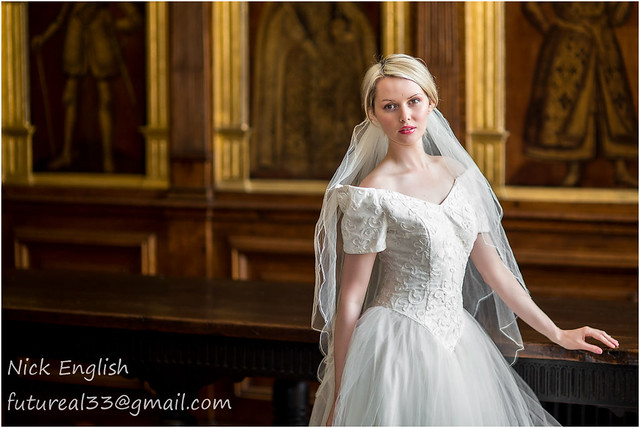
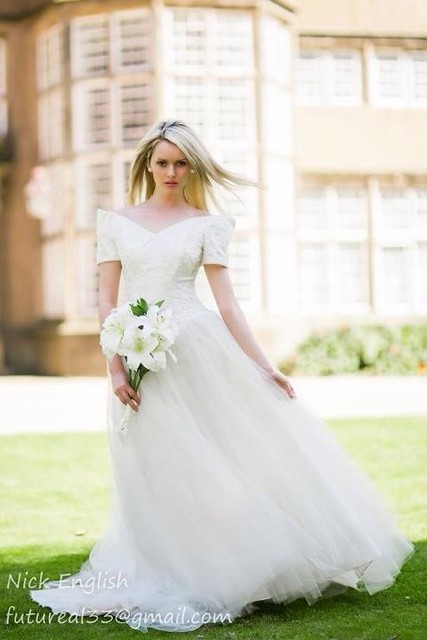
Would you say either of these images "popped" - if so, Im happy to share my methods


Carla by futureal33, on Flickr


Carla Bridal Shoot by futureal33, on Flickr

If I was to be completely honest..... then the first one deffo yes. The second, a great image but doesn't have that 'pop' factor I'm looking for! Please share away! Also, be interesting to see how differently the two images were taken and processed?

Thank you.
 
If I was to be completely honest..... then the first one deffo yes. The second, a great image but doesn't have that 'pop' factor I'm looking for! Please share away! Also, be interesting to see how differently the two images were taken and processed?

Thank you.

Marcus,
Both were exposed to the right to reduce noise, and to brighten slightly, processed in Lightroom, mainly around the Blacks and contrast sliders, and sharpening of course.
Getting the WB right was the hardest bit, even more so in the first pic as the contrast between orange backdrop and white dress was quite "off" in camera!
 
As an engineer who likes to reverse engineer things why ask how its done? Including the specifics?
Surely you should be working this out for yourself?
I don't believe an injection of kit into your bag will help you achieve what your looking for either, there is more going on in the images you presented. Like natural talent, understanding, composition, timing, you know, the stuff you can't buy.
 
Injecting kit will help. Get an 85mm f/1.2 and go and make the background melt so people look 3D, or a Zeiss 100mm and watch the high micro contrast make the image pop. Good glass always helps. I wouldn't say it was natural talent or particularly amazing sense of timing etc. He can hit 10fps with a D4, set up the camera right with fast glass and machine gun away, only the keepers make the album.

Buy or rent a fast L prime or Zeiss and go experiment.
 
I think the lighting is the main thing you are seeing. Nice defined light with a difference between subject and background - particularly if the background is slightly darker. Rim lighting on the subject will help as well.

Look at Nick's two shots, the first hits what you want, and it has a fairly shallow depth of field, along with side lighting on the subject that is brighter than the background. His second shot doesn't nail what you're looking for, but while it still has a shallow depth of field, the subject is in flat lighting and is darker than the background.
 
If your on a budget can I suggest the canon 85mm F1.8, its a real hidden gem of a lens and produces a lovely creamy bokeh and very sharp images.

I generally find myself shooting around F2-F2.5 most of the time as it works for my subjects, the short distance between them and the background and of course the crop factor on my 500D, with your FF the depth of field effect will be more pronounced than on a crop body.

A lot though is down to getting the correct exposure (exposure compensation is your friend) and having good light.
This is not so easy for us here as we cant be certain of good light all the time.
Always focus on the eyes of your main subject and learn how to make them pop in PP.
Don't be afraid to push the contrast a bit in PP.
Mike Warrens "pop action" is quite good for giving a boost to colours and contrast, best used on a separate layer and then blend with the original using the opacity & fill sliders.

How to pop eyes.

This presumes you are using an adobe product that allows you to use to tools mentioned.

Select both the eyes (pupils) using the lasso or quick select tools
Right click and click layer via copy
click "filters", other and then high pass.
I set the radius to 10 pixels then click OK
Right click the layer with the eyes and choose "blending properties"
Now choose soft light from the drop down menu in the center.
Finally adjust opacity and fill to taste and merge the layers.

I got tired of doing this all the time so after selecting the eyes and creating the new copy layer I clicked record and created an action with all the other steps, stopping after clicking soft light so that I can run the action when processing eyes but still adjust the opacity and fill before merging the layers.
If you would like a copy just in box me with your email addy and I'll send it to you.
 
Last edited:
Examples.

500D - 85mm 1.8 - ISO 800 - natural low light - approx 50% crop to concentrate on eyes (exif should be intact on images)

Base converted raw no PP

beforeeyepop.jpg


Subtle pop on eyes as described in my previous post.
aftereyepop.jpg


After applying MW's pop action
plusMWpopaction.jpg


Using the opacity and fill sliders gives you full control over the level of effect with both actions/processes.

PS, Vikki really is that pale.
 
Last edited:
You can also use dodge or screen layers, as well as various colour dodging or burning on the iris as well to add to that effect. You should really take control of the radius of the high pass for each image though, as you can get a pixilated effect, especially with catchlights as you are starting to see in that example. Worth noting that backing off the opacity is different to controlling the effect through the radius of the actual filter.

I think WeddingHack or someone posted a pretty decent walkthrough with screen captures on here ages ago.
 
Marcus, I'm really surprised you can't figure this out for yourself. You have all the skills required to deconstruct this method with your knowledge of pp and light.
 
Like most of the posts above and my posts have basically said, the technical aspect is not too complex if you can work with natural light and wide apertures (side lights work well for the pop as it gives the subject depth/definition) however it is the execution and consistency that are the hardest part. You just need to get out and practice, yes new gear will help to a point (primes are ideal for this) but its the 6in behind the camera not the 6in in front that makes all the difference
 
Examples.

500D - 85mm 1.8 - ISO 800 - natural low light - approx 50% crop to concentrate on eyes (exif should be intact on images)

Base converted raw no PP

beforeeyepop.jpg


Subtle pop on eyes as described in my previous post.
aftereyepop.jpg


After applying MW's pop action
plusMWpopaction.jpg


Using the opacity and fill sliders gives you full control over the level of effect with both actions/processes.

PS, Vikki really is that pale.

with all due respect I don't think these images are showing any pop like we are talking about. I'm not saying they are bad images, but they don't exhibit the behaviour marcus is trying to emulate. They just have more contrast the more you go down. That's not pop.

It's not just about isolating the subject from the background either like richard suggested. Those images of footballers at f/4 with the background blurred aren't popping in the same way that marcus is looking for.

James hits the nail on the head, it's not just about shallow DOF, it's the combination of that with the lighting. There needs to be a difference in the background and subject, either darker or lighter, the more they are of the same tone the less the pop becomes.
 
iancandler said:
Examples.

500D - 85mm 1.8 - ISO 800 - natural low light - approx 50% crop to concentrate on eyes (exif should be intact on images)

Base converted raw no PP

Subtle pop on eyes as described in my previous post.

After applying MW's pop action

Using the opacity and fill sliders gives you full control over the level of effect with both actions/processes.

PS, Vikki really is that pale.

Whatever you have done just made her look jaundace
 
The23rdman said:
Marcus, I'm really surprised you can't figure this out for yourself. You have all the skills required to deconstruct this method with your knowledge of pp and light.

Hi Dean,

To be honest I had an idea of what it was, being a good lens wide open, full frame sensor, a little pp, correct metering and last but very definitely not least, the skill that people like AB bring. I wasn't content in sitting back and really wanted to see what the good people of TP would say, and some of the posts have been really good and would like to thank everyone including yourself for posting up.

I'm happy now that I was on the right track and already considering how I can better de-construct and rebuild my own style to try and add this 'pop' to my own work.

One thing that always makes me smile is the contrasting and diverse comments presented, but that is what makes TP what it is and a great place to learn and bounce idea's around.

Everday is indeed a schoolday despite how good, pro, competent, experienced, etc you are.

Cheers,

Marcus.
 
Laudrup said:
Injecting kit will help. Get an 85mm f/1.2 and go and make the background melt so people look 3D, or a Zeiss 100mm and watch the high micro contrast make the image pop. Good glass always helps. I wouldn't say it was natural talent or particularly amazing sense of timing etc. He can hit 10fps with a D4, set up the camera right with fast glass and machine gun away, only the keepers make the album.

Buy or rent a fast L prime or Zeiss and go experiment.

You wouldn't catch me with an L lens lol im an olympus guy.
And banging out 10fps? All day to get your shots? Just sounds amateur to me,
No, if i want to make people "pop" (god i hate terminology like that)
I would use medium format.
And the whole melting away backgrounds thing, well yeah i understand but its not just about using fast prime lenses, its about what your blurring!
And without timing, composition, knowledge of light and experience then kit won't do anything for you.
What's the point of pulling focus on one element In an image when that one element looks like crap
 
Hi Dean,

To be honest I had an idea of what it was, being a good lens wide open, full frame sensor, a little pp, correct metering and last but very definitely not least, the skill that people like AB bring. I wasn't content in sitting back and really wanted to see what the good people of TP would say, and some of the posts have been really good and would like to thank everyone including yourself for posting up.

I'm happy now that I was on the right track and already considering how I can better de-construct and rebuild my own style to try and add this 'pop' to my own work.

One thing that always makes me smile is the contrasting and diverse comments presented, but that is what makes TP what it is and a great place to learn and bounce idea's around.

Everday is indeed a schoolday despite how good, pro, competent, experienced, etc you are.

Cheers,

Marcus.

All that, mate. Maybe we can get together in the near future and practice popping. ;)
 
Back
Top