Help a newbie understand IQ

If that were true, then why are so many... I'd go as far as to say the VAST majority of amateur images more visibly post processed than professional ones? If 99% of camera users want to take images as close to the reality of what they are shooting... why? Why is instagram so popular? HDR? Silver FX? Why? The reality is actually the opposite. Most people seem to want to find ways to alter their images from reality. And that's not just in here... that's across the board.

People are shooting pictures of their kids, their holidays, just general snapshots etc,. and some don't even run them through a computer you know.

HDR, B+W conversion etc,. is not generally used but take your point about Instagram although I still think the general snapper wants good IQ to start with whether they put some of them through effects processors or not.
 
Who said it was a rule. The general goal of a camera is to capture pretty much what the eye sees, that is what 99% of people are after isn't it?


A focal plane camera can not capture what the eye sees. The people want a document of an event/person/location etc. that is aesthetically pleasing for their own subjective definition of pleasing.

http://photographerobscura.wordpress.com/2012/12/26/the-reality-of-a-photograph/

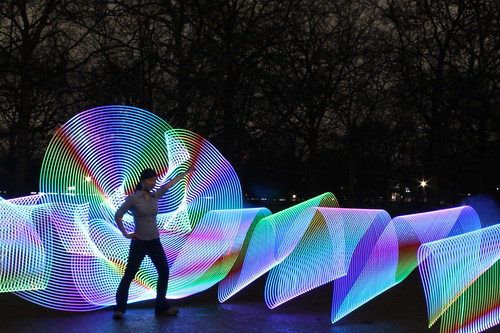
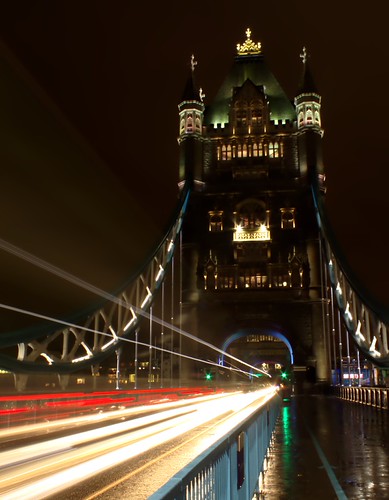
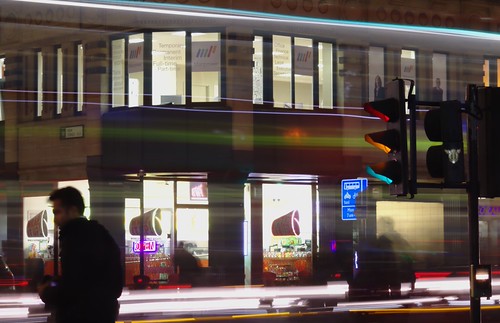
For example, I quite like these photos, but none of them are what you would see looking at that scene with the naked eye:


A focal plane camera can not capture what the eye sees. The people want a document of an event/person/location etc. that is aesthetically pleasing for their own subjective definition of pleasing.


For example, I quite like these photos, but none of them are what you would see looking at that scene with the naked eye:

Well the camera catches what I see pretty well. Your example photos are in the 1% of camera users who want/put the effort into getting those images.

The types of general camera user I am referring to are like my mum or sister. They take shots and they look at them on TV or just getting any they like printed. They go nowhere near a computer or PP and are happy that they captured what they saw with enough IQ to portray that.
 
HDR, B+W conversion etc,. is not generally used but take your point about Instagram although I still think the general snapper wants good IQ to start with whether they put some of them through effects processors or not.

Absolutely... and they'd be happy with sheer technical quality alone. That doesn't alter the fact that image quality is still effected by aesthetic considerations. Whether they choose to make such changes doesn't alter the fact. A fact is still a fact no matter how many people pay attention to it.

Let us not forget who actually asked the question in the first place. It wasn't joe blogs who wants point and shoot records of his kids on the beach, it was someone who signed up to a photography forum. Anyone with any ambition beyond merely taking holiday snapshots will be considering aesthetics when it comes to the final image quality. It actually doesn't matter if us, and people like us make up 1% of the camera buying public, or 99%. I bet only 1% of people in the UK fully understand why electrons pass through a graphene sheet as if they have no mass... it doesn't stop it being a fact though. It is also a fact that the overall technical quality of an image is directly affected by the aesthetic changes you make to it, whether they be to contrast, colour, resizing, sharpening, filters or whatever else you may do to it. As it was someone interested in photography that asked the question, it is reasonable to assume that he didn't just mean image quality as in the purely technical performance of the camera system. Even if you chose to do no processing, other factors also influence the overall perceived quality of the image: The paper it's printed on, or the quality of the screen it is viewed upon.

There's almost no end to the list of things that actually have an influence on the quality of the final image, and assuming that it begins and ends with the camera system is quite foolish if you ask me. Purely academic arguments aside... pretty much everyone in here WILL be processing their images for aesthetic gain (or loss in some cases), so I fail to see why you are arguing against this. Whether we are a majority, or a monitory is actually irrelevant.


The types of general camera user I am referring to are like my mum or sister. They take shots and they look at them on TV or just getting any they like printed. They go nowhere near a computer or PP and are happy that they captured what they saw with enough IQ to portray that.


And they play no part in this conversation. Or.. are you suggesting that we are in a minority, so therefore what we do is irrelevant? It's relevant here, right now in this forum though, surely.


Also... you're pretty free with this 1%. Any facts to actually back that up, or is it a number plucked from thin air? :)
 
Last edited:
I would just like to say i started this thread for an understanding of the term IQ, as i said in the OP there seems to be conflicting posts when talking about IQ which lead to some confusion on my part :thinking:.

I definitely didn't start this thread to start an argument or was even aware that it would lead to strongly felt differing opinions :shrug: i think the subject has just about been covered sufficiently for me (and maybe other newbies) to have a clearer understanding :thinking::suspect: of what the term IQ actually involves, or at least that there are 2 trains of thought on the term.

Sorry ernesto but i have to agree that your argument about joe bloggs use of a camera has no place in this forum, i would still like to thank you to you and everyone else for your replies though :thumbs:.
 
Also... you're pretty free with this 1%. Any facts to actually back that up, or is it a number plucked from thin air? :)

I have so much data in front of me to back up the 1% you wouldn't believe it - no really, you wouldn't believe it :)

This thread just proves that "what is IQ" is a question that has many different opinions. What comes out of lens and camera combined, the finished PP'd shot, both things together and probably other things.

I still sway on the side of believing it is what comes straight out of the camera and shows the quality of the lens and sensor. The rest is down to software and preferences in PP but you still need the IQ in the original shot for the PP'd shot to looks it's best (probably 99% of the time :) )

And John, don't worry about causing debate or seeing opinions come out. To me debate and opinions are what I enjoy and it tests my thinking and changes my opinion a lot of the time (the key part) and I think others may be the same. As long as you get something from it and can sift through the opinions to form your own opinion then great..
 
Last edited:
I have so much data in front of me to back up the 1% you wouldn't believe it - no really, you wouldn't believe it :)

Care to share some of it? :) Sorry, but I'm always sceptical of people who throw statistical numbers around without referencing them. Not that it matters.... see below.


No one's saying you're wrong with believing it's what comes straight out of the camera. What we're saying, is that's only the case for this x% of consumer snappers you're talking about. For everyone else, no matter how big, or small a minority (but probably the vast majority in this forum) it doesn't end there, and the ultimate quality of your images.. your work.. your actual finished product is influenced by so much more than the camera system itself. How many times have you seen images in here ruined by poor post processing? I have.. I see it every day. The RAW file may have been taken on a 5DMkIII and looked lovely.. then the author decided to ruin it through poor processing, or purposely degraded it for effect, or did any number of things to it that will always have a profound effect on the image.

I'm baffled why you keep using consumer snappers as a reference. I really don't think there are many of those in here. We're all photographers.

Even consumer snappers edit though.. whether it's Instagram as previously discussed, or choosing "settings" on the camera to process their JPEGs in camera.
 
Last edited:
I was using consumers snappers as they too want good IQ but they don't often PP their shots. It is still IQ and they have they own view of what IQ is.
I realise this forum is not those people but the question was what is IQ and that is for everyone.

Until this thread I just thought IQ was concerning the quality of the image from the camera and lens. What you do with the image in post is post processing quality (software quality, quality of persons skills doing the post processing etc,.)

IQ from the camera or lens can be defined and measured, i.e. one lens can categorically be better than another but post processing is so subjective that there can be no real measurement of it.
A shot you may like I may hate so does it have high IQ or not?
 
Lots of interesting and good points here, I was chatting to someone at the weekend about photography and the subject of getting everything right and potentially missing the shot vs getting a less than perfect shot but capturing the moment came up.

The best example of this I can give is being at a friend's wedding a few years back, armed with my 400D/Sigma 18-200mm trying to get shots of the first dance in a nigh on pitch black room.

The camera was struggling for focus but I kept snapping away. I did manage to get some nicely exposed, reasonably sharp images but the image the Bride & Groom have up in their lounge is slightly out of focus, a little dark and a little grainy BUT..... It captured them just after their first kiss on the dance floor, the way they were looking at each other was so natural and you could tell how much they meant to each other and how happy they were.

From a technical perspective, I'd rate the image at 4/10 but for "capturing the moment" I'd rate it at 9/10....... again this is very subjective ;)
 
I was using consumers snappers as they too want good IQ but they don't often PP their shots

Well.. A) It's irrelevant, as those people aren't in here, and B) Almost every consumer camera you can buy now will be processing the images in camera through it's list of presets. Long gone are the days when people shot snaps, then collected their photos from the lab.

. It is still IQ and they have they own view of what IQ is.
I realise this forum is not those people but the question was what is IQ and that is for everyone.

Clearly not. Photographers clearly have a very different view.

but post processing is so subjective that there can be no real measurement of it.
A shot you may like I may hate so does it have high IQ or not?

Exactly. Which is my point. The images that come straight off the camera are actually very rarely seen by anyone these days, so you HAVE to consider post processing when evaluating quality, because they always will be post processed. Whether you like it or not is irrelevant... it's there, and you have to consider whether what's been done to it is working and to a high standard.

I agree that having equipment that delivers the highest possible quality is desirable, even if you do want to degrade it. I also understand your viewpoint, but what we look at 99.9% (made up statistic :)) of the time is post processed images. We never actually get a chance to see the RAW output unless it's in a thread about "how great is camera x" threads... and even then, when examining the EXIF data... there's stuff done.

We live in an age where Photographers would rather chop off their own testes than just use the RAW output from the camera.
 
Exactly. Which is my point. The images that come straight off the camera are actually very rarely seen by anyone these days, so you HAVE to consider post processing when evaluating quality, because they always will be post processed. Whether you like it or not is irrelevant... it's there, and you have to consider whether what's been done to it is working and to a high standard.

The images straight off of the camera are seen by me and I judge the IQ between cameras and lens accordingly. That is why I see that as IQ from the camera and lens and that is the IQ I look for.

Where we are differing here is that I am using IQ as a definitive measure of a lens/camera and you are using it as a measure of the finished photograph (which encompasses the definitive measure)

So you could talk about IQ that a lens gives or you could talk about IQ of a persons photograph and what they have done with it to get it to a higher IQ than somebody else given the same raw file (dangerous subjective ground).
 
Where we are differing here is that I am using IQ as a definitive measure of a lens/camera and you are using it as a measure of the finished photograph (which encompasses the definitive measure)


Yeah... the sensible way. To do anything else would be dismiss everything that comes after capture as having no impact on image quality. Carry on doing that if you want... free country an' all that :)

I believe we're going around in circles, and I don't really have much more to say.. so we'll have to agree to disagree.
 
Agree, although my way is clearly the sensible way. :)
 
People are shooting pictures of their kids, their holidays, just general snapshots etc,. and some don't even run them through a computer you know.

HDR, B+W conversion etc,. is not generally used but take your point about Instagram although I still think the general snapper wants good IQ to start with whether they put some of them through effects processors or not.

I doubt the general snapper using a compact with to many pixels crammed onto a tiny sensor even considers IQ (except how many megapixels) or knows what it is and just likes the aesthetic quality of the 6x4 prints. ;)
 
Last edited:
I do often wonder why people obsess with Mega pixels when they never print above 6x4.
 
Back
Top