HDR advice

blod5

Suspended / Banned
Messages
16
Name
Tom
Edit My Images
Yes
I no a lot of people are against HDR photography but I love it. I have watched tutorials like this:

http://www.youtube.com/watch?v=hbSGE4nTXeU

But I would like to know how to take HDR shots with about up to 10 different exposure shots. Do you have to change the exposure of each image as you go along or is there a setting to automatically do this :naughty: ?

Thanks people :D
 
You 'bracket' the shots, something which your 450D can do.

You can also do a 'pseudo HDR' with some programs, which uses one image and just stretches it to the limits of its own dynamic range. As you're only using one image, the results can be a bit crummy but sometimes they look OK; here's two of my pseudo HDRs:

KnockdowEstate1Window-Towardsmall.jpg


TarsanDamsmall.jpg


Without the HDR treatment, neither image was particularly inspiring, they were just dull and lifeless. The second image is dull and cruddy but the colours that were brought out give it a nice moody feel.
 
I no a lot of people are against HDR photography but I love it. I have watched tutorials like this:

http://www.youtube.com/watch?v=hbSGE4nTXeU

But I would like to know how to take HDR shots with about up to 10 different exposure shots. Do you have to change the exposure of each image as you go along or is there a setting to automatically do this :naughty: ?

Thanks people :D

You either need a camera with enough auto bracketing steps (my Nikon D300 has 9, which is the main reason for switching from Canon to Nikon). On your camera I think you'll only have 3 AEB shots at a time. One trick is set the AEB to underexpose and take 3 shots and then set it to over expose and take 3 shots... that way you get 5 or 6. Alternatively you need to do every exposure manually. A tripod is essential of course and vary shutter speed not aperture.
 
You could shoot 3 raws.
-2 0 +2

then in lightroom generate the exposures between?

BTW.... how does the image differ between say 10 images compared to 3?
 
ok great advice from both, thanks guys. Gordon Scott, yes when I use the AEB setting it takes one under exposed one normal and one over. So ok, I need to do it manually then. thanks :D
 
I have used up to 7 before and ALWAYS had alignment issues, although they were mostly landscapes on windy days

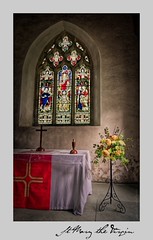
Here's a few single image HDRs which (hopefully) show you can get good results with just one image - each was processed 'correctly' then also saved as 1+ and 1- exposures to create the 3 for the merge

DD

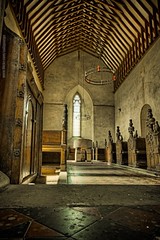
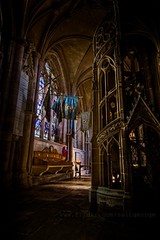
Inside York Minster


Overlooking Derwent Water


Angel of my village :) my son in snow


Ullswater's famous boathouse (long exposure too)


Rainbow view
 
You could shoot 3 raws.
-2 0 +2

then in lightroom generate the exposures between?

BTW.... how does the image differ between say 10 images compared to 3?

I used to shoot 3 images -2 0 +2 in RAW, but upped it to -4 -2 0 +2 +4 to aid the acquisition of dynamic range and reduce noise in the processing. I now take -4 -3 -2 -1 0 +1 +2 +3 +4 and if it's an indoor shot with windows would bias the zero point towards under exposure in the first place. This amount of exposures seriously improves the quality of the output image, and an increase in dynamic range is achieved over smaller numbers of exposures. Also this method reduces dramatically the amount of noise in the image when processed.
 
I used to shoot 3 images -2 0 +2 in RAW, but upped it to -4 -2 0 +2 +4 to aid the acquisition of dynamic range and reduce noise in the processing. I now take -4 -3 -2 -1 0 +1 +2 +3 +4 and if it's an indoor shot with windows would bias the zero point towards under exposure in the first place. This amount of exposures seriously improves the quality of the output image, and an increase in dynamic range is achieved over smaller numbers of exposures. Also this method reduces dramatically the amount of noise in the image when processed.

All of which is true - but I do sell 20x16 images using HDR from 1 image, the noise merely being a feature of the rugged look to the shots

In my film days just about any 20x16 would have it's own 'noise' equivalent anyway :)

DD
 
All of which is true - but I do sell 20x16 images using HDR from 1 image, the noise merely being a feature of the rugged look to the shots

In my film days just about any 20x16 would have it's own 'noise' equivalent anyway :)

DD

LOL... I remember saying "noise is a feature" until I did HDR across more multiple images. Your middle three examples all have burnt out sky's and they all lack dynamic range. That said, they very good, considering they are from one RAW.
 
I used to shoot 3 images -2 0 +2 in RAW, but upped it to -4 -2 0 +2 +4 to aid the acquisition of dynamic range and reduce noise in the processing. I now take -4 -3 -2 -1 0 +1 +2 +3 +4 and if it's an indoor shot with windows would bias the zero point towards under exposure in the first place. This amount of exposures seriously improves the quality of the output image, and an increase in dynamic range is achieved over smaller numbers of exposures. Also this method reduces dramatically the amount of noise in the image when processed.

Thanks, much more understandable now. :thumbs:
 
All of which is true - but I do sell 20x16 images using HDR from 1 image, the noise merely being a feature of the rugged look to the shots

In my film days just about any 20x16 would have it's own 'noise' equivalent anyway :)

DD

Dave nice piccies.. but what are you doing on here?? get that lamb cooking :thumbs:
 
LOL... I remember saying "noise is a feature" until I did HDR across more multiple images. Your middle three examples all have burnt out sky's and they all lack dynamic range. That said, they very good, considering they are from one RAW.

Yep - but some burn out is not necessarily a problem or one you should resolve IMO, getting a full 10 stopper of a day into one image can look a bit too unreal for me. And, aside from the Minster, these were all done on 'blowing a gale' days so any proper HDR would have had other problems :)

Dave nice piccies.. but what are you doing on here?? get that lamb cooking :thumbs:

Soz m8 - just off for a gallon of petrol to get it started :thumbs:

DD
 
The number of images that you need to take to get a good quality HDR image will depend on the specific shot you are taking.

For example if you have a very contrasty subject, (say indoors with bright window light) then the bright bits will be very bright and the dark, very dark. You need to shots that capture the entire tonal range of the scene if you want to preserve detail in all of it. In this example you might need 10 frames to get a good image as the difference between the brightest and darkest will be quite a few stops of light.

In a flat light example, you might not need as many (say 3) to cover the entire tonal range and preserve detail in both the highlights and the shadows.

If you're just starting out, try setting your camera to autobracket and shoot 3 frames (-2,0,+2), as this way you dont have to touch the camera and you reduce the chance of it moving between frames (which will cause ghosting). When you're feeling more confident, you can use your histogram / blinkies to manually take enough images that cover the entire tonal range.

Obviously, since 1's and 0's are free, you could just snap away and take the maximum amount for every shot, but personally I get 'the fear' when I sit down to do the post processing of HDR due to the sheer number of shots involved. For me, if a minute or two spent head scratching during the shoot saves 1/2hr in PP, then I'm happy.

--
 
The number of images that you need to take to get a good quality HDR image will depend on the specific shot you are taking.

For example if you have a very contrasty subject, (say indoors with bright window light) then the bright bits will be very bright and the dark, very dark. You need to shots that capture the entire tonal range of the scene if you want to preserve detail in all of it. In this example you might need 10 frames to get a good image as the difference between the brightest and darkest will be quite a few stops of light.

In a flat light example, you might not need as many (say 3) to cover the entire tonal range and preserve detail in both the highlights and the shadows.

If you're just starting out, try setting your camera to autobracket and shoot 3 frames (-2,0,+2), as this way you dont have to touch the camera and you reduce the chance of it moving between frames (which will cause ghosting). When you're feeling more confident, you can use your histogram / blinkies to manually take enough images that cover the entire tonal range.

Obviously, since 1's and 0's are free, you could just snap away and take the maximum amount for every shot, but personally I get 'the fear' when I sit down to do the post processing of HDR due to the sheer number of shots involved. For me, if a minute or two spent head scratching during the shoot saves 1/2hr in PP, then I'm happy.

--

Great post :thumbs:
Thank you
 
I like DD's images - great example of what you can do with one Raw if you're careful with exposure. I think doing 'faux HDR' that way is a great technqiue as it only requires one exposure and the inherant limitations prevent you going too silly with it ;) The result looks real, pretty normal, just super-enhanced.

For much the same reasons, I like the result from a 3-shot HDR of -2, 0, +2. If you want to replicate a grad sky effect that is plenty enough range and again it's easy - just set the camera to shoot a three-shot auto bracket and it's all done in a fraction of a second. Usually, you can even get away with a bit of subject movement as the shooting sequence is so rapid. And you don't need a tripod.

More than +/- 2 stops, you get some fanatastic results (which I rather like but others hate) but it's really a different kind of effect. It's also much more involved with tripod, static subjects only etc.
 
I like DD's images - great example of what you can do with one Raw if you're careful with exposure. I think doing 'faux HDR' that way is a great technqiue as it only requires one exposure and the inherant limitations prevent you going too silly with it ;) The result looks real, pretty normal, just super-enhanced.

For much the same reasons, I like the result from a 3-shot HDR of -2, 0, +2. If you want to replicate a grad sky effect that is plenty enough range and again it's easy - just set the camera to shoot a three-shot auto bracket and it's all done in a fraction of a second. Usually, you can even get away with a bit of subject movement as the shooting sequence is so rapid. And you don't need a tripod.

More than +/- 2 stops, you get some fanatastic results (which I rather like but others hate) but it's really a different kind of effect. It's also much more involved with tripod, static subjects only etc.

:agree:

And yet... I did see a series of shots I really liked from New York a couple of years ago, all HDR from 3 or more shots and all showing huge signs of ghosting on the people/cars and obviously not on the roads/buildings

Horses for courses :) whatever that really means :lol:

DD
 
Don't waste your time on this HDR ****. It looks fake and very amateur. If you pay attention to the light and process RAW properly you shouldn't need to do it.

Na sorry m8 I love it lol
 
Yep - but some burn out is not necessarily a problem or one you should resolve IMO, getting a full 10 stopper of a day into one image can look a bit too unreal for me. And, aside from the Minster, these were all done on 'blowing a gale' days so any proper HDR would have had other problems :)


Soz m8 - just off for a gallon of petrol to get it started :thumbs:

DD

What petrol do you use Dave,is it bio-degradable,:shrug: have you got the recipe:p:p
 
Don't waste your time on this HDR ****. It looks fake and very amateur. If you pay attention to the light and process RAW properly you shouldn't need to do it.

LOL... some people just live in the past.
 
Why do people hate HDR so much? I dont get it....

Anyway, I dont have any HDR specific software but Ive had a couple of goes with CS2, but they just dont quite look right.

Is it photoshop or me thats the issue do you think?

Could anyone maybe give a photoshop CS2 example?
 
Don't waste your time on this HDR ****. It looks fake and very amateur. If you pay attention to the light and process RAW properly you shouldn't need to do it.

You know its funny, I think the same about Picasso [he should have learnt to paint properly], yet millions of people adore his work.....


EDIT: to the OP, as has already been said, there are several ways for getting your HDR, from 'faux' [using a single exposure] all the way to staccking lots of them. I think the most I have ever used is 7, 5 sometimes, 3 often and tbh, my best stuff has probably come from a single exposure - though the HDR Purists may not like that! ;) Best advice I can give is to play around and see what works best for you. Every image is different so the number of exposures and how far you push the process is down to you really. Practice practice practice.
 
Don't waste your time on this HDR ****. It looks fake and very amateur. If you pay attention to the light and process RAW properly you shouldn't need to do it.

I hate 99.5% of all HDR images I see on here so it would be easy to agree with you. Most people seem to use it just as they do with mono - because they can, and not because the scene has a dynamic range too wide for their cameras sensor. They do it because they like the radioactive blurry unnatural look it gives. So it doesn't matter if we think it is horrible - it is their 'art' and if they like it like that good luck to them I say :)
 
I hate 99.5% of all HDR images I see on here so it would be easy to agree with you. Most people seem to use it just as they do with mono - because they can, and not because the scene has a dynamic range too wide for their cameras sensor. They do it because they like the radioactive blurry unnatural look it gives. So it doesn't matter if we think it is horrible - it is their 'art' and if they like it like that good luck to them I say :)

:thumbs:
 
I hate 99.5% of all HDR images I see on here so it would be easy to agree with you. Most people seem to use it just as they do with mono - because they can, and not because the scene has a dynamic range too wide for their cameras sensor. They do it because they like the radioactive blurry unnatural look it gives. So it doesn't matter if we think it is horrible - it is their 'art' and if they like it like that good luck to them I say :)

:thumbs:
 
I hate 99.5% of all HDR images I see on here so it would be easy to agree with you. Most people seem to use it just as they do with mono - because they can, and not because the scene has a dynamic range too wide for their cameras sensor. They do it because they like the radioactive blurry unnatural look it gives. So it doesn't matter if we think it is horrible - it is their 'art' and if they like it like that good luck to them I say :)

:thumbs:
 
It's interesting, a little frustrating and not very constructive, when the OP has simply asked how to do HDR and then people just bash the final results of HDR. For example, I wonder if I chose to criticise the birds shots posted on TP (which I think are mostly record shots) how the people who sit for hours to get the right photo (for them) often after spending a fortune on expensive glass would feel...
 
HDR is always a very controversial topic. But ultimately you either like an image, or you don't.

Going back to the original question, I used to AEB +/-2 and use three exposures but I've now converted to shooting in manual and covering 10+ exposures at 1-stop intervals. I'm not sure that having quite so many shots is neccessary- but I think the range is. I think the effort/reward tails off after 5 or 7 exposures.. but it keeps me busy for a while! It is however essential to fully cover the dynamic range of the scene, and it must be a scene with a high dynamic range present within it. I process with FDRtools and I have minimal alignment issues (FDRtools has a very good alignment module).

 
If you don't like HDR thats fine. But when someone asks for help with it, either help or butt out. I don't like the processing on some shots but I would't bash the hell out of it because my personal taste differs. You have to accept that digital has changed photography and new techniqes like HDR are becoming the norm and certainly have there place.

Gordon has offered some great advice. His shots speak for themselves.
 
Don't waste your time on this HDR ****. It looks fake and very amateur. If you pay attention to the light and process RAW properly you shouldn't need to do it.

I hate 99.5% of all HDR images I see on here so it would be easy to agree with you. Most people seem to use it just as they do with mono - because they can, and not because the scene has a dynamic range too wide for their cameras sensor. They do it because they like the radioactive blurry unnatural look it gives. So it doesn't matter if we think it is horrible - it is their 'art' and if they like it like that good luck to them I say :)

I think really obvious HDR can be like this but it can also be very subtle

just out of curiosity, which images in this thread do you think are HDR?
 
Gordon has offered some great advice. His shots speak for themselves.

Is this sarcasm ??? :suspect::thinking::suspect:

I don't think Gordon has posted ANY images in this thread, so I'm suspicious of this comment :D

DD
 
Is this sarcasm ??? :suspect::thinking::suspect:

I don't think Gordon has posted ANY images in this thread, so I'm suspicious of this comment :D

DD

He didn't say gordon had posted pics in the thread just that his shots speak for themselves, you can click on his website to see some of his photography, I don't think this was sarcasm :thumbs:
 
He didn't say gordon had posted pics in the thread just that his shots speak for themselves, you can click on his website to see some of his photography, I don't think this was sarcasm :thumbs:

Oops - my bad :bonk:

Soz for the mistook :)

DD
 
He didn't say gordon had posted pics in the thread just that his shots speak for themselves, you can click on his website to see some of his photography, I don't think this was sarcasm :thumbs:

Thanks Joe. That is what I meant. No need to be suspicious :)
 
HDR is a tool. The same restoring of dynamic range can be done without by masking images in PS, but, damn, HDR is easier. I use it to recreate what I saw that the camera couldn't rather than producing some crazy cartoon. This image is obviously HDR to the trained eye, but to anyone else it's just well exposed.
*note - on my wife's very bright laptop this looks flat, but processed on my screen it doesn't. Hope mine is a closer representation.*
clickable.
 
HDR is a tool. The same restoring of dynamic range can be done without by masking images in PS, but, damn, HDR is easier. I use it to recreate what I saw that the camera couldn't rather than producing some crazy cartoon. This image is obviously HDR to the trained eye, but to anyone else it's just well exposed.
*note - on my wife's very bright laptop this looks flat, but processed on my screen it doesn't. Hope mine is a closer representation.*

exactly what I do too, I bet people can't pick which of the images in this thread a HDR and which aren't http://www.talkphotography.co.uk/forums/showthread.php?t=224751
 
Back
Top