

You are using an out of date browser. It may not display this or other websites correctly.
You should upgrade or use an alternative browser.
You should upgrade or use an alternative browser.
Hard or Soft Lee Filters
- Thread starter jollyjack
- Start date


Hard edge are used for seascapes and landscapes where there is a distinct flat separation between sky and land. Soft edge used for when the landscape varies in and out of the sky.
Example of when I use soft edge(which I do 99% of the time)
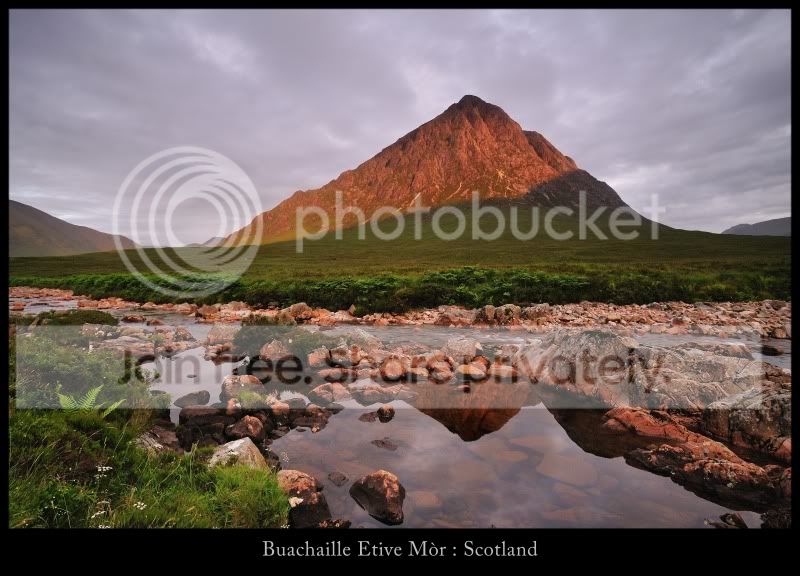
Example of when I use soft edge(which I do 99% of the time)
The Lee Filters guy said you may as well use hard all the time - that the break isn't *that* abrupt.
Or at least that was my understanding.
Depends on the filter strength. A .9 hard grad would be very noticeable.

jerry12953
Suspended / Banned
- Messages
- 12,421
- Name
- Jeremy Moore
- Edit My Images
- No
The Lee Filters guy said you may as well use hard all the time - that the break isn't *that* abrupt.
Or at least that was my understanding.
I tend to agree. Have always used hard (1- and 2-stop). Hardly ever notice the transition.
It would be interesting to know how many Lee sell of each.

- Messages
- 11,048
- Name
- Adam
- Edit My Images
- Yes
Devitt would you say the hard or softer edge choice also dependant on the dof needed
More than the type of shot its used for?
Devitt would you say the hard or softer edge choice also dependant on the dof needed More than the type of shot its used for?
If I am understanding you right then DoF would always be generally large for landscapes but the distance of the main subject both in terms of how close it is into the scene and also how much the subject is protruding into the sky from the ground level. So that would be a factor on whether a hard grad would suffice for that. Hope that makes sense, but I guess my photo example above shows what I mean. I don't think a hard grad 2 stop (used 2 stop soft edge in photo) would work in the example shown as would have made the "edge" fairly apparent. That would be my thinking though, could easily be wrong:shrug:
- Messages
- 11,048
- Name
- Adam
- Edit My Images
- Yes
Hi Devitt. No not quite, my fault, I should have been clearer. I understand totally what you mean by using it in a way thats complementary to the light and view.
What I mean is, at say f22 or above, and lets say focused right up close on some foreground with a distant landscape ...is the line more obvious than if you where at say f8.
I realise the filter is still outside of the dof range of most lens types, but I wondered if the harder edge types became more viewable when a lens is closed down towards max dof.
What I mean is, at say f22 or above, and lets say focused right up close on some foreground with a distant landscape ...is the line more obvious than if you where at say f8.
I realise the filter is still outside of the dof range of most lens types, but I wondered if the harder edge types became more viewable when a lens is closed down towards max dof.
jerry12953
Suspended / Banned
- Messages
- 12,421
- Name
- Jeremy Moore
- Edit My Images
- No
That's a good point....
In theory, the transition line should be more visible at f22 than f5.6...and with shorter focal lengths.
In theory, the transition line should be more visible at f22 than f5.6...and with shorter focal lengths.

 following this as I'm about to buy a hitech set and am thinking hard but there's no real consensus here
- Messages
- 11,048
- Name
- Adam
- Edit My Images
- Yes
I'm going with the theory myself at the mo...I'm not sure what VulKan is getting at as the depth of field is the same with either, its just the field of view that changes, so I'd like some explanation of that.
But apart from that, the harder transition types must be effected by smaller apertures purely because the nearer to parallel rays of light will increase the chance that it becomes viewable ...to what extent, hardly noticeable, or really obvious I have no idea.
I'd love to see some examples....
At the Lee filter talk recently during the TP convention, Lee filters suggested their starter kit of 3 varied standard ND grads (.3,6, and .9 I think, all hard) (look on their website maybe) was a good place to start giving a useful mix of densities for almost any type of shot ...very good advice I though, I'll probably go for that myself even after knowing some answers from this thread.
The softer edge filters are considerably more I believe, and possibly not as immediately useful over the hard as one would imagine I'm thinking.. to begin with anyway.
But apart from that, the harder transition types must be effected by smaller apertures purely because the nearer to parallel rays of light will increase the chance that it becomes viewable ...to what extent, hardly noticeable, or really obvious I have no idea.
I'd love to see some examples....
At the Lee filter talk recently during the TP convention, Lee filters suggested their starter kit of 3 varied standard ND grads (.3,6, and .9 I think, all hard) (look on their website maybe) was a good place to start giving a useful mix of densities for almost any type of shot ...very good advice I though, I'll probably go for that myself even after knowing some answers from this thread.
The softer edge filters are considerably more I believe, and possibly not as immediately useful over the hard as one would imagine I'm thinking.. to begin with anyway.

Trappe
Suspended / Banned
- Messages
- 3,701
- Name
- Rory
- Edit My Images
- Yes
My two pennies worth....I have the Lee hard grad and sunset grad filters. During a longish exposure and with a 0.9 ND in the filter holder I hand hold the hard grad and move it slowly up and down in front of the lens. The only drawback is that you have to be wary of any unwanted reflections. I find that it works for me and it eliminates the "dark line2 across the frame.

Vulkan75
Suspended / Banned
- Messages
- 628
- Name
- Alex
- Edit My Images
- No
I'm going with the theory myself at the mo...I'm not sure what VulKan is getting at as the depth of field is the same with either, its just the field of view that changes, so I'd like some explanation of that.
But apart from that, the harder transition types must be effected by smaller apertures purely because the nearer to parallel rays of light will increase the chance that it becomes viewable ...to what extent, hardly noticeable, or really obvious I have no idea.
I'd love to see some examples....
At the Lee filter talk recently during the TP convention, Lee filters suggested their starter kit of 3 varied standard ND grads (.3,6, and .9 I think, all hard) (look on their website maybe) was a good place to start giving a useful mix of densities for almost any type of shot ...very good advice I though, I'll probably go for that myself even after knowing some answers from this thread.
The softer edge filters are considerably more I believe, and possibly not as immediately useful over the hard as one would imagine I'm thinking.. to begin with anyway.
There are a number of things that effect the transition on grads.
Sensor size: A crop sensor will always soften the effect of the transition of a grad.Compared to the 24x36mm frame-the traditional standard size for a 35mm camera-CCD or CMOS sensors cover a smaller part of the image area.For this reason, they are actually using a smaller region of the filter attached.The graduated part of the filter effectively spans a larger area of your image.This alters the affect and softens the transition line,sometimes so much so that the effect of soft grads can become completely lost.
Focal length: using a zoom or focal length normaly anything over 50mm will result in the transition line becoming softened.
Placing the filter as close to the lens as posisble i.e first slot of your holder will soften the transition line.
Whilst your theory of a stopped down aperture to F22 seems sound in real practice I have found no evidence that aperture effects the transition of grads.
Plus I would avoid doing that for the affect, even if it was possible to because of the circle of confussion issue and difraction.which will soften your images.
- Messages
- 11,048
- Name
- Adam
- Edit My Images
- Yes
Nice explanation Vulkan thank you. makes perfect sense, I understand totally now.  I'm on a cropped sensor so its all going my way.
Your evidence of closed down aperture having no effect is very appealing too. Ta for that confirm.
...although I'm guessing by your final statement you've not had to use, or don't use because of diffraction, f22 or similar as a necessity for a particular shot… I find I do need the greater dof occasionally.
Buying the three was cheaper yes, not sure if that was just for TP ..it wouldn't surprise me though, they seemed very helpful and did put considerable effort in at the TP meet.
I'm on a cropped sensor so its all going my way.Your evidence of closed down aperture having no effect is very appealing too. Ta for that confirm.
...although I'm guessing by your final statement you've not had to use, or don't use because of diffraction, f22 or similar as a necessity for a particular shot… I find I do need the greater dof occasionally.
I had to leave early - was there some sort of discount available to tp members on the Lee kit?
Buying the three was cheaper yes, not sure if that was just for TP ..it wouldn't surprise me though, they seemed very helpful and did put considerable effort in at the TP meet.
- Messages
- 11,048
- Name
- Adam
- Edit My Images
- Yes
My two pennies worth....I have the Lee hard grad and sunset grad filters. During a longish exposure and with a 0.9 ND in the filter holder I hand hold the hard grad and move it slowly up and down in front of the lens. The only drawback is that you have to be wary of any unwanted reflections. I find that it works for me and it eliminates the "dark line2 across the frame.
Nice tip Trappe, good idea.

Theirs an invention awaiting to be patented...

Trappe
Suspended / Banned
- Messages
- 3,701
- Name
- Rory
- Edit My Images
- Yes
Nice tip Trappe, good idea.
Theirs an invention awaiting to be patented...
I need to carry a couple of pegs in my bag to hold the filters when they are held in front of the lens....worth a few quid on Dragons ***?

- Messages
- 11,048
- Name
- Adam
- Edit My Images
- Yes
...there not pegs, there optical filtration clamps!! Hey we jest, but I actually had two thoughts as to whether I should post those patent words.

jerry12953
Suspended / Banned
- Messages
- 12,421
- Name
- Jeremy Moore
- Edit My Images
- No
Hey we jest, but I actually had two thoughts as to whether I should post those patent words.
Some people use optical filtration adhesive.......or blu-tac, as us normal folks call it.
Vulkan75
Suspended / Banned
- Messages
- 628
- Name
- Alex
- Edit My Images
- No
...although I'm guessing by your final statement you've not had to use, or don't use because of diffraction, f22 or similar as a necessity for a particular shot I find I do need the greater dof occasionally.
QUOTE]
No of course ive used it,thats what its there for,as long as you accept the trade off.
I mainly use it to slow shutter speeds in bright light. For Landscapes I rarely close past f11,f16 occasionally, that gives plenty of DOF front to back.
Vulkan75
Suspended / Banned
- Messages
- 628
- Name
- Alex
- Edit My Images
- No
very informative vulkan thanks
no probs
- Messages
- 11,048
- Name
- Adam
- Edit My Images
- Yes
Some people use optical filtration adhesive.......or blu-tac, as us normal folks call it.
..Its like light retarding barriers ...more commonly known as gaffer tape.
I'm trying to stop...


No of course ive used it,thats what its there for,as long as you accept the trade off.
I mainly use it to slow shutter speeds in bright light. For Landscapes I rarely close past f11,f16 occasionally, that gives plenty of DOF front to back.
Ah I got you. The trade off is irrelevant if one shooting a pebble at 3 inches with a mountain a mile being though, ..that was my point, f16 aint going to be enough is it.
So, just checking ...I can be assured that the filters don't come into focus, anymore than what’s being mentioned as a dividing line, closed down like f22 then?
Btw, a good idea suggested by Lee filters was to stack some filers upside down, ie. some light reduction for the bottom also, in doing so the stacking can reduce the whole exposure...this way you get the long exposures without having to come to a compromise with ones dof choice.
Vulkan75
Suspended / Banned
- Messages
- 628
- Name
- Alex
- Edit My Images
- No
Depends on your focus.
On a wide angle lens set to 10mm say at F8 you should have sharp focus from about 3ft to infinity.
If your focusing on a pebble 3inches away your effectively isolating it from the scene...I doubt F22 would cut either
On a wide angle lens set to 10mm say at F8 you should have sharp focus from about 3ft to infinity.
If your focusing on a pebble 3inches away your effectively isolating it from the scene...I doubt F22 would cut either
- Messages
- 11,048
- Name
- Adam
- Edit My Images
- Yes
Hmm, yeah I may have exaggerated my example a tad, soz about that … but hey! I think where going around in circles now aren’t we.... 
...my point was, one may need to use very closed apertures for certain shots.
Or do you refute that? because you seem to be arguing closed down apertures are not necessary at all?
...my point was, one may need to use very closed apertures for certain shots.
Or do you refute that? because you seem to be arguing closed down apertures are not necessary at all?
- Messages
- 11,048
- Name
- Adam
- Edit My Images
- Yes
