
Great Tit Lession ( warning :- not a pretty sight).

Dale.

Bo Derek
Suspended / Banned
Messages
13,716
Name
Dale.
Edit My Images
Yes
Warning :- upsetting image.........

I noticed this Great Tit a few weeks ago at my hide. It had a small bump on its face, it was red at the time and looked like and was about the size of a newly attached tick. I had some time in the hide today and he turned up again but the bump is much bigger, clearly affecting the eye now. He doesn't seem fazed by it at all, is feeding well and bobbing about as they do. I don't believe for one moment though that it's not affecting the bird, it's now compromising the eye, it can't be comfortable.

I'm not sure what it is, my guess is a tumour, it's upsetting to see. My urge is too try and help it but I don't know how I could.
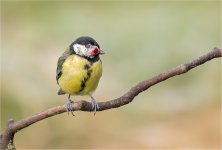


IMGL9373 LRC PS JP tp.jpg
 
That looks very painful
 
I'm not an expert but feeding the picture into an AI engine it came up with the following:

Based on the image, the bird is a Great Tit (Parus major), and the large, fleshy, reddish growth on its face is a classic symptom of Avian Pox.
This is a viral infection that has become increasingly common in Great Tits across the UK and Europe over the last two decades.
Key Details about Avian Pox
* The Growth: These "wart-like" or "tumour-like" lesions typically appear on the featherless areas of the head, such as around the eyes or the base of the beak. They can vary in color from pink and red to grey or yellow.
* Severity in Great Tits: While many bird species (like dunnocks or sparrows) get only mild cases, Great Tits are known for developing particularly large and severe lesions.
* How it Spreads: The virus is transmitted through biting insects (like mosquitoes), direct contact between birds, or indirectly via contaminated surfaces like bird feeders and water baths.
Is it Dangerous to Humans?
The avian pox virus is not infectious to humans or other mammals (like cats or dogs). However, it is highly contagious between birds and can be fatal for the individual bird if the growth grows large enough to prevent it from seeing, feeding, or escaping predators.
What You Can Do
If you see this bird in your garden, the most helpful things you can do are:
* Stop Feeding Temporarily: If multiple birds appear sick, it is recommended to stop feeding for 2–4 weeks. This encourages birds to disperse, reducing the chance of them passing the virus to one another at a crowded feeder.
* Deep Clean Feeders: Thoroughly clean all bird feeders, tables, and water baths using a mild disinfectant (like a 5–10% bleach solution), then rinse and dry them completely before putting them back out.
* Report the Sighting: Organizations like Garden Wildlife Health or the BTO (British Trust for Ornithology) track these outbreaks to monitor the health of wild bird populations.
Would you like me to help you find where to report this sighting online?
 
That looks very painful

Indeed.


I'm not an expert but feeding the picture into an AI engine it came up with the following:

Based on the image, the bird is a Great Tit (Parus major), and the large, fleshy, reddish growth on its face is a classic symptom of Avian Pox.
This is a viral infection that has become increasingly common in Great Tits across the UK and Europe over the last two decades.
Key Details about Avian Pox
* The Growth: These "wart-like" or "tumour-like" lesions typically appear on the featherless areas of the head, such as around the eyes or the base of the beak. They can vary in color from pink and red to grey or yellow.
* Severity in Great Tits: While many bird species (like dunnocks or sparrows) get only mild cases, Great Tits are known for developing particularly large and severe lesions.
* How it Spreads: The virus is transmitted through biting insects (like mosquitoes), direct contact between birds, or indirectly via contaminated surfaces like bird feeders and water baths.
Is it Dangerous to Humans?
The avian pox virus is not infectious to humans or other mammals (like cats or dogs). However, it is highly contagious between birds and can be fatal for the individual bird if the growth grows large enough to prevent it from seeing, feeding, or escaping predators.
What You Can Do
If you see this bird in your garden, the most helpful things you can do are:
* Stop Feeding Temporarily: If multiple birds appear sick, it is recommended to stop feeding for 2–4 weeks. This encourages birds to disperse, reducing the chance of them passing the virus to one another at a crowded feeder.
* Deep Clean Feeders: Thoroughly clean all bird feeders, tables, and water baths using a mild disinfectant (like a 5–10% bleach solution), then rinse and dry them completely before putting them back out.
* Report the Sighting: Organizations like Garden Wildlife Health or the BTO (British Trust for Ornithology) track these outbreaks to monitor the health of wild bird populations.
Would you like me to help you find where to report this sighting online?


Thank you for that Dan.

I wasn't exactly sure what the lession was/is but I think this seems about right. Handily, I took my feeders down last Monday and they are in a large old reef salt bucket with bleach and water. My aim was to put them back out this week (the feeders) but I may leave it a little longer now.

There were no signs of this on any other birds, so hopefully, it hasn't spread, although the birds here tend to congregate in some nearby trees, which could mean it's spreading there too.

I'll have a chat with NatureScot later on, I deal with them very frequently due to Schedule 1 things and see if need to record this.

Thanks again Dan, above and beyond. (y)
 
Back
Top