Got a new monolight

paul williams

Suspended / Banned
Messages
925
Name
Paul
Edit My Images
No
I finally decided to replace the Multiblitz Minilite that died last year after nearly thirty years of sterling service. Now over the years I’ve accumulated quite a few Multiblitz accessories and reflectors and after looking at the competition decided to stick with the baby Multiblitz lights. However, being completely German made, Multiblitz have never been cheap and the current UK entry price into the range is £369.

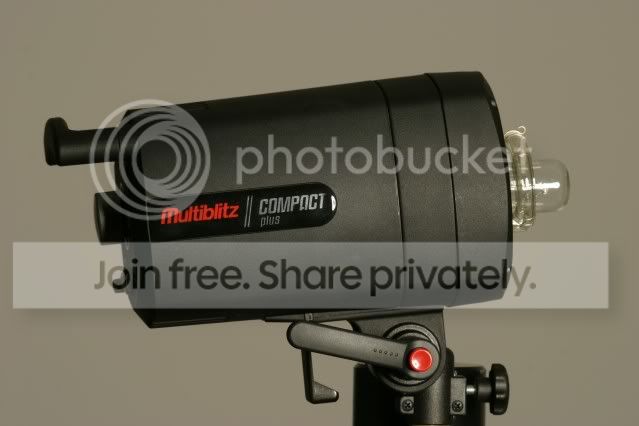
Now I didn’t actually need some of the functions of the current model so a bit of surfing turned up some old stock in Germany saving just over £120. So Monday morning credit card & address details were sent and astonishingly Wednesday afternoon I receive a parcel containing a Mk1 Multiblitz Compact Plus – Compact by name, compact by nature.

IMG_8071a.jpg

or a better indication of the size, here’s a pic with a paperback resting on top
IMG_8072a.jpg


This thing is tiny and weighs in at less than a kilo
IMG_8059a.jpg

the end with the controls
IMG_8062a.jpg

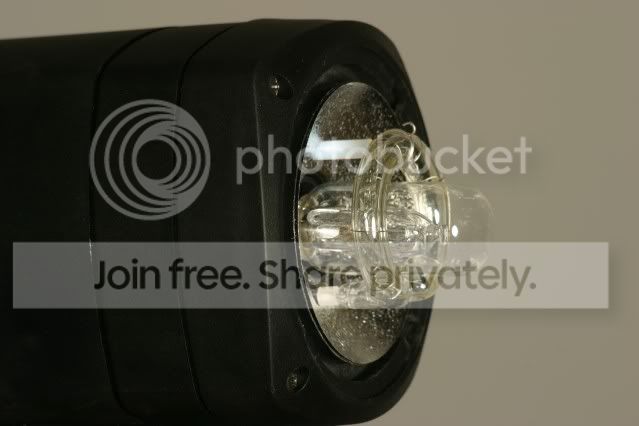
the business end
IMG_8061a.jpg

and with the ‘standard reflector mounted
IMG_8076a.jpg


A quick check delivered output spot on the spec
f22 @ 2 mtr and returning just over f16 @ 10feet - more than enough for my needs. The modelling lamp, whilst only a 60watt (Osram Halolux) puts out a respectable 820 lumens, and matches my old but similarly spec’d Minilites, and according to the spec is good for 2,000 hours and over 1,000,000 switches.

So is there anything I don’t like, well unfortunately yes and it’s a big dislike - it feels very cheap. Although Multiblitz have used plastic cases for many years, this one is really flimsy and both the stand mount and controls don’t really inspire that much confidence, but I guess time will tell. Also the finish is very 'matte' and will tend to show marks more easily than the previous gloss finishes, tending to make them look tatty over time. So this could actually be the last Multiblitz flash unit I buy – after nearly 40 years of brand loyalty :( anyway I'll hopefully give it a good tryout over the weekend.

Paul
 
Last edited:
Thanks for the info, a shame things seem to have taken a bit of a turn quality wise :(
 
Thanks for the info, a shame things seem to have taken a bit of a turn quality wise :(

Quality in the context of "fitness for purpose" probably hasn't been at all compromised, but more my perceived value for money. These are quite costly units and I don't think their 'feel' reflects this at all.

The reason I got the original Multiblitz Minilites, was that I could pack a three head kit into the panniers on my motorcycle, with stands and brollies bungeed to the pillion seat. Those lights are tough and not only survived years of use, but miles of being subject to vibration and radical changes in temperature & humidity and until last year I'd only ever replaced a few modelling lights – at £3 for 10 the last time I bought some!

Paul
 
£3 for 10????? Lol. That sure was a long time ago...!

I know absolutely nothing about Multiblitz units, do they use their own unique modifier fitting?
 
After seeing this I had a look on the popular dslr forum here in Germany at 2nd hand prices all this for 650 Euro seems pretty good after your reco (theres a 40" x 40" Softbox in too)

wNfq6.jpg
 
£3 for 10????? Lol. That sure was a long time ago...!

I know absolutely nothing about Multiblitz units, do they use their own unique modifier fitting?

I wouldn't expect to pay more than a £1 per bulb even now. Yes, Multiblitz have 2 types of bayonet the 'P' mount and the 'V' mount - 'P' for the smaller units & 'V' for the bigger ones.

Edit to add - the best price I can find for the modelling lights used in this new head is £12 delivered ATM.
Paul
 
Last edited:
Quality in the context of "fitness for purpose" probably hasn't been at all compromised, but more my perceived value for money. These are quite costly units and I don't think their 'feel' reflects this at all.

The reason I got the original Multiblitz Minilites, was that I could pack a three head kit into the panniers on my motorcycle, with stands and brollies bungeed to the pillion seat. Those lights are tough and not only survived years of use, but miles of being subject to vibration and radical changes in temperature & humidity and until last year I'd only ever replaced a few modelling lights – at £3 for 10 the last time I bought some!

Paul
I don't think that build quality should really matter as much as it used to. If you go back say 30 years, there were a few flash heads on the market that were built like tanks, and some of them are still in use today - but should we really expect flash heads to last that long? And will we still want to use them if they do, or should be expect to replace them every few years?

My thinking behind this is that the technology has come on in leaps and bounds during the last few years. Ignoring the junk, most manufacturers have done a great deal to improve the actual performance and efficiency of their products and this has required more complex electronics, more efficient cooling, more powerful modelling lamps and so on - and so the likelyhood of long life is less than with the less sophisticated products of years ago. And, in real terms, prices have come right down too, so what was once a once-in-a-lifetime purchase should perhaps now be regarded as a tool that will need to be replaced from time to time, so maybe some production economies are justified.

And, if you look at how well or otherwise some of the manufacturers are doing, it seems to be the ones who still use very expensive production methods who are suffering from reduced sales and who are losing out to the more progressive manufacturers.

I'm not sure how well Paul's new lights will stand up to years of being carted around on a motorbike, but I have a nasty habit of putting my own lights in the back of my 4x4, driving them to location shoots and totally forgetting about them as I bump them around driving to off road locations, with no problems whatever.
 
Build quality is probably the biggest influence I have when buying equipment to be honest, I'd rather have 1 or 2 of everything and know I can depend on them, then need 2 back ups of everything for when it goes wrong. Unfortunately manufacturer's across all industries are adopting that mind set.

I'm a qualified engineer and worked in the gas energy field for 6 years, even something like a domestic boiler, now has countless more features and packs alot of technology compared to the old models, which went about as far as a solenoid and a multifunctional gas valve. The newer models, ARE, much less reliable, people hate getting rid of their old models and usually refuse to do so unless they pack up or become dangerous. The technology is in there, and it gives another 1000+ possible components to go wrong and countless scenarios to create fault.

The search for technological advances and implementation of new ideas is certainly at the compromise of reliability.

Features vs Reliability. It's finding the best of both worlds thats the difficult part
 
Well I no longer need to transport my kit about on a motorcycle (though it certainly remains my preferred mode of transport). But I only have a very limited space in my ‘shed’ where I have my studio kit set-up and has to share the available space with my many other interests as well. As a consequence small compact lighting is a must, also I prefer lower powered modelling lights as I find the heat generated by some units I’ve tried over the years to be very oppressive in a confined space – even with all the windows and door open in the summer. On this topic, wish more manufacturers would print the modelling light output in some measure other than watts as this doesn’t really give an indication of their ‘brightness’ – just like 200/300/400…ws won’t indicate the inherent efficiency in converting those watts into light output.

As for aspects of longevity, well I’m not a pro’ so these aren’t tax deductable, so I’d like them to last as long as possible and yes I’m still quite happy to use the Multiblitz units I have that were first launched over 30 years ago! I actually value a more simplistic basic product over a feature packed one – especially if you actually use your head to decide what is really useful. Multiblitz currently have a camera hot-shoe trigger that not only fires the flash, but allows you to control most of their functions (up to 16 heads, giving individual heads their own unique ‘address’) at the camera which I could see being an absolute boon to the pro’ but for me…it was launched over a year ago, but of course there is absolutely no mention of it on the UK distributor/retailers web pages, also according to the Multiblitz site all heads and sets come bundled with a wireless transmitter – no mention of this on the UK sellers sites, but that’s because they don’t supply it – but they do bundle a stand. :shrug:

I don’t know how big Multiblitz’s Worldwide market share is, but I suspect its quite small, certainly in the UK you can only buy it from 2 places that I’m aware of, so here market share is probably miniscule. The information on both their web sites are very poor and out of date IMO – then again as I perceive it the distributor seems to do nothing to promote sales either and the prices seem very high compared to other brands - so what chance would they have of getting a better share - or perhaps I just have no grasp of these things. :thinking:

Anyway, over the weekend I want to pull together some pictures for both an advert and instruction manual, so I’ll have a better idea of its real life performance soon.

Paul
 
Last edited:
Build quality is probably the biggest influence I have when buying equipment to be honest, I'd rather have 1 or 2 of everything and know I can depend on them, then need 2 back ups of everything for when it goes wrong. Unfortunately manufacturer's across all industries are adopting that mind set.

I'm a qualified engineer and worked in the gas energy field for 6 years, even something like a domestic boiler, now has countless more features and packs alot of technology compared to the old models, which went about as far as a solenoid and a multifunctional gas valve. The newer models, ARE, much less reliable, people hate getting rid of their old models and usually refuse to do so unless they pack up or become dangerous. The technology is in there, and it gives another 1000+ possible components to go wrong and countless scenarios to create fault.

The search for technological advances and implementation of new ideas is certainly at the compromise of reliability.

Features vs Reliability. It's finding the best of both worlds thats the difficult part

Absolutely know what you mean - but I have a sneaking suspicion that this new Compact Plus unit will just go on and on and on....as it is indeed just like me, a bit simple;)

Paul
 
First testing session (after the ‘OK that meets the ‘f’ number specified) would perhaps be for this colour consistency thing. Now I don’t have anything that can measure colour temperature except my eyes, so setting the camera to white balance for ‘flash’ and take a sequence of exposures of colour patches/grey scales cards for each marked power setting, then comparing the output – would that make sense or is this flawed?

Paul
 
First testing session (after the ‘OK that meets the ‘f’ number specified) would perhaps be for this colour consistency thing. Now I don’t have anything that can measure colour temperature except my eyes, so setting the camera to white balance for ‘flash’ and take a sequence of exposures of colour patches/grey scales cards for each marked power setting, then comparing the output – would that make sense or is this flawed?

Paul

It's flawed. Try this.
Take a series of shots at various power settings, shooting in raw. Include a neutral target such as white or grey.
Open them in ACR and see how much the colour temperature changes when you correct the white balance by clicking on the target.

Crude, and not as good or fast as a colour temperature meter, but it works.
 
It's flawed. Try this.
Take a series of shots at various power settings, shooting in raw. Include a neutral target such as white or grey.
Open them in ACR and see how much the colour temperature changes when you correct the white balance by clicking on the target.

Crude, and not as good or fast as a colour temperature meter, but it works.

OK but as I never now shoot raw (no idea what ACR is) or indeed generally use any 'PP-photo' software, are you saying I wouldn't even be aware (visually) that the colours were 'wrong' :thinking: or is this just that empirical thing that the measurement is more important than the image - if I can't tell the difference :D

Paul
 
Last edited:
I'm sure that there will be a way of doing it with jpegs, someone else will have to explain though because I never shoot in jpeg...
ACR is Adobe Camera Raw.

If you can't tell the difference then of course the difference doesn't matter - but the human brain is a clever thing, it tends to compensate and show us what we want to see rather than what is actually there, so taking measurements is usually a good idea - in other words, other people may see what you don't see, and vice versa
 
Ok well, just popped down to the shed and set-up a pin board like so;
F27_iso100_t125.jpg

took the sequence anyway, then cropped to the colour/greyscale patches with a bit of the 18% grey card.

F27_iso100_t125c-1.jpg
F22_iso100_t125c.jpg

F19_iso100_t125c.jpg
F16_iso100_t125c.jpg


sequence continued on next posting.

Paul
 
and continuing

F13_iso100_t125c.jpg
F95_iso100_t125c.jpg

and the lowest setting with the highest as at the start
F8_iso100_t125c.jpg
F27_iso100_t125c.jpg


well visually there is an obvious difference, but is it important in the grand scheme of things?

Paul

Edit to add obviously over exposed as well - must remember to reset the EV compensation thingy :bang:
 
Last edited:
Back
Top