Getting my head round manual flash

Mike Jackson

Billy Brownnose
Suspended / Banned
Messages
1,863
Name
Mike
Edit My Images
Yes
I think I'm finally getting my head round setting up flashes manually.

Using one flash to work out the power I need I multiply the F stop by the distance and this will give me the required guide number. I can then use the Chart to work out the flash power I need.

If I then want to use multiple flashes I repeat this for each flash and then multiply the flash power for each flash by the proportion of light that I want from this particular flash.

Does this sound right?

Obviously it would be more accurate to use a light meter but until I can afford one I'm going to have to do it manually.
 
Erm, no. Flipin nightmare. You just chimp it!

Working out flash exposure with a guide number is a bit of an art at the best of times, and doing multiple flash like that is bordering on the impossible. Guide numbers are affected by the environment, and how do you work out the exposure on areas of overlap?

Chimp it off the LCD, one light at a time. Start with the main light, then build on that, working each light solo and then in combo. When you've got the ratios right, you adjust the overall exposure with f/number and/or ISO.

It's easy. Takes a moment or two, but also dead accurate at the end of the day. Once you've been using flash for a bit, you'll get to know pretty much what exposures you'll get at certain distances and power settings. Remember the inverse square law - double the distance equals quarter the light, ie two stops drop.
 
Last edited:
The best advice I was ever given by one of the guys on here, was give yourself a constant to work with, being the settings on the camera as starting point.

ISO100
F8
1/125

Then set up your key light to get a nice evenly spread histrogram curve, with no clipping at either end. Fill lights anywhere from half that power to a quarter. Set the lights up one at a time, chimping the screen, and after a little while you'll crack it.

Using a brollybox with a 580EXII is about 1/1 or 1/2 power, or with a pair of brolly's for a more even spread use two 430EX at about 1/2 power each. I can't comment about mains powered flash power levels as I don't use them.

It's the aperture that controls the amount of flashlight that is let in, so if you reduce the aperture number, turn the flash power down, if you increase then turn the flash power up. The shutter speed controls how much ambient is let in, but in a studio or house then generally 1/125 at ISO100 without flash the histrogram should clip completely to the left (black).

After a while you just know what aperture you want to work with, what settings the light should roughly be and where, then after a couple of setup shots with chimping, your away.

I love shooting at F2.8, where with my brollybox a starting point is usually about 1/32.

I'm far from being an expert, but hope this helps.
 
And there was me hoping I could use some sort of mathematical formula to get the set up right. Looks like more playing is required.

Initially it will be using the 580ex on camera to trigger the two Nissins but I've ordered some e-bay radio triggers so I can get all the flashes off camera.
 
And there was me hoping I could use some sort of mathematical formula to get the set up right. Looks like more playing is required.

Initially it will be using the 580ex on camera to trigger the two Nissins but I've ordered some e-bay radio triggers so I can get all the flashes off camera.

When I started getting my head round it, I started a thread about the mathematical method, and it didnt work.

Are you using brolly, softbox, brollybox, or bare flash?
 
I've got two brollies at the moment but will probably look at getting some softboxes as well.
 
Well using the above as a starting point, you should get the hang of it pretty quickly. Took me one whole evening of self portraits to crack the basics and get the exposure how I wanted it.
 
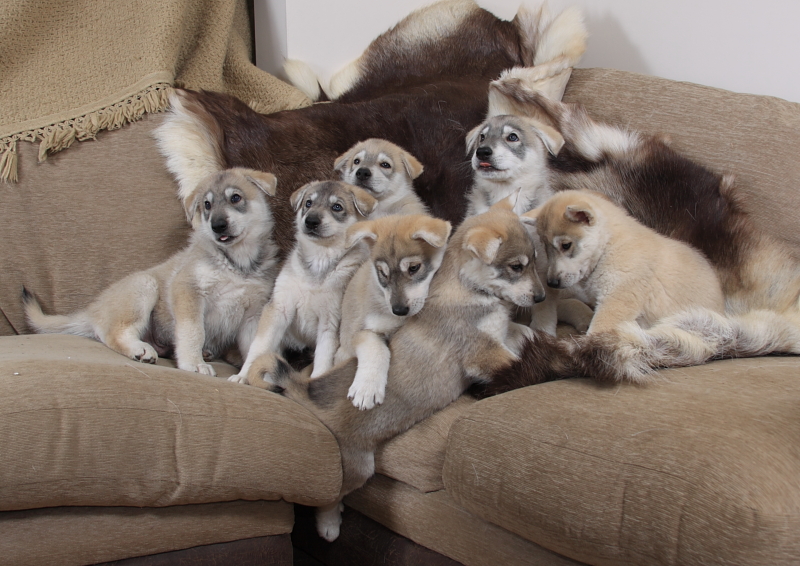
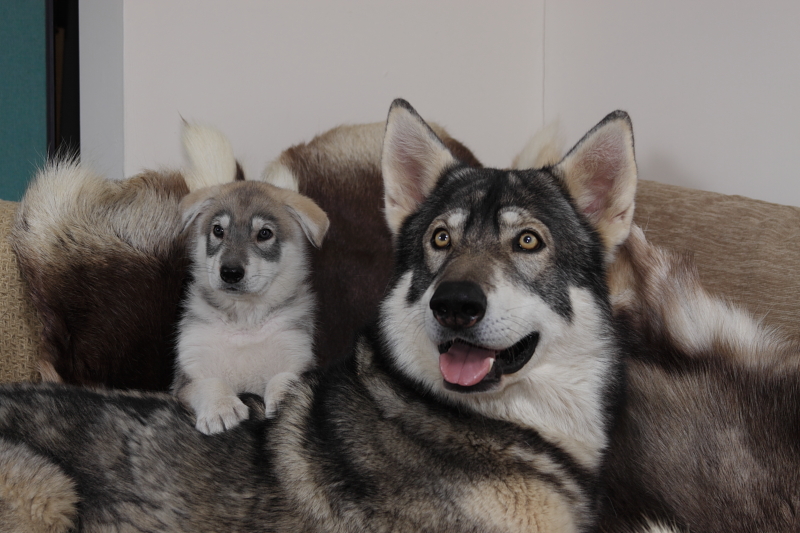
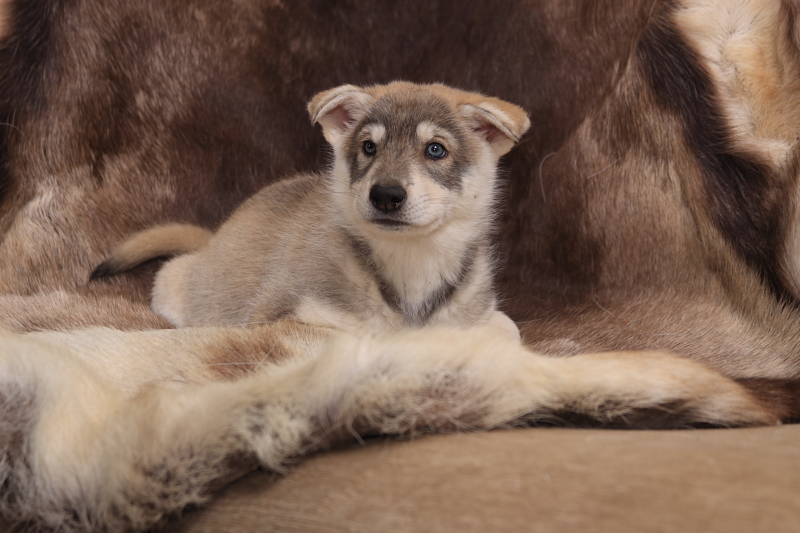
Well it's crunch time today. I'm doing some puppy portraits for a friend. Plan is to use a Di466 either side, bounced off the umbrellas and use the 580 to trigger them. I've had a brief play this morning setting the 580 to 1/128 power and the 466s set to 1/4 power each and I got a reasonable exposure. I was a bit concerned that the minimum power on the 580 wouldn't be enough to trigger the slaves but it worked so all I need to do is photograph puppies instead of my fireplace.

Wish me luck.
 
Well done.

On shots like these, things like squeaky toys are more important to picture success than loads of equipment.
 
I've gone from 'flash bulbs' to Nikon CLS, but I still find the secret is 'flash tests'.

With flash bulbs one could easily get through a roll of film doing tests, now film costs nothing it's all digital.

So, test away for free.

D in W
 
Back
Top