

You are using an out of date browser. It may not display this or other websites correctly.
You should upgrade or use an alternative browser.
You should upgrade or use an alternative browser.
Focus Scope
- Thread starter Barney
- Start date

auntiemaryscanary
Suspended / Banned
- Messages
- 836
- Edit My Images
- Yes
Surprised me too the first time I used one. Which one have you gone for? I need to purchase one, probably used.
OP

Barney
Suspended / Banned
- Messages
- 3,043
- Name
- Wayne
- Edit My Images
- No
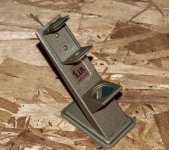
I went for new "old stock" LPL which I got for a tenner. Do not know if its any good or not,Surprised me too the first time I used one. Which one have you gone for? I need to purchase one, probably used.
I thought it was a decent metal construction so therefor more durable, its sturdy looking and I am impressed so far but not actually used it, so a miserable pointless review.


FujiLove
Suspended / Banned
- Messages
- 3,923
- Edit My Images
- No
I have snagged a focus scope and am quite surprised,
I expected magnification of the projected image on the easel. I think it works by viewing a reflection of the actual negative.
Why is that?
I suppose because looking up at the negative will always be a lot brighter than the image on the base board, and therefore much easier to focus. Also, sticking something in the path of the projected light will block it from hitting the base board!
OP
Barney
Suspended / Banned
- Messages
- 3,043
- Name
- Wayne
- Edit My Images
- No
I suppose because looking up at the negative will always be a lot brighter than the image on the base board, and therefore much easier to focus. Also, sticking something in the path of the projected light will block it from hitting the base board!
When you put it like that it is so logical!
auntiemaryscanary
Suspended / Banned
- Messages
- 836
- Edit My Images
- Yes
Sounds good to me and a tenner is value. As you say it sounds durable. They only really have 2 settings working or not working!! Plus you never need to put fresh batteries inI went for new "old stock" LPL which I got for a tenner. Do not know if its any good or not,
I thought it was a decent metal construction so therefor more durable, its sturdy looking and I am impressed so far but not actually used it, so a miserable pointless review.

AndrewFlannigan
Suspended / Banned
- Messages
- 11,977
- Edit My Images
- No
The boss of the first studio I worked at, handed me a big "Sherlock Holmes" style magnifying glass, when I mentioned one of those "Gizmos" as he called them.
I'd seen it reviewed in a magazine and as is the way of the young and enthusiastic I thought it was the answer to all my problems. As is the way of old and experienced photographers, he turned out to be right. The magnifying glass did a good job and seemed to me much faster, once you got the knack of it.
I'd seen it reviewed in a magazine and as is the way of the young and enthusiastic I thought it was the answer to all my problems. As is the way of old and experienced photographers, he turned out to be right. The magnifying glass did a good job and seemed to me much faster, once you got the knack of it.

- Messages
- 6,206
- Name
- Peter
- Edit My Images
- Yes
The negative is reflected in the mirror and you're focussing on the grain in the negative. This will pop in and out of sharp as you adjust the enlarger, and is the most accurate way of doing it.View attachment 477396
There isn't a model number on the scope or the packaging but visually it looked pretty unique from the several I looked at.
I thought that you kind of looked through it I didn't realise that it was a mirror.
OP
Barney
Suspended / Banned
- Messages
- 3,043
- Name
- Wayne
- Edit My Images
- No
On the easel or the negative?The boss of the first studio I worked at, handed me a big "Sherlock Holmes" style magnifying glass, when I mentioned one of those "Gizmos" as he called them.
I'd seen it reviewed in a magazine and as is the way of the young and enthusiastic I thought it was the answer to all my problems. As is the way of old and experienced photographers, he turned out to be right. The magnifying glass did a good job and seemed to me much faster, once you got the knack of it.
OP
Barney
Suspended / Banned
- Messages
- 3,043
- Name
- Wayne
- Edit My Images
- No
Thanks Peter,The negative is reflected in the mirror and you're focussing on the grain in the negative. This will pop in and out of sharp as you adjust the enlarger, and is the most accurate way of doing it.
is it a small adjustment for focus or winding up and down like mad?
AndrewFlannigan
Suspended / Banned
- Messages
- 11,977
- Edit My Images
- No
Both.On the easel or the negative?
For focussing, you just need to get the knack of holding the lens at the correct angle, to avoid glare and see the area you want clearly. I could hold the lens several inches from the easel and see a good sized area, plus it's much easier to move around the projection and check for bulging of the negative. When doing a lot of prints at different magnifications I found it much faster and a great deal easier on the back and neck muscles.
Mind you, my eyesight was a lot better then. It may not be as effective for me now as it was when I was nineteen!

- Messages
- 6,206
- Name
- Peter
- Edit My Images
- Yes
You can usually get rough focus visually, then use the scope to fine focus the negative, so no major movements.Thanks Peter,
is it a small adjustment for focus or winding up and down like mad?
- Messages
- 6,206
- Name
- Peter
- Edit My Images
- Yes
No, assuming you don't have a sheet of paper on the baseboard at this point. If you wanted to be totally accurate, you coud have a previously exposed sheet in place while focussing, but not an unexposed sheet.Do you have to focus with the red light over the light shining from the head?
Last edited:
- Messages
- 6,206
- Name
- Peter
- Edit My Images
- Yes
Sounds good to me Wayne.So have I got this right,
focus on the negative with empty board at largest aperture,
Stop down lens to f8 or 11 to get better depth of field.
put the paper on to make test strip at known times and then develop
OP
Barney
Suspended / Banned
- Messages
- 3,043
- Name
- Wayne
- Edit My Images
- No
Thanks Peter.Sounds good to me Wayne.

I need a safelight then I am up and away, take some pictures next weekend then make a print week after sometime.
As far away from chimping as you can get.


- Messages
- 5,607
- Name
- Stephen
- Edit My Images
- Yes
So have I got this right,
Stop down lens to f8 or 11 to get better depth of field.
Just a thought. If your negative is flat, your baseboard flat, and your lens is properly corrected, why would you need more depth of field? Everything lies on a single plane...
OP
Barney
Suspended / Banned
- Messages
- 3,043
- Name
- Wayne
- Edit My Images
- No
Food for thoughtJust a thought. If your negative is flat, your baseboard flat, and your lens is properly corrected, why would you need more depth of field? Everything lies on a single plane...
Thanks
FujiLove
Suspended / Banned
- Messages
- 3,923
- Edit My Images
- No
Just a thought. If your negative is flat, your baseboard flat, and your lens is properly corrected, why would you need more depth of field? Everything lies on a single plane...
There can often be a bit of paper curl, so the centre of the paper isn’t completely flush with the baseboard. It’s also useful to stop down to lengthen the exposure time (especially for small prints where the head is close to the baseboard) so dodging and burning can be a controlled, leisurely activity instead of a mad waving of the hands!
Last edited: