I'm interested in what you mean by this. It "is" what is written on the lens, that is the focal length of the lens, a 50mm lens on crop or FF always has a focal length of 50mm but you get a different field of view because on a smaller sensor the usable image is ... well ... cropped compared to a larger sensor. Field of view is also affected by the sensor aspect ratio.
Except, when it isn't

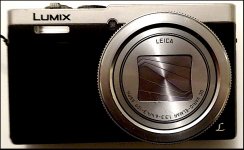
My Lumix TZ100 certainly has 9.1mm - 91mm on the front of the lens, but on top of the lens it has 25mm - 250mm, and when you set the focal length using the zoom lever, the scale in the viewfinder and on the rear screen runs from 25mm - 250mm. It was also advertised as having a 25-250 zoom.
The OPs camera for example, has "24mm-960mm (equivalent)" on the lens and you need to go to the manual to find out the actual focal lengths.
Olympus have advertised their lenses in the past (and maybe still do) as being, e.g. "a 600mm f4 *" and you need to look for what the asterisk means to find out that the lens is actually a 300mm f4. Some Olympus wildlife photographers on youtube also do this and refer to using their 600mm (when they mean their 300mm). And more than once I have seen photographs showing a 300mm f4 lens alongside a Nikon 600mm f4 lens to show how much smaller the Olympus lenses are.
I am also familiar to people referring to using a "35mm" lens, when they are using a Fuji x100, which has 23mm written on it.
You also regularly hear or read people saying that their Nikon or Canon or Sony 400mm "becomes" a 600mm when put it onto a crop sensor body.
I once answered a forum question from someone who owned a 70-300mm "crop" sensor zoom and had bought a 70-300mm "FF" zoom, to get extra reach because he had read, in multiple places, that a 300mm FF lens "becomes" a 450mm lens on a cropped sensor. He couldn't understand why he was getting exactly the same magnification from both lenses.
During my lengthy series of posts where I tried to explain why this was he was adamant I had to be wrong because everyone else said that FF lenses on cropped sensors increased their focal length by x 1.5.
In the olden days, we used to refer to the focal length and the format e.g. a 65mm on 6x7, unless the format was obvious, but there is a lot of confusion now a days when both users and manufacturers refer to focal lengths in terms of their real focal lengths and their FF equivalents.
Hence the desire to just refer to focal length as actual focal length (call it what it is) and not "some of the time" to it's FF equivalent focal length.
Actually, having said all that, I find it rather convenient with my Lumix as I mainly use it as a viewfinder for my Nikon to explore a scene before deciding on which focal length I'm going to use, and where I’m going to set up my tripod