Fishing portrait shots

goldeneye243

Suspended / Banned
Messages
127
Edit My Images
Yes
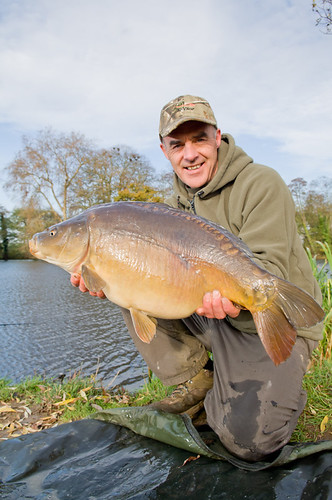
One of the main times I take pictures is when fishing either portrait shots of people holding fish or of the wildlife around me. Are there any good tips for camera settings that could be useful?

I have just bought a 600D and have a 430EXII flash.

For a portrait I would typically try and set up with a background behind the subject, without trees growing from the head etc. I would probably use the 18-55mm kit lens and shoot with an aperture somewhere around 5.6 to get the right depth of field.

I sometimes use the flash to highlight the fish.

I have a polarising filter, is that a good idea to use?

any other tips?

There is limited time to take pictures as the fish needs to go back into the water as quickly as possible but the area can be prepared before the fish is hopefully caught....
 
I imagine general outdoor portrait advice would work for your situation.

Off the top of my head(and im not an expert by any means); if it's sunny try and get the subject in some shade, or sun behind you but not full in the subjects face making them squint, or; sun in front of you, behind subject and use fill flash.
Possibly showing recognisable parts of the lake/river etc in the background might work. Hiding unhooking mats, nets and bits and bobs from the frame probably good.

Not sure about the polariser, if the fish is shiny and wet and reflective it might help or if you have water in the background reflecting sun it might help.

Shots of people in action also, maybe a bit different to the usual man holding fish type pics associated with fishing. Abstract shots of float collections, fishing flies, spinners/lures etc.

There is a professional fishing photographer who frequents this site, if you're very lucky maybe he'll notice this thread and drop in.
 
Yeah, the guy you want is specialman. Seach for posts under his name and check out his pics.

I know he uses flash a lot, in a small softbox, for great fish/fisherman portraits for the magazines he works for.

It sounds easy enough, and it is - if you know what you're doing. The trick is to balance the flash and ambinent light exposures carefully, and position the light so it looks natural.

Your kit is fine. Just get a cheap softbox maybe 30-40cm, on a short extension cord. Then practise :)
 
HoppyUK said:
Yeah, the guy you want is specialman. Seach for posts under his name and check out his pics.

This ^, especially his 'diary of a professional' thread ( or some such).
 

That doesn't look like a 30-40cm softbox to me, so no. It's just a basic diffuser designed to work indoors where light is bounced off the ceiling/walls for a softer light, but used outside the effect won't look much different to a naked flash gun, but will reduce power substantially as most of it will be blasted into the sky ;) Basic rule - the larger the light source, the softer the shadows.

Something like this Lastolite jobbie http://www.lastolite.com/ezybox-speedlite-kit.php
 
Having said that, the sun is 865,000 miles across and that gives quite harsh shadows! :geek::lol:

:coat:

Size is relative to distance, so no, direct sun is a very small light source in terms of the shadows it projects.
 
One of the main times I take pictures is when fishing either portrait shots of people holding fish or of the wildlife around me. Are there any good tips for camera settings that could be useful?

I have just bought a 600D and have a 430EXII flash.

For a portrait I would typically try and set up with a background behind the subject, without trees growing from the head etc. I would probably use the 18-55mm kit lens and shoot with an aperture somewhere around 5.6 to get the right depth of field.

I sometimes use the flash to highlight the fish.

I have a polarising filter, is that a good idea to use?

any other tips?

There is limited time to take pictures as the fish needs to go back into the water as quickly as possible but the area can be prepared before the fish is hopefully caught....


Hi, my fishing camera at the moment is a 450D, and up until very recently have been using it with a 50mm 1.4 (I have the same flash too). For trophy shots I prefer natural light, and shoot in Aperture priority (Av), as for me depth of field is key. If you want both the angler and fish in focus, then I tend to shoot around f 6.3 or 7.1 (with my 50mm). I normally have ISO set to auto, so if the light is poor the camera will push up the ISO (keep an eye it's not moving too high), and slow the shutter speed. Be careful the shutter speed doesn't drop too low, or camera shake will be an issue (no IS on the 50mm I have been using), though if you are doing self take trophy shots on a tripod, then that's not an issue (if you have IS, make sure it's turned off, when on the tripod).

Although I have had some very sharp shots with the 50mm on the 450D, being a crop body, I think the focal length (80mm equiv) is too long for trophy shots, ie the angler vs the fish can appear too large, and you will have to stand quite far back to take the shot (ie an issue in a tight swim). So if you do consider a prime down the road, I would advise looking at something around 28/30/35mm on a crop camera (ie getting in around 50mm on a full frame, which should give you a natural looking perspective of the trophy shot). That 28/30/35mm area would be a good focal length to shoot at on your current kit lens.
 
Thanks for the reply - I have got the 50mm 1.8 but was probably going to use the kit lens to get the 30mm type of range as you suggest. I may have to invest in a 30mm prime lens at some point but they are a bit more money...

Thanks for the pointers much appreciated!
 
Last edited:
Lens wise I find myself using either a Canon 20-35 F/2.8L or the 24-105 F4 IS L. Both have given me great shots.

An invaluable piece of equipment for me was the TC-80n3 remote for my camera which allows me to do self-take portraits really easily. You can set how many shots in a sequence you want to take and at how many seconds apart each shot would be and then off it goes. You'd need to check for compatibility with Canons XXX series cameras though.

Where ever possible I will try to use natural day light and a flash would be a last case resort, as I find the specular highlights on the fishes flank very distracting. The use a secured floating recovery sling is also a handy tool to have. This can afford you the time to organise yourself, find the right location/background, set the camera up correctly with a few fishless practise shots and wait until the sun is behind a cloud to diffuse the sunlight on sunny days.
 
Funny you should mention the remote - I went out for a few hours this morning and caught a carp of just over 16lb. As I have not been fishing for a while I thought I would take a quick picture.

Unfortunately it is a little out of focus as I focused on the trees in the background rather than on the fish (as I couldn't be in two places at once...)

There may be a work around but I think a remote seems like a good idea to get the pictures in focus!
 
My ears were burning so I thought I'd see what people were saying about me :lol:

For 'grip & grins' you have ideal kit; I love using longer focal lengths (100-200mm) for holding shots but only when I have the space to do so (and usually with smaller species like bream, chub and small carp). I have no preference as to what focal length I shoot at but generally my 17-55mm gets the most use.

Separation between the background and subject is key. Get the subject too close to the background, especially where carp anglers dressed in green are concerned (and backgrounds also being green),m and you get to the point where it all looks a bit too busy. Of course, I always look at things from the point of view that I'm shooting so designers can overlay text; with personal trophy shots it's not as much of an issue.

I tend to judge the use of natural light Vs flash on the day; if I'm using flash it's generally off-camera and mainly diffused through a 40cm soft box (which is portable and easy to hand hold)..... getting the flash off camera can allow you fire the flash slightly upwards to light under the peaks of caps but don't overdo it as A) you'll create an underlit 'house of horrors' looks, and B) you risk the fish casting a shadow over the subject's face, giving them an epic 12 O'clock shadow :lol:

If you do end up using an off-camera flash then be mindful of specular highlights (flash hotspots) on the side of the fish. I've tried using a polariser before but TBH, it didn't make enough of a difference to warrant the loss of light.

The pose is one thing that will make or break an image; kneeling down with both knees on the deck and your back straight looks awkward and usually means that you hold the fish further out to balance and because you're straining to keep upright, you tend to pull what I call 'sex faces' ;)

There's nothing wrong with holding the fish out a bit but A) watch the depth-of-field doesn't render the subject or the fish out of focus, and B) holding the fish out too much makes you look like you have gigantic hands.

Here's a shot I did of Dave Lane some time back, shot wide (17mm) at f/6.3.....


Test by Pat MacInnes, on Flickr

...at that aperture the anglers and fish are sharp throughout and the background is blurred enough that text will be legible. There's a lot of space around the subjects for straps and headlines etc.... this was a possible cover option (which didn't get used BTW). Pretty sure there was a flash coming in from camera left.....

This is the kind of pose I'd recommend; one knee down with one arm resting on the other knee to support the fish up. Hold the fish the other way and you push the fish further out and your knee sticks into its side.

BTW, fish are a bit tougher than some people think..... carp in particular will survive well for a few minutes out of the water - just keep pouring some lake water over the fish, especially over it's head and gills. :)

Any more info you need just ask :thumbs:
 
Last edited:
Thanks for posting. Even though I had read this I still tools some pictures at f/1.8 yesterday without thinking about it. They looked pretty poor! F/6.3 next time :)
 
Thanks for posting. Even though I had read this I still tools some pictures at f/1.8 yesterday without thinking about it. They looked pretty poor! F/6.3 next time :)

Don't worry - I managed to do half a shoot the other day in the sun on ISO 800... it was only when I started using manual flash where I was stuck to 1/250th maximum sync that I actually noticed. :lol:
 
Back
Top