First time using a speedlite

Tunbridge

Suspended / Banned
Messages
1,282
Name
Stephen
Edit My Images
Yes
Hi,

I’ve had a good hunt through the forum and there doesn’t appear to be an idiots guide to using speedlites?

I currently have a D3000 but I’m planning on borrowing my dad’s SB-600 for a wedding at the weekend. I’m only there as a guest so there is no pressure to take decent photos so I’ll be using it as a learning experience as much as anything.

I’ve used his SB-600 before but really didn’t know where to start with it and due to limited time I just ended up using everything in auto. I tended to try to bounce the flash of the ceiling or walls by rotating the head but I was just guessing this was the right thing to do based on the fact I know that a direct flash from in line with the camera isn’t flattering. I also seemed to get quite a few over exposed photos despite being in auto.

So any tips on camera settings/flash settings/technique will be really appreciated.

I’ll be trying to use my 50mm f1.4 as much as I can during the day to avoid the need for flash (more because it’s what I’m used to) but by the night I’ll be needing the flash! I also have the kit 18-55mm if that is going to be any better?
 
Your right in bouncing the flash of ceilings and walls, But you got to use it at the same angle to the subject which is being shot. Or if its too close spin the flash round so it bounces of the wall behind.

For TTL flash your best control of this automatic flash is FEC (flash exposure compensation) so you can set it up or down if its too bright or dark for the correct exposure and maybe a diffuser like a sten omnibounce.
 
Thanks Gordon, just to clarify what do yo mean when you say "you got to use it at the same angle to the subject". Does that mean to aim it to bounce of the wall and onto the subject, as if throwing a ball?

The flash does have a little flip out diffuser which seemed to reduce the harshness last time, although I suspect it's not as effective as a proper one.
 
The flip out diffuser is actually a device for making the flash work with wide angle lenses, what you were doing was effectively bouncing the flash off all walls and ceiling and reducing its power - not necessarily a bad thing.

Yes, imagine the light is a ball and bounce it to the subject from above or from one side.
 
Oh thanks I didn't know that was what it was for! It's going to be much easier to use now I know what it's for!

Any other top tips?!
 
To make the light softer, you need a larger light source. That's why bouncing is so effective, as the ceiling becomes your new light souce, several feet wide. Bouncing uses a lot of power though, so be prepared to push the ISO higher, and/or lower the f/number.

Even better, make a little bounce-reflector card - about the size of a packet of cigarettes is fine, attached with a rubber band. Something like this www.abetterbouncecard.com and just fire the gun straight up. You get nice soft light from the ceiling, but this also casts shadows under eyes and chins so the little card fills those in very nicely. Works brilliantly, and v easy.

The other trick is to balance the flash with the background ambient light, to stop the background going dark. It basically means dropping your shutter speed (the flash will freeze movement) and there's probably an auto mode that will do it for you. I think some variation of A mode with Nikon - see handbook.

If there is no ceiling, or it's just too high and dark painted, then fire the flash direct but then you really need to balance the flash with the ambient to lift the background and help the flash from looking so harsh.

Bear in mind the inverse square law, that says if you double the flash to subject distance, the light is reduced to one quarter. In other words, flash falls off very quickly over distance so try and keep all important areas of the subject the same distance away.

Final tweak, indoors under tungsten light, set white balance to tungsten and use a CTO gel (light orange) over the flash to balance colour with the ambient.
 
Thanks Richard, some great advice, I can see me needing plenty of batteries at this wedding!
 
markta said:
This book is awesome; it not only is good for beginners but also for intermediate and advanced users, so a book for you to cut your teeth with and then develop..

http://www.amazon.co.uk/Speedliters-Handbook-Learning-Craft-Speedlites/dp/032171105X/ref=sr_1_1?ie=UTF8&qid=1331253775&sr=8-1

It's a bit pointless the OP buying this book as it's aimed at Canon users and has absolutely no specific information in it for a Nikon shooter. Whereas basic flash principles aren't actually manufacturer specific this book talks about setting up and using canon flash (Ettl, Canon's wireless system etc) and doesn't cover anything Nikon. There's only around 10% non manufacturer specific information in the book.

A much better bet for the OP is to check out David Hobby's Strobist blog, and Joe McNally's blog and books (which are all excellent)
 
Ste manns, I havnt read the whole book yet by there's certainly significantly more than 10% non canon specific information and I would certainly recommend it to nikon shooters. That said I havnt read any of Joe mcnallys books so they may be just as good
 
I've read it several times and refer to it all the time. It doesn't matter what the actual percentage is the fact is its aimed at canon shooters mostly, whereas its true to say basic principles of flash are of course universal the op would be much better buying a different book with these basic principles included than buying a canon specific book that also has some of it included, which was my point.

Joe Mcnallys books do have nikon specific info in them but he writes more generally. I'd recommend his books to anyone who wants to know more about portraiture and flash, they're excellent books. If you shoot canon I would seriously recommend Syl's book
 
Sometimes there's just no helping some people. <-----Ignore!!

Enjoy the book, it is a very good read

Edit - what the heck am I on about? Sorry read that totally wrong but in my defence I've had a week from hell.
 
Last edited:
Thanks guys some great advice, David Hobby's Strobist blog is a great source of info.
 
Lol. I think the speedlite thread title threw me a little; didn't look at the OPs camera brand.

I was gonna ask the mods to delete my post, but glad i inadvertently helped big rob in the end.
 
Yep book is ordered. Hopefully be here next week. :thumbs:
 
The best tip I ever learned about using flash is to adjust for the ambient light first using shutter speed (faster shutter = less ambient light, slower shutter = more ambient light). Then adjust the amount of flash using aperture (wide aperture = more flash, narrow aperture = less flash).

Here is a nice intro tutorial: http://neilvn.com/tangents/flash-photography-techniques/2-flash-ambient-light/

Hope this helps.
 
Thanks Gordon and Stuart, some more good material there.

Well I've had a go with the flash at the wedding last weekend, managed to get some great shots with the flash although my 50mm f1.4 when the light allowed was where I was most comfortable. They weren't all perfect with the flash but I managed to put a lot of the great advise to good use.
I'll post some picks up to show how it went.
 
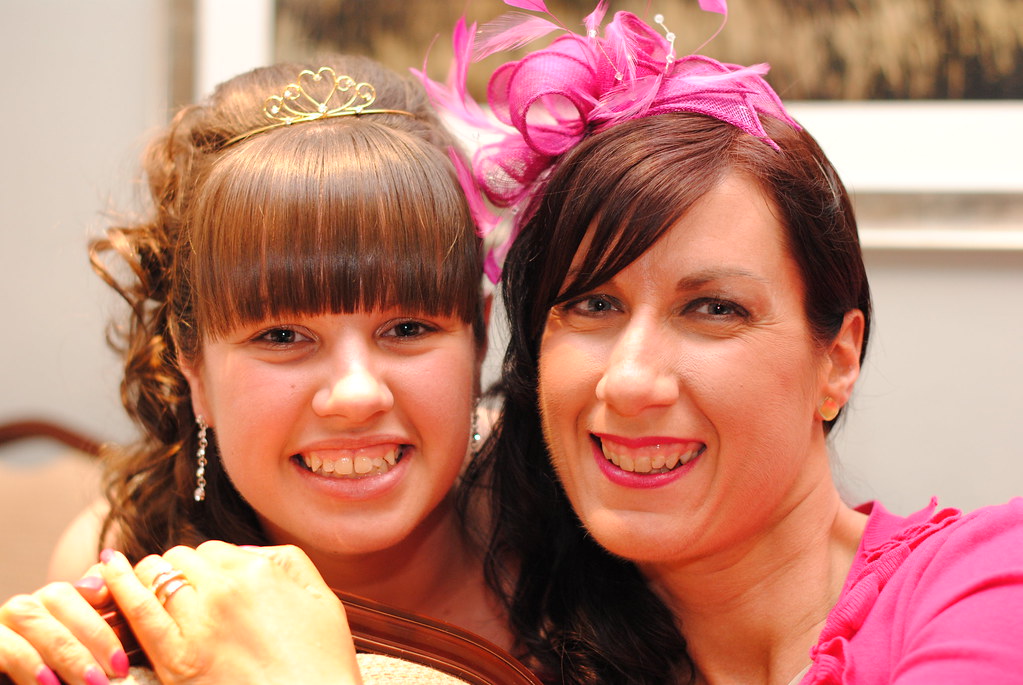
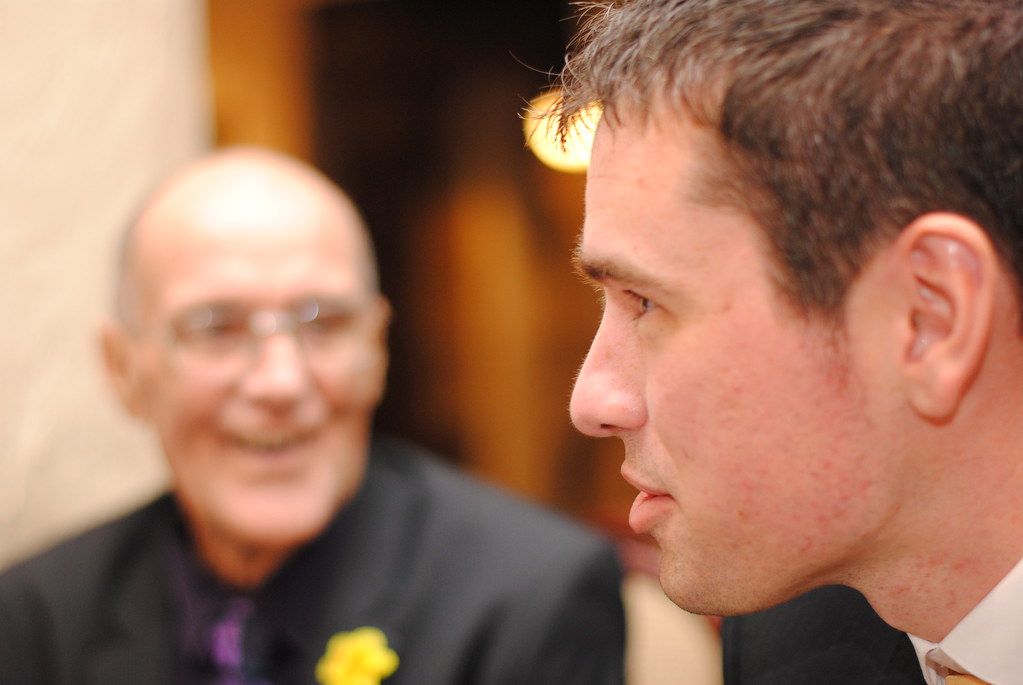
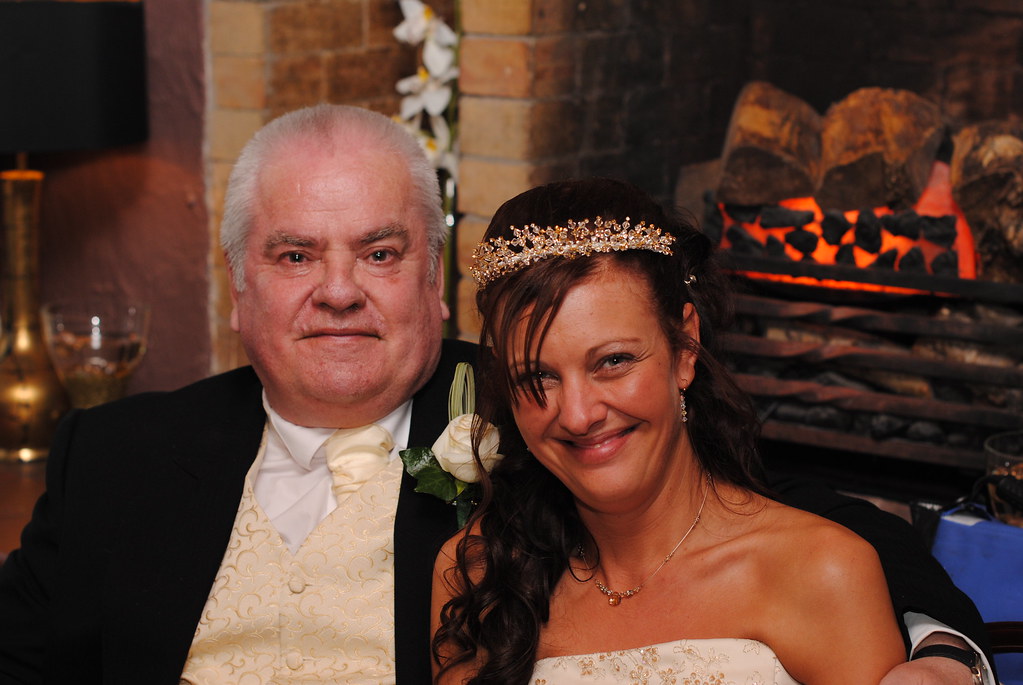
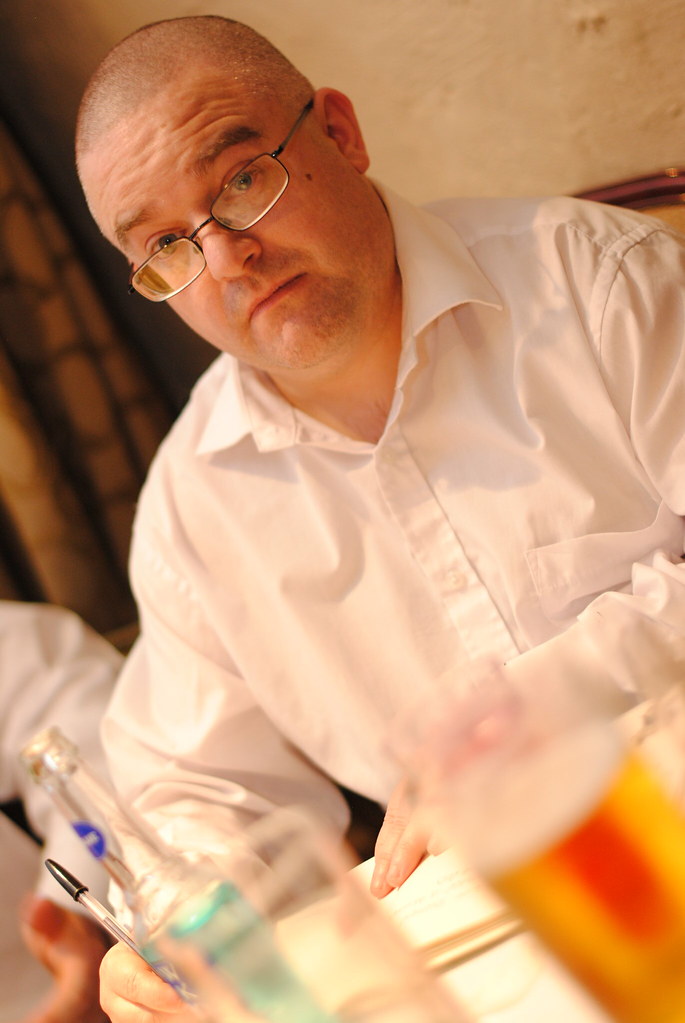
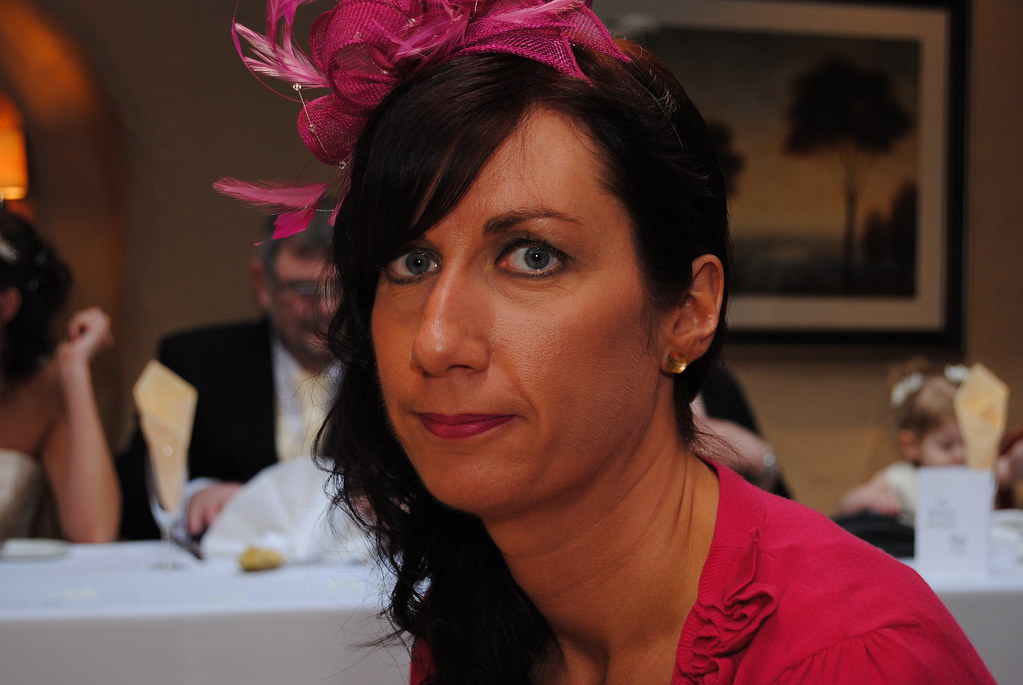
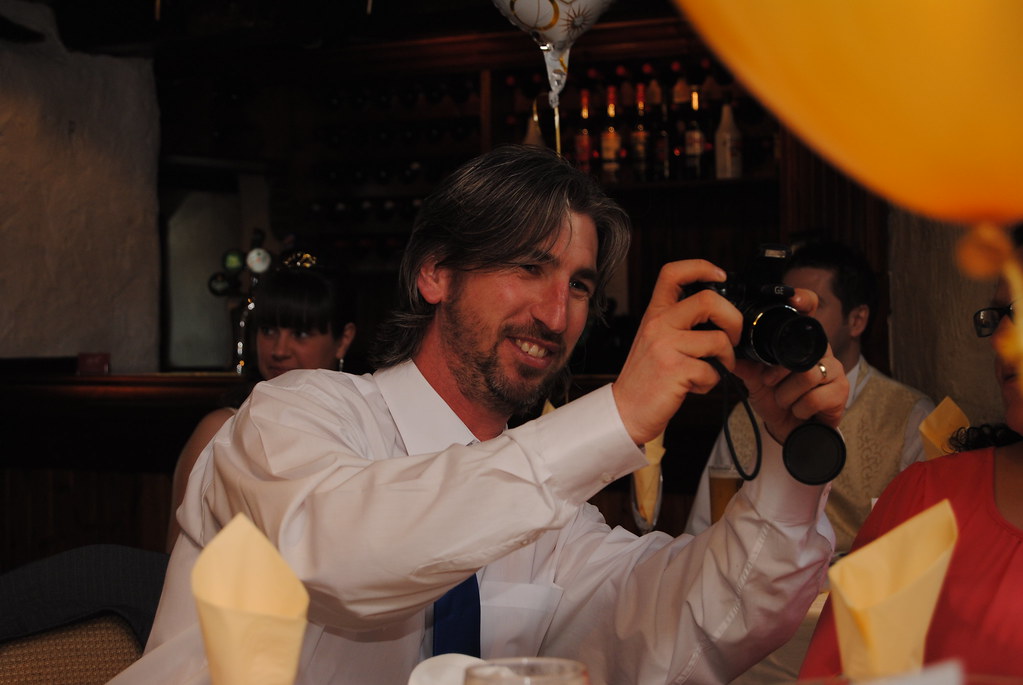
As promised here’s the results of my first attempts with the SB-600. I know this isn’t the c&c section but any comments are happily received as I’m here to learn and hope that I’ve put some of the great advice above into practice.

So here goes, the first 4 I’m reasonably pleased with, all of them had the flash bounced of the ceiling (aimed forward at about 45 deg) and I’m fairly pleased that this has softened the light to the desired effect.


2012_03_10-2682Michael-Wedding by Tunbridge Wells, on Flickr


2012_03_10-2663Michael-Wedding by Tunbridge Wells, on Flickr


2012_03_10-2657Michael-Wedding by Tunbridge Wells, on Flickr


2012_03_10-2661Michael-Wedding by Tunbridge Wells, on Flickr
 
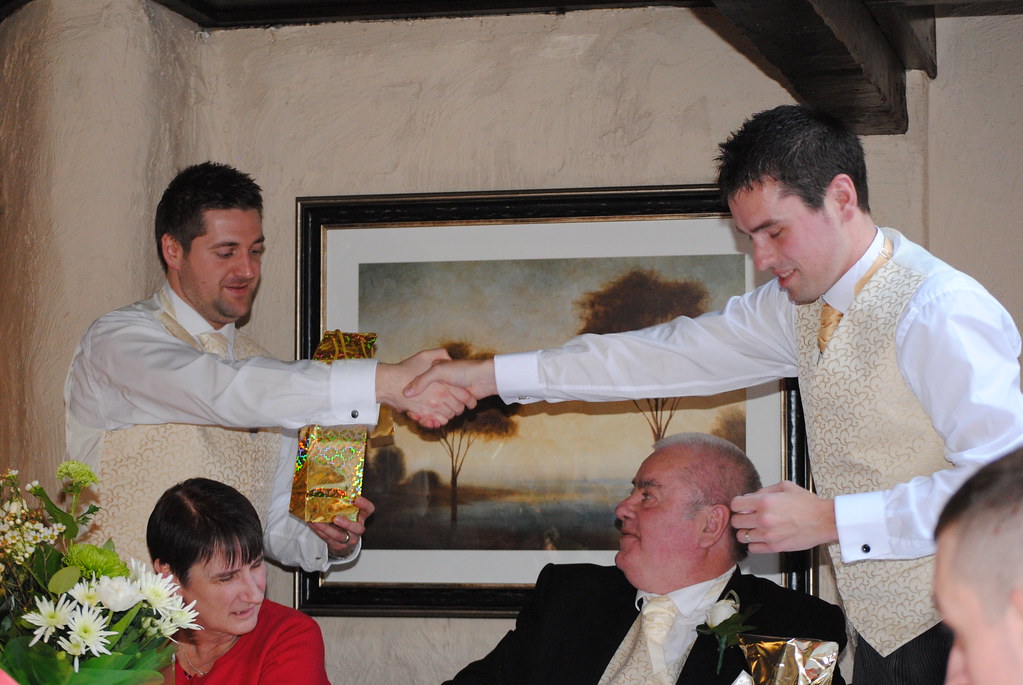
So here’s when it went wrong!

Although the light is soft enough on this I bounced the flash of the ceiling which was a dark wood finish and this seems to have colour cast the photo with a brown haze. I’m sure this is fixable with a bit of PP but I wouldn’t even know where to start at the moment (something I plan to get into in the future).


2012_03_10-2558Michael-Wedding by Tunbridge Wells, on Flickr

This one is a bit dark despite putting the flash up to +3.0EV but I think this is a limitation of the equipment rather than me. I was just too far away.


2012_03_10-2564Michael-Wedding by Tunbridge Wells, on Flickr

Again I came unstuck with the lack of flash power for the distance I was stood. Bouncing the flash was loosing all the power so I pointed it directly at the subject and ended up with nasty shadow on the wall. Can’t really see how I’d have got round this?


2012_03_10-2631Michael-Wedding by Tunbridge Wells, on Flickr

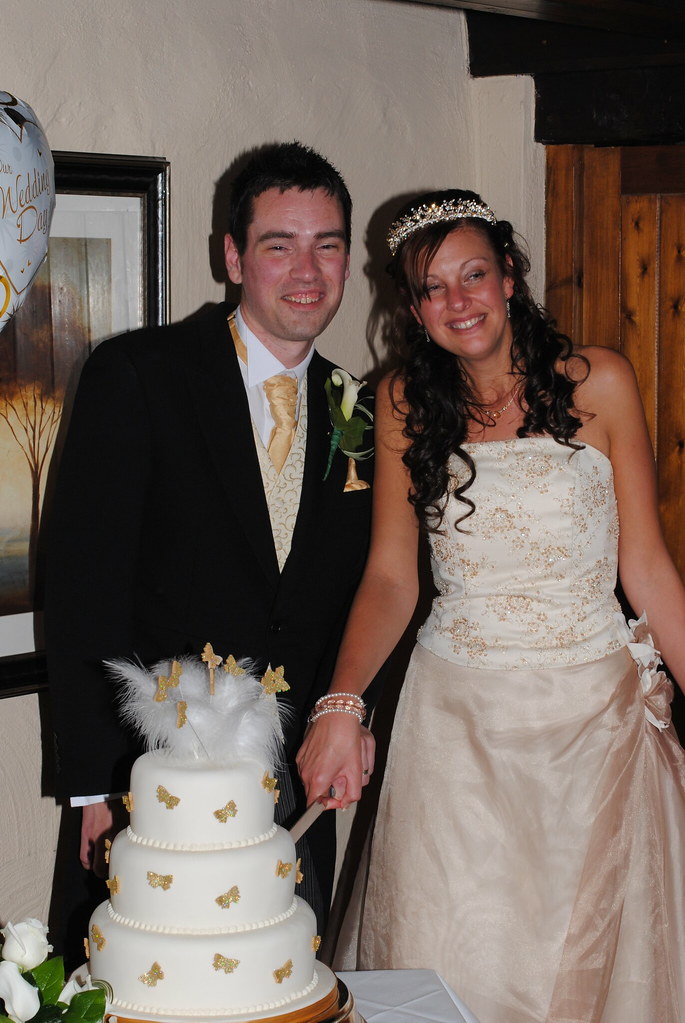
And finally, a very disappointing shot. I tried bouncing the flash but we were stood under a huge glass sky light and the first shot came out very dark, I then went to +3.0EV and tried it again with still no luck. In a last ditch attempt I aimed the flash direct at the couple (forgetting to take it back to 0EV) and ended up with a terrible photo! Inexperience and bad planning in equal measures!:bonk:


2012_03_10-2724Michael-Wedding by Tunbridge Wells, on Flickr

Either way it was a learning experience and one certainly aided by the advice from you guys so thanks you for your time.
 
Could always use a light diffuser. Gary Fong light sphere is very good (not cheap though)

Looks good but probably a little pricy for the amount I'd use it, especially as the sb-600 is borrowed anyway. Worth considering for the future though, thanks.
 
I usually shoot in full manual, aperture priority and shutter priority (Depends on the situation) but when I use my speedlite I only shoot in manual, this is because when I shoot in aperture priority, my DSLR automatically lowers the stops in order to compensate for the extra flash light and that means that I don't get as much ambient light. This is not always a problem but it is something worth considering when you want to get a good "ambient/flash light mixture".

P.S. There are other ways around this problem but this is the method I choose.
 
Thanks I'll have to give that a go next time, it hadn't occurred to me that the camera was doing that. I have only just started getting used to full manual but can't manage it in a quick changing environment as I need too much time to think! More practice required!
 
Back
Top