First home development - success!

Craigus

Suspended / Banned
Messages
1,562
Name
Craig
Edit My Images
Yes
Last night I attempted my first home development of black and white film, I think it all went fine, amazingly! I was keen to get some scanned last night to see the results, at the bottom are the only two I got round to scanning as it was getting quite late. I'll put some more up when I've gone through the whole roll.

Some observations and a couple of questions...

- The bit I was most concerned about was the work in the dark bag. I had a roll of poundland film that I use to test cameras with so I practised with that in the open first, then again loading it onto the reel in the dark bag. This was actually much easier than I thought it would be, the hardest part was using a bottle opener to get the cap off the film canister, lots of cursing went on and as it was the very first step I thought it would only get worse from there and I'd be in for a long night, thankfully things picked up. There are specific tools for this, are they any better or do you just get on with it?

- I used 450ml of chemistry so that I had enough to cover the single film even though the tank says 375ml is enough, having not enough is surely worse than too much.

- I used ID11 developer un-diluted, but threw it out afterwards, realising now I could probably have kept it? But I can't keep it if I do dilute?

- Is the temperature of the stop and fix as crucial as the developer? I got them pretty close to 20 degrees but was just curious.

- I've kept the diluted stop and fixer in separate containers, how long will these last? There is air in there too and I have nowhere near enough marbles to fill the air gaps :D Also how long does the undiluted stop and fix last in their original bottles? Any other tips for extending the shelf life?

Thanks for all the help I've had already on here, it's been excellent and appreciate the support, some of the old threads that come up in searches are gold mines too.

Here are a couple of pics, just a couple of snaps from a day out last Friday. Scanning technique needs some work and research too. Shot on Olympus XA3.


Image 1 (5).jpg

Image 1 (6).jpg
 
Fix lasts years or a few dozen films depending what comes first. If you Google fix clip test there are loads of people who'll show you how to test the effectiveness of your fix.

Stop might got mouldy depending on the type, orange based stuff doesn't keep as well as the nasty pet chems ones.
 
Last edited:
Crisp and clear, I love # 1 so much going on.

Congratulations(y)(y)
 
Last edited:
For black and white the temperature isnt all that important,even for the developer, anything around 20 degrees is fine.
Very good results for your first attempt and both good shots as well.
 
For black and white the temperature isnt all that important,even for the developer, anything around 20 degrees is fine.

While this is mostly true, and likely to be developer specific, the development does vary with temperature. For example, according to massive dev chart, (fuji acros 100, rodinal, 1:50, ISO100) the dev time for 20 degrees is 13.5 minutes, and only 8 minutes for 24 degrees. For ID11, the ratio of the two times for the same temps is less extreme, but still non-negligible.

I think the key message is pick a temperature and stick to it if you can, as this will lead to more consistent results.
 
Last edited:
- Is the temperature of the stop and fix as crucial as the developer? I got them pretty close to 20 degrees but was just curious.

- I've kept the diluted stop and fixer in separate containers, how long will these last? There is air in there too and I have nowhere near enough marbles to fill the air gaps :D Also how long does the undiluted stop and fix last in their original bottles? Any other tips for extending the shelf life?

I don't think the temperature of the stop and fix are anywhere near as critical as the developer, but you want to avoid any sharp differences in temperature as it may cause reticulation, effectively cracking of the emulsion.

I keep my diluted stop and fix in clipseal plastic pots. Don't worry about the air gap. Stop usually gets thrown out when it looks a little gunky. So far I've never had fixer fail; once after some time of disuse it had deposited dark stuff (presumably silver) on the inside of the pot, so I threw that. After a few uses, I pour a little into a saucer and put the cut-off end of the film partly in it, if it clears it's fine!
 
Excellent results! Fun eh?

I use a film retriever, rather than trying to get the top off the canisters. Much easier. An added advantage is the film is kept tidier in the bag as you just pull a few inches out of the canister at a time.

Easier still: shoot medium format :D

ID11 has to be thrown if you use it 1:1, but you can process up to ten rolls per litre by using the full strength developer and adding 10% to the development time per film. Check out Ilford’s ID11 PDF for full details.
 
Thanks all for the advice.


Don't tempt me!!!! It's inevitable now I think, just trying to hold off and enjoy what I'm doing now for a while longer.

Terribly sorry, don't mean to put temptation in your path but...... Ross Ensign 16-20 on Kodak Portra 160, the camera cost £4.99 plus postage. I was lucky it was that cheap but you can pick these up for under £30 and they are smaller than most SLR 35mm cameras. :)

Catbells-Pano by Andy, on Flickr
 
I used 450ml of chemistry so that I had enough to cover the single film even though the tank says 375ml is enough, having not enough is surely worse than too much.
Too much developer is not good. There needs to be a good amount of air above the developer so that when you invert the tank for agitation, the air moves through the spiral, displacing the developer and allowing fresh developer to take its place. It is best to have the right amount of developer although a slight excess won't hurt.
 
Nice shots Craigus, they look great!

I tried a bottle opener for the canisters, all I’ll say is getting a canister opener for £8 is better than the swearing and frustration Lol. I bought a film retriever too, and tried to load straight from the canister, but found it didn’t let the film go onto the reel as easily.
 
Last night I developed my second roll, just as succesful but I have a question.

On the first roll I ended up with some water spots on the negatives, this second roll I used some Kodak Photo-Flo which did seem to help the water run off for the first few minutes of hanging. However this time I've ended up with some streaky marks, I've tried to take some pics of the negs to post but it's very hard to see it. Any thoughts? Am I going to have to use distilled water for the wash? The water around here is preety good (South West, Somerset) from what I understand compared to many places in the UK.
 
Sorry to clarify they look like streaks from water drying on them, the type of thing you would see on anything shiny if water dried on it if that makes sense. Best I could find by googling is this but mine are less straight and more all over. Could try scanning it as that may show it clearly.
 

Attachments

  • Capture.JPG
    Capture.JPG
    27.7 KB · Views: 17
Wet your fingers with a bit of the the rinse water so they are just a bit moist, and gently run them down the length of the film to remove the excess water. Also try hanging them diagonally so the water runs to the edge, not down the whole length. Don’t be tempted to use film squeegees as they easily scratch negatives.
 
Great results Craig! It really gives a sense of satisfaction developing your films at home :-) You're on the slippery slope now!!

Congrats,

Fraser
 
I'll give running my fingers down the strip a go next time, thanks for the suggestion.
 
Great results Craig! It really gives a sense of satisfaction developing your films at home :) You're on the slippery slope now!!

Congrats,

Fraser

Thanks, appreciate the comment.I already have 3 film cameras and can't stop looking at medium format now, even though I just bought a dedicated 135 scanner! :banana:
 
What scanner have you bought Craig? - I'm in exactly the same position as you; just bought a 135 scanner but would love a MF film camera again! (Oh God it's getting silly!) :)

P.S. I actually do use a film squeegee but very lightly on the film. A wetting agent at the end (not sure if you used one) really helps with water marks as well.
 
Last edited:
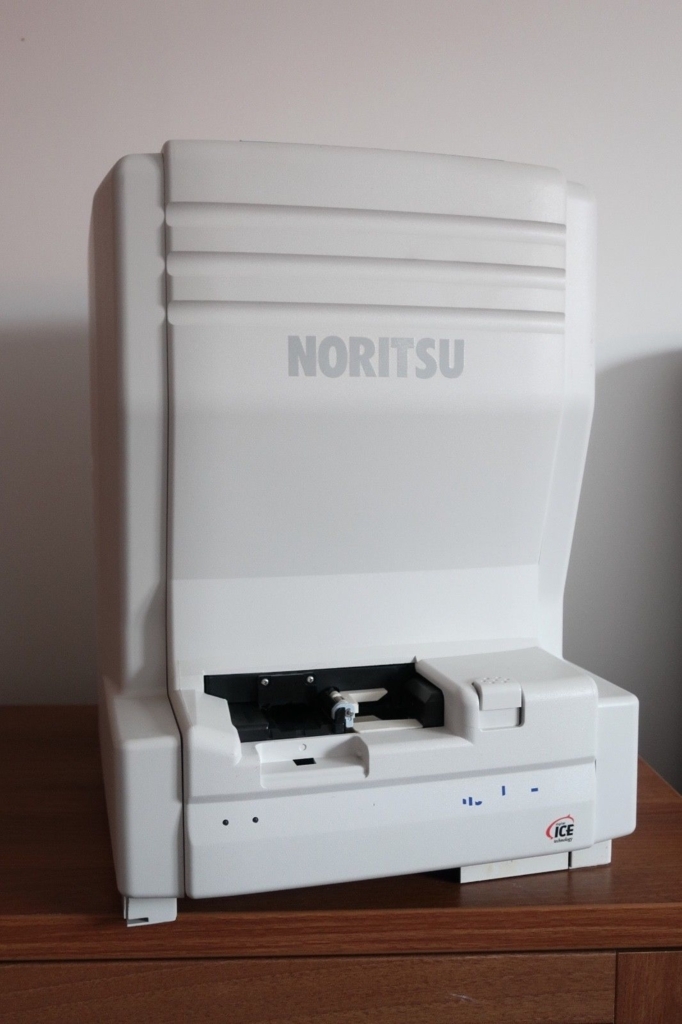
Ive bought a Plustek 8100, very impressed and happy with it! What have you got?

To reply to the question about my wash process, I leave the tank running under the tap for about 5 mins then fill it up with water and add the wetting agent and agitate it for about a minute. Improvements?
 
Ive bought a Plustek 8100, very impressed and happy with it! What have you got?

To reply to the question about my wash process, I leave the tank running under the tap for about 5 mins then fill it up with water and add the wetting agent and agitate it for about a minute. Improvements?

I was never keen on the leave under running water technique.

I fill the tank with water from the water bath, invert 5 times then empty. Fill again from the bath, invert 10 times, empty. Fill again from tank, invert 20 times then empty.

Never had any problems rinsin that way. Then I do the stabiliser step. Then a final rinse with the wetting agent, again just use water from the water bath add wetting agent together in a jug, fill the tank, invert 5 times then empty and take out the film
 
Last edited:
To reply to the question about my wash process, I leave the tank running under the tap for about 5 mins then fill it up with water and add the wetting agent and agitate it for about a minute. Improvements?

Five minutes is probably okay, although I always leave it for ten (under a mixer tap at 20°). I'd make up the wetting agent in a jug, make sure it's mixed, then pour it into the tank. Try to avoid bubbles or foam when mixing - wetting agent in first, then add water and give it a gentle stir with a glass rod or thermometer. Shouldn't need to agitate it apart from a little at the start to dislodge any air pockets. I have the lid off the tank and just move the reel up and down a few times while keeping it submerged (if the reel breaks the surface, the risk of foaming increases).
 
Fascinating how advice changes over the years. When I started (c1959) the advice for film was six changes of water, with five minutes in each change before the wetting agent step. With the water at the process temperature to avoid reticulation (gelatine cracking due to sudden temperature change). I kept to this until I switched to the "Ilford method" which saved time and water - basically Shaun's method in post 24.

I'm doubly wary of using water at cold tap temperature, since gelatine can contract when cooled, and this makes it harder for the chemicals to diffuse out, apart from any idea of reticulation. Cold water temperatures will I assume vary by area and season; but when I measured such things (in Yorkshire) the temperature was fairly constant at 55 degrees.

I already have 3 film cameras and can't stop looking at medium format now, even though I just bought a dedicated 135 scanner! :banana:

Why not cut out the middle format and just go to large format :D. It's just like 35mm but more so...
 
Ohhhhhh Sh*t! It's official!

The Chroma laser cut camera is amazing! (Thread is brilliant).

Just purchased a book on large format Cameras (Cant imagine inside the covers of that it will tell me the format is crap and don't buy one!)

There is only one solution to this addiction;

Annoy enough people on this forum (seem to be doing a good job recently!) that an admin banns me so I don't have anymore temptation from you lot :ty:
 
If we ever hold a large format only meet its going to have to be at the Albert Hall at this rate. :D
 
I was never keen on the leave under running water technique.

I fill the tank with water from the water bath, invert 5 times then empty. Fill again from the bath, invert 10 times, empty. Fill again from tank, invert 20 times then empty.

Never had any problems rinsin that way. Then I do the stabiliser step. Then a final rinse with the wetting agent, again just use water from the water bath add wetting agent together in a jug, fill the tank, invert 5 times then empty and take out the film

Shaun, when you say 'the stabiliser step', are you talking about C41 or E6 colour processing? If so, it's very important not to rinse the film after that step. Colour stabilisers contain anti-fungal agents that stop the emulsion rotting. It's not required with B&W film because the silver does the same job.
 
Fascinating how advice changes over the years. When I started (c1959) the advice for film was six changes of water, with five minutes in each change before the wetting agent step. With the water at the process temperature to avoid reticulation (gelatine cracking due to sudden temperature change). I kept to this until I switched to the "Ilford method" which saved time and water - basically Shaun's method in post 24.

I'm doubly wary of using water at cold tap temperature, since gelatine can contract when cooled, and this makes it harder for the chemicals to diffuse out, apart from any idea of reticulation. Cold water temperatures will I assume vary by area and season; but when I measured such things (in Yorkshire) the temperature was fairly constant at 55 degrees.

Why not cut out the middle format and just go to large format :D. It's just like 35mm but more so...

I've generally been following the Ilford fill and dump guidelines for washing film (https://www.ilfordphoto.com/wp/wp-content/uploads/2017/03/Reducing-Wash-Water.pdf)

However a couple of weeks ago I found a thread on Photrio (will try and find it and post it below) where 'Photo Engineer' (ex Kodak chemist) stated that the Ilford method was basically designed to save water and it doesn't do a great job of removing hypo. He said film should always be washed under running water if you want archival negatives. I've switched to using a Jobo tank with one of the hoses inserted in the top.
 
Here you go: https://www.photrio.com/forum/threa...nmentally-friendly-way-to-do-it.43248/page-12

From page 1:

"I have posted this before, but Mason, one of the early proponents of the sequential dump and fill showed mathematically and in practice that this method was not as effective as a stream of continuously running water for washing film or paper. He therefore repudiated the dump and fill method. I posted the equations in another thread on this same subject which keeps coming up over and over.

The best wash is a stream of constantly flowing water which is kept up until the photomaterial tests free of hypo residue and silver halide using the appropriate tests. The only way to change this is to change dC/dT or the change in concentration in the photoproduct with respect to time and this can only be changed by changing dD/dT or the change in diffusion rate of the unwanted materials with respect to time.

I've been working on this problem for over 3 years."

And page 12:

"The best authors, in their books, (Haist of EK and Mason of Ilfors for example) disavow the Ilford method and the use of either HE or HCA at the end of the process. I went through the math elsewhere to explain the reasons. Washing is a dynamic situation governed by the differential equation dc/dt or the change in concentration vs the time and this is with either static or running water. Before I hear yawns, this is essentially a slightly faster flow than Matt has posted above.

With the multiple changes, the last tray or can always has some hypo left.

And, HCA or HE is just another chemical to dispose of."


When he refers to the, "flow that Matt posted", that's a trickle of water that fills the tank in 5 minutes. I've been trying to regulate the flow to 3 minutes for a tank fill and let it run for 20 minutes, so 6 or 7 changes of water.
 
The Ilford method might not be fully archival but do you really think a single person is going to be interested in your negatives in a 100 years time? The Ilford method is certainly good for 40 years as my own negatives show.
 
The Ilford method might not be fully archival but do you really think a single person is going to be interested in your negatives in a 100 years time? The Ilford method is certainly good for 40 years as my own negatives show.
Ive only just started using the Ilford method, partly because I was finding it increasing difficult to maintain a consistent washing temperature from my combi-boiler and partly due the amount of water I was wasting.
 
Hmm, is the wash temperature really that important? I just left it running under the cold water which was pretty cold. I will give the Ilford method a go next time I think as I don't like to waste that much water, and I can get the water to the same temperature.
 
I've always used the constant flow technique as it was what I was taught in the 80's but interesting info here - thanks.
 
The Ilford method might not be fully archival but do you really think a single person is going to be interested in your negatives in a 100 years time?

I don't know, but I'd rather spend an extra 5 minutes washing my film so my negatives will be around if they are. And as the flowing water method doesn't require any manual input, it actually makes things quicker for me, as I get all the other processing equipment cleaned up while it's running. Bit of a no-brainer, as they say.
 
I don't like to waste that much water

You only need a bit more than a trickle flowing into the tank. You should be aiming for a flow that fills the tank in something like three to four minutes. That's actually not much water if you're using a two reel tank. If you do five complete fills over 20 minutes of washing, that's only two tanks of extra water compared to the standard Ilford method. You waste 40 times that flushing the loo!

(okay, maybe a slight exaggeration...but you see my point)
 
Last edited:
Back
Top