Filters

Sweety

Suspended / Banned
Messages
62
Name
Neil
Edit My Images
Yes
I've got a Sony DSC-H400 & the aperture only go's to f8.1 so when trying to do photos of water or waterfalls it comes out very over exposed or a white photo. I've been thinking of getting an adjustable nd filter (2nd-400nd) would this help solve my issues? Also is there any other filters I should think about getting
 
Last edited:
What size filter thread is it?
I have a cheap variable ND I can let you have if its the right size.
 
Hello mate. I bought a dslr about a year ago, and as I am hobbyist I didn't want to fork out on loads of gear. I purchased a variable ND filter from an EBay shop. It has helped with exposure a lot and also with getting long exposure shots during lighter hours when you would otherwise get white out. You could also try variable filters, and have the darker/coloured section at the bottom to compensate for the background.
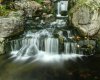
Just as a bit of a shameless show off, this is an image I got using long exposure and ND filter in Kyoto Garden in Holland Park. This is also last year, before I started shooting in RAW format. If you shoot in RAW, you have a lot more control when it comes to post processing. I never used to do a lot of PP as jpegs are already compressed and altered for colour etc by your camera. I now do some, but mainly just bringing the colour and vibrance into the shots as RAW images tend to come out a bit flat due to them holding all the original data that the camera captures. If you don't already go for RAW and post processing it is worth a try. It is a learning curve but worth it, and Adobe light room has a 30 day free trial.
It's def not a pro filter, but I'm not a pro shooter and I find it is adequate for my level a the moment... http://www.ebay.co.uk/itm/Adjustabl...115637?hash=item2edf9d2db5:g:cHMAAOSwBLlVGPXx

IMG_4350_edited.jpg
 
What size filter thread is it?
I have a cheap variable ND I can let you have if its the right size.
It's a 55mm thread & I'm very grateful to you for the offer & kindness :)
 
Darn - just checked - its a 52mm variable ND that I have sat doing nothing
 
Just had a look at your camera online, Neil. As with many (if not all) bridge cameras the part of the lens that extends when zooming, retracts inside the outer part of the lens when the camera is switched off. If so, then be careful about which screw in filters you use. If the filter mount is too thick then as the lens retracts with the filter in place it can get jammed. I had this happen to me with a bridge camera I had a few years ago. I think there are filters with very slim mounts but that would be difficult to judge without seeing them.

Dave
 
Sweety? Milked out water-fall aren't 'art', they are an ever increasingly cheesy worn out cliche. I think your camera could be trying to give you a hint....
 
@ JulesP thanks for taking the time out to have a look for me late last night

@ Tringa your 100% correct the lens does indeed retract fully & can jam which I sharp learned when I fitted a petal shade now just unscrew it one full turn before switching the camera off & it clears nicely

@ Teflon-Mike yes I know photos of milked out water are now very common but it's something I would like to try being a newbie to photography but i'my sure a filter would come in handy at other times as well
 
I've got a Sony DSC-H400 & the aperture only go's to f8.1 so when trying to do photos of water or waterfalls it comes out very over exposed or a white photo.

only stops down to f8.1 ???? i find that unlikely to be honest .
 
only stops down to f8.1 ???? i find that unlikely to be honest .

Given the small size of the sensor and the effect of diffraction, I don't, although I couldn't see the minimum aperture in the camera specification. Remember that small apertures become progressively larger as format size drops - you only get f/90 and smaller on large format cameras and (with very few exceptions) f/32 on roll film cameras. 35mm/FF are normally f/16 minimum.
 
@ Teflon-Mike yes I know photos of milked out water are now very common but it's something I would like to try being a newbie to photography but i'my sure a filter would come in handy at other times as well
When?
I have a shoe-box full of filters.. there's only two in the camera bag.. well, four actually, the 18-55 and the 55-300 have UV 'protection' filters on the front.. probably unnecessary since UV light getting to the sensor wont add to the exposure as it can on film, but I still have this 'thing' about wiping the rain of the front of a lens with the tail of my t-shirt, and wincing at the idea of knackering the lens coatings..Other two are both polarizers.. one for each of those lenses.

I do use filters, like I said, have an awful lot of them, but mostly only on the film cameras, and then more often on B&W where a yellow will boost a bit of contrast in the sky or a red give a very harsh contrast to a scene. In general though, even on film they don't get much use, and even in the days before digital and the insurgence of instant one touch 'filter effects' and the Cokin 'system' was the defacto way to get cheesy cadbury flake soft focus or centre spot effects... only took a few outings to realise was getting 'cheese' not art from them!

Now, the 'hint' your camera is trying to offer.... it lacks tight apertures, because, it is a micro-sensor super-zoom compact. I think spec says it's sensor is something like 7mm, I presume on the diagonal, so around a 4x crop factor compared even to a crop sensor DSLR.... this is what allows it to have such a huge 'zoom' range, the very very high crop factor multiplying the effective 'zoom' of a relative short lens.

But, short lenses offer big Depth of Field, front-to-back of scene focus sharpness, which is what we use small apertures for (normally). So, since your camera has such a 'short' real focal length, just 4mm I think the spec says! (that's shorter than a super-wide-angle fish-eye on my crop sensor DSLR!) you will get the sort of front-to-back Depth of Field 'sharpness', that will almost make that camera 'Focus Free' rather than 'Auto-Focus'.. even at relatively 'wide' apertures, so it doesn't need to have small apertures to get it. While with such a large 'zoom factor', usually going to be far more important to keep the shutter speed up to avoid motion blur, (rather than create it, as you are trying to do!) So larger apertures are more important to the designers.

Auto-Retraction issues?Yeah. Again the 'hint' is that this is an 'extended capability' consumer point and shoot; it's not a versatile 'hobby' camera for enthusiasts.. and trying to get more creative with it, you are on the the 'buffers' of its inherent 'design capability'... So, if you want to start taking your photography off into this sort of realm, looking for artistic effects, and stretching the potential of camera control to get them... the MAYBE its not the 'right' camera for the job.....

Following that train of thought, then, leads to suggestion that what would be far ore appropriate, is not a filter, but another camera.. which would beg suggestion that that path would beg learning more about aperture and Depth-of-Focus and selective focus, shutter speeds and motion blur, and getting to grips with the increased scope of possibility from a camera that actually gives you an f-stop tighter than F8, would be more important, more imminently than playing with filters, and more, learning to use such a camera 'well' .

Meanwhile, just' to experiment, and see what you can get with the camera you have, I'd be holding a dark pair of sunglasses in front of the lens.. you are using a tri-pod and the self-timer, aren't you? If not, then, how an earth do you intend to keep the camera still for a 30s exposure! So a tri-pod would come higher up my list than a filter.

I don't want to be disparaging about your camera but it is what it is, and you are trying to push it into a role it was never really designed for. I have got some great shots, 'pushing' the limits of 'consumer' compact cameras. And I have shot 'hand-held' through graduated sun-glasses to hold back skies, or propping one on a wall and a crushed coke-can as an impromptu tri-pod to get a long exposure, when circumstances have dictated... BUT... I have set out with a compact in my pocket, because have gone out for the day to do or see stuff, not to take photo's or try getting 'arty' with a camera.... but an 'arty' opportunity has arisen, and I have used a bit of know-how to help me make the most of it...

Its an approach 'thing', and tools for the job. I have a swiss-army pen-knife in my pocket, I don't take it out of my pocket in the kitchen to open a tin or chop onions! I get the tin opener or the kitchen knife out the draw!

And back to the 'cheese'... you know, I have got more fantastic photo's actually LIKE to look at from my compact cameras over the years than I have ever got from the SLR's, that, taken out to 'Do Photography', rather than just being with me to get a 'snap' while I'm out and about with the kids or whatever, but I do have an awful lot of cheese out of it that makes me grimace!

Which begs another path; stick with the camera you have, and wok with it's strengths and get the pictures its 'best' at making, and you probably bought it, in the first place, to get, rather than trying to force it to do stuff it wasn't made for, that it doesn't do very well, and you never even thought of doing, until you started to pay more attention to the camera and what comes out of it, than you do the stuff you bought it to point at....

Flikr is full of milked out waterfalls and beaches if that's what you want to look at. Do you really want to make more, and disappoint yourself with results likely to not be as wonderful, while making life hard for yourself using a camera not really up to the job, and not really learning much, up against the buffers, wondering how much of the disappointment is that you don't have a camera that's really made for the, or that you are applying the technique badly?

Which path do you want to take?
 
only stops down to f8.1 ???? i find that unlikely to be honest .
Sadly that is the case as it won't go higher than f8.1 but it is a bridge camera not a DSLR

Teflon-Mike I know what your saying but this is my first camera so still on a huge learning curve trying to understand stand everything. I might be trying to push my camera to it's limits but for the time being I don't have the finances to replace what I have so just trying to make the most of what I have
 
I must admit, I do agree with Teflon-Mike on the camera side of things. I had a superzoom/bridge camera for about six months between realising that I had an interest in photography beyond just taking snap shots and realising that I did need better kit to progress with the sort of images I liked to see. I don't agree with the 'don't take milky waterfall shots' comments though (my shot, not sweetys') as when most people are trying to learn and progress with a skill, they will try to emulate what has gone before them and then when they have got to grips with what is normal, they will try for something more. I have only been using a DSLR for about nine months, and with working six days a week I don't get a lot of camera time so I am still very much a newbie myself. I have also bought several filters that would get more use as coasters on my coffee table but again, it is all part of the learning.
Maybe bite the bullet and find a decent entry level DSLR with a few bits bundled with it. I got mine from an ebay shop. Good enough DSLR with a couple of kit lenses, a few filters and other bits (camera kit bag, camera body and lens bag, lightweight [cheap] tripod, basic filters etc) for about £75 more than getting the camera, one kit lens and small bag in a high street shop.
Also, then you can shoot RAW and you have much better capabilities when it comes to post processing and you will find that you can adjust exposure of certain areas to bring the image to life.
Also, in agreement with T-Mike, the clothes don't make the man. I went out a few evenings ago to try some low light, long exposure, dramatic skies/clouds [possibly cheesy] shots at a castle near me. My favourite shot of the night was taken on my Samsung S5 phone!!
 
I'm firmly in the camp of stick with what you have, until you find that it's making it impossible (NOT just difficult) to produce the photographs that you want to. We live in an age of inflation - more in the realms of what defines a "basic photographic kit" than money. Not very long ago, photographers found that they could manage very well with just one camera and lens, and the "dream outfit" would have three prime lenses (typically 35mm, 50mm and 135mm). What you have leaves them standing.

Yes, there are things that a DSLR will let you do that your present camera won't (but perhaps less than you think); and there are things that it might make easier. But even a DSLR isn't the ultimate - there are things that you need a different camera to achieve. If you use your present camera to its limit (which will be stretching you more than the camera!) then you will know what you need to buy to progress. If you start out your photographic journey with the idea that more/better/more expensive/heavier equipment will make you a better photographer, then you will probably always think that any failures in your photographs are down to the equipment; and getting a "new X" will improve things. Very few will be down to the camera - certainly compared to the photographer's failings.
 
Teflon-Mike I know what your saying but this is my first camera so still on a huge learning curve trying to understand stand everything. I might be trying to push my camera to it's limits but for the time being I don't have the finances to replace what I have so just trying to make the most of what I have
No, no you're not, are you, though. What did you ask at the begining?
I'very been thinking of getting an adjustable nd filter (2nd-400nd) would this help solve my issues?
You are looking to 'buy' something to add to your camera, you want to buy something more' than you have already got.....

544050_563529627005292_451174176_n.jpg

Now, that was shot with a little 5Mpix point and shoot that doesn't even have a proper lens! And yeah, its a holiday 'snap'.. far from a snap-shot, as there was a fair bit of thought and set-up for it. Camera lacked any sort of manual control, compensation or over-ride, but still, working with what I got, that was shot through my sunglasses to hold back the sky, force-flash used to give some 'fill-in' and stop strong back-lighting leaving the kids faces under exposed, while holding back the sky a bit more; shot was 'set up' to get the sunset in the background and get some rim lighting in my daughters hair, while including the sand-castles they were so proud of. Composition was employed. And I think I even went and picked up some litter and shifted some of their toys to get it. This is NOT a 'Snap-Shot' fired from the him without any thought or attention, which is the strict definition of one.... if its dismissed as a 'better' snapshot, a pure fluke, well, then I have achieved what I set out to... I was not trying to 'Make Art' I wanted a 'pleasing' holiday photo, and I got it... with a pretty uninspiring camera, and no specialist photographic equipment, just a bit of know-how, and a little care and attention.

THIS is what I got a camera for! An awful long time ago, I have to say! I think I was about as old my daughter was when that picture was taken.. about when I put cameras in both their hands for same purpose! Daughter now demands the 'Fancy Camera' and electing to do Photography for O-Level, has probably had more use out of my DSLR in the last couple of years until I bought her her own than I have, and has done what I did when I started to wonder what 'more' I could do with a camera when I started uni and got a film SLR for Christmas, has been taking an awful lot of photo's 'for effect' or playing with 'style' and demonstrating either 'camera dexterity' or 'artistic intent'....that I am sure she will look back on in twenty years, like I have and if she doesn't simply wonder WHY she ever took it, dismisses it as not particularly interesting or relevant. While I am certain, she will look back at old holiday snaps, no matter how photographically 'wonderful', and smile at the memory.

So back to your predicament. What was it that interested you enough to want a photo of it, more buy a camera to take those photo's?

Did you buy this camera to make art? Did you buy it to try making 'cheese'? If you did, then you were mis-sold. Its NOT that kind of camera. It is what it is, but you can probably get an awful lot 'more' out f it as it is, sticking to its strengths, working within its limitations, and learning how to 'better' get those pictures you wanted to when you bought it, rather than trying do do something completely 'new', because you have discovered this 'photography thing', which it simply wont do... but you hope to make it do... with some 'more' equipment.

DON'T loose sight of what you picked up a camera for in the very first place, chasing, frequently other people's, ideas and aspirations of what you should be using one for!

And 'Art'... yeah. That pretension is a particular 'nark'. Photography is primarily a recording medium, it makes a graphical representation of a scene in front of the box.There is very little 'creative' input into making a photo, we are 'scavengers' grabbing what is already there. I didn't make that beach, or the sand-castles or the sunset! They are elements within that holiday snap, and I might have arranged them with a little artistry and I might have applied a bit of creative imagination to working the camera to get a shot that didn't wash out the back ground and leave the kids murky semi-silhouettes, but pressing a shutter button does not an 'Artist' make me! I am a 'scavenger', an opportunist, NOT an artist, I don't 'make' pretty pictures, I simply 'See' pretty pictures and try and harvest them. As do most photographers. Get over that pretension, and feel you NEED to make 'art', its a recording, and remember what it was you wanted to record at the very start, before you even had a camera, and try make better recordings, NOT 'art'.

You have found a limitation with your camera. Accept that fact. As quotes at top. Your camera isn't made to take arty milked out 'effect' shots. The 'more' you are asking for from it is something it don't do. You hope you might be able to get that bit of 'more' from adapting it, bolting something else to it; that is NOT getting 'more' from the camera, that's getting 'more' from adding something to the camera.

I have a little hatch back car, its designed to go to and from the hops round town, maybe occasionally venture up to about 70mph on a motorway, not be a rally car... sure I could 'adapt' it to make it do a bit of what rally cars do, but I'm not getting 'more' from the car, I'm getting more from the adaptations.. might work, and I might feel I'm getting more from it... BUT, its wasn't designed as a rally car, and I can say with some degree of certainty, even if I did start chasing adaptations to make it one, still wouldn't do even that job half as well as if I had bought one that was designed to be a rally car! Meanwhile I only bought the thing to get me to the shops to do my shopping.... So what do I want to do, get to the shops, or win the world rally championship? Just because I have bought a car, doesn't mean I have to become a racing driver!
 
All I really wanted to know was if a filter would help with the over exposure when trying to slow things down a bit.
 
I don't agree with the 'don't take milky waterfall shots' comments though
I have hundreds, not trying to make them milky, but NOT make them milky! Make them look like I actually 'see' them, with texture in the water.. I have very few that come even close, its a very challenging subject.. milking them out to the cliche, is the 'cop-out'. On of the 'better' results of recent times....

10603247_985086231516294_5033712084183775278_n.jpg


But a rainy and overcast day in wet and windy Wales, in the middle of December with the river in spate, was probably not the most conducive to the task! ( Looking at te sequence I tried, I was up to 1/2000th and STILL getting 'milk' on that day! Just SO much water coming down the river!)

Some of the most natural water-fall shots I have seen, have actually been taken with multiple bursts of off-camera high-speed flash to effectively get up to a dozen incredibly high speed exposures, in one long shutter opening, to 'freeze' texture in the water before it has a chance to 'milk' but retaining some 'blur' to show the motion...

But it's a tough cookie; water is always a more tricky subject to photograph, its like glass, light passes through it, its translucent, and only partially reflective, while it has no shape form or texture, of its own, it only obtains that from movement, and as an exercise in camera control for a newbie... I am sanguine... water is an interestig subject to 'consider' and tackle, but water-falls and milking them is cheese making, and its easy cheese to make, if you have a tripod... even with a camera you cant fit a big-stoppa to.. jut wait for a dull day, and it to start getting dark! You can milk it as much as you like really!

Wacking on a filter, looking into the camera bag for a 'solution', is missing the 'lesson' a little and endemic of attitudes that we shouldn't have to look beyond the box, that no matter what our 'subject' looks like, no matter how bad the lighting on our subject, we don't need to 'look' for the picture, we just have to have the right gear and IT will gve us what we want, or thik we should want.

If there is a lesson in waterfalls for newbies, it ought to be to try and capture what they see or capture something other people DON'T, not make more cheese, and call the admissio of failure 'art'.

Not very long ago, photographers found that they could manage very well with just one camera and lens, and the "dream outfit" would have three prime lenses (typically 35mm, 50mm and 135mm). What you have leaves them standing.
Lol! - That 'dream' outfit (well, I have a 29 rather than a 35) is actually at my elbow, while I wonder whether to try squeezig a few more shots on the roll of B&W in it or if my daghter gets back early enough to take it out and teach her how to mix developer!
 
All I really wanted to know was if a filter would help with the over exposure when trying to slow things down a bit.
I think you already new the answer to that one. You had realised your camera has limited range of small apertures, you had recognised you need to reduce light getting through the lens to be able to use a slower shutter speed, and milk the waterfall.... and what you really wanted was not for us to tell you what you had already worked out, but affirmation of your aspirations...Sorry I have not provided them. I have addressed the issues behind the question you already knew the answer to.. and in that HOPE I have offered you some ideas to make you consider WHY you are trying to do things, rather than just how to do them.
 
The point I was making, is just that to learn a skill I (and I assume others) will go over the typical images and how they are done. From there I will progress and try other things. Don't run before you can walk and all that. Yes, milking a waterfall is easy and is a subject that has been milked (excuse the pun).... but so is reflections, sunsets/rises, misty landscapes, coastal bogeys, and even more specific... Tower Bridge, Angel of the North, pretty much everywhere on the beach at Dungeness. These are photos that will always be taken, and are a great reference to learn from.
Back to the OP, as this has derailed a bit... Yes a filter will help with exposure but it will also affect your shutter speed (and give milky or blurred water). You can use other things, like sunglasses, as previously mentioned. I tried it once and cocked it right up. I don't think I was holding them close enough, and they were a bit grubby/sandy and I ended up with bad light spots and stuff. I don't know what controls your camera has, but are you able to adjust the white balance? If so, you might find that setting it to a tungsten or fluorescent light preset (I think) will warm the light up a bit and take some of the harshness away.
 
I've got a Sony DSC-H400 & the aperture only go's to f8.1 so when trying to do photos of water or waterfalls it comes out very over exposed or a white photo. I've been thinking of getting an adjustable nd filter (2nd-400nd) would this help solve my issues? Also is there any other filters I should think about getting

Are you sure the image(s) aren't just over-exposed? If that is the case, a filter won't help. You just need to make sure the exposure is correct.
 
There's a lot of confusing woffle above! My instant research came up with a range of max aperture from f/3.4 (wide) - f/6.5 (tele), if I got the camera model right? But forget that stuff.

Adding a filter most likely won't help with exposure issues. I think it's to do with how you're using the camera & it's settings. So back to base, & a rethink. Sorry can't help more than that right now. But forget about filters. Basics first.

Overexposure of highlights is a common fault of cameras set on auto-whatever, & recording jpg files. That's a fact of life. The only way over it is usually to think in terms of taking charge of the camera - knowing when & how to override it's settings. Cruel, I know. But it ain't about shopping for gizmos.
 
Last edited:
All I really wanted to know was if a filter would help with the over exposure when trying to slow things down a bit.

Seems that your questions are being ignored, in favour of a lecture by the self appointed taste police ;)

Yes you are on the right track, a neutral density filter will allow you to extend the exposure time without overexposing the shot.
A variable neutral density would work well for the use you are asking about. It does have some positives and negatives over a fixed ND though.
On the plus side, you can vary how much light it blocks out, so you can go from a minimal setting which will introduce a slightly longer exposure, giving a little motion blur, through to the milky effect at the darker end. Shooting in aperture priority would be my recomendation, let the camera decide the exposure length based o the amount of light it is receiving. With a bit of experimenting you will get a feel of how much the adjustments on the filter effect the image.
Another plus if that at the lower settings, the filter wil give a polarising effect, it is in fact 2 polarising filters fitted together.

There are a couple of negatives though which you should be aware of.
First up, all variable ND filters introduce a dark X shaped shadow towards their maximum settings, cheap or expensive, it makes no difference, they all do it. If you use live view, you should see it, it starts in the corners, like a vignette, just means you need to back the filter off a bit and wont be able to use the darkest setting.
Because they include a Linear Polariser, some do effect auto focus at longer focal lengths and the camera wont focus properly. Shouldnt be too much of a problem, just something to keep in mind.

Here's a selection of shots taken with a Variable ND
https://www.flickr.com/photos/steveblackdog/tags/variable/

Hope this helps some.
 
Last edited:
Are you sure the image(s) aren't just over-exposed? If that is the case, a filter won't help. You just need to make sure the exposure is correct.

I think hes saying they are over exposed when he reduces shutter speed in which case a filter will help - however I find it hard to believe that the narrowest apperture the camera can achieve is f8
 
I think hes saying they are over exposed when he reduces shutter speed in which case a filter will help - however I find it hard to believe that the narrowest apperture the camera can achieve is f8

It's very common on small sensor compacts to have a minimum aperture of f8.
 
It's very common on small sensor compacts to have a minimum aperture of f8.

indeed - my TZ35 has for example , but the camera under discussion is a bridge so i'd have expected better.

that aside assuming that f8 is all it can do the OP is right to think that to acheive a slow shutter speed he needs to reduce the ammount of light reaching the sensor in a diferent way (such as filter or shooting in lower light)
 
indeed - my TZ35 has for example , but the camera under discussion is a bridge so i'd have expected better.

that aside assuming that f8 is all it can do the OP is right to think that to acheive a slow shutter speed he needs to reduce the ammount of light reaching the sensor in a diferent way (such as filter or shooting in lower light)

Exactly, totally agree with you.

Have used a 10 stop filter attached with blu-tac on my Panasonic LZ10 to overcome the aperture problem, just need to remember to catch the fiter when the lens retracts ;)
 
Last edited:
Welding glass held on with blue tack is another cheap option - be aware that the edges are sharp though
 
Also if you have manual control over the iso make sure its turned down as low as it will go (probably ISO 100)
 
Welding glass held on with blue tack is another cheap option - be aware that the edges are sharp though

Not sure about the round ones for goggles, but all the rectangular ones for masks that I have used over the last few years have polished edges, so no sharp edges. Might be a bit heavy for blu-tac and the strong green cast will be difficult unless the camera has a good custom white balance facility. B&W is an option of course, but with cheap 10 stop filters and variable ND's now well under a tenner, not sure I would recommend the welding glass route.
Dont get me wrong, I really enjoy using welding glass, was using it on sunday, but its a steep learning curve for a beginner.
 
Thanks for the latest input guy's, I've tried setting the ISO to 80 which is the lowest the camera will do, then set apature to f8.1 but at times it'll only go to f7.8 (think camera trying to take control a bit) & tried the shutter at 1/20 & it comes out over exposed
 
The sort of settings I'd be looking at for a waterfall on a cloudy day would be 0.5 sec @ f16. (100ASA)

f16 will give you good depth of field and 1/2 sec will give you plenty of "flow" for the silky look.
That's with a polariser; subtract about 1 stop if not using one (eg f16 and 1/4 sec), you need a tripod.

I'd say you were over-exposing.
 
Last edited:
then set apature to f8.1 but at times it'll only go to f7.8 (think camera trying to take control a bit)
It is probably not the camera trying to take control and diddle your settings, it will be that that is the smallest aperture you have... at the zoom setting you are using,
I presume you are down the wide end, not the telephoto.

The f-Number isn't the size of the hole inside the lens, its a ratio of the hole diameter to the focal length. So, if you have an aperture of 10mm, and a focal length of 40mm, then aperture diameter to focal length ratio is 4 or f4 f you have he same aperture, 10mm, and zoom 'in' to 160mm, then the ratio becomes 160/10 or f16. Size of the hole hasn't changed, f-number has because its a ratio and the focal length has changed with the 'zoom' setting. Mechanics in the camera using a multiple number of lens elements to get the 'equivalent' of any given focal length mess up the simple maths, but that's what's happening.

Specs for your camera say it has a maximum aperture of f3.4, at shortest focal length, 4mm, but that same aperture gives f6.5 at the longest, 227mm focal length.The hole size doesn't change with the zoom setting, the focal length does, hence the ratio that is the f-number.

What you are seeing, I suspect, is the same thing working backwards, you have a tightest aperture of f8.1, at maximum zoom, but zoom out the focal length reduces that smallest hole gives a lower f-number.

AS to the over exposure... a filter, or better, and as previously suggested, just waiting until the day-light gets dimmer, is will reduce light getting through the lens. However... you are taking a photo of water, and that is translucent and highly reflective. What you are trying to capture is the reflections of that water, which if you used a normal shutter speed would be glinting and making small twinkling 'high-lights'

Only you are trying to milk the waterfall, those highlights are your subject, and holding the shutter open to make milk, you are letting those highlights 'drag' across the frame. What light was reflected of water in the first fraction of the exposure, and small and 'twnkling' is getting another high-light super-imposed on it as the water moves and hence highlights move down the frame, exposing and re-exposing the same bit of sensor over and over again, rather than staying still and just giving you a 'twinkle'.

So its not just about holding back the exposure, its about holding back the high-lights, and a filter isn't selective, it will hold back the whole exposure.

Picking your light, waiting until later in the day, and ambient lighting is lower, both in brightness but also angle of incidence, when raking from a lower angle it is more likely to create more directional highlights, rather than when falling from directly overhead the water scattering that light in all directions, so you will get 'less' high-light to have to contend with and likely get more texture in your water.

But either way, its about exposing for the highlights, not as your camera, and almost any other, or even most hand-held meter, will try and suggest, exposing for the 'mid-tones' and more, 'compensation' ,for over-laying those highlights on top of each other as they move during a long exposure. And I suspect I might as well be talking Japanese, but hey ho... I'll leave you to ponder... you need to know abut 'exposure', and you need to understand your scene and your subject. And a filter is probably still not going to be all that much use to you.
 
The sort of settings I'd be looking at for a waterfall on a cloudy day would be 0.5 sec @ f16. (100ASA)

f16 will give you good depth of field and 1/2 sec will give you plenty of "flow" for the silky look.
That's with a polariser; subtract about 1 stop if not using one (eg f16 and 1/4 sec), you need a tripod.

I'd say you were over-exposing.

But if his camera is only capable of f8 at its narrowest , thats 2 stops wider than you are talking so the slowest shutter speed he could get without over exposing would be 1/8 which isnt really slow enough for milky water (the basic issue here is trying to do things his camera isnt really capable of)
 
Thanks for the latest input guy's, I've tried setting the ISO to 80 which is the lowest the camera will do, then set apature to f8.1 but at times it'll only go to f7.8 (think camera trying to take control a bit) & tried the shutter at 1/20 & it comes out over exposed

your max an min appertures will vary depending which end of the zoom you are using (the difference between F7.8 and f8.1 is negligible anyway). If its over exposed with those settings the shutter speed wants to be faster , so the only way to keep it slow is to reduce the amount of light coming in e.g either by using an ND filter or shooting when there's less light (or not worrying about getting milky water and shooting with a fast shutter to freeze waterfall action instead)
 
Teflon-Mike as I've said a couple of times i'm totally new to the world of photography so it's all a huge learning curve for me & being dyslexic doesn't help at all when trying to read up on things, but give me an engine to fix or modify or ask me to install a large sound system into a car & i'm flying.
I'm not necessarily wanting to do milky water photos as such but being able to slow the movement down more than I have been able to do so would be great but I also like the other end of the scale where you freeze the action of of water with a very fast shutter speed.
I have taken the advice on board & tried using an old pair of sunglasses over the lens & have to say I was quite pleased with the result on a 20 sec exposure of the tap running into the kitchen sink not milky but nice & smooth & for a change not over exposed in fact a little under exposed but ISO was at 80 & they were rather dark glasses so think a filter will help especially when it's lighter outside than I would like it to be which I don't have an option about due to being disabled I can only go out when I'm able to walk or drive
 
Unfortunately when trying to help it is too easy to slip into jargon or get too technical for a beginner. Easy to forget we had to start somewhere, possibly many, many years ago. Anything you dont understand, dont be afraid to ask, everyone who has responded is trying to help in their own way.
 
But if his camera is only capable of f8 at its narrowest , thats 2 stops wider than you are talking so the slowest shutter speed he could get without over exposing would be 1/8 which isnt really slow enough for milky water (the basic issue here is trying to do things his camera isnt really capable of)

I obviously don't know anything about cameras like this. I couldn't understand that a camera might have a minimum aperture of f8! Max aperture I could understand......

Yes I agree that the OP is trying to do something his camera isn't capable of.
 
I obviously don't know anything about cameras like this.
Just picked up my latest toy on the DSLR, as I haven't though to check such things on it yet, but like the OP's bridge, smallest aperture I get is f25, @ 16mm but if I wind the zoom to the wide side, that opens up to f22 @ 8mm. Get the same thing on the kit 18-55, and stopped down to the max, at 18mm, I get f22, zoom in to 55m and that tightens up to f32..

Because the f-number is not the size of the aperture, its a ratio, of the aperture diameter to the focal length, so will change with either.

While this, and limited range of f-number settings isn't an issue or quirk of the OP's 'kind' of (bridge) camera, it's a bit of basic camera or lens mechanics that that can effects all cameras / lenses.

Just checked two electric lenses for DSLR, and the kit 18-55 has more available f-no settings, and at the tele end goes a stop or so tighter than the UWA can. Both, though do err towards offering f22 or tighter as smallest aperture, though, which is significantly tighter than the OP's camera does. But, same 'change' with zoom setting is there.

Conveniently to hand, I have my old Zenit 35mm film camera, with it's Helios 44.. confusingly, a 58mm lens, I believe much loved by the MFT folk. This has a nice fast f2 max aperture, but like the OP's Bridge camera, restricted at the other end with a smallest aperture of f16.

Its not the only manual lens I have with a lower smallest aperture, though most, I think go to f22, but sat with the Zenit, is my old fish, whch is a bit of an odd-ball, but that too has pretty restricted aperture settings, just three, f8, f11 and f16. It also doesn't have a leaf-blade 'iris' aperture control. Instead, it has a metal plate, with three perfectly round apertures punched into it, that's moved round to align one hole between elements inside the lens.

Some of the Large-Format film folk possibly use lenses, with a similar if perhaps even cruder (though possibly more 'precise') system, where the aperture is selected by picking a brass disc with a hole in the middle, out of a felt-lined box, probably, and slotting it into a rebate before attaching the lens to the camera!

AND! Lets talk reflector-lenses! Not as common as they used to be, but still available ad being attached to DSLR's; to get a very large focal length, 500 or 1000mm or so, for lots of reach, but without having a meter of metal on the front of the camera, they use 'parabolic mirrors', to make them shorter; light coming through the front element, being reflected off a mirror at the back of the lens, onto another mirror in the front, behind the front element, and then, having travelled three times the length of the lens, inside it, through the aperture and into the camera. Constraints of the construction mean you cant practically put a variable aperture iris to one, the levers to work it would be blocking the mirrors; so these usually have a single fixed aperture, usually about f4 or f8 if its a really big mirror.

So, limited range of aperture settings, isn't a quirk of the OP's bridge camera's lens, its a generic issue to all cameras, but one that is probably less common with the more common of modern lenses, than it was in days past.

Like wise change of f-no with focal length, when most lenses were fixed focal length primes, you got the f-numbers on the aperture ring that was the only thing that changes them. When zooms came along, the change of f-ratio with zoom setting became obvious, BUT most only concerned with maximum apertures, fact that it also changes with zoom at tight apertures, is rarely mentioned or considered..
.
Yes I agree that the OP is trying to do something his camera isn't capable of.
I think that might be a tad unfair to the camera. It would be fairer to say that its not best suited for what he's trying to do.

He has plenty of scope to be more technical with that camera; over fully-automatic snap-shot program, it has a conventional shutter priority mode, an aperture priority mode, and a full manual mode. He has ISO settings from 80 to I think it was 800, shutter speeds from I think it was 1/2000th, down to 30second, Apertures from f3.5 to f8.1 are a tad 'restricted'... bit there is plenty of 'capability' there. Looking at that old Zenit SLR, That has just 5 shutter speeds! 1/30th up to 1/500th. Has two extra stops of aperture at the wide end, and two more at the tight, while its SO settings were limited to the film you stuck it, probably a choice between 100 & 200ASA, you were stuck with for the entire roll. And t doesn't even have an inbuilt meter! THAT is a camera that lacks 'capability'! Wouldn't stop some-one taking waterfall shots with it though, and having a 'Bulb' setting you could use to lock the shutter open, with a cable release, meant many did.

OP's bridge camera the has an awful lot of the capability, and certainly the settings available from, a modern DSLR, but, for this one specific situation, taking long exposures, it does lack that one key feature to make long exposures, the ability to hold the shutter open more than 30s or to lock the shutter open to time independently.

Lack of smaller apertures? Its another limitation and is having influence on this situation, because he cant stop down further to force longer exposure times.

But, its a compound problem; and OP doesn't properly understand exposure; using aperture priority to force longer shutters, he has some idea of it, but he's relying the meter, and getting over exposure, begging the idea fro the little he knows about exposure that he needs tighter apertures or a filter, which is tangential to the 'core' problem. He doesn't understand exposure enough for this situation, or how to compensate to expose for the high-lights rather than the mid-tones, which whether he uses aperture or shutter priority or full manual, all taking the meters suggested exposure settings based on mid-tones, that will err towards over-exposure, and any thought for further compensation, to hold the back where highlight layered on highlight during a long exposure will multiply the local 'exposure' pushing streaks even more into over exposure.

The OP's 'problem' is, like I say compound; there are many factors conspiring against him, and while I agree, the camera isn't helping him much, the camera probably isn't incapable of getting a milky waterfall effect. Should be able to get them at under 1s shutter, and he can get down as low as 30s for plenty of milk, if he has a tripod. It is 'possible', with that camera. It's just not so easy.. but ten wouldn't be an awful lot easier on an DSLR, without better understanding exposure and his subject.

 
.
Should be able to get them at under 1s shutter, and he can get down as low as 30s for plenty of milk, if he has a tripod. It is 'possible', with that camera.


and how does heget them to 1s shutter when 1/20 sec shutter is over exposed with the narrowest apperture and the lowest possible iso ? - short of using filters or shooting in low light i can't think of a way
 
Back
Top