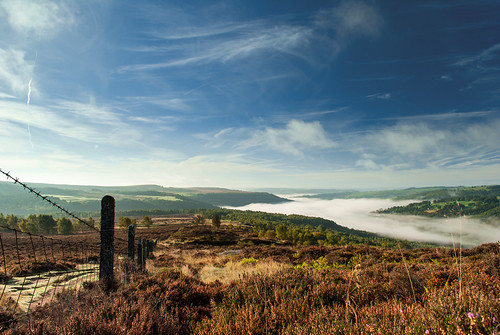
Filters for Landscape

zendog

Suspended / Banned
Messages
365
Name
Steve
Edit My Images
Yes
Please bear in mind I am a beginner and on a restricted budget.

From what I have read two filter types will help my attempts to do justice to Norfolk landscapes - big sky, flat land.
- Circular polariser.
- Graduated neutral density.

The birthday fairy just sorted the first and I'm now looking at the second.

A search on Amazon / eBay gave me a choice of cheap (and presumably nasty) and eye wateringly (to me) expensive with nothing much in between.

Your advice would be appreciated!

If I'm going to spend £80 + what is the best option? How many stops to stop - I'm only going to buy one at this price.

Try a cheapy? (not usually a good idea)

Is there an in between cost option for reasonable quality?

Forget the whole idea and get better at pp'ing.

My lens is a Tamron 10 -24mm.

Cheers

Steve
 
Lenstip did a large test some years ago... http://www.lenstip.com/115.4-article-Polarizing_filters_test_Results_and_summary.html


Can't be worth much, but I gave up on anything in front of the glass...
rolleyes.gif
 
ND Grad is a useful filter for longer exposures, that's said a Polariser also is good for sky's, makes them very blue

Les ;)
 
ND Grad is a useful filter for longer exposures, that's said a Polariser also is good for sky's, makes them very blue

Les ;)
not totaly true - NDG is for balancing bright and dark (usually sky and land) - an ND filter (no graduation) is better for long exposures.

This wasn't the question asked though.


As for the OP - a lot of people recommend Hitech (me included), they're not as good a Lee/Singh-Ray but bang for your buck they're pretty good
 
Filters are mostly over-rated in a digital world.
For example the grad effect is easily recreated with Lightroom or other software methods.
Messing about with filters and being told you should/must use them is one big dead end distraction, save your money and take more pictures.

A polariser has some uses but can also mess up more pictures than it helps with if you don't know what you're doing - not needed.
 
not totaly true - NDG is for balancing bright and dark (usually sky and land) - an ND filter (no graduation) is better for long exposures.

This wasn't the question asked though.


As for the OP - a lot of people recommend Hitech (me included), they're not as good a Lee/Singh-Ray but bang for your buck they're pretty good

Yes sorry a typo there I did of course mean ND and not ND Grad- I personally don't use filters - I just get the exposure right

Les
 
Filters are mostly over-rated in a digital world.
For example the grad effect is easily recreated with Lightroom or other software methods.

This is fine provided the OP doesn't blow the highlights. As he's interested in doing a lot of landscape I would have thought a ND Grad would have been a worthwhile investment allowing him to get as much right in camera as possible.
 
Filters are mostly over-rated in a digital world.
For example the grad effect is easily recreated with Lightroom or other software methods.
Messing about with filters and being told you should/must use them is one big dead end distraction, save your money and take more pictures.

And how exactly is Lightroom going to recover a blown sky? It can darken a sky if the information is still there, but can't help if you've blown the sky completely, which is an issue in parts of the UK with dark foregrounds, the North York Moors near me with dark heather for example, or Scotland with dark rocks. The other software methods you refer to, presumably HDR or exposure blending, all take much longer to do well than slotting in a grad when you know what you're doing with them. Look around the world's best landscape photographers, the vast majority of them wouldn't be without their grads.

To the OP, I'd get a Lee foundation kit (filter holder) and a 2 or 3 stop hard edged grad, probably from Hitech if you're trying to keep costs down.

A CPL is a very useful tool, the only filter which can't be replicated in PP, but on your 10-24 would have to be used carefully, there are occasions where you'd get uneven polarisation across the shot, mainly when at the wide end of your lens. It's been a long while since I bought one so will leave the recommendations to other people.
 
You try not to blow the sky, reduce the exposure a bit and lift the dark areas later if need be.
Or sometimes just watching and waiting for better light on the darker foreground.

There is no need for someone starting out to feel they should or must buy filters.
 
You try not to blow the sky, reduce the exposure a bit and lift the dark areas later if need be.
And bring in a load of unnecessary noise.

Or sometimes just watching and waiting for better light on the darker foreground.
And if the composition and lighting are right for the shot but there is still too big a dynamic range?

There is no need for someone starting out to feel they should or must buy filters.
The OP expressed an interest in learning to use filters, which IMO is good, learning the right way.
 
Despite some peoples reluctance to accept how useful a graduated ND might be, I would (from experience) say that if you are looking to take landscape photos, this would be one of the basic kit requirements for your bag. I dont understand peoples reliance on software to do everything for them. The OP stated that he is a beginner, so why not help him to actually learn photography, and get the images as correctly exposed at the time of shooting as possible instead of starting out with, what I feel, is the wrong attitude.

To the OP. Steve, if you really are serious about this, PLEASE go out and get yourself a filter kit. To start off with, this doesnt have to be expensive. I started off with a relatively cheap Cokin P set, and altthough they are not the most high quality filters, I still managed to get some very good results with them. When you are happy with what you are doing, then maybe think about some better quality filters, if that is in fact the area of photography you wish to persue.
 
grads are the most important, hard grads get used a lot more than soft ones IME. ND if you want long exposures and a polarisers can give a boost (if used correctly - 90 degrees to the sun, careful with UWA lenses as they can effect one side of the frame more than the other)

Wouldn't dream of going out for a landscape shoot without them. People saying"get the exposure right" or do it PP are missing the point of them I think.
 
Filters are mostly over-rated in a digital world.
For example the grad effect is easily recreated with Lightroom or other software methods.
Messing about with filters and being told you should/must use them is one big dead end distraction, save your money and take more pictures.

A polariser has some uses but can also mess up more pictures than it helps with if you don't know what you're doing - not needed.

Bad advice ^^

You can't recreate a 30s exposure by just darkening a 1/125s exposure. You don't get the moving clouds, misty water, etc
You also can't digitally replicate a polariser.

Sure, it takes time to know what you're doing, but that's best done using them rather than ignoring them, if you like landscape
ND, ND grads, reverse NDs, CPLs and so on all have uses in specific shots. You don't have to use them but they'll make pictures pretty once you know when to use them.
I would suggest finding shots you liked on flickr and seeing what filters they used, if it's listed. That might give you an idea which to buy first.

Good luck!
 
I'd say a cir-pl is a must, and a ND Grad (Hard, not soft blend I would've thought for flat, Norfolk land) useful.

Whilst you could shot 2 (or more) exposures to balance the sky and ground, this then requires time spent infront of a PC - much more time-efficicent to get it right in camera.
 
Oh - and Hoya do reasonable good & cheap filters. The Cokin P-series grads are cheapish, though you'll need a wide-angle holder (or sawn-off normal version) to avoid vignetting on the the ultra-wide angle lens :)
 
Despite some peoples reluctance to accept how useful a graduated ND might be, I would (from experience) say that if you are looking to take landscape photos, this would be one of the basic kit requirements for your bag. I dont understand peoples reliance on software to do everything for them. The OP stated that he is a beginner, so why not help him to actually learn photography, and get the images as correctly exposed at the time of shooting as possible instead of starting out with, what I feel, is the wrong attitude.

To the OP. Steve, if you really are serious about this, PLEASE go out and get yourself a filter kit. To start off with, this doesnt have to be expensive. I started off with a relatively cheap Cokin P set, and altthough they are not the most high quality filters, I still managed to get some very good results with them. When you are happy with what you are doing, then maybe think about some better quality filters, if that is in fact the area of photography you wish to persue.


Deserves another quote :)

I'd certainly put a ND Grad 2 or 3 stop down as priority over a CPL - I don't always like the wide effects with a CPL.
 
Thanks for all the pointers and after an hour or so with Google I think I sort of understand my options. Much better than yesterday anyway but please second guess my thoughts below.

So going the Tokin route (Lee looks a bit expensive for now).

I need:

A Tokin Wide angle holder (Paul - it took me a while to twig why - thanks).
77 mm adapter.

On the actual filters I still need some help.

All your posts recommend going for a 2 stop OR 3 stop. Is one likely to be used much more than the other or would both be needed on a typical day out?
My guess would be I'm learning and the way to do that is experiment with both - at double the cost obviously!

Amazon (prices seem reasonable) have two makes of hard (Norfolk invented flat horizons) ND grads Kood and Hitech. OK you get what you pay for but am I going to notice much difference if I go for the cheaper one?
Bearing in mind this is just for a proof of concept not a lifetime choice.

Cheers for your help
Steve
 
Filters are mostly over-rated in a digital world.
For example the grad effect is easily recreated with Lightroom or other software methods.
Messing about with filters and being told you should/must use them is one big dead end distraction, save your money and take more pictures.

A polariser has some uses but can also mess up more pictures than it helps with if you don't know what you're doing - not needed.

An argument might be that you'll take more pictures by using filters, capturing great shots in-camera and spending a lot less time on a PC processing.. each to their own though, the great thing about digital is that we all have choices, personally I much prefer the filter route which ultimately I find far more rewarding than photo editing


I'd recommend Hi-Tech filters as a cost vs quality best compromise, Lee are the best - I use them now and have used both Cokin/Hitech before but Hitech are a good compromise

Simon
 
Last edited:
I picked up a cokin kit which included holder 1,2 &3 stop hard nd grads for about £45 from Wex in Norwich. My idea was Ill see which gets used the most and replace where necessary. 12 months on and they're still going strong :)
 
Les - yes I spotted that already but it's not the wide angle holder. Only usable down to 28mm from memory. Chris I'm guessing yours was the same?

I've not seen any kits for WA and that's why I'me thinking separate.

Steve
 
I agree with Mark Mullen and Nikon_Nick (and others of course) that you need a set of ND Grad filters for shooting landscapes. I was in a similar boat to you (wanting to improve and learn photography but didn't have the budget for Lees filters so I got myself one of these: http://www.premier-ink.co.uk/photog...ype/kood-ptype-nd-filter-kit-52mm-p-1248.html

I then got myself a hard edged 3 stop filter for about £20 or so and that set-up has served me very well indeed. I don't use them as much as I probably should but that's mostly because I'm lazy.

I was glad to see you got a CPL already as mine is almost always used for my landscape shots. It produces some really intense blues in the sky e.g.

Hope Valley From Surprise View
by RMac Photography, on Flickr

Given the harsh light that was about when I took this shot, I'd wager that the sky would be blown in this shot without the CPL and ND grad filters.
 
After more searching I have found this kit. http://srb-griturn.co.uk/77mm-p-size-hard-grad-wa--filter-kit-4883-p.asp

Hard edged and with the wide angle holder (just what I want) with some extra's but unbranded.

Any views on the quality against the other recommended filters?

I'm well confused - so many options!

Cheers

Steve


To be honest it's really not as complicated as you think.. buy a recognised brand and there's really a choice of 3, Cokin, Hitech, Lee.

Just based on my own experiences I'd rank them as follows:

1. Lee - best but also easily the most expensive
2. Hitech - very good and reasonable cost
3. Cokin - good and the cheapest

Just choose one of these based on your requirements and you can't go wrong !!

Simon
 
Unbranded you might get some distortion and/or strange colour casts. Colour casts are fixable in RAW, but a bit of pain.
 
I agree with the majority on here, and personally use the Lee gear but im sure cheaper options are not going to be noticably worse to anyone bar the uber picky.

I also believe that you should do as much as you can "in-camera" because relying on the PC, to me, seems kind of pointless. I enjoy learning about the fundamentals and the mechanics of photography as much as I do the taking of the pictures and for me, the satisfaction comes from saying "I took that myself in every aspect from the drive, the hotel room, the walking, the composition and the wait for the light". its just not as satisfying to drag a slider up in Photoshop, or whack a layer mash across a sky and then "pretend" that I created that shot because really, I didn't, I just created the framework and Adobe created the image.

Its also worth noting that if you buy say, a .3 and a .6 ND or ND grad, you can of course stack them to create a .9 I did some tests up in the lakes yesterday with mine as a good friends is buying a filter set this week and he asked teh question does he "Need" to buy a nine.. so we tried and can see no discernible difference between a .3 and .6 stacked, and a .9 single.
 
Last edited:
Hi Just been reading this thread Many Many thanks to you all as i just saved money on buying the wrong filter's .
One question !! if you buy cheap surely you will compromise the quality of the lens on the camera ??? MANY thanks again great thread
Barry
 
Just to add my pennorth to the many others here.....

In my opinion the polariser is the first "must use" in the landscape. It is most effective when used at 90 degrees to the angle of the sun. It is true that when used with (ultra-) wide angles you can get a problem with uneven polarisation, but I came across a solution to this (if you use Lightroom 5) quite recently. See the blog post below.

http://wp.me/p2BFlt-9w

The polariser is also useful in other situations like removing reflections from wet vegetation or wet rocks in streams.

As far as using grads is concerned, I use a 1stop hard and a 2stop hard. The 1stop is rather faint but you can get delightful natural looking skies using it in conjunction with a polariser. as one of the earlier posters said you can stack the two to get a 3stop and I have done that occasionally.

It is also worth noting that it is not necessary to buy a full "set" of filters . Start off with one - I suggest a 2stop hard grad - and see how you get on with it. I also maintain that it is not even necessary to use a holder, although not many seem to agree with me. You can hold the filter against the rim of the lens. (easy when the camera is on a tripod).
 
Back
Top