Film/Digital

I have seen someone else mention this recently. They carried an ND filter with them. That seems like a very good idea for moments like that.

It really does. This was last year (I know I said 'recently' in the original post, but it's relative...) and was probably my first real test of taking a film camera on a trip away and I hadn't yet rediscovered the limitations of 1000 as my fastest shutter speed.

I've always been wary of filters as cheap ones can often ruin a shot anyway, but it might be worth getting a couple as most of my Minolta lenses are either 55mm or 49mm diameter.

Having said that, I just about got away with it on that occasion, and have only seen it very rarely on other occasions.
 
Just a small point: if you scan a film negative, isn't it now a digital image?!
Not in the way that the current "film vibe" digital cameras are being pitched. If you expose an image via a digital sensor, in a digital camera, that's a digital image (and I have no problem at all with digital photography, I use Sony kit myself). However, if you expose an image directly on to emulsion, via an analogue camera, it will always be an 'analogue' image, regardless of whether you print it, scan it or project it. Again, I have no issues with using film either, my business literally revolves around it!

Selling a cheap camera with a tiny digital sensor, hidden behind a fake frontage giving the appearance of an SLR lens, and applying a selection of awful mid-2000s filters to attempt to give it a 'film look' is still a digital camera, just one with absolutely terrible quality and hiding it behind misdirection and false advertising.
 
Last edited:
Blow up a film shot and you get round areas of grain. Blow up a digital images and you get square pixels. Grain is far more pleasing to the eye than pixels will ever be.
I've seen four or five foot wide prints, from 8 megapixel sensors, which look just fine.

If you walked right up to them with a ten times magnifier, you might see the effect described but why would you? Terry Pratchett satirised such behaviour in his book "Thief of Time", where some of the characters reduce a painting to its individual molecules to understand why the painting is so popular.

Needless to say, they fail.

To misquote from another Pratchet book: it is "the thing and the whole of the thing" that matters.

Wildlife photography exhibition at Winslade Park DSC01097.JPG
 
Last edited:
I forgot to add that I bought my daughter one of those CAMP SNAP cameras that were doing the rounds before Christmas. I didn't really look into the specs of it, but she says it's worse than her phone in almost every situation and she doesn't really use it.

On the flip side, I've got one of those 3D printed holders that uses a disposable camera lens for my A7. Not given it much use, but I prefer that idea TBH. It's not the OREO looking one, as I got it before that came out. I've tried it a couple of times, and I guess if you're going for that look, then there will be flaws that you probably can't replicate with a filter.

The digital set up that I feel gave the most film-like look for me was a MKI Canon 5d and early EF lenses. In particular I did have a 35-350 L lens that worked really well with the older 5D.

Unfortunately it was rubbish at anything under f/8.
 
Last edited:
In the 90's I was using colour film and processing using C41 chemicals. Eventually, I discovered a process I called "reverse colour solarisation" which produced some strange effects which could look attractive with the right image. The effect was after only partially developing, I exposed the film to light (not necessarily white) which created a reversal similar to the slide process; I then continued the development. As you can imagine changing the various timings and colour exposure produced different final images. When entered in competitions, initially most judges had not encountered Photoshop so tended to like such images because they were different. A couple of years later, judges were suggesting that it was a nasty photoshop effect. Interestingly, I was scanning my negatives and digitally editing by the late 90's but could never recreate that "reverse colour solarisation effect" digitally.

Dave
 
I forgot to add that I bought my daughter one of those CAMP SNAP cameras that were doing the rounds before Christmas. I didn't really look into the specs of it, but she says it's worse than her phone in almost every situation and she doesn't really use it.

I've got one of those 3D printed holders that uses a disposable camera lens for my A7. Not given it much use, but I prefer that idea TBH. It's not the OREO looking one, as I got it before that came out.

The digital set up that I feel gave the most film-like look for me was a MKI Canon 5d and early EF lenses. In particular I did have a 35-350 L lens that worked really well with the older 5D.

Unfortunately it was rubbish at anything under f/8.
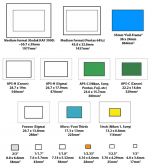
1/3.2" sensor (4.8x3.6mm), shown in the bottom right compared to other sensors.

1753882931921.png

The iPhone 6 was launched in 2014 with the same sensor size (but much better optics and processing).
 
That's shocking really.

No wonder she didn't like it.

I think it gives a 'film-like experience' in so much as you can't see the pictures you've taken as it doesn't have a screen.

Maybe the film format they're referring to is the old 110mm format.
 
Last edited:
That's shocking really.

No wonder she didn't like it.

I think it gives a 'film-like experience' in so much as you can't see the pictures you've taken as it doesn't have a screen.

Maybe the film format they're referring to is the old 110mm format.
Definitely, the inability to see the image you've taken is the only thing 'analogue' about it.

To be fair though, 110 format is night and day better than the tiny digital sensor. I took this on Lomo Tiger 200 a few months ago with my Rollei E110 (resized down to half the scan size so I can upload it);

IMG_3494.JPG
 
The benefits of digital over film is the cost,
erm well yes if you compare using a mobile phone ;), but it all depends what type of photographer you are/become and for me using film these days, I only take shots that are worth taking esp if I was to use my RB67 with 10 shots per roll of film...so definately no machine gunning.
I only have a Sony Nex 3 and Cyber-shot and comparing usage and a film camera is so simple to use, and one time using the Nex 3 couldn't see what I was shooting as the sun was on the screen erm back to the old days with a black cloth over my head :LOL:
 
1/3.2" sensor (4.8x3.6mm), shown in the bottom right compared to other sensors.

View attachment 459179

The iPhone 6 was launched in 2014 with the same sensor size (but much better optics and processing).

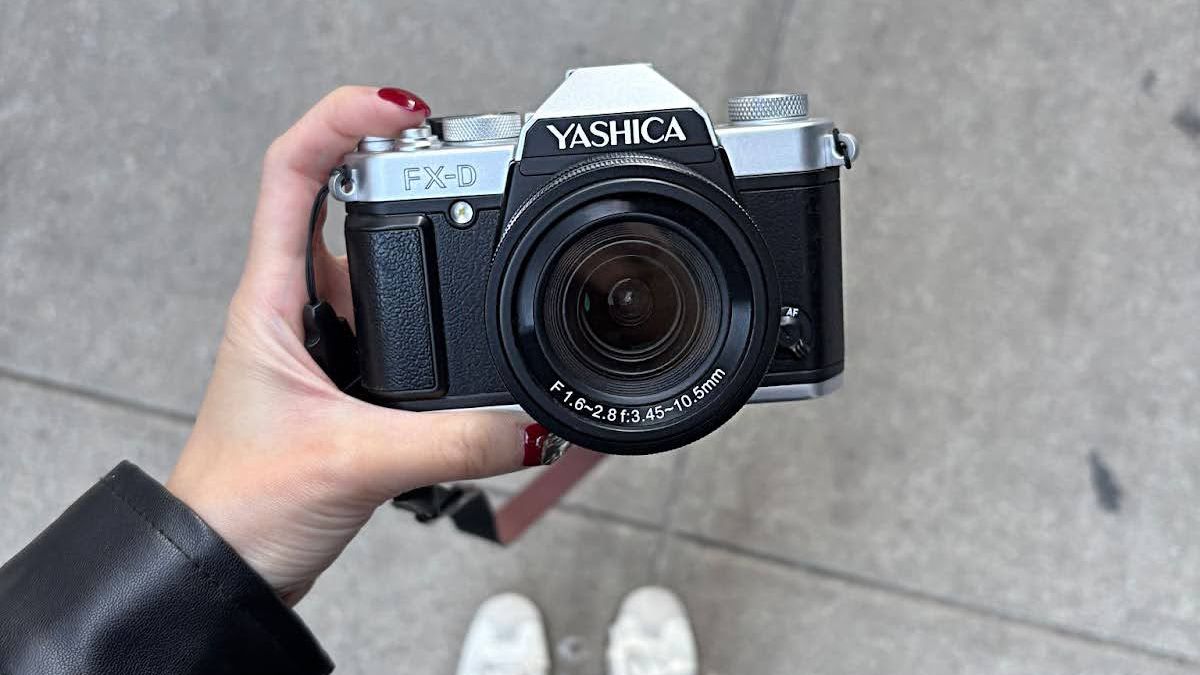
I can't recall the exact details, but this new Yashica FX-D (I think) is a nice looking, simple camera (which I initially liked the look and sound of) but that too has a tiny (terrible) sensor!

I've not got a clue on the expected sales, but I'm sure it would be a lot more if it had a M43 or aps-c sensor in it!
 
I've not got a clue on the expected sales, but I'm sure it would be a lot more if it had a M43 or aps-c sensor in it!
I've heard it said that Yashica always wanted to join the big boys' game, but they never quite understood the rules.

This FX-D seems like a good example of that.
 
A bit of a misnomer, being generous, naming it FX.
 
The Yashica of old is long gone. The brand name is now owned by another company ...
Brand names and the companies (mis)using them...

:tumbleweed:
 
It really does. This was last year (I know I said 'recently' in the original post, but it's relative...) and was probably my first real test of taking a film camera on a trip away and I hadn't yet rediscovered the limitations of 1000 as my fastest shutter speed.

I've always been wary of filters as cheap ones can often ruin a shot anyway, but it might be worth getting a couple as most of my Minolta lenses are either 55mm or 49mm diameter.

Having said that, I just about got away with it on that occasion, and have only seen it very rarely on other occasions.


I use a yellow or an orange one quite regularly in order to achieve contrast in the sky. The extra couple of stops also gives me some additional options with my exposure triangle. For films such as ADOX 20S I like to have a bit of room to play with in terms of juggling the exposure triangle. I tend to work from box speed and stay within limits - other than when experience tells me the real speed of a film (or at least what its real range is)..
 
1/3.2" sensor (4.8x3.6mm), shown in the bottom right compared to other sensors.

View attachment 459179

The iPhone 6 was launched in 2014 with the same sensor size (but much better optics and processing).
That table is really interesting; it would be even more interesting with the addition of a few film MF and LF "sensor" sizes (and also maybe 11 and 127 etc, just to get an idea.

Not to take anything from your point, Steve but my only digital camera is a Fuji X10, which has a 2/3" type sensor, and the results continue to amaze me. It isn't all about sensor size; a lot of other engineering contributes to the final result. In the case of the X10, a slightly different sensor design and a cracking good lens!
 
That table is really interesting; it would be even more interesting with the addition of a few film MF and LF "sensor" sizes (and also maybe 11 and 127 etc, just to get an idea.

Not to take anything from your point, Steve but my only digital camera is a Fuji X10, which has a 2/3" type sensor, and the results continue to amaze me. It isn't all about sensor size; a lot of other engineering contributes to the final result. In the case of the X10, a slightly different sensor design and a cracking good lens!
There are definite optical restraints which appy to smaller sensors. They gather less light, so less dynamic range, as well as poorer performance in low light - including with auto-focus. Additionally, there is less finesse with control of depth of field.

Sensor size is more important than megapixel count. In fact, I'd love a sensor of real medium format size - even if it was 16 Mp.

The problem with the naming convention is that anything above full frame is now labeled "Medium Format".
 
Sensor size is more important than megapixel count. In fact, I'd love a sensor of real medium format size - even if it was 16 Mp.
I'm not so sure about that.

The analogy between a piece of plastic, coated with a suspension of silver halide crystals, and the microengineering of a photo sensor chip is a tenuous one. For many practical purposes, a 16MP 2/3" sensor will (in general terms) pass through more usable data than a 8MP 4/3rds chip. There will, of course, be many other factors to take into account, such as lens resolution and the processing applied.
 
I'm not so sure about that.

The analogy between a piece of plastic, coated with a suspension of silver halide crystals, and the microengineering of a photo sensor chip is a tenuous one. For many practical purposes, a 16MP 2/3" sensor will (in general terms) pass through more usable data than a 8MP 4/3rds chip. There will, of course, be many other factors to take into account, such as lens resolution and the processing applied.
Photography is all about the optical qualities of the glass in front. It's physics. The constraints are physical. They're real barriers.

Look at the lenses typically used in large format. Plasmat lenses. 4 Elements. The image circle means that it is far easier to control aberrations and diffraction. Compressing an image onto a small sensor leads to incredibly difficult optical considerations, and a lot of what happens in a modern lens is actully correction rather than purely pass-through.

My experience with lenses is that they improve enormously as the film size increases. Thankfully, this huge performance improvement isn't matched by higher prices.

My best lenses are those I use on the 4x5, although even jumping from 35mm to MF shows a huge gap in the optics.

The size of the sensor plays a huge role in resolving detail. The effect may be distal rather than proximate, but it is real.
 
Look at the lenses typically used in large format. Plasmat lenses. 4 Elements.
Surely the Plasmat is a 6 element symetrical design?
The image circle means that it is far easier to control aberrations and diffraction.
There's a trade off between image circle and aberrations. This is one reason why large format lenses tend to have aperture options down to f64 or even f128.
Compressing an image onto a small sensor leads to incredibly difficult optical considerations, and a lot of what happens in a modern lens is actully correction rather than purely pass-through.
All compound lenses are designed to overcome the problems of mapping the curved field of a simple lens onto a flat surface. There have been various attempts to create electronic sensors with a curved receptor surface, to overcome this.
My experience with lenses is that they improve enormously as the film size increases.
What you're actually seeing is that the larger format requires less enlargement and so provides greater apparent sharpness at any given print size.
Thankfully, this huge performance improvement isn't matched by higher prices.
There are many who might dispute this claim. Large format lenses have generally been considerably more expensive than those for smaller formats. There are various reasons for this, such as production quantities, which are generally much higher for the smaller formats.
My best lenses are those I use on the 4x5, although even jumping from 35mm to MF shows a huge gap in the optics.
Frankly, you seem to be confusing the effect of smaller enlargement factors with actual image resolution. As pointed out above, the bigger the negative the less the enlargement.
The size of the sensor plays a huge role in resolving detail.
That's not actually the case. At the end of the day, the entire system dictates the resolution of the the final image recorded. The place to look for information on this is in the work done on microfilm recording and aerial intelligence gathering. Astronomers know a lot about it as well.
The effect may be distal rather than proximate, but it is real.
I have no idea what you mean by that. Both distal and proximate refer to the distance from an event or feature. What have they got to do with the resolution of an image?
 
Of course I mean 6 elements. Thank you for the correction.

No, I'm not considering the mathematics and geometry of the plane receiving the light. I'm talking about the quality of the light landing on it, the ability of the lens to resolve that in a coherent way, and the LP/mm and the MTF measurements which result from that. Thro in some Nyquist–Shannon sampling and you have some greater objectivity of what is really happening on the sensor/film.


Oh, the distal/proximate stuff refers to causality. There will often exist performance factors where their effect is immediate on the process or those whose effects are more remote from the end-product. Often, though, the distal impact is bigger than the proximate.
 
On the cost of lenses, I just checked the Zeiss Milvus 50mm f/1.4 35mm for full frame digital price and the last listed price for the Cooke Triple Convertible lens. The Zeiss was £1235 at WEX, the Cooke £5880 inc VAT.

Edit to add. My choice of lenses was determined by the Milvus being regarded as first class, but expensive, and the Cooke being one of the last LF lenses made. Both are nominally the standard focal length for the formats they were designed for.
 
Last edited:
I'm talking about the quality of the light landing on it, the ability of the lens to resolve that in a coherent way, and the LP/mm and the MTF measurements which result from that. Thro in some Nyquist–Shannon sampling and you have some greater objectivity of what is really happening on the sensor/film.
I rather think you're trying to justify your claims with some techno babble.
Oh, the distal/proximate stuff refers to causality. There will often exist performance factors where their effect is immediate on the process or those whose effects are more remote from the end-product. Often, though, the distal impact is bigger than the proximate.
And again.
 
That table is really interesting; it would be even more interesting with the addition of a few film MF and LF "sensor" sizes (and also maybe 11 and 127 etc, just to get an idea.

Not to take anything from your point, Steve but my only digital camera is a Fuji X10, which has a 2/3" type sensor, and the results continue to amaze me. It isn't all about sensor size; a lot of other engineering contributes to the final result. In the case of the X10, a slightly different sensor design and a cracking good lens!
Of course, there are sensors and there are sensors, but don’t forget that the one in your X10 has more than 3 times the surface area, and considerably higher pixel depth, than the tiny dashcam sensor in the cameras pretending to be analogue. The lens on the X10 is also a multi-element design, in contrast to the tiny glass hidden behind the fake front ‘element’ on the Yashica efforts.
 
Last edited:
I can't recall the exact details, but this new Yashica FX-D (I think) is a nice looking, simple camera (which I initially liked the look and sound of) but that too has a tiny (terrible) sensor!

I've not got a clue on the expected sales, but I'm sure it would be a lot more if it had a M43 or aps-c sensor in it!
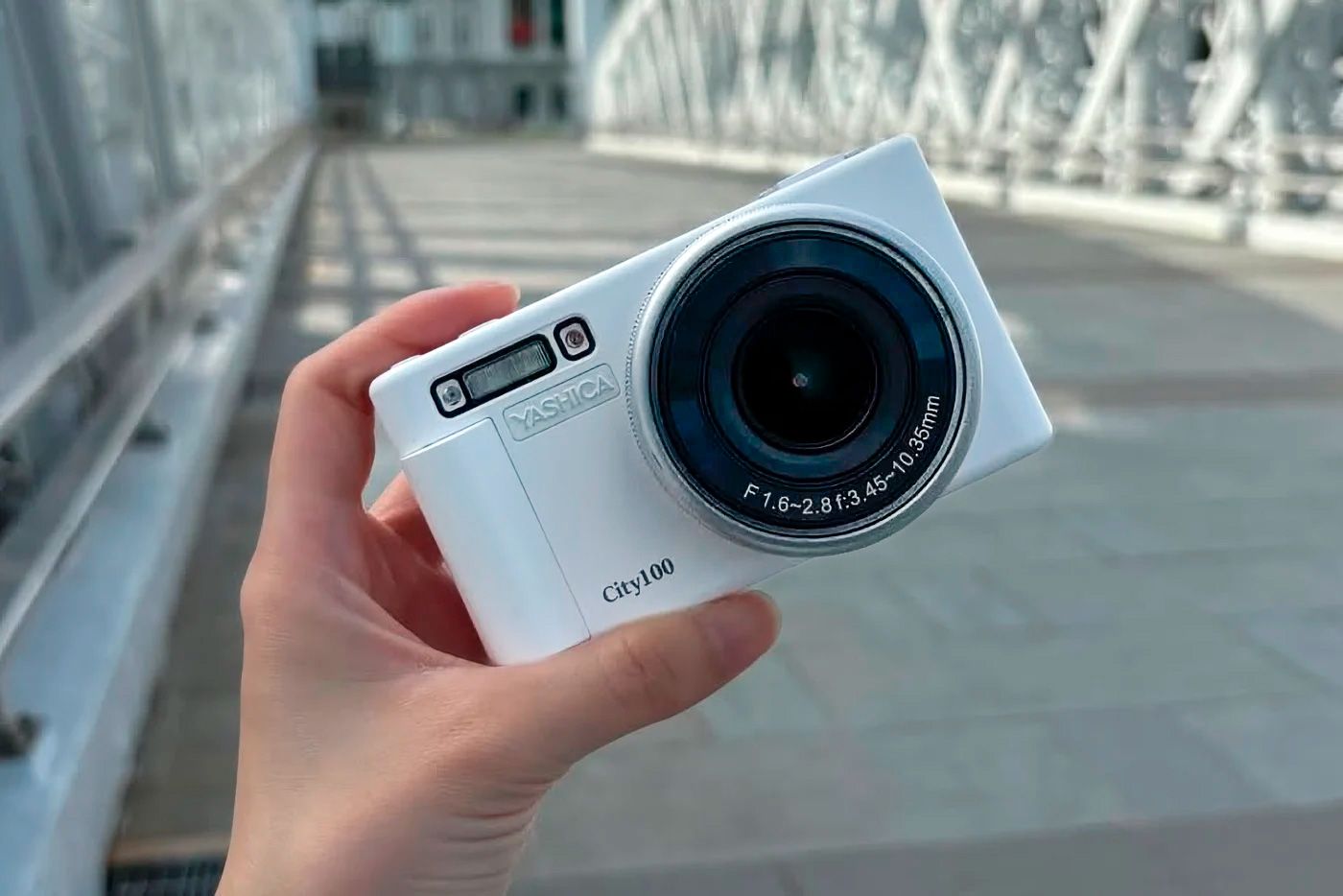
Sony IMX 458 (dashcam) - 5.8mm diagonal


Looks to be the same internals as these previous ‘Yashica’ compacts, wrapped up in an ‘analogue’ outer body.

 
Last edited:
No babble to it. They are standard industry metrics.Anyway, as you were.
Weird.

60 years of photography and I've never come across those terms, let alone seen them in common use. Well, they do say that the world is becoming stranger than you can imagine... :naughty:
 
Weird.

60 years of photography and I've never come across those terms, let alone seen them in common use. Well, they do say that the world is becoming stranger than you can imagine... :naughty:

I might say "weird" to that. The Nyquist limit is rather important in determining the limits of resolution with a digital sensor.
 
The Nyquist limit is rather important in determining the limits of resolution with a digital sensor.
It may be but as it is a parameter that is completely inaccessible to the average user, it's irrelevant to the average user of a camera.
 
It may be but as it is a parameter that is completely inaccessible to the average user, it's irrelevant to the average user of a camera.
My apologies, I didn't realise that discussions here were limited to average camera users (whatever that may be). I will keep my trap shut.
 
My apologies, I didn't realise that discussions here were limited to average camera users (whatever that may be).
I can't speak for the owners of this site but my experience is that the membership is very diverse.

They let me in, for a start!

Surprised looking woman Exeter bus station  DSC01485.JPG
 
If the membership is very diverse, then quite possibly it might just include people who find what you dismiss as "techno babble" not only interesting but also of practical use in evaluating equipment and claims. If so, possibly negative reactions to such posts (which we also see with depressing regularity whenever art is mentioned) might best be left unposted.

I'll leave it at that.
 
Last edited:
I will keep my trap shut.
Please don't. While I'm very much a person who focuses on the end result - the photograph - and see the technical aspect more as a necessary means to an end rather than an end unto itself, I nonetheless greatly value the technical knowledge that is available here.

Interest in photography can cover many aspects. Some like to look at photographs or follow the photographers that make them, some like the taking of photographs. Some enjoy the cameras (aesthetically and mechanically), while some are fascinated by the history of the art form, and some have a passion for the physical and chemical science involved. And obviously more reasons exist. It's not a single thing and can include a whole range of pursuits. I embrace the diversity, even if not all of it is in my personal line of interest.
 
Please don't. While I'm very much a person who focuses on the end result - the photograph - and see the technical aspect more as a necessary means to an end rather than an end unto itself, I nonetheless greatly value the technical knowledge that is available here.

Interest in photography can cover many aspects. Some like to look at photographs or follow the photographers that make them, some like the taking of photographs. Some enjoy the cameras (aesthetically and mechanically), while some are fascinated by the history of the art form, and some have a passion for the physical and chemical science involved. And obviously more reasons exist. It's not a single thing and can include a whole range of pursuits. I embrace the diversity, even if not all of it is in my personal line of interest.


Very well put Nige (y)
 
My apologies, I didn't realise that discussions here were limited to average camera users (whatever that may be). I will keep my trap shut.

That's a remarkably snobby attitude.
 
That's a remarkably snobby attitude.
I didn't raise the concept of an average camera user. Indeed, I have indicated in the post that you quoted that I don't believe in such a category.

Whatever. I'm out of here. I have no need of this sort of crap in my time on the 'net.
 
Back
Top