Feeling disappointed

Doddy1974

Suspended / Banned
Messages
663
Name
Cathy
Edit My Images
Yes
We went to Whipsnade Zoo today, was very grey and dismal.
I am very disappointed with today's efforts, but I am wondering if I am being too hard on myself.

Should I be able to take good pictures even with poor lighting? Maybe I need to come back to the photos in a few days, but right now, I am feeling very let down.

Is it me, my capabilities, the weather or what??!!
 
I had a quick look at your flickr page. Some nice images. Watch your histogram when shooting - some just need a little contrast added in Ps - Some vignettes are too much..... Takes time to learn


Steelo
Landscapes are ALL about the right light. Use the golden hours wisely.
 
there are some lovely pictures on your flickr profile doddy.

definitely worth coming back to your photos in a few days, you can see your photography differently when you look at them objectively. also sometimes different crops can breath new life into a photo you'd perhaps have discarded so have a play.

as for the weather... well with landscapes, a scene with a plain white dull sky isn't going to look as good as one with a sunset dramatic clouds with yellows, blues and purples.

with these dull winter days, i find i've been going out less than normal with my camera. by 12pm the light is starting to fade.... but at least these dull days are on their way out and we'll be making way for those spectacular spring blossoms.

keep with it, you've definitely got talent.
 
Last edited:
Thankyou SO much for your comments. You have restored a little faith!
I was even contemplating selling all my gear tonight!

I am going to do what you suggest...leave them alone for a few days, and then go back to them. I don't hold out much hope..they are really bad!
I guess a part of me is getting frustrated with this dull weather, I just want to get out and shoot some nice shots...considering last year was my first year, I was quite happy with some shots I managed to take.

Thankyou guys so much...I can go to bed a little more reassured tonight.

THANKYOU xxx
 
I had a quick look at your flickr page. Some nice images. Watch your histogram when shooting - some just need a little contrast added in Ps - Some vignettes are too much..... Takes time to learn


Steelo
Landscapes are ALL about the right light. Use the golden hours wisely.

I need to learn more about histograms. I don't totally understand them. If the picture looks right on the screen when I play back, I just assume it's ok!
I know I need to lay off the vignettes a bit...it's hard because I do like them, but I know it's not for everyone.

Thankyou x
 
Photography is essentially about the capture of light. If the light is ***** then the picture won't look right. Flat, dull, dreary light makes for flat, dull, dreary photos - no highlights, no shadows, bland. There are exceptions, but I think that is pretty key to understanding the results. Here are two similar photos with the main difference being the light.

20090221_161053_1037_LR.jpg
20090301_120240_4938_LR.jpg


Same dog, same fur, exposures both reasonable, no edits, but one has life and vitality and the other is as dull as ditchwater. I tend to avoid wildlife photography under dull, overcast conditions. The absence of contrast can even make an image look softer than it really is. Also look at the difference in the eyes. I'll take a light in the eyes over none any day of the week.

Landscape photographers choose their time of day and weather conditions very carefully, in order that the scene is lit as they would like. Portrait photographers are just considerate of the lighting in the studio. It's the same for architecture, product photography and so on. Why would wildlife photographers not be equally concerned for the lighting upon their subjects and scenery? Sometimes you have no choice over the lighting, especially if you shoot sports or news, but when you are planning a trip to the zoo, for example, then it's worth thinking about the light before you set off.
 
Last edited:
I shoot in all weather and lift conditions so unfortunately, I don't really get a choice because if I don't provide the ***** I get a telling from the commissioning editor.

However, flat light is as good as 'perfect' good light in my book. It's very much a case of whether if suits the subject. You obviously feel like you were a bit short changed on your trip but that doesn't always have to be the case - I'm not wildlife expert but I've seen some stunning work in what looked like appalling light.... Suppose that's where god composition wins through :)
 
thanks for posting those two pics Tim...I really see what you mean!
I didn't realise till today how important light is...silly statement probably...this is my first January/Winter with my DSLR...so it's all still such a learning curve I guess.
I only got my DSLR in Mar/Apr last year, so must remind myself I haven't yet been through winter.

Thankyou, and I hope the sun us shining for us on the 15th!!
 
I shoot in all weather and lift conditions so unfortunately, I don't really get a choice because if I don't provide the ***** I get a telling from the commissioning editor.

However, flat light is as good as 'perfect' good light in my book. It's very much a case of whether if suits the subject. You obviously feel like you were a bit short changed on your trip but that doesn't always have to be the case - I'm not wildlife expert but I've seen some stunning work in what looked like appalling light.... Suppose that's where god composition wins through :)


I thought flat light was easier to deal with that bright sun, hence why I went out today!
I haven't had a proper play with the pictures yet, I had a go at one of my cheetah shots, and got very disheartened, hence this thread. I am gonna leave them for a few days, and then go back to them.

Does make me wonder tho...people that have to deliver the shots no matter what the weather...what on earth do you do? Just rely on post-editing???

Edit to add...your flickr is amazing :)
 
Last edited:
Editing does come into it, although I shoot for instructional magazines so often the shots don't have to be masterpieces - providing they serve the purpose of illustrating a point then fine. As long as they put the point across clearly, that's what matters, especially with sequence shots....

I have days when I really have to work hard and come away with stuff I'm 75% happy with, but that's me as a photographer; the editors often have much lower expectations so it's fine for them... providing I come back with something :)

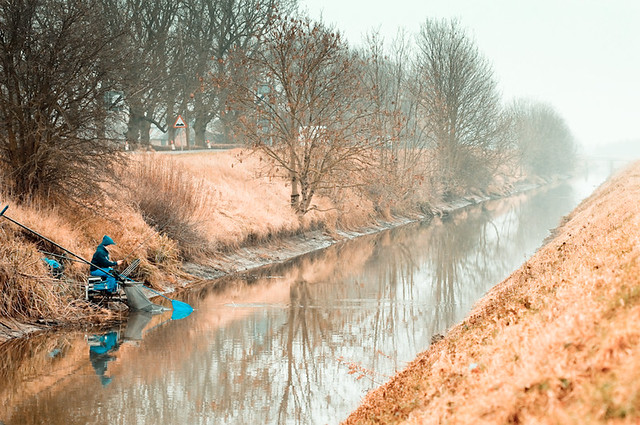
This was one of those days; freezing cold, water levels down (so lots of exposed mud around the margins - looks nasty) and totally featureless....


Catching In The Cold by Pat MacInnes, on Flickr

Heavily processed but i like it like that, although I may look to do a re-edit to have a play :)

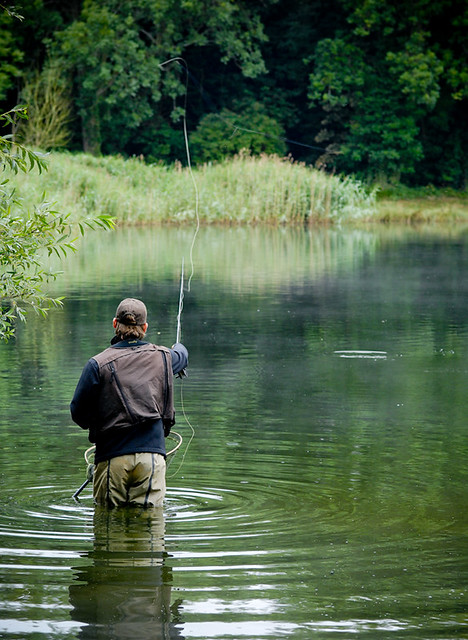
this was another; a real struggle of a day in terms of catching - the fish just kept moving out of range - but the angler, Paul, was adamant we could get something and as fish rose for dry flies, he just kept launching the line out in the hope he'd get something... that to me was what the day was about so it was what I'd focus on:


The Rise by Pat MacInnes, on Flickr

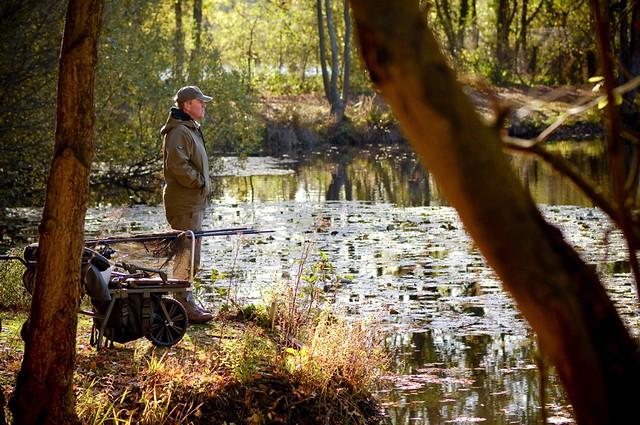
But good light does help, I can't argue that; this was one of those days where everything played into our hands.


Winter Sun by Pat MacInnes, on Flickr

The Feature was about scouting venues to make the most of short winter days and the light being so low, warm and strong just helped massively.... flat light wouldn't have worked. It's all about matching light to what you want to convey :)
 
Last edited:
Lets face it - the light is terrible at the moment. Grey, overcast skies, ISO800 or 1600 to get even a decent shot or taking silhouettes against the sunset etc.
 
Light is light, learn how to use it in your favour; weather it's diffused by clouds (grey overcast), or midday sun.

So they sky is grey and boring and landscapes look dull - try to fill the frame with something which doesn't include the sky. With a grey sky you essentially have a big diffuser, can make for some great colors.
 
If there is one thing I've learnt in landscape/outdoor photography is that you can't just turn up and take a fantastic photo in perfect light (whatever your definition of perfect light is at the time) within 5 minutes of getting there and then head home. Unfortunately in this hobby you really need to put the time and effort into it, getting up at stupid hours, sitting around for hours once you get to the location all for that 10 minutes or less of good light, even then if you are lucky. Repeat trips to the same place are necessary as well I think.
On a slightly different note I was in Dorset at the coast for the day last November, it was windy, overcast, cold, wet and altogether uninspiring, I certainly didn't get the postcard sunrise I'd driven nearly 4 hours to get, but instead I focused on the waves against the rocks, the textures etc. and at least came home with some shots I could work with and in the end I was more than happy with what I got, keep an open mind and a better shot than what you set out for usually appears.
Perseverance I guess is the name of the game, and when you do get the perfect conditions you will enjoy the shots all the more!
 
It's not a co-incidence that some of the best landscape pictures I've seen have involved the photographer going to some lengths to be in the right place at the right time to capture it.

If the light is rubbish, and the first pass doesn't reveal many keepers at the end of the day....I'll either use it as an excuse to try some outrageous processing, or just file them away and come back to them later.
 
Consider not only quantity, quality and colour of light, but also direction. It will have an influence on how clearly texture and detail is picked up by the camera. Shots of the moon are a good example. A full moon looks full because it is front lit by the sun. Of course you can see details, but there is no texture. No shadows. No impression of three dimensional shape. However, when the moon is only partially lit the craters begin to reveal themselves because highlights and shadows begin to appear.

20090812_003105_1552_LR.jpg


You see from the shadows that the sun is over to the left of the camera. On the sunny side there is an absence of texture. This is not so very different from having completely flat/soft light on a dull day. However, work your way round the moon to the areas where the light is striking across the surface and you can see what the moon is really made of.

It's the same thing with texture in any subject and scene. Front lighting, back lighting and flat lighting will hide those details. Directional light at an angle will emphasise them, picking out every nuance in feathers, fur, flesh etc.. For some subjects that is a good thing. For others it may be less so.
 
Last edited:
You've got some nice shots there on flickr - those child portraits are excellent (although the vignetting as someone else mentioned...).

I've not been to Whipsnade for 9 or 10 years, although I used to be a regular there. I always preferred it in the winter because there were fewer visitors, and there was a chance of being there for the best light which wasn't usually possible in the summer with the opening times. Some of the animals were less shy then as well with fewer people around. The wolves in particular in summer would be out of sight for hours on end - I know as I used to on occasion spend 2-3 hours waiting for them to do something! One particular winter eye contact with a tiger cub stands out in my memory.

If the light is particularly bad (and it can't be rescued in post processing) then you could use the opportunity to concentrate on practicing in other areas, composition for example.

A frustration I used to have there - and can be seen in some of your pictures - is trying to avoid 'man made' features in the background, fences, wire, etc. If you're already wide open and can't throw the background out of focus any more try moving slightly to the side or (the one most people forget) getting lower or higher to change the appearance of the background.

Is the indoor animal house still open? That's a good option for a bad weather day and gives a good opportunity to try some other techniques.
 
Thankyou for your comments...you are making me see things in a "different light" (please the forgive the cheesyness!!!)

Rob...when say about the man made features in the background, I do try and avoid, and I find myself getting very frustrated...I think this is something I need to work on more. I think now I know how my camera works etc, I seriously need to concentrate on composition.
I have a problem in that I have dodgy knees and cannot get low down...something that really frustrates me.

I never thought about the animal house...the only time I have been in there, I was again disappointed with my shots, but now I have read on here about using flash, allowing time for the equipment to acclimatise, I will certainly give that a go.

Thankyou all again your comments...you are helping restore my belief a little!
 
Yes, the light is everything!

I shoot in all conditions because my main subject is motorsport journalism. The weather is the weather and the races occur regardless and I still have to turn in photos no matter what.

However, if I could choose the weather and whether or not (if you excuse the pun) to even press the button, I wouldn't choose flat grey days or when its tipping with rain because I know its not going to be a stunning image (well, sometimes rain can be interesting!).

So, recording what happened on a day, shoot! Choosing a day for stunning images with no time pressures to deliver or when any day to shoot will do - pick better weather.

It is annoying though, when you are a busy person to have your planned zoo visit or day at the airfield blown out because of crap light, but thats photography for you. At least it wasn't a day at the office :D
 
I just found another example of the same scene shot in overcast conditions vs sunshine and clear skies. Both are straight out of camera, no edits. They were shot 22 hours apart. What a difference a day makes!

20071205_162053_0779_LR.jpg
20071206_141655_0836_LR.jpg


With a bit of jiggery pokery I can make the overcast scene look a bit more interesting, but it's hard to compete with the sunlit scene for effortless vibrance and detail....

20071205_162053_0779_LR-3.jpg
20110105_150059_.JPG


EDIT : p.s. looking at the EXIF and the image itself I think I would have used a CPL for the sunlit scene, which has helped the richness of colour. No such option for the overcast scene.
 
Last edited:
What a difference!!! Thankyou for posting those...so it's not just me not able to cope with varying light! It is reassuring to know it's not me doing something wrong, but just the way it is!
 
Back
Top