

You are using an out of date browser. It may not display this or other websites correctly.
You should upgrade or use an alternative browser.
You should upgrade or use an alternative browser.
F & C Week long trip to Cornwall!
- Thread starter Woodsy
- Start date


RaglanSurf
Suspended / Banned
- Messages
- 11,477
- Name
- Nick
- Edit My Images
- Yes
I'm not sure we're allowed to travel to Cornwall in this post brexit, pre trump, post truth world.

- Messages
- 12,294
- Name
- Brian
- Edit My Images
- Yes
I'm not sure we're allowed to travel to Cornwall in this post brexit, pre trump, post truth world.
Do you think Cornwall is declaring independence like the film "passport to Pimlico"


medwaygreen
Suspended / Banned
- Messages
- 4,425
- Name
- Richard
- Edit My Images
- No
- Messages
- 12,294
- Name
- Brian
- Edit My Images
- Yes
Cornwall have always declared that they are an independent people, it is a shame that they are just a county in the country of England.
Great place for photography,is anything going to happen.
@Woodsy
Perranporth is a warm 12c atm and wednesday 14c
 ...ATM highest in the outer London areas 5c
- Messages
- 11,730
- Name
- Chris
- Edit My Images
- Yes
Cornwall have always declared that they are an independent people, it is a shame that they are just a county in the country of England.
Great place for photography,is anything going to happen.
@Woodsy
When we were in St Ives in June there was a talk about Cornwall and Cornishness, which was interesting. He described how old documents would talk about England, Wales and Kernow. Even back in the Roman occupation, apparently they never bothered with Cornwall, in part because they'd been trading partners with them for a long time. Not sure that theory really holds up though! Can't quite imagine a Roman general saying "I know we've conquered nearly everywhere else, but we'll leave the Cornish alone because they have some nice copper mines we trade with..."


joxby
Suspended / Banned
- Messages
- 8,782
- Name
- John
- Edit My Images
- No
We were 5k away from buying a bungaloid in Porth 20 years ago
45k it was, hillside, sea view, massive veranda, under house garage...the works, could only manage 40
It was sold again a couple of years ago for nearly half a million....
That's whats happening in coastal cornwall
45k it was, hillside, sea view, massive veranda, under house garage...the works, could only manage 40
It was sold again a couple of years ago for nearly half a million....
That's whats happening in coastal cornwall

swisscheese
Suspended / Banned
- Messages
- 45
- Edit My Images
- No
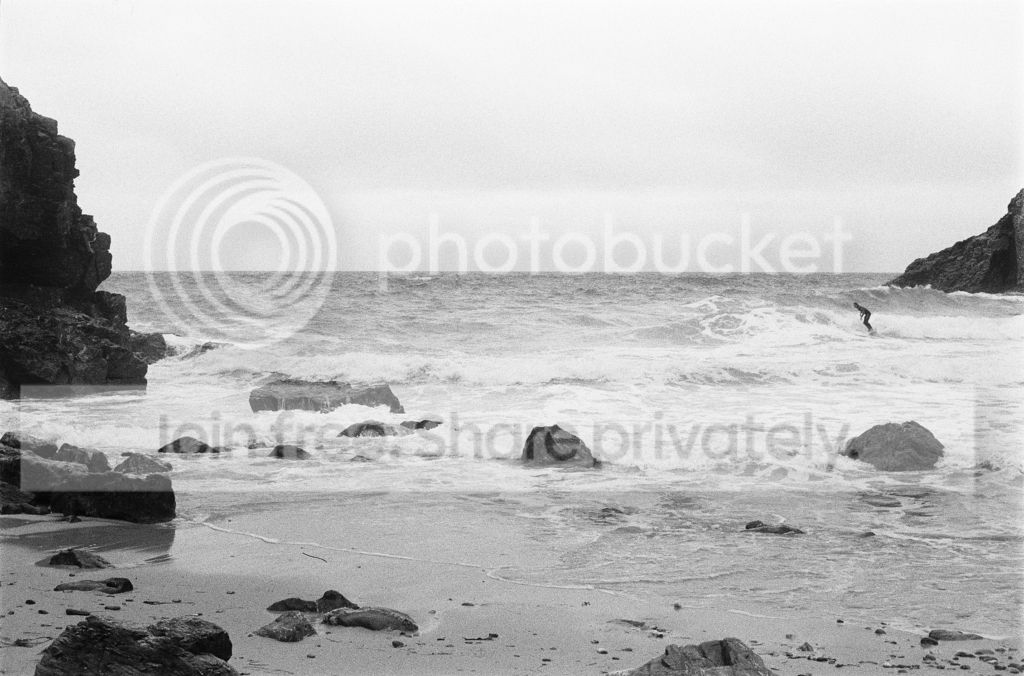
Lone Surfer - North Cornwall Coast - Kentmere 400 - Konica Auto S2
It was damp, grey and overcast - not ideal.
Have Fun.
Last edited:

AshleyC
Suspended / Banned
- Messages
- 2,956
- Name
- ...
- Edit My Images
- No
Cornwall have always declared that they are an independent people, it is a shame that they are just a county in the country of England.
Great place for photography,is anything going to happen.
@Woodsy
actually we have been declared an official and recognised minority now. bear in mind that historically we had our own currency, parliament and language and are part of the original celtic nations within this island. We're capable of a bit more than a cream tea to the odd tourist.
- Messages
- 12,294
- Name
- Brian
- Edit My Images
- Yes
Hard to find many genuine Cornish people - most current residents are incommers!
My Auntie moved to Falmouth from London about 50 years ago (at the age of 26) and saw her for the first time about 20 years ago at a wedding and after she spoke to me I said "why are you talking funny"
AshleyC
Suspended / Banned
- Messages
- 2,956
- Name
- ...
- Edit My Images
- No
Cream on first!!!

some people just want to watch the world burn.
OP

Woodsy
Suspended / Banned
- Messages
- 7,676
- Name
- Jonathan
- Edit My Images
- No
Yep, this is still going ahead! I was giving the thread and everyone a little time to contemplate whether they want to come or not, before declaring final numbers. With things looking like they are, we won't be needing a huge place, so that opens up lots of options. Nikki and I will be having another look this week and will start posting up options 

raathistle
Suspended / Banned
- Messages
- 1,448
- Name
- Chris
- Edit My Images
- Yes
If theres still space then I'm in. It'll be a good chance to actually take some pictures for a change
OP
Woodsy
Suspended / Banned
- Messages
- 7,676
- Name
- Jonathan
- Edit My Images
- No
Guys, I'm really sorry this has had to take a back seat for a while and Nikki and I have not yet had chance to fully look into this yet. The initial search I did a while back has had some bookings already so I'm re-searching now.
Given that the poll was a while back, please may everyone who's interested in coming re-state their interest and any dates they can't do. From memory, it was @Andysnap @Mrs Snap @RaglanSurf Mrs Surf @Carl Hall @ChrisR Mrs ChrisR (possibly) and @raathistle. Is there anyone else?
Lastly, if it were brought forward a little, what's the general opinion for April?
EDIT:
It has become apparent that a lot of places in cornwall now do Friday change over days. Quite when and why this changed from Saturdays is a little beyond me, but there we are. Will this be a deal breaker for anyone should the popular vote settle on a house with such a change over day?
Given that the poll was a while back, please may everyone who's interested in coming re-state their interest and any dates they can't do. From memory, it was @Andysnap @Mrs Snap @RaglanSurf Mrs Surf @Carl Hall @ChrisR Mrs ChrisR (possibly) and @raathistle. Is there anyone else?
Lastly, if it were brought forward a little, what's the general opinion for April?
EDIT:
It has become apparent that a lot of places in cornwall now do Friday change over days. Quite when and why this changed from Saturdays is a little beyond me, but there we are. Will this be a deal breaker for anyone should the popular vote settle on a house with such a change over day?
Last edited:
RaglanSurf
Suspended / Banned
- Messages
- 11,477
- Name
- Nick
- Edit My Images
- Yes
Still up for this, usual conditions apply, dates, work etc.


- Messages
- 11,274
- Name
- Asha
- Edit My Images
- Yes
Sorry jonathan ( and everybody else for that matter!) but I'm backing out.
It was only going to be a possibility if funding allowed and reallistically to raise holiday funds inc flights etc within the next 4 months is not going to happen.
It was only going to be a possibility if funding allowed and reallistically to raise holiday funds inc flights etc within the next 4 months is not going to happen.
RaglanSurf
Suspended / Banned
- Messages
- 11,477
- Name
- Nick
- Edit My Images
- Yes
Good point, Easter best avoided I think.
RaglanSurf
Suspended / Banned
- Messages
- 11,477
- Name
- Nick
- Edit My Images
- Yes
You could always sell the LeicaSorry jonathan ( and everybody else for that matter!) but I'm backing out.
It was only going to be a possibility if funding allowed and reallistically to raise holiday funds inc flights etc within the next 4 months is not going to happen.

- Messages
- 11,274
- Name
- Asha
- Edit My Images
- Yes
You could always sell the Leica
Body and one lens .......Yours for £4500...................................... plus postage
I am still up for this I don't think I'll be able to do an entire week now though unfortunately due to how much vacation I have left (I hate that word, it's holiday not vacation!). If we're starting on a Friday then I can likely do from Friday afternoon to Tuesday. The only dates that I can't do are the 30th April, and 19th - 22nd May.
I don't think I'll be able to do an entire week now though unfortunately due to how much vacation I have left (I hate that word, it's holiday not vacation!). If we're starting on a Friday then I can likely do from Friday afternoon to Tuesday. The only dates that I can't do are the 30th April, and 19th - 22nd May.
raathistle
Suspended / Banned
- Messages
- 1,448
- Name
- Chris
- Edit My Images
- Yes
Still fine with April and a Friday change over is no problem
lot of places in cornwall now do Friday change over days. Quite when and why this changed from Saturdays is a little beyond me
Try leaving Cornwall to go back to England on a Saturday is a nightmare with the Road packed with Emmets going East, so they stagger it to help us Locals, see we can come up with bright ideas.!!

OP
Woodsy
Suspended / Banned
- Messages
- 7,676
- Name
- Jonathan
- Edit My Images
- No
Righty then!
Here is a shortlist of 3 possibles. These have taken into account location, price, parking (as much as possible), rooms (as much as possible) and distance to services etc. Now, one thing to bear in mind is that nowhere is perfect, and so if someone else finds somewhere that is, I'm all ears
The Roundhouse
https://www.cornishhorizons.co.uk/north-coast-cottages/little-petherick/p00096-the-roundhouse?fromdate=05 May 2017&nights=7&adults=10
£1695/week, sleeps 10 in 2 doubles and 3 twins. Ideally placed between the A39 and Padstow making transport easy and it's close-ish to a large Tesco. Parking for 4 cars. Friday changeover. [Currently available starting April 21st, April 28th, May 5th and May 19th, ALL Options are £1695/week.]
Trenance Farmhouse
https://www.holidaycottages.co.uk/c...-farmhouse?n=7&period=6&year=2017&sd=06052017
£980/week, sleeps 10 in 3 doubles and 2 twins. A little more rural in Mawgan Porth, but still situated between Newquay and Padstow. Parking for 5 cars off road. Saturday changeover. [Currently available on April 22nd @ £1190/week, and 6th, 13th and 20th May @ £980/week.]
Romanov
https://www.cornishhorizons.co.uk/north-coast-cottages/mawgan-porth/p00084-romanov?fromdate=06 May 2017&nights=7&adults=10
£1626/week, sleeps 10 in 3 doubles and 2 twins. A little more rural as well, but *Excellent* sea views (I should know, Nikki, families and I stayed here over Christmas). Located in Mawgan Porth, has a shop near by, as well as a pub just outside of walking distance (5 min drive). Parking for 4-5 cars at a squeeze, but has parking in the village nearby suitable for over night. Friday changeover. [Currently available April 28th, and 5th and 12th of May, all @ £1626/week.
There were some others, but they had significant drawbacks, such as only space for 2 cars, bunk beds or being hilariously expensive. Thoughts very welcome. Options also copied to OP.
Here is a shortlist of 3 possibles. These have taken into account location, price, parking (as much as possible), rooms (as much as possible) and distance to services etc. Now, one thing to bear in mind is that nowhere is perfect, and so if someone else finds somewhere that is, I'm all ears
The Roundhouse
https://www.cornishhorizons.co.uk/north-coast-cottages/little-petherick/p00096-the-roundhouse?fromdate=05 May 2017&nights=7&adults=10
£1695/week, sleeps 10 in 2 doubles and 3 twins. Ideally placed between the A39 and Padstow making transport easy and it's close-ish to a large Tesco. Parking for 4 cars. Friday changeover. [Currently available starting April 21st, April 28th, May 5th and May 19th, ALL Options are £1695/week.]
Trenance Farmhouse
https://www.holidaycottages.co.uk/c...-farmhouse?n=7&period=6&year=2017&sd=06052017
£980/week, sleeps 10 in 3 doubles and 2 twins. A little more rural in Mawgan Porth, but still situated between Newquay and Padstow. Parking for 5 cars off road. Saturday changeover. [Currently available on April 22nd @ £1190/week, and 6th, 13th and 20th May @ £980/week.]
Romanov
https://www.cornishhorizons.co.uk/north-coast-cottages/mawgan-porth/p00084-romanov?fromdate=06 May 2017&nights=7&adults=10
£1626/week, sleeps 10 in 3 doubles and 2 twins. A little more rural as well, but *Excellent* sea views (I should know, Nikki, families and I stayed here over Christmas). Located in Mawgan Porth, has a shop near by, as well as a pub just outside of walking distance (5 min drive). Parking for 4-5 cars at a squeeze, but has parking in the village nearby suitable for over night. Friday changeover. [Currently available April 28th, and 5th and 12th of May, all @ £1626/week.
There were some others, but they had significant drawbacks, such as only space for 2 cars, bunk beds or being hilariously expensive. Thoughts very welcome. Options also copied to OP.
Last edited:
OP
Woodsy
Suspended / Banned
- Messages
- 7,676
- Name
- Jonathan
- Edit My Images
- No
So currently it stands at:
Me, @nikki_s, @Andysnap, @Mrs Snap, @RaglanSurf, mrs surf, @raathistle, @Carl Hall, @ChrisR and possibly mrs ChrisR. So that's 9, possibly 10.
Me, @nikki_s, @Andysnap, @Mrs Snap, @RaglanSurf, mrs surf, @raathistle, @Carl Hall, @ChrisR and possibly mrs ChrisR. So that's 9, possibly 10.
RaglanSurf
Suspended / Banned
- Messages
- 11,477
- Name
- Nick
- Edit My Images
- Yes
In order of preference:
=1. The Roundhouse
=1. Romanov
3. Trenance Farmhouse
At the moment any week is fine for us too?
=1. The Roundhouse
=1. Romanov
3. Trenance Farmhouse
At the moment any week is fine for us too?
RaglanSurf
Suspended / Banned
- Messages
- 11,477
- Name
- Nick
- Edit My Images
- Yes
Is there a most likely week? We're ok for any of those dates at the moment but would like to get this written in stone as soon as is practical. Also Mrs Surf has a preference for The Roundhouse.
Last edited:

Earley Man
Suspended / Banned
- Messages
- 1,536
- Name
- Christopher
- Edit My Images
- Yes
actually we have been declared an official and recognised minority now. bear in mind that historically we had our own currency, parliament and language and are part of the original celtic nations within this island. We're capable of a bit more than a cream tea to the odd tourist.
Despite my surname, one of my great-grandmothers from Fowey went to Devonport to work and met/married a shipwright from Gloucester and they then moved back to Cornwall, almost all of my family on both sides are Cornish and I have always taken an interest in our origins.
At least 15 years ago I read an article based on DNA research concerning the origins of the Cornish and this showed that we are different from the other Celtic races, Welsh, Irish and Scottish, within the UK, apparently our closest relatives are the Bretons and Portuguese. The article also said that the original people who became the Cornish migrated from the Middle East around 4,500 years ago. This could explain why most of us get brown very quickly when sunbathing
.In the 1990's and before I had read the article, I had a holiday on the Algarve and on seeing the older people in the inland villages I was struck by the fact that they looked very much like the older generations of Cornish people that I knew when I was a child. I have since been to Brittany and again the older Bretons look very similar to us, obviously, just as with the Cornish, this has changed during the last 100 years due to the much greater freedom of movement that has been possible for the ordinary people in each country.
(We're capable of a bit more than a cream tea to the odd tourist)
Such as hard rock mining, inventing the first really practical steam engine and fighting the English like this during the Civil War.
The Cornish had given so much to the Royalist cause during the Civil War that they were exhausted. After overcoming the English at Stratton, the Cornish regiments had marched eastwards to capture Taunton, Bridgwater, and Bath. They had figured prominently in the taking of Bristol, but their losses had been severe, especially among their leaders. The Cornish Army's loyalty had been to its leaders, and not to the English commanders who now exerted authority. The survivors of the Cornish regiments headed home. Although depleted in numbers, they yet managed to overcome Dorchester, Weymouth, Portland, Bideford, Barnstaple, Exeter, and Dartmouth. Almost single-handed, the Cornish had taken on the rest of the South West counties and won many famous battles. (Feats later to be emulated on the rugby field!)
Last edited:
- Messages
- 12,294
- Name
- Brian
- Edit My Images
- Yes
Interesting post but erm "fighting the English in the civil war" sounds odd.

steveo_mcg
Suspended / Banned
- Messages
- 6,319
- Name
- Steven
- Edit My Images
- Yes
Interesting post but erm "fighting the English in the civil war" sounds odd.
Sound sensible from up here

Andysnap
Suspended / Banned
- Messages
- 16,322
- Name
- Andy Grant
- Edit My Images
- Yes
Interesting post but erm "fighting the English in the civil war" sounds odd.
I think Brian that the Cornish have always considered themselves to be an independent country (much like Yorkshire
) and so calling us 'the English' isn't quite so strange as it may at first seem.
- Messages
- 12,294
- Name
- Brian
- Edit My Images
- Yes
I think Brian that the Cornish have always considered themselves to be an independent country (much like Yorkshire
Probably what many Cornishmen thought in those day, maybe some today
 .......but Royalist versus Parliamentarians sounds right.
- Messages
- 12,294
- Name
- Brian
- Edit My Images
- Yes
Sound sensible from up here
Only because Charles 1st was a Stuart
steveo_mcg
Suspended / Banned
- Messages
- 6,319
- Name
- Steven
- Edit My Images
- Yes
Only because Charles 1st was a Stuart
You knew him better than me