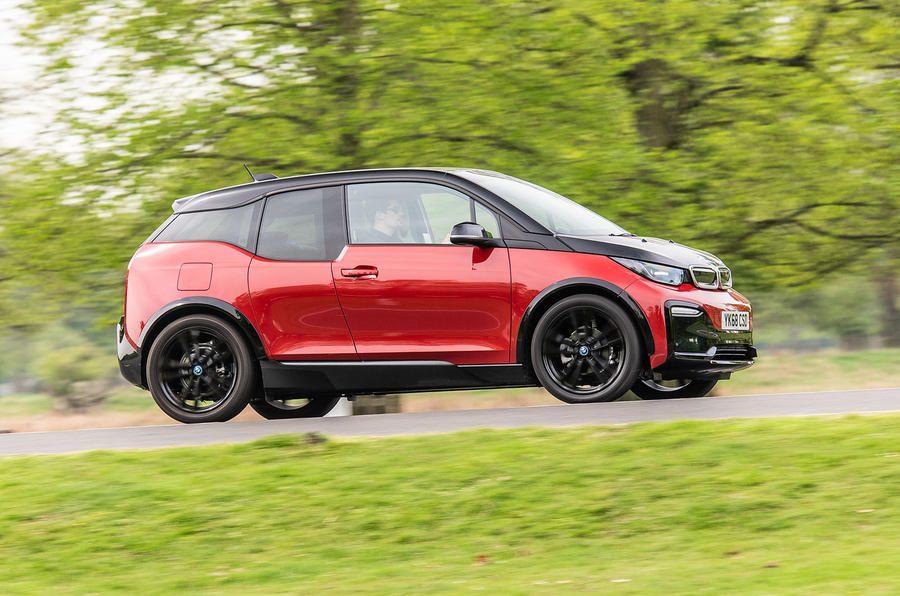
What! there are different kinds of charger sockets, depending on what type of car you have, unlike ICE cars where petrol and diesel use the same socket with the pipes being the same colour
Some of us can remember when there was multiple fuel grades at a petrol garage, 4 star, 3 star , diesel and so on, People worked out what you put in your own car, as they will with EV. I do think some pepole are trying very hard to find an issue where there is non.
I’ve said this before on here electric vehicles may suit some people but I just can’t see us getting one
A lot of my trips in the summer are to nature reserves and similar out of the way places and obviously it’s not practical to have chargers at every roadside lay-by
I’ve said this before on here electric vehicles may suit some people but I just can’t see us getting one
A lot of my trips in the summer are to nature reserves and similar out of the way places and obviously it’s not practical to have chargers at every roadside lay-by
Ranges are constantly improving. IIRC, the Nissan Leaf had a range of around 60-80 miles when it first came out. New cars being produced now have 200+ mile ranges and that will only improve. By the time the new regulations come in in 2030, I'm guessing that ranges will be pretty much the equivalent of a full tank in an ICE vehicle.
Most are in that range but I do a few longer trips a year
Maybe I’m being over cautious but I wouldn’t feel comfortable at the moment replacing our current petrol Yaris with an electric vehicle
To be honest couldn’t afford to anyway as am retired on a fixed income
Occasional long trips are no problem in today's new EV. But if you want to buy a cheap second hand one for £2000 to replace that 15 years old Astra, there is none.
The problem I can see in a few year's time. 10 year old super-cheap (sub £2000) second hand EV's remains few to choose from (what was 2020's EV sales percentage?). If the tailpipe emission levy are gradually jacked up by cities around the country, where can people buy cheap second hand EV's to continue their lives? The less well-off are effectively being priced out of mobility.
Point is, we need a lot more affordable (<£20k) brand new EV's on sale right now. Time to invest in battery factories was in ~2017.
Ranges are constantly improving. IIRC, the Nissan Leaf had a range of around 60-80 miles when it first came out. New cars being produced now have 200+ mile ranges and that will only improve. By the time the new regulations come in in 2030, I'm guessing that ranges will be pretty much the equivalent of a full tank in an ICE vehicle.
Also don't forget early technology batteries won't be so good at retaining charge. A colleague had an early Nissan Leaf and when it went back commented that a full charge noticeably didn't give as many miles as when new. Could be an issue for the s/h market a few years down the line
Got to remember the range only really matters if the car gets in the way of your daily life.
For example, when I bought my 2014 Leaf, its range in winter just about manages my 60 miles daily commute. Now, it probably wouldn't manage it. Luckily my work have installed workplace charger just in time. So the slightly decreased range becomes a total non-issue for me and doesn't get in the way of my daily routine.
I guess the point is, buy something that has a comfortable buffer between your daily needs and the quoted range. I'd say double, eg, if you commute 50 miles a day, get a second hand car with 100+ miles EPA range (Leaf 30 kWh). That should last you 10 years no problem.
Let's say I commute 40 miles and Leaf 24 kWh EPA range is 84 miles. So far over 3.5 years of my ownership, I estimate 3% degradation per year. So that puts it at 52 miles at around 13 yo (10 years of my ownership), it should still do the 40 miles daily commute.
Then there's total cost of ownership advantages of EV's:
- £12k for a second hand Leaf 30 kWh
- Assume zero resale value (very pessimistic)
- Assume same service cost and same consumables (pessimistic against EV, because no oil change required, no engine air filter)
- 50 miles a day for 10 years, 220 working days a year.
- 3p per mile for electricity (pessimistic, I'm getting close to 2p); 10p per mile for a very efficient 55+mpg at around £1.21 a litre diesel (data from my lifetime usage on Skoda Octavia over 25k miles)
=> £15,300 total spent over 10 years for EV
=> £11,000 spent on diesel fuel alone, leaving only £4300 to buy an older second hand car
Dealers are totally useless with EV's.
I've had to teach 2 different new EV owners over the years, both of them used the Type 2 AC to charge at 7kW from a rapid charger. Reason? Didn't know about the additional cover to take off for CCS rapid charging. Said no one told them!
I’ve said this before on here electric vehicles may suit some people but I just can’t see us getting one
A lot of my trips in the summer are to nature reserves and similar out of the way places and obviously it’s not practical to have chargers at every roadside lay-by
You'd be surprised and you don't need them at every layby, if you can do 200-250 miles in an electric car you only need a charger every 200 miles. I can't speak for England but here there are chargers every 50 miles or so and closer on main routes,
You will most likely see chargers popping up in the car parks of nature reserves too. Certainly here in Scotland the bigger parks (e.g. Strathclyde country park) have banks of chargers. All NTS properties have or are installing chargers.
Most are in that range but I do a few longer trips a year
Maybe I’m being over cautious but I wouldn’t feel comfortable at the moment replacing our current petrol Yaris with an electric vehicle
To be honest couldn’t afford to anyway as am retired on a fixed income
Tell you what to do, just as an exercise. Plan a trip somewhere you'd like to go and pretend you have an electric car that can to 150 miles. Check out https://www.plugshare.com/
to see how many charging stations are on your route. See how easy or difficult it would be.
I watched a video on youtube the other day, a couple have done multiple trips round Europe in a NV200 van that gets 120 miles. To Hungary and back, Spain and back.
That looks impressive. However how many of those are restricted to one make of car and more importantly is there a real time website to show if they are all functioning.
I don't doubt in the future we'll treat charging stations like petrol stations now ie it is exceptional if a garage runs out or can't dispense fuel. Currently I don't think the infrastructure has reached the degree of stability that can be totally relied upon but give it a few years and these issues should have been resolved
I will shortly be choosing my new company car which will be electric.
Quite like the VW id4 and the Kia e-nero.
I will try and get a test drive in them before deciding.....
That looks impressive. However how many of those are restricted to one make of car and more importantly is there a real time website to show if they are all functioning.
I don't doubt in the future we'll treat charging stations like petrol stations now ie it is exceptional if a garage runs out or can't dispense fuel. Currently I don't think the infrastructure has reached the degree of stability that can be totally relied upon but give it a few years and these issues should have been resolved
I'd say over 95% of those are for any car and the image is a screen shot from the plugshare app which is live. You can click on any charger and see if it's availabe, in use or down. The app also gives you price details, directions, reviews and photographs of the site.
I will shortly be choosing my new company car which will be electric.
Quite like the VW id4 and the Kia e-nero.
I will try and get a test drive in them before deciding.....
Find EV charging stations with PlugShare, the most complete map of electric vehicle charging stations in the world!Charging tips reviews and photos from the EV community.
That looks impressive. However how many of those are restricted to one make of car and more importantly is there a real time website to show if they are all functioning.
I don't doubt in the future we'll treat charging stations like petrol stations now ie it is exceptional if a garage runs out or can't dispense fuel. Currently I don't think the infrastructure has reached the degree of stability that can be totally relied upon but give it a few years and these issues should have been resolved
I'd say over 95% of those are for any car and the image is a screen shot from the plugshare app which is live. You can click on any charger and see if it's availabe, in use or down. The app also gives you price details, directions, reviews and photographs of the site.
I'd rather have fewer dots but a LOT more charger per dot, so that we don't have to click on each dot to ensure they are working as we plan the route. So we don't have to wish it isn't in-use as we get off the highway to use it.
When driving up to a petrol station, you can assume it works and get a refill after a few minutes at worst of times.
When driving up to any EV charging location with less than 6 stalls, there is a chance it is busy and you have to queue a while. With single stalls, there is a greater change it is out of order.
People are unlikely to arrive all at the same time. The greater number of charging stalls per location, the shorter average waiting period. It's simple probability.
1 stall => wait 30-45min maximum
6 stalls => average wait time of 6.6min when arriving to find all stalls in-use as long as people arrive minutes apart
12 stalls => average wait time of 3.3min when....^^^
Also, as good as Zapmap and Plugshare. Apart from a few networks, the downtime data are still unofficial crowd-sourced. I don't like the fact I may be the one reporting a broken charger......
That is somewhat in the eye of the beholder. Personally I'm dreading this transition, all cars being silent, gearless machines with no soul. I've been in Teslas, my mother in law drives a Leaf which I've spent a lot of time in and EVs just do absolutely nothing for me. As a car enthusiast I really worry about where my passion will go in the coming years. I guess I'll just retreat into a world of classic cars and moaning about how modern stuff isn't any good
The lack of character is a huge issue for people like me, alongside the size, weight and range issues. I'll hold on to an ICE car for as long as I practically can.
I also worry about the effect this transition is going to have on motorsport. Battery technology is currently not suited to anything but quick sprint races, with again the size, weight and range issues conspiring to make any race longer than 30 minutes or so impractical. And, along with many (most?) other racing fans, I have absolutely zero interest in watching silent racing cars. I think forcing cars to be 100% electric is a huge mistake and I hope sense breaks out between now and 2030. Like most car enthusiasts I'm pinning my hopes on a breakthrough in carbon neutral synthetic fuels, to make them practical to produce in large quantities and keep the ICE alive.
I think forcing cars to be 100% electric is a huge mistake and I hope sense breaks out between now and 2030. Like most car enthusiasts I'm pinning my hopes on a breakthrough in carbon neutral synthetic fuels, to make them practical to produce in large quantities and keep the ICE alive.
Cars magazine did a piece on this. To paraphrase, it essentially says: the sooner most people who aren't enthusiastic about cars drives electric, the longer ICE can live for those who enjoys their characteristics.
I get where you are coming from. But at the same time, the needs of many (the entire ecosystem on Earth, in addition to all humans) vastly outweighs the desires of tiny minority (people who likes ICE characteristics).
In similar fashion, let's be honest, the engine noise only really belongs on the race track. I bet vast majority of people does not like to hear someone else's loud exhaust from within their house.
The use of synthetic fuel is still combustion at high pressure. Unless they can guarantee the reaction is as pure as fuel cells, absolutely no additional harmful emission are produced. Otherwise it would be similar to 2000's Petrol -> Diesel propaganda, where only one metric was measured and the public was misled.
Cars magazine did a piece on this. To paraphrase, it essentially says: the sooner most people who aren't enthusiastic about cars drives electric, the longer ICE can live for those who enjoys their characteristics.
I get where you are coming from. But at the same time, the needs of many (the entire ecosystem on Earth, in addition to all humans) vastly outweighs the desires of tiny minority (people who likes ICE characteristics).
In similar fashion, let's be honest, the engine noise only really belongs on the race track. I bet vast majority of people does not like to hear someone else's loud exhaust from within their house.
The use of synthetic fuel is still combustion at high pressure. Unless they can guarantee the reaction is as pure as fuel cells, absolutely no additional harmful emission are produced. Otherwise it would be similar to 2000's Petrol -> Diesel propaganda, where only one metric was measured and the public was misled.
I do agree with that. I think Jay Leno said years ago that petrol cars will become like horses. People who want them will have them but they will be a niche hobby.
I would also suggest that ripping vast quantities of lithium, cobalt and various other metals out of the earths crust, shipping them around the world to be made into batteries that will; a) be charged in many cases by fossil fuel generated electricity for many years to come, and b) wear out one day and have to be disposed of, isn’t really serving the earth’s ecosystem very well either. Battery EVs simply swap one set of environmental problems for another set of equally bad ones. Plus there is the environmental impact of constructing an entire new infrastructure to support them.
In terms of emissions, Porsche have already said their prototype synthetic fuel burns way cleaner than petrol, with little particulate emissions. EVs have been proven to have particle emissions as great as modern petrol cars, as their increased weight means much more tyre and brake wear.
I hate the thought of carrying around a huge 500kg battery pack, which could be only half charged, on my daily commute. There are so many issues with EVs and I really cannot wait for them to have their Diesel moment, when governments realise they are not the answer to clean transport. I fully agree that we cannot continue to burn fossil fuels in the way we currently do. But battery EVs are not the answer.
In terms of noise, it’s not about that in a road car, although it is nice to have a bit of engine sound. It’s about involvement, a manual gearbox, a bit of character. But from a motorsport point of view the loss of noise would kill the appeal for me. For me the louder a racing car the better, and EVs can’t provide that.
That is somewhat in the eye of the beholder. Personally I'm dreading this transition, all cars being silent, gearless machines with no soul. I've been in Teslas, my mother in law drives a Leaf which I've spent a lot of time in and EVs just do absolutely nothing for me. As a car enthusiast I really worry about where my passion will go in the coming years. I guess I'll just retreat into a world of classic cars and moaning about how modern stuff isn't any good
The lack of character is a huge issue for people like me, alongside the size, weight and range issues. I'll hold on to an ICE car for as long as I practically can.
I also worry about the effect this transition is going to have on motorsport. Battery technology is currently not suited to anything but quick sprint races, with again the size, weight and range issues conspiring to make any race longer than 30 minutes or so impractical. And, along with many (most?) other racing fans, I have absolutely zero interest in watching silent racing cars. I think forcing cars to be 100% electric is a huge mistake and I hope sense breaks out between now and 2030. Like most car enthusiasts I'm pinning my hopes on a breakthrough in carbon neutral synthetic fuels, to make them practical to produce in large quantities and keep the ICE alive.
EVs are modes of transport. Much prefer driving my ICE car or Mrs Nod's ICE toy and even more so, my ICE 2 wheelers. Looking forward to having a test ride on an EV motorbike. Remains to be seen whether the extra performance is worth losing the soundtrack from a parallel twin!
I would also suggest that ripping vast quantities of lithium, cobalt and various other metals out of the earths crust, shipping them around the world to be made into batteries that will; a) be charged in many cases by fossil fuel generated electricity for many years to come, and b) wear out one day and have to be disposed of, isn’t really serving the earth’s ecosystem very well either. Battery EVs simply swap one set of environmental problems for another set of equally bad ones. Plus there is the environmental impact of constructing an entire new infrastructure to support them.
There is no vast quantity of lithium, cobalt or other material required. There's a small fraction of cobalt, lithium and various other materials required for the batteries. Only the cathode need exotic material.
Li-on battery recycling is entirely possible and EV battery recycling will be done when enough demand is there. But before recycling, EV battery can be re-used as stationary battery. The battery will far outlast the car itself.
Charging is the ace up its sleeve. A EV may emit X CO2 per unit distance now. As the national grid decarbonise, ALL EV charged across the nation becomes greener together. ICE vehicle emissions are fixed throughout its lifetime.
No new infrastructure required. We already have exactly what we need to charge the cars: electricity connection. The EV batteries will be part of the future energy puzzle to ensure dynamic load management to maximise renewable usage.
For the amount of energy, quote from National Grid: " There is definitely enough energy and the grid can cope easily. "
The correct statement is that it has proven that all vehicles produce a baseline particle emission due to tyre wear.
EV have less brake wear, this is a fact. Have a read on regenerative braking.
So with similar tyre and brake particulate emissions, surely it is always better to not produce other localised harmful emissions through the tailpipe?
I agree. This is why the drive to maximum range does not make any sense. We should buy the EV that suits our needs. The key is efficiency, not putting huge battery packs and having ultra-inefficient cars like Porsche, Audi, Jag.
There are so many issues with EVs and I really cannot wait for them to have their Diesel moment, when governments realise they are not the answer to clean transport. I fully agree that we cannot continue to burn fossil fuels in the way we currently do. But battery EVs are not the answer.
The facts are:
- EV are cleaner over its lifetime
- EV batteries can be repurposed/reused elsewhere before needing to be recycled
- EV batteries can actively help the grid
- EV particulate emission from tyre/brake is similar to other similar vehicles
- EV's are much much better to drive compared to ICE eco-boxes
I'm sorry to break it to you, EV's will never have their diesel moment. It is the answer to not only personal transport, also help pushing up renewable utilisation and in the future autonomous taxies.
There is no vast quantity of lithium, cobalt or other material required. There's a small fraction of cobalt, lithium and various other materials required for the batteries. Only the cathode need exotic material.
Li-on battery recycling is entirely possible and EV battery recycling will be done when enough demand is there. But before recycling, EV battery can be re-used as stationary battery. The battery will far outlast the car itself.
Charging is the ace up its sleeve. A EV may emit X CO2 per unit distance now. As the national grid decarbonise, ALL EV charged across the nation becomes greener together. ICE vehicle emissions are fixed throughout its lifetime.
No new infrastructure required. We already have exactly what we need to charge the cars: electricity connection. The EV batteries will be part of the future energy puzzle to ensure dynamic load management to maximise renewable usage.
For the amount of energy, quote from National Grid: " There is definitely enough energy and the grid can cope easily. "
The correct statement is that it has proven that all vehicles produce a baseline particle emission due to tyre wear.
EV have less brake wear, this is a fact. Have a read on regenerative braking.
So with similar tyre and brake particulate emissions, surely it is always better to not produce other localised harmful emissions through the tailpipe?
I agree. This is why the drive to maximum range does not make any sense. We should buy the EV that suits our needs. The key is efficiency, not putting huge battery packs and having ultra-inefficient cars like Porsche, Audi, Jag.
The facts are:
- EV are cleaner over its lifetime
- EV batteries can be repurposed/reused elsewhere before needing to be recycled
- EV batteries can actively help the grid
- EV particulate emission from tyre/brake is similar to other similar vehicles
- EV's are much much better to drive compared to ICE eco-boxes
I'm sorry to break it to you, EV's will never have their diesel moment. It is the answer to not only personal transport, also help pushing up renewable utilisation and in the future autonomous taxies.
There are parts of that I disagree with. There is a vast amount of charging infrastructure that needs to be built, all resulting in disruption, environmental damage and yet more chewing up of the worlds resources. ICE cars running on carbon neutral synthetic fuel also have zero carbon emissions, and the fuels can be used in existing cars, thereby making all cars carbon neutral if a way can be found to produce the fuels in sufficient quantities. Surely that, alongside investing in hydrogen fuel cells, is better than trying to replace one 19th century technology (the ICE) with another (the electric car).
You say we should buy an EV to suit our needs. What if my needs change? My daily commute is around 35 miles a day. But I also travel long distances for work and leisure several times a year. So do I need two cars? That doesn't sound too sustainable to me. The drive to maximum range is needed to give flexibility. At the end of the day my current car can go 450 miles on 50kg of fuel and be refilled to do another 450 miles in about 3 minutes. EVs simply cannot match that and I will not give up that convenience.
EVs are not better to drive than ICE cars, they are soulless transport pods. I simply have no interest in owning one, ever, and hugely resent that it's going to be forced upon me. I know they have the potential to be incredibly fast, but it's just performance without the involvement, and not what I want from a car. And don't get me started on autonomous self driving cars. It'll never happen, certainly not for ordinary passenger cars. Aircraft have been quite capable of auto take off, flight and landing for many years but they still have pilots. Humans will never trust a machine being solely driven by an AI.
I understand I'll not change your mind and I'm perfectly okay with that. Just posing to show counter arguments to some of your points. (and some places, correct misconception, eg. particulate emissions, battery composition, battery end of life)
There is a vast amount of charging infrastructure that needs to be built, all resulting in disruption, environmental damage and yet more chewing up of the worlds resources.
The vast infrastructure you speak of would be rapid charging to enable travel away from home range. This is no different to petrol stations. How often are petrol stations rebuilt? Everytime that happens, one petrol pump can be replaced with a rapid charger.
How much pollution is there to deliver the petrol/diesel to the stations? There's no need for grid infrastructure upgrade, localised battery buffering can be used (remember those old repurposed EV batteries?)
I haven't read much into synthetic fuel, so I don't know. All I know is that if we have developed a cost effective way of capturing carbon to generate the fuel (thus having net zero carbon emission after combustion of said fuel) The captured carbon should go back into the ground.
Considering the amount of worry generated from E5 to E10, I'm not sure all existing cars can use this synthetic fuel.......
Hydrogen fuel cells are very far from the answer for us. It will be the answer to replace HUGE machineries from long distance lorries upwards, to planes and ships. It will not have a place in passenger cars simply due to its inefficiency and inconvenience to recharge it at home.
Why replace something that's further along in maturity that has 80% efficiency, with something around 40% efficiency?
You say we should buy an EV to suit our needs. What if my needs change? My daily commute is around 35 miles a day. But I also travel long distances for work and leisure several times a year. So do I need two cars?
If needs change, change the car. Someone else will find use for cars that doesn't suit your needs.
For those several times a year, depends on how often, can be either an old existing ICE car while infrastructure catches up. Or rent something more suitable, bigger in size and battery capacity.
At the end of the day my current car can go 450 miles on 50kg of fuel and be refilled to do another 450 miles in about 3 minutes. EVs simply cannot match that and I will not give up that convenience.
EV only needs to match the amount of distance you can drive between rest stops and able to recharge enough while you stretch your legs and use the facilities.
Eg. 180 miles real world range 80-20% EV, recharges that 20-80% in 20min.
You set off with 100%, drive 3 hours 180 miles, and take a 15min break, the car gets back to 80%.
You drive another 3 hours and have a 30min lunch. The car recharged to over 80%.
You drive another 3 hours and take 15min break, car back up to 70%.
You drive another 3 hours and arrive at destination with 10% battery. Time for dinner?
Total distance covered: 720 miles. Time spent to recharge: zero because you were away doing your own thing.
It's only inconvenient to drive EV long distance right now, because motorway services have loads of petrol pumps rather than rapid chargers.
EVs are not better to drive than ICE cars, they are soulless transport pods. I simply have no interest in owning one, ever, and hugely resent that it's going to be forced upon me. I know they have the potential to be incredibly fast, but it's just performance without the involvement, and not what I want from a car.
Each to their own. I do understand enjoyment can be had from a good gear change and having a nice engine.
But for the same total cost of ownership as horrible eco-boxes, in comparison to those eco-boxes run by vast majority of people, EV's are much better to drive. It's quieter, it's instant and it's easier.
You say we should buy an EV to suit our needs. What if my needs change? My daily commute is around 35 miles a day. But I also travel long distances for work and leisure several times a year. So do I need two cars? That doesn't sound too sustainable to me. The drive to maximum range is needed to give flexibility. At the end of the day my current car can go 450 miles on 50kg of fuel and be refilled to do another 450 miles in about 3 minutes. EVs simply cannot match that and I will not give up that convenience.
I do agree with that. I think Jay Leno said years ago that petrol cars will become like horses. People who want them will have them but they will be a niche hobby.
I would also suggest that ripping vast quantities of lithium, cobalt and various other metals out of the earths crust, shipping them around the world to be made into batteries that will; a) be charged in many cases by fossil fuel generated electricity for many years to come, and b) wear out one day and have to be disposed of, isn’t really serving the earth’s ecosystem very well either. Battery EVs simply swap one set of environmental problems for another set of equally bad ones. Plus there is the environmental impact of constructing an entire new infrastructure to support them.
Battery technology is evolving rapidly. Already they have almost cut the use of cobalt from current ones.
Old EV batteries are not disposed of, they are reused in power storage units, see YT for "grid storage".
GM have a battery in the works that's half the price with twice the range, will be out in a year or two.
Solid state batteries with 600 miles range are almost with us and will be 'cleaner' made with more readily available elements (aluminium, magnesium etc. )
One thing we need to consider is how the next generation will think of EVs. Whilst we might love the involvement and soundtrack of an ICE. To a large degree this is the car culture we have grown up with.
What's the view of the tinies who are growing up with computer games as their culture. What will be their influences and views on transportation ?
One thing we need to consider is how the next generation will think of EVs. Whilst we might love the involvement and soundtrack of an ICE. To a large degree this is the car culture we have grown up with.
What's the view of the tinies who are growing up with computer games as their culture. What will be their influences and views on transportation ?
Car looks and body styles will change markedly when ice cars are finally gone. Right now an electric car looks just like an ice car. Partly because it's easier for people to think of buying one if it looks like a car and partly because car manufacturers are soulless accountants whose only joy comes from the bottom line.
One thing we need to consider is how the next generation will think of EVs. Whilst we might love the involvement and soundtrack of an ICE. To a large degree this is the car culture we have grown up with.
What's the view of the tinies who are growing up with computer games as their culture. What will be their influences and views on transportation ?
Indeed. I grew up with sci-fi, computer games and fixing early electronics. Also working in electronics R&D. I view cars the same as everything else: a software platform.
For me, personally, I like tweaking via software. I hugely dislike Canon/Nikon's rigid products. I ran my 5D2 with Magic Latern, I like Fujifilm's regular firmware updates adding features. I view cars the same, my Leaf has tweaks applied via Leafspy Pro, my VAG car has had OBD11 long coding and adaptation done to it. Cars should get new features added via software updates, similar to Fujifilm cameras, nVidia Shield TV's (my 2015 still receives new features) and iPhones. That excites me, not the messy oily bits.
Speaking of electric scooters, now my 3yo is in the process of graduating from balance bike to pedals. I'm considering one.
Electric scooters are (other than in a few cities and even then, using hire scooters only) illegal on roads and pavements in the UK. Only legal to use them on private roads.
Electric scooters are (other than in a few cities and even then, using hire scooters only) illegal on roads and pavements in the UK. Only legal to use them on private roads.
People have been prosecuted for their use on roads/pavements, including some students who ended up getting driving bans for riding them while drunk - they're classed as motor vehicles so if you get caught misbehaving on them (and riding them where they're not permitted counts!), you could end up with a motoring conviction and points on your license.
This site uses cookies to help personalise content, tailor your experience and to keep you logged in if you register.
By continuing to use this site, you are consenting to our use of cookies.