EV and VED ?

Or offered unprecedented discounts and deals as has been the case.
Same with anyone trying to adopt new tech or force change. From fag prices to sugar tax or deals on solar or heat pumps.
 
Same with anyone trying to adopt new tech or force change. From fag prices to sugar tax or deals on solar or heat pumps.
Agreed. But there are people who seem to think that increasing EV sales are occurring on a level playing field. If governments dropped the limits on how many ICE vehicles can be manufactured EV sales woulnd't be increasing as they are now. It is only the scarcity of diesel and petrol cars in the showrooms that is holding back their market share.
 
Same with anyone trying to adopt new tech or force change. From fag prices to sugar tax or deals on solar or heat pumps.
Interesting you use the words force change. Is that how you see it (changing to EV's.)?
 
Interesting you use the words force change. Is that how you see it (changing to EV's.)?
Force or influence. For me there is nothing wrong with ice. But we are running low on fuel stocks and will need to change at some point. Yea there is the impact of ev production but if all cars were electric tomorrow the air in our towns would improve overnight so immediate health benefits.

No different to many other rules the government put in place.
 
It is only the scarcity of diesel and petrol cars in the showrooms that is holding back their market share.

That's kinda the point.
 
Force or influence. For me there is nothing wrong with ice. But we are running low on fuel stocks and will need to change at some point. Yea there is the impact of ev production but if all cars were electric tomorrow the air in our towns would improve overnight so immediate health benefits.

No different to many other rules the government put in place.
Most changes rely on a combination of encouragement and mandate. I'd guess we all have an inbuilt resistance to change it's a question of degree. I seem to recall the hue and cry around the introduction of low energy light bulbs. I agree the early iterations were less than fantastic ! However anyone want to go back to incandescent bulbs now?
 
It's not all Government policy failure or mixed messaging. The car manufacturers have until recently been focusing their EV product lines on high value, high profit vehicles which may suit the fleet and leasing market but are priced out of the range of many private buyers. How many new sub £30k EVs are there? How many at around £20k or less compared to the overwhelming number of £40k+ SUVs that are on sale that have so far avoided the extra VED?

They have killed off many of their less profitable (but more affordable) small family cars such as the Fiesta (other manufacturers were available) rather than develop EV variants.
 
Last edited:
It's not all Government policy failure or mixed messaging. The car manufacturers have until recently been focusing their EV product lines on high value, high profit vehicles which may suit the fleet and leasing market but are priced out of the range of many private buyers. How many new sub £30k EVs are there? How many at around £20k or less compared to the overwhelming number of £40k+ SUVs that are on sale that have so far avoided the extra VED?

They have killed off many of their less profitable (but more affordable) small family cars such as the Fiesta (other manufacturers were available) rather than develop EV variants.
Spot on and this is being discussed on quite a few you tube EV channels as being a big hole in the UK EV market that China will fill in 2025

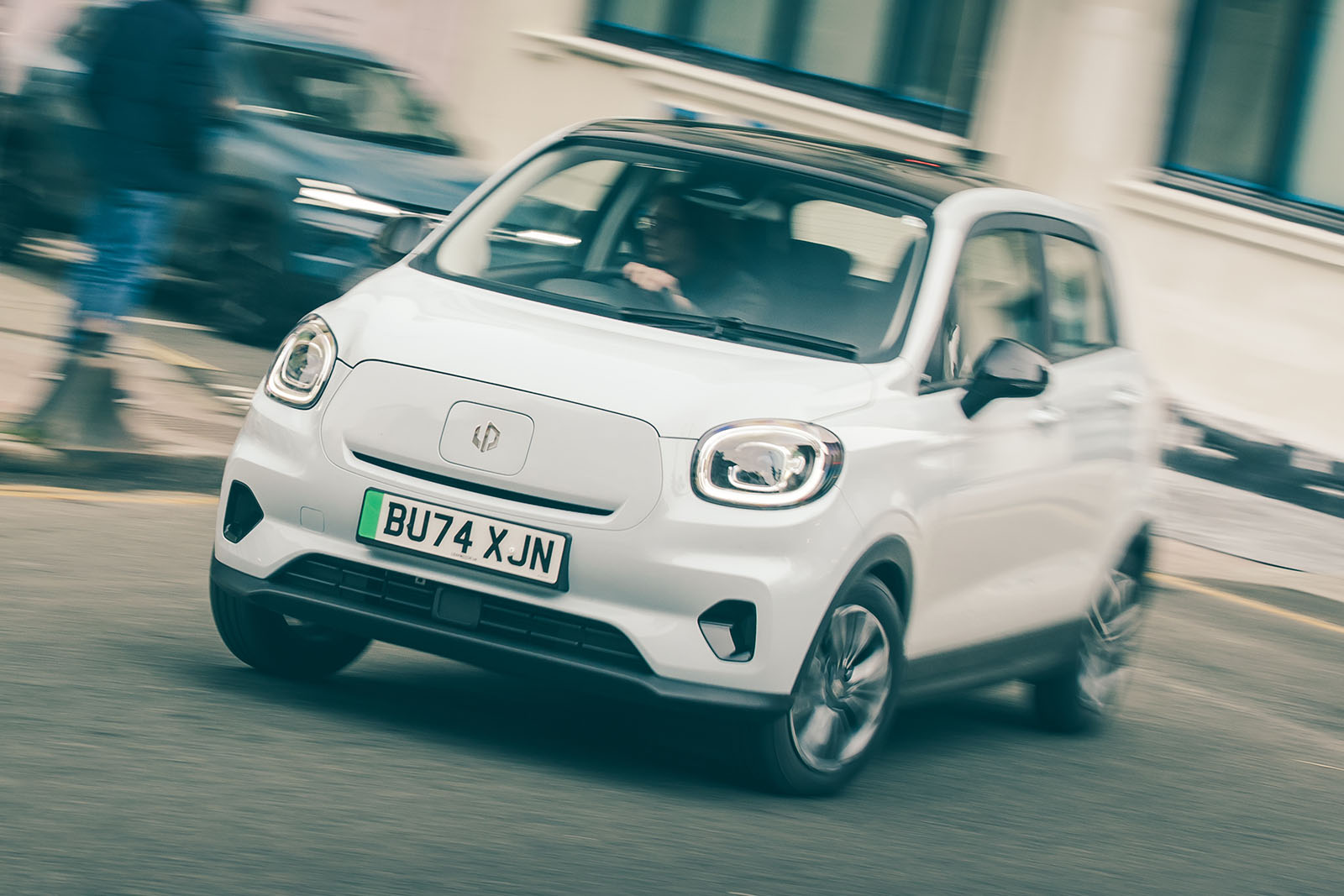
we have the Leapmotor T03 coming

Also the BYD Seagul

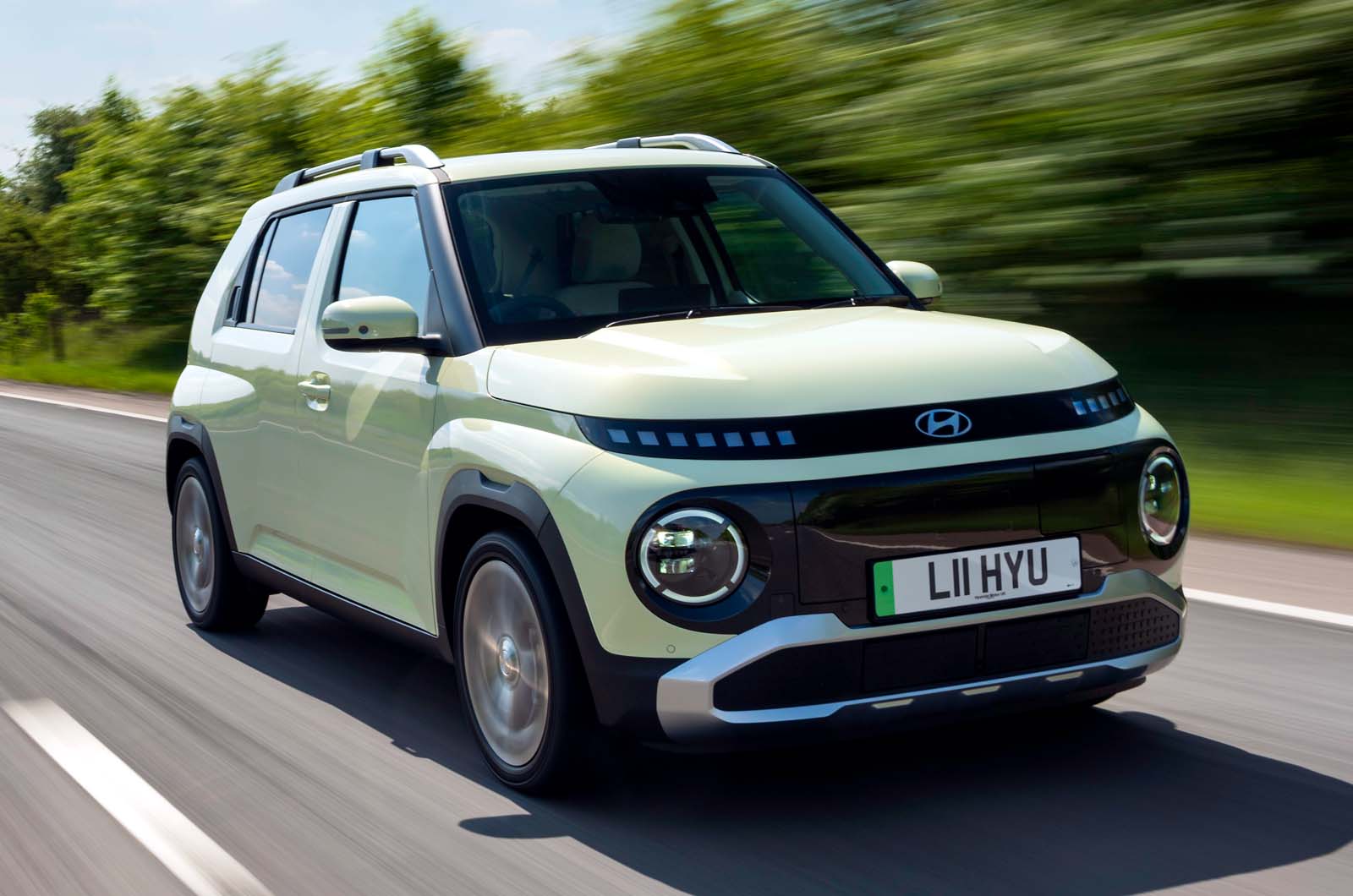
Also the Hyundai Inster a bit more expensive but insanley cool and practical


There are quite a few others that will be announced soon all at under that magic £20k mark
 
Last edited:
Also the Hyundai Inster a bit more expensive but insanley cool and practical

Great to see Hyundai abandoning all pretentions of making good looking cars. I was always in 2 minds about their EV6 - is it Blade Runner or does it actually look like a Toaster?

Inster is giving strong Multipla vibes.

I think BYD have some interesting ideas - let's see what happens with Mr Musk in charge of tariffs on Chinese goods. Maybe it will develop into another Huawei (great phones but too risky for many people to own).

And yes, I'm mildly vexed that my 7 year old car will suddenly be paying VED. But they have to tax us somehow I guess.
 
Isn't the EV6 a KIA rather than a Hyundai? I quite like the look of them but they're still a bit pricey 2nd hand - the iPace was cheaper (and Mrs Nod prefers its looks!)

Having Build Your Dreams plastered across the back of a car is a dealbreaker for me!
 
Isn't the EV6 a KIA rather than a Hyundai? I quite like the look of them but they're still a bit pricey 2nd hand - the iPace was cheaper (and Mrs Nod prefers its looks!)

Of course you're right - I was confusing my Korean EVs. The EV6 is actually a nice looking car. I was thinking of the Ioniq 5 which is actually the same car as the EV6 but in a love it or loathe it party frock :D
 
Tried an EV6 on at the local County Show a couple of years ago and it was very comfortable. Tried another on with Mrs Nod before she bought the iPace and the Jag has it in the comfort stakes! IF we needed the longer range that the KIA has, a different choice may have been made but we rarely need more than a 200 mile round trip and if we do, we still have mine to use!
 
Spot on and this is being discussed on quite a few you tube EV channels as being a big hole in the UK EV market that China will fill in 2025

we have the Leapmotor T03 coming

Also the BYD Seagul

Also the Hyundai Inster a bit more expensive but insanley cool and practical


There are quite a few others that will be announced soon all at under that magic £20k mark
I hope the Chinese brands improve their spares availability; when we were collecting my wife's car (Honda Hybrid) from a body repair shop a few months ago I was shocked to see a row of 6-8 MG EVs all propped up on axle stands waiting for front suspension parts.
 
:ROFLMAO: :ROFLMAO: :ROFLMAO: :ROFLMAO: They were a couple of hundred quid maybe. It was so long ago I can't remember now :)

It was actually a serious question. If I could have bought an EV for that price of my recent ICE then I might have been tempted. Even without the convenience of being able to charge at home or at work.

It's recognised as the biggest barrier to EV uptake, the price of a new car.
That is changing though and it would always have changed because technology is always expensive when new. EV prices are falling, cars are getting more efficient and are definitely better designed than ice cars at least in my mind. By the time the ice cutoff comes EV prices will have settled and you won't recognise them compared to today.
 
It's recognised as the biggest barrier to EV uptake, the price of a new car.
That is changing though and it would always have changed because technology is always expensive when new. EV prices are falling, cars are getting more efficient and are definitely better designed than ice cars at least in my mind. By the time the ice cutoff comes EV prices will have settled and you won't recognise them compared to today.

I'm not sure it will though. Who's going to buy a 10 year old EV on its original battery that's well past its prime and ideally needs replacing. If a replacement battery is even still available for it. I would imagine an engine has a longer lifespan than a battery.
 
I'm not sure it will though. Who's going to buy a 10 year old EV on its original battery that's well past its prime and ideally needs replacing. If a replacement battery is even still available for it. I would imagine an engine has a longer lifespan than a battery.

Why do you suppose a ten year old EV battery will need replacing? It's mileage that affects batteries, not age and even today's batteries are good for 200,000 miles and more.
 
Why do you suppose a ten year old EV battery will need replacing? It's mileage that affects batteries, not age and even today's batteries are good for 200,000 miles and more.

I read that battery warranties go from 8-10 years. But regardless, you still aren't going to buy and own a decent EV for a couple of grand which is probably one reason they aren't so popular privately owned.

Money.
 
I read that battery warranties go from 8-10 years. But regardless, you still aren't going to buy and own a decent EV for a couple of grand which is probably one reason they aren't so popular privately owned.

Money.

You should maybe read up on a subject before you pronounce your opinion on it.
 
I read that battery warranties go from 8-10 years. But regardless, you still aren't going to buy and own a decent EV for a couple of grand which is probably one reason they aren't so popular privately owned.

Money.
what warranty do you get on a standard car engine?
the average age of a car on the UK roads is a bit over 10 years
so very few of them will have any warranty at all so whats the difference between an older EV?

I suspect they will come with a battery health check which will give potential buyers a good idea of the state of the battery etc,
what do you get on a 10 year old engine? some service records but the cam belt could go at the end of the road?
 
what warranty do you get on a standard car engine?
the average age of a car on the UK roads is a bit over 10 years
so very few of them will have any warranty at all so whats the difference between an older EV?

I suspect they will come with a battery health check which will give potential buyers a good idea of the state of the battery etc,
what do you get on a 10 year old engine? some service records but the cam belt could go at the end of the road?

Toyota extend your warranty by a year each time you have the car serviced with them, so you can get 10 year engine warranty on a Toyota - I think the issue here comes from the fact that a 10 year old battery may have significantly reduced range (that might suit you), but a 10 year ICE car will typically go for just as many miles as it did in year one on a tank of fuel. A new cambelt almost ceretainly would cost significantly less than a battery replacement.

At the moment electric cars are priced in such a way that only a percentage of road users can use them, and government and local council policies of pushing electric vehicles (at a cost to ICE users) is effectively a tax on the less well off. The latter is something that perhaps the current mayor of London needs to consider!!!!
 
I wonder how many of the best sellers on this list are leased company cars, or cars bought through employee sacrifice salary schemes, both of which offer significant financial benefits to their drivers?
It should be pointed out that it was company cars that started the rush to private car ownership. Company cars were originally a way of getting round wage caps. These cars then change from being company cars to privately owned ones at the end of their leases. I would bet that a large proportion of cars on the roads were once company cars.
 
It should be pointed out that it was company cars that started the rush to private car ownership. Company cars were originally a way of getting round wage caps. These cars then change from being company cars to privately owned ones at the end of their leases. I would bet that a large proportion of cars on the roads were once company cars.
I don't get your point about company cars starting the rush to private ownership.......

I remember getting my first company car in the early 1980s, before that they were largely unheard of apart from 'commercial travellers' and sales people having them. Only people who had a need to be mobile were provided with cars, I agree with you the growth of company cars was fuelled by wage constraint in the UK. Before I retired I worked for a global IT company and the UK subsidiary I worked for was (and probably still is) one of the few countries within the global group that provided 'perk' cars.
 
I don't get your point about company cars starting the rush to private ownership.......

I remember getting my first company car in the early 1980s, before that they were largely unheard of apart from 'commercial travellers' and sales people having them. Only people who had a need to be mobile were provided with cars, I agree with you the growth of company cars was fuelled by wage constraint in the UK. Before I retired I worked for a global IT company and the UK subsidiary I worked for was (and probably still is) one of the few countries within the global group that provided 'perk' cars.
Company cars don't disappear after their lease is up. After three or four years they get sold off, and largely end up in private hands. In the early days it was distance rather than age, Maybe 30,000 miles and off to the auction house.
 
Seems to be age these days - change it before it needs an MoT. Great for 2nd owners, not so good for private first owners.
 
I think the issue here comes from the fact that a 10 year old battery may have significantly reduced range (that might suit you), but a 10 year ICE car will typically go for just as many miles as it did in year one on a tank of fuel. A new cambelt almost ceretainly would cost significantly less than a battery replacement.

You need to think of batteries in terms of miles driven, not the age of the car. Today's EV main batteries are degrading significantly less than those of a few years ago and in many cases will still be 80% effective after 150k miles.
A privately owned car of 10 years old will have driven an average of 75k miles or 20-30 miles a day (according to google) and if you apply that to an EV battery it's still going to be about 90% effective. My first EV had a range of ~200miles, minus 10% is 180 and that's a weeks worth of driving for the average Brit.
What I'm saying is, it's just not going to be the issue for drivers that some ice car lovers would have you think.
 
Toyota extend your warranty by a year each time you have the car serviced with them, so you can get 10 year engine warranty on a Toyota - I think the issue here comes from the fact that a 10 year old battery may have significantly reduced range (that might suit you), but a 10 year ICE car will typically go for just as many miles as it did in year one on a tank of fuel. A new cambelt almost ceretainly would cost significantly less than a battery replacement.

At the moment electric cars are priced in such a way that only a percentage of road users can use them, and government and local council policies of pushing electric vehicles (at a cost to ICE users) is effectively a tax on the less well off. The latter is something that perhaps the current mayor of London needs to consider!!!!

Yes this is exactly right our 6 year old Yaris is still under warranty as long as we get it serviced at the dealer, who are very good
One of the wheel bearings went they spotted the issue at the service and changed it without charge for us
I’m not against EVs in principle it’s as you say a cost thing , an EV is way out of our budget we’re going to keep our Yaris as long as we can
 
Hello, another EV thread :banana:

I drive an EV that is over 10 years old now, 2014 Leaf. It is still just about do 50 miles in winter and more in summer. Over last year it had been fully discharging every day for vehicle-2-home (using EV as home battery). Battery health reading from a few weeks ago is 78%.
I have zero doubt the battery will continue to be fully functional for us both as vehicle and home battery, until other part of the vehicle is beyond economical repair.

For EV, key is able to charge at home. Makes whole thing very easy and extremely cheap.

The other day, when I saw whole Top Gear back catalogue on iPlayer, I watched the first boat challenge. One of comment I thought was strange is that Hammond said the camper van had 70 bhp when new, it must now have 40 bhp. (not sure about exact numbers)
I had zero interest in ICE so not sure, is this reduction in engine power true? How does this affect fuel consumption during use?
 
You need to think of batteries in terms of miles driven, not the age of the car. Today's EV main batteries are degrading significantly less than those of a few years ago and in many cases will still be 80% effective after 150k miles.
A privately owned car of 10 years old will have driven an average of 75k miles or 20-30 miles a day (according to google) and if you apply that to an EV battery it's still going to be about 90% effective. My first EV had a range of ~200miles, minus 10% is 180 and that's a weeks worth of driving for the average Brit.
What I'm saying is, it's just not going to be the issue for drivers that some ice car lovers would have you think.

also there is a market already springing up that can repair faulty cells in batteries that will be very mature in 5 years time.

nice article about batteries here
the industry is pushing hard for EV manufacturers to offer recondition and repair

 
The other day, when I saw whole Top Gear back catalogue on iPlayer, I watched the first boat challenge. One of comment I thought was strange is that Hammond said the camper van had 70 bhp when new, it must now have 40 bhp. (not sure about exact numbers)
I had zero interest in ICE so not sure, is this reduction in engine power true? How does this affect fuel consumption during use?
Lots of factors influence fuel consumption as ICE vehicles get older, wear on the engine usually means that some of the original factory horses are now lame and wear on driveline components increases resistance. Wear on suspension and steering components also causes more rolling resistance and therefore require more power to overcome (though this will also be true of EVs)

the industry is pushing hard for EV manufacturers to offer recondition and repair
which should have been in place from day one!!

I'm certainly not anti-EV, it has its place and yes the market is maturing.
 
Lots of factors influence fuel consumption as ICE vehicles get older, wear on the engine usually means that some of the original factory horses are now lame and wear on driveline components increases resistance. Wear on suspension and steering components also causes more rolling resistance and therefore require more power to overcome (though this will also be true of EVs)


which should have been in place from day one!!

I'm certainly not anti-EV, it has its place and yes the market is maturing.


When Britain got the first ice cars (1890s) the tyres (which made up 75% the cost of the vehicle btw) were good for only 500 miles and there were no petrol stations at all for decades. Going by your opinion all this should have been sorted before the first car was ever sold.
 
The other day, when I saw whole Top Gear back catalogue on iPlayer, I watched the first boat challenge. One of comment I thought was strange is that Hammond said the camper van had 70 bhp when new, it must now have 40 bhp. (not sure about exact numbers)
I had zero interest in ICE so not sure, is this reduction in engine power true? How does this affect fuel consumption during use?
It's untrue. Certainly in the 80s and earlier engine power and efficiency could deteriorate with mileage, but not to the extent stated. There were multiple reasons for this:

Fuel - addatives to keep the engine internals clean were not as advanced.
Ignition - in the days of points and condenser ignition before full engine management the ignition timing and dwell angle could both drift, resulting in decrease in engine performance.
Carburation - before fuel injection petrol and air were mixed in a carburetor. These used a variety of methods to deliver a mixute that was close to the correct ratio at any given combination of engine revs, throttle drepression and engine load. For mechanical devices that work primarily on vacuum they were quite an achievement, but they were never perfect.

All of this would lead to a build up of carbon deposits inside the engine which would cause other problems (pinking, pre-ignition), as well as the mechanical components in both the ignition and fueling systems wearing and meaning they either require adjustment or replacement to restore performance and efficiency. Things would have to be really bad to see more than a 10% decrease in peak power though, and it was resolvable with some adjustments and possibly a "decoke" (a once in 100,000 miles procedure requiring removal of the cylinder head and some labour to scrape off the deposits and reseat the valves, I did a few when I was young) The cost of parts for this was small (I mean sub £50),

Nowadays with engine management and O2 sensors in the exhaust gasses you don't get carbon buildups as the engines always run at stoich and there are no moving parts in the ignition system and the only moving part in the fuel system is the throttle butterfly. Performance decrease with age is largely a thing of the past until you're talking interplanetary mileages, unless there's a design fault (e.g. the chocolate camshafts in some of the Audi V6 PD engines that would need replacing after about 200,000 miles).

 
Back
Top