

Phil Young
Suspended / Banned
- Messages
- 6,584
- Name
- Phil
- Edit My Images
- Yes
Please define "quality"
See above.

Please define "quality"

Your camera and lenses aren't responsible for flat and dull images - Your eyes are!I own a 550d and I really struggle with getting good image quality. I have recently bought a Canon 70-200 f2.8 IS lens and that has made a huge difference! Although my images still seem flat and dull. I also own a Sigma 10-20mm lens which is great for landscapes, I have wondered for as long time if my camera body is being restrictive? I was thinking about the 7D but wondered if I would get any benefit?
John


See above.
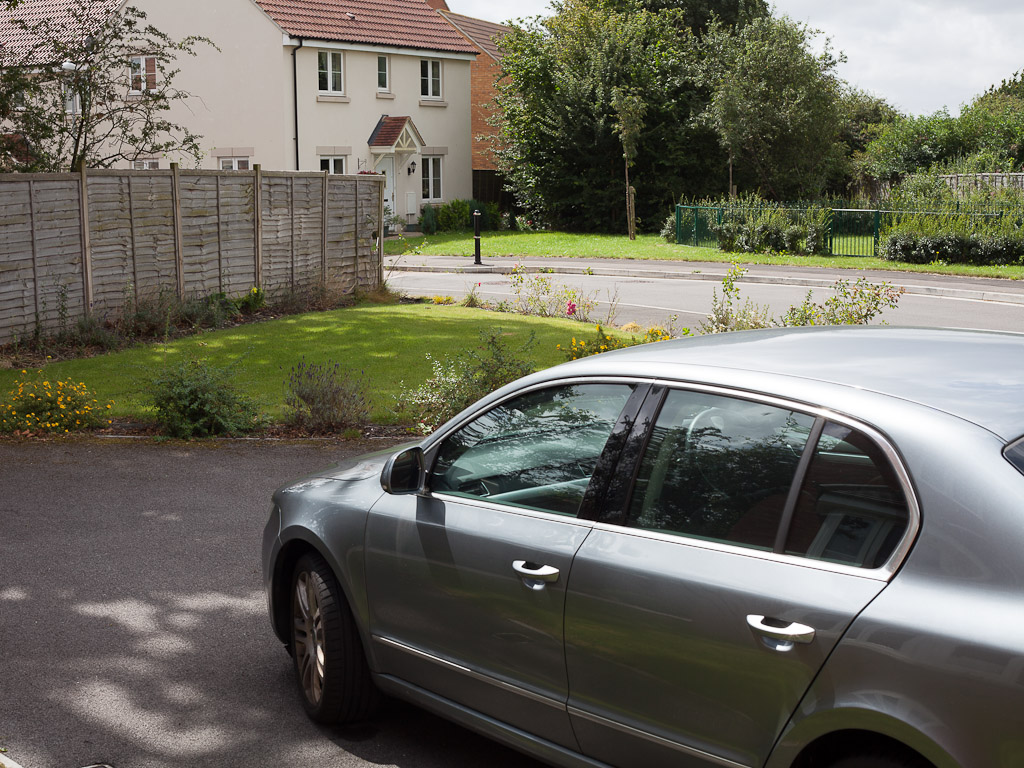
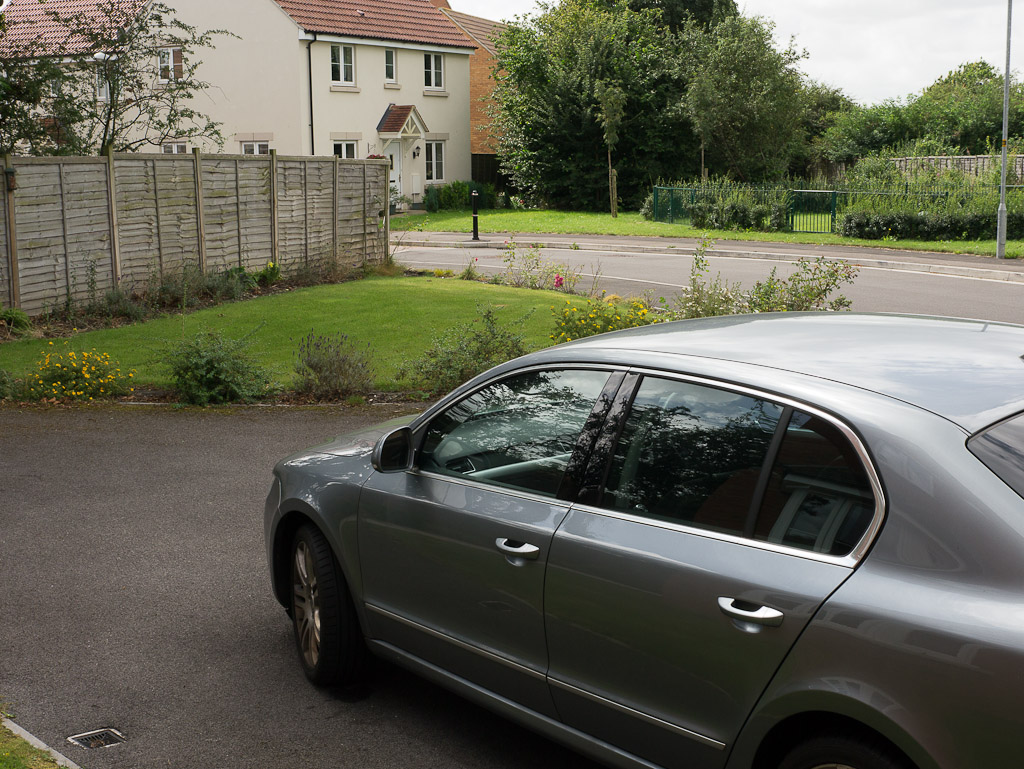 )?
)?


The sunshine is different between the two therefore the contrast and shadows will be different. Which is the FF and which is the micro 4/3rds (and don't cheat by looking at the exif

I was just wondering if there is a lot of difference in IQ between say my 550d, and say a 5d. I know there are differences in things like iso capabilities and maybe other stuff that could lead to better IQ in certain conditions, but I mean in general.

I'll say 2nd one is ff.
They were "snaps" out of my front door - just to see what the different cameras could do with a standard scene. Even when viewed at a decent size, they are pretty difficult to tell apart. If you view at 100%, you can tell them apart, but only in the fine detail. In fact, if I were using the GH3 (the micro 4/3rds that took that picture is a G5) I don't think I could really tell them apart even at 100% - the GH3 is sharper than the G5.Those two images are really tricky. I honestly can't tell the difference. Both have things that are better or worse about the other.

The sunshine is different between the two therefore the contrast and shadows will be different. Which is the FF and which is the micro 4/3rds (and don't cheat by looking at the exif
That's about the size of itIn my book, that shows that at base ISO, in good light, with a good lens, at a reasonable viewing distance...you can't tell the difference!
Found it.
5d2 gallery link here
7d gallery link here
The gallery pics are at iso 400/800/1600/3200/6400
The 24-70 was used for both, the focal length adjusted so that the same 'area' was covered.
ISO info should be in the keywords for each pic.
ISO 6400 on 7d
ISO 6400 on 5d2

Thank you - I will let others have a guess before saying which.
Also just to say these are SOOC with no processing (well, there was a slight colour change +500K and exposure hike +0.24 on one) and then straight out of LR.
EDIT: and crop to the FF to get it to 4:3 aspect
I said above, if you look closely, then yes, you can see the difference, but there isn't a lot in it if you are generally at a fairly low ISO.... I'd dispute "a lot more" in the processing latitude thoughNo processing is obviously why you buy expensive FF camera :shrug:
One of them will have a lot more processing latitude than the other. The highlights are nearly blown in both (second is worse - hence more likely to be 4/3, or perhaps it is just more exposed). You need to recover sky, and push the shadows a bit till they look nice, then we can compare. Or you might say that some £100 PS can also do almost same.


I'll say #1 just because there appears to be a tad more DR as the clouds have some detail.

What's the point of comparing photos that are only 1024 pixels across? Of course the differences are minimal at such a resolution. What does this prove?
That when viewed at a reasonable distance it's difficult to tell the difference???
The OP wanted to know what the IQ differences were between an entry level crop camera, and a full frame camera. Those images don't help him. Whether he needs the quality is up to him.
The beef is probably that there isn't much practical difference between the sizes unless you are pushing ISO, pushing processing hard or cropping & enlarging a large amount (i.e. viewing at 100%). Especially if you end up putting better & faster lenses on the smaller sensor as they are more affordable.what's the beef??
The beef is probably that there isn't much practical difference between the sizes unless you are pushing ISO, pushing processing hard or cropping & enlarging a large amount (i.e. viewing at 100%). Especially if you end up putting better & faster lenses on the smaller sensor as they are more affordable.
Yes, you can see differences when you view 100%, yes, you need to do more noise reduction on the micro 4/3rds images, but if you're taking photos in good light and they are exposed well, and you're printing up to 18"x12" (ish) - you probably won't see much of a practical difference. There's a lot of people with enough invested in FF & lenses, or have aspirations of owning FF, that don't like to admit that
Wonder how a canon 85 1.2 would perform on a m4/3. Oh wait, it wouldn't, there goes that idea.
No problem Sir!Wonder how a canon 85 1.2 would perform on a m4/3.
Why do people always do this when they are proved wrong?
If you can't accept the above don't go trying to turn it into a battle of what companies do and don't produce.
No problem Sir!
http://www.ecrater.co.uk/p/16786210/ast-canon-eos-ef-lens-to?gps=1
Manual only, but can be done (and anyway, let's face it, you're going to be using it wide open anyway)
How was anyone proven wrong exactly, sure in ideal conditions with a half decent lens at slow apertures and smaller image size display and print size a m4/3 can look similar to a ff. That's a lot of variables and the lens comment was to add that a system is as good as its lenses and intended use. Not everyone shoots in perfect conditions.
A battle of manufacturers ha ha, good spin on my post.
But that wasn't what you saidThanks, the point was its not the same is it, focal length equiv, no af, rather large on a m4/3 camera, dof won't be the same, so overall it won't act like it should.
You said:It quite clearly would (and if you only want to use it f1.2, there are some apertureless adapters available for a lot less...)Wonder how a canon 85 1.2 would perform on a m4/3. Oh wait, it wouldn't, there goes that idea.
) 
