Dumb Questions!

Sorry Neil, got so engrossed in this thread, forgot everything else. :lol:
 
You can lock exposure, here is a little vid that is relevant to your situation

http://www.youtube.com/watch?v=ztSGPemFg-s&feature=related


Andy

wouldnt really recommend locking exposure for shooting a competition, horse moves, light changes etc. in fact id recommend switching the focus activation to the AF-ON or * button (model depending) on the rear of the camera. that way you can track focus without locking exposure with a half press of the shutter etc.
 
Where is the processing? Do you mean like Adobe etc?
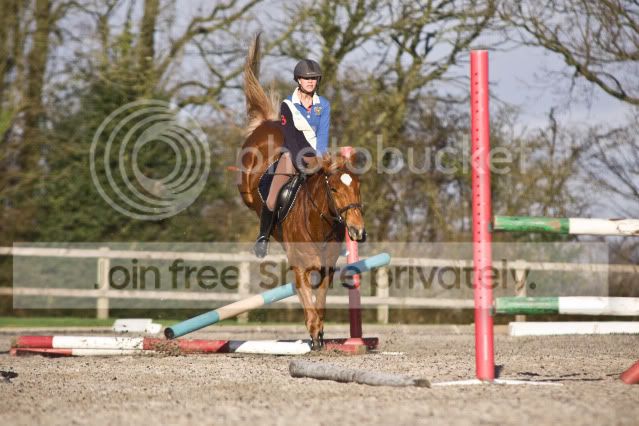
Yes, Something like Adobe Photoshop Elements. Just about every digital image can be improved somewhat using post-capture processing. There are even free programs that can help. This is what I got after playing with one of your images for three minutes in a free program called FastStone -

donna.jpg


I hope you think it's an improvement on the original -

AshwellShowAugust2010127.jpg


And no idea what Parameters are? Told you i was total novice

No worries.

Your camera will do a lot of processing of the images itself, before it writes them to the card. How it does that processing is determined by a set of parameters that can be selected by choosing different Picture Styles - p.67 of the manual. Further tweaking can be done to the parameters individually - p.82. Some people like to boost the 'sharpness', 'contrast' and 'saturation' settings - but the can be over-done.
 
Last edited:
Yes, Something like Adobe Photoshop Elements. Just about every digital image can be improved somewhat using post-capture processing. There are even free programs that can help. This is what I got after playing with one of your images for three minutes in a free program called FastStone -

donna.jpg


I hope you think it's an improvement on the original -

AshwellShowAugust2010127.jpg


No worries.

Your camera will do a lot of processing of the images itself, before it writes them to the card. How it does that processing is determined by a set of parameters that can be selected by choosing different Picture Styles - p.67 of the manual. Further tweaking can be done to the parameters individually - p.82. Some people like to boost the 'sharpness', 'contrast' and 'saturation' settings - but the can be over-done.

Thankyou ive got you! :thumbs:
 
Ok..Nice sunny day so far...What settings would be best for moving horses?
 
Sunny f16 rule http://en.wikipedia.org/wiki/Sunny_16_rule

Set aperture to f16 and then your ISO should be equal to you shutter speed, for example ISO100 = shutter 1/100 (or 1/125). If ISO is 200, then shutter 1/200(or 1/250) and so on.

Now it depends how much depth of field you want, coupled with how fast the action is and your focal length.

Maybe try Manual mode at ISO200 f11 1/500.


Andy
 
Sunny f16 rule http://en.wikipedia.org/wiki/Sunny_16_rule

Set aperture to f16 and then your ISO should be equal to you shutter speed, for example ISO100 = shutter 1/100 (or 1/125). If ISO is 200, then shutter 1/200(or 1/250) and so on.

Now it depends how much depth of field you want, coupled with how fast the action is and your focal length.

Maybe try Manual mode at ISO200 f11 1/500.


Andy

f/16, your aving a larf surely, were not shooting landscapes or here but equine action where it would be nice to give the subject some seperation from the background, even your suggested f/11 is totally ridiculous, bear in mind it will be difficult enough to acheive background seperation using a crop camera and the OP's relativly slow lens at its widest aperture:bang:
 
Last edited:
f/16, your aving a larf surely, were not shooting landscapes or here but equine action where it would be nice to give the subject some seperation from the background, even your suggested f/11 is totally ridiculous, bear in mind it will be difficult enough to acheive background seperation using a crop camera and the OP's relativly slow lens at its widest aperture:bang:

erm....thats the rule of thumb ya tit.

READ what I said. DEPENDS

check this thread here.....lacking dof from op http://www.talkphotography.co.uk/forums/showthread.php?t=321646
 
Last edited:
Hi Donna, not read all the replies yet but thought I'd add my 10p worth as I do a lot of this!

A fast lens is important (ie f/2.8 lens) but dont worry if you cant afford one, outdoor shots are easily achievable with good result with a standard lens (ie, f/4-5.6).

This advice is for outdoor shots as indoor shots are a different ball game!

Anyway set your camera up to either iso 400 or 800 depending on the light. I find I dont need to go higher than 400 if the light is reasonable. I use AV mode as you can then set to the widest aperture (yours will be f/4) always ensuring you get the fastest shutter speed available for the iso setting.

Set your focus mode to AI Servo and use the centre focus spot and the continuous shooting mode.

These settings will free you up to capture the action without having to worry about further setting and faffing with the camera.

Then do a little sharpening with Adobe or whatever software you use and with practice you'll get some nice shots.

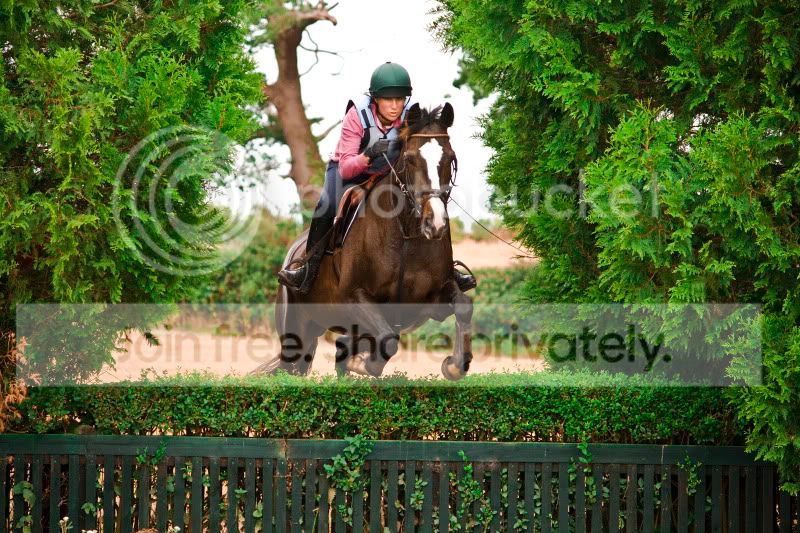
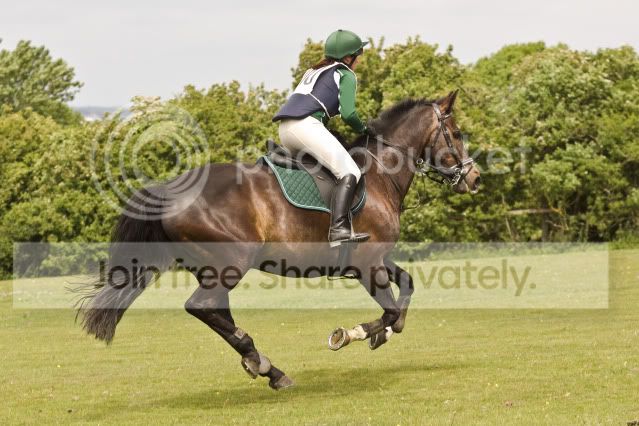
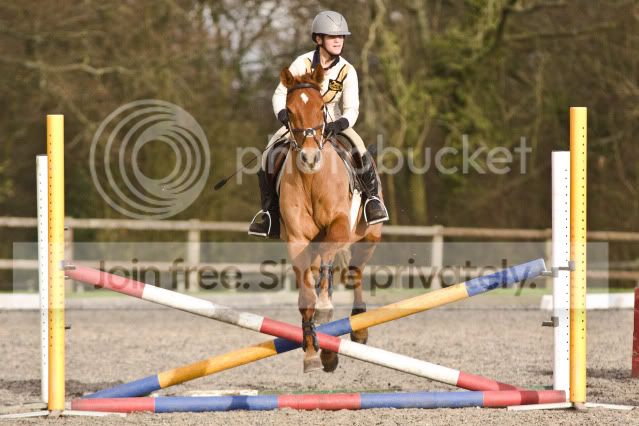
A few of mine using these basic settings (I'm not saying these are perfect mind you!);

Georgejumpingatthefinish.jpg


Magsrunning3.jpg


Alana6.jpg


Lucy19.jpg


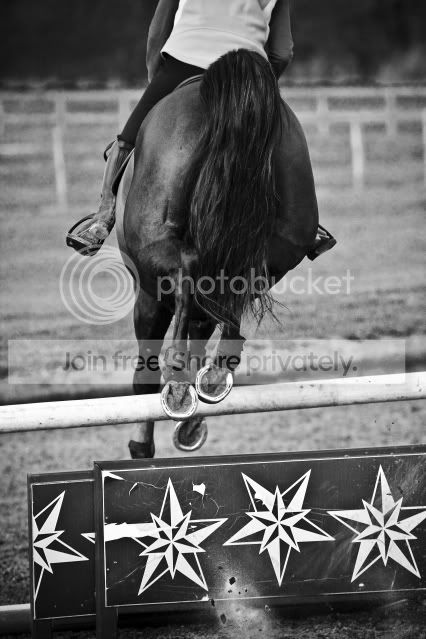
Rearjumpbw.jpg


Shutter speed is very important, 1/250 is waaaay too slow, you want to be in the thousanths of a second, rather than hundreths but using the above settings you should achieve that outside!

When you've mastered that we'll talk about back button focusing, but not yet!
 
Last edited:
Sunny f16 rule http://en.wikipedia.org/wiki/Sunny_16_rule

Set aperture to f16 and then your ISO should be equal to you shutter speed, for example ISO100 = shutter 1/100 (or 1/125). If ISO is 200, then shutter 1/200(or 1/250) and so on.

Now it depends how much depth of field you want, coupled with how fast the action is and your focal length.

Maybe try Manual mode at ISO200 f11 1/500.


Andy


No no no no :)

Avoid high AV values, as per my post above!
 
Last edited:
There is a method which allows you to get pretty good exposures all the time - I used to use it back in the days of film when I was doing weddings.

I call it "the back of the hand method."

In effect you are using the back of your hand as a kind of mobile grey card.

Firstly set the ISO, aperture and WB (if you need to).

Then point the camera at the back of your hand (Ideally it should just be a blur) and take a note of the exposure (I use a Canon camera and to do this I just depress the button half way).

Then reset the camera mode to manual and set the ISO, aperture, and WB as before and exposure to that indicated.

You have now set the camera to correctly expose for faces but it gives pretty good results in a wide variety of situations.

You can now use the LCD screen for final checks (ignoring any bright lights or sky).

The beauty of this method is that it totally ignores the BG etc so a shot of a horse and rider against the sky will be almost the same as a shot taken against a darker BG (as long as the ambient lighting doesn't change too drastically).

I used this method for years and still use it when conditions dictate.

.
 
Sunny f16 rule http://en.wikipedia.org/wiki/Sunny_16_rule

Set aperture to f16 and then your ISO should be equal to you shutter speed, for example ISO100 = shutter 1/100 (or 1/125). If ISO is 200, then shutter 1/200(or 1/250) and so on.

Now it depends how much depth of field you want, coupled with how fast the action is and your focal length.

Maybe try Manual mode at ISO200 f11 1/500.


Andy

Nope. Bad advice i`m afraid there bud.
 
http://www.bbc.co.uk/schools/gcsebitesize/art/video/photography/

There are some short videos about shutter speed, exposure, focus and DOF etc.
I suggest you watch them, they're actually really good, good explanation of everything you need as a starting point and most importantly really easy to understand. The person there doesn't operate words no one can understand.

Also there is few funny bits, for example women in a video says that if you want to zoom in to an object you will have to use zoom lens( obviously)
 
Dont say that Fracster, he'll call you a tit. :lol:

Shut it you..........:D

You do realise that all that fast F4 and F2.8 glass you have for sports is useless? You need to give them to me and i`ll buy you some nice F11 or F16 glass instead.
 
:lol: Now now children.
Anyway thankyou everyone so much.
I got lots of good pics but sadly lost 90 cause of the 32g memory card i bought off ebay :thumbsdown: ( should of known better ) pics come out corrupt but luckily i had others with me to use.
Ill post a few pics once ive edited some ( got 600 ):thumbs:
 
Well done Donna, I am pleased you got things sorted and got some good photo's, it's one big learning curve.

Next time you want some memory cards take a look at 7day shop.
 
32gb is a bit too "eggs in one basket" for my liking. max size i like to go is 8gb, that still gets about 500 or so RAW files from the 1D.

as for the whole f16 thing above.. if you like the subject, fences, spectators, carpark and main road all in focus then go for it :D
 
32gb is a bit too "eggs in one basket" for my liking.

Better to have all your eggs in a single, well-protected, basket than trying to juggle three or four smaller baskets of eggs.

Over a dozen years I've never lost photos from a CF card. I have, however, lost a CF card - and the pictures on it - when I put it 'somewhere safe' in the heat of the moment. Now the only way I can lose the card is to lose the camera.
 
Back
Top