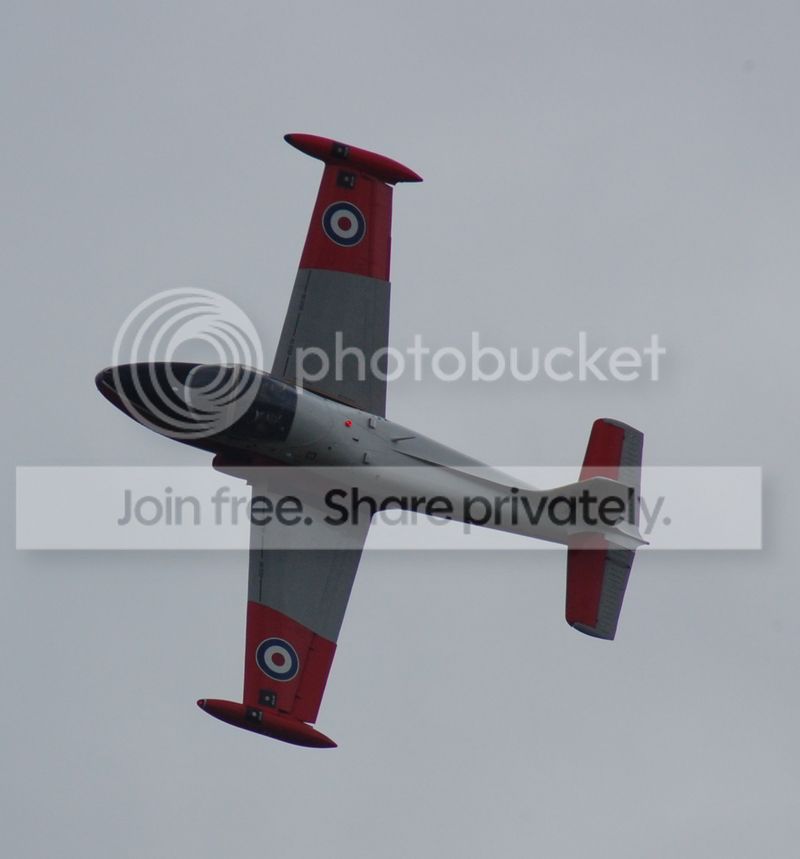
When shooting against a cloudy sky it is highly probable that the sky will be the brightest part of the scene, or very close to it. That being the case, I would actually spot meter the sky and manually set an exposure to put the bright sky at between +2 and +3 (when shooting raw). That will give me a reasonable ETTR exposure and, even if the lighting and contrast is dreadful, at least allow me to capture as much tonal detail in the aircraft as I can.
If you try metering from the aircraft then you will introduce a lot of variables which might end up with you blowing the sky or needlessly underexposing the aircraft. The variables include - tonality of the aircraft, how much of the frame it occupies, whereabouts in the frame it is positioned, what metering pattern you choose, how much variation in brightness between the plane and the background.
My approach seeks to simply fit the dynamic range of the scene within the capabilities of the camera as best I can. It may look a bit poo SOOC, but equipped with an abundance of image data I can then use my raw editor to craft something I like the look of.
Here's an example....
Of course, it's still pretty pants, because of horrible light and (I think) the remainders of smoke bombs lingering in the air, but at least my "bright" exposure has captured as much data as possible without blowing what little detail there was in the sky.
Also, while you often have little control over these things, I would certainly try to look all around me and, if there were brighter areas of sky as well as darker regions, I'd try to put the bright bits behind me and the darker bits ahead of me where I expected my subject to pass. That will narrow the contrast gap and make life easier all round. Unfortunately, in my limited experience of such events, the organisers seem determined to have the spectators facing south and into the sun for most of the performance. so cloud or no cloud you usually have a trickier job than you otherwise might.
FWIW my approach is exactly the same when shooting BIF too. I always try to put the light behind me and aim to ETTR for the brightest part of the scene, whether that would be the sky or the bird. Example before edits....
I knew in advance that the sky would be brighter than the bird, so I metered for the sky ahead of time and locked the exposure manually to avoid any upsets whilst tracking the bird. It's also much easier to meter like that than from a small subject that is whirling about all over the place.
Note, exposing highlights at +3 works well when shooting raw with Canon cameras. I think for Nikons the upper limit is more like +2 1/3 when shooting raw. You might need to shave 1/3 stop off those figures for either brand if shooting to JPEG. I'm not sure, because I never shoot JPEG.