

You are using an out of date browser. It may not display this or other websites correctly.
You should upgrade or use an alternative browser.
You should upgrade or use an alternative browser.
Do UV filters cause problems?
- Thread starter PAS
- Start date

HoppyUK
Suspended / Banned
- Messages
- 23,200
- Name
- Richard
- Edit My Images
- No
Yes, filters do cause one problem - flare.
Softness is rarely an issue, but flare can be. With a cheap filter, it is bad, but even with the very best multi-coated ones (eg Hoya Pro, Hoya HD, B+W) you can get very noticeable flare effects in extreme conditions.
This is partly a digital problem, as the surface of the sensor is like a mirror and reflects light back through the lens. Normally this just escapes, but a filter on the front reflects it back down the lens again as coloured patches of light.
I took some test pictures a while ago, with and without a Hoya Pro-1 high quality UV filter, of my car headlights. Without the filter there were flare spots, but with the filter there were even more strong flare spots, and it was also noticeable that the halo around the headlights was much larger in the filter pic, and also the black background wasn't quite so black in the filter pic, indicating veiling glare as well.
To be fair, this was an extreme test and I have only ever seen the same thing replicated in real photos in night scenes with bright street lights, and that kind of thing.
I bought that UV filter specifically for protection from salt sea spray on holiday a few years ago, and it did a valuable job. But I've never used it since. I use a lens hood for general physical protection.
Softness is rarely an issue, but flare can be. With a cheap filter, it is bad, but even with the very best multi-coated ones (eg Hoya Pro, Hoya HD, B+W) you can get very noticeable flare effects in extreme conditions.
This is partly a digital problem, as the surface of the sensor is like a mirror and reflects light back through the lens. Normally this just escapes, but a filter on the front reflects it back down the lens again as coloured patches of light.
I took some test pictures a while ago, with and without a Hoya Pro-1 high quality UV filter, of my car headlights. Without the filter there were flare spots, but with the filter there were even more strong flare spots, and it was also noticeable that the halo around the headlights was much larger in the filter pic, and also the black background wasn't quite so black in the filter pic, indicating veiling glare as well.
To be fair, this was an extreme test and I have only ever seen the same thing replicated in real photos in night scenes with bright street lights, and that kind of thing.
I bought that UV filter specifically for protection from salt sea spray on holiday a few years ago, and it did a valuable job. But I've never used it since. I use a lens hood for general physical protection.

StewartR
Suspended / Banned
- Messages
- 11,513
- Name
- Stewart
- Edit My Images
- Yes
Many telephoto zoom lenses deliver their poorest performance when used wide open at maximum zoom. That might be what you're seeing here. If you test it with and without the filter, my prediction is that it will still be slightly soft in this region even without the filter.Do UV filters really cause any picture problems, ie soft focusing? flare? poorer pictures?
have 1 on my new sigma, but have slightly soft focus at 200mm f2.8 n f4.0
gona try lens tomorrow without filter to see if its better!
HoppyUK
Suspended / Banned
- Messages
- 23,200
- Name
- Richard
- Edit My Images
- No
Don't want to hijack the thread, but how does the canon nifty fifty work with a UV filter?
A UV filter does nothing more than give physical protection on any lens.
But with the nifty fifty it malkes even less sense than usual, as that lens has a deeply recessed front element, meaning there's a neat mini lens hood already built in. You are throwing away that benefit by fitting a filter.
And also, it is questionable putting a good quality filter on there at a cost of £30, when you can buy that lens new for £70 (from Kerso, in the For Sale forum here).
HoppyUK
Suspended / Banned
- Messages
- 23,200
- Name
- Richard
- Edit My Images
- No
Typical lens flare using the Canon nifty fifty and a UV filter ...

I did return to get a decent image without the filter
HTH
That is dreadful
 Must have been a really nasty cheapo filter to do that. Can you remember what it was, or did you throw it so far away it has never been seen again! Classic 'mirror' flare reflections off the digital sensor. Glad you got a decent shot without it
Without meaning to go off on a rant, the thing about UV filters is perpetuated by camera sales people who are interested in profit, not in helping the customer. When they say, would you like a filter to protect your valuable new lens, it is not surprising that many folks say yes.
What they should really mean is, please will you buy a filter for that lens because there's a big profit margin in it and we'll make an extra tenner. That's not much less than we make on the whole camera!
And then they should add that while it offers physical protection, if you really feel you can't take care of your lens, it will also cause flare which, in certain situations with bright lights at night, will wreck your pictures.
That is the full story, but it's not often told in camera shops!
Edit: the flare in the headlights pic is obviously very bad, but if we had exact with and without comparison shots, there would be even more going on. There would be lesser flare marks that are not immediately obvious, and there would also be more detail in the darker areas without the filter which have been partly washed out by the veiling glare that has been spilled over the whole image as a light fog.

GarynLea
Suspended / Banned
- Messages
- 2,084
- Name
- Gary
- Edit My Images
- Yes
Hi Hoppy, this image was in rather extreme circumstances but I used it just to highlight potential problems. The filter was a Hoya green box cheapy one. It now resides in the bottom of the camera bag.
Another example from the same night ..

And my final image without filter, once I'd got control of the exposure ...

Cheers, Gary
Another example from the same night ..
And my final image without filter, once I'd got control of the exposure ...
Cheers, Gary

will69
Suspended / Banned
- Messages
- 611
- Name
- Neil
- Edit My Images
- Yes
Yes but they screw on.... and .... wait for it ... screw off!!
I find the benefits of risk mitigation outweigh the occasional lens flare issues. When I am shooting in a difficult lighting situation where lens flare is likely I will take the UV filter off.
I find the benefits of risk mitigation outweigh the occasional lens flare issues. When I am shooting in a difficult lighting situation where lens flare is likely I will take the UV filter off.

To be honest i use cheap kenko UV filters on all of my lenses, Sigma 70-200, Sigma 10-20 etc etc and i cant say i notice ANY difference in quality, fair play to some people who might experience some difference in quality on their lenses but on mine i dont. I set the camera up on a tripod, remote shutter release, same settings, one picture without filter and one with and i cant say i can see any difference.
Only thing i will mention is recently i got a skylight filter from jessops and when i put it on the lens i notice it slowed the exposure down from 1/40 to 1/30 admittedly thats nothing to worry about but the UV filter didnt affect the exposure at all, Just thought i`d mention it.
Only thing i will mention is recently i got a skylight filter from jessops and when i put it on the lens i notice it slowed the exposure down from 1/40 to 1/30 admittedly thats nothing to worry about but the UV filter didnt affect the exposure at all, Just thought i`d mention it.
Blue Eagle
Suspended / Banned
- Messages
- 825
- Edit My Images
- Yes
Only thing i will mention is recently i got a skylight filter from jessops and when i put it on the lens i notice it slowed the exposure down from 1/40 to 1/30 admittedly thats nothing to worry about but the UV filter didnt affect the exposure at all, Just thought i`d mention it.
Dont bother with skylights because they are just a UV and warm up filter....but you can push the WB if you want to warm the scene anyway (only useful for film really)

Naboo32
Suspended / Banned
- Messages
- 3,278
- Name
- Andy
- Edit My Images
- Yes
I must admit, I've been "mugged" into buying UV filters to protect all of my lenses and have only ever taken them off when using other types of filter in their place :|.
My question is (having read almost nothing but negative comments here):
What are the noticable benefits of using UV filters and in which circumstances :shrug:?
Most of what I've read about these filters came directly from the manufacturers and retailers, but what do you guys think ?
?
My question is (having read almost nothing but negative comments here):
What are the noticable benefits of using UV filters and in which circumstances :shrug:?
Most of what I've read about these filters came directly from the manufacturers and retailers, but what do you guys think
?
Werecow
Suspended / Banned
- Messages
- 761
- Edit My Images
- Yes
I don't see the point in spending hundreds or thousands of pounds on a lens for it's image quality only to have another piece of glass screwed to the front that causes image quality problems.
The only time i'd think about using one is to protect from wind-blown rain or sand. Other than that i use a hood as protection.
The only time i'd think about using one is to protect from wind-blown rain or sand. Other than that i use a hood as protection.
HoppyUK
Suspended / Banned
- Messages
- 23,200
- Name
- Richard
- Edit My Images
- No
What are the noticable benefits of using UV filters and in which circumstances :shrug:?
There are none. Zero. Zilch. In terms of allegedly enhancing the image in some way, a UV filter does absolutely nothing with digital.
UV filters go back to film, and to relatively simple lenses that had only four slender glass elements. Film has some sensitivity to UV, and these lenses sometimes allowed UV light through, typically at high altitude where there is a lot of UV that has not been filtered out by the atmosphere. Or under a bright blue sky. Blue-ish snowscapes were a commonly bad example, and a UV filter prevented this.
A Skylight filter is a UV with a hint of pink, which takes the warming up thing a tiny bit further. Also, early electronic flash was a bit blue and portraits often benefit from a slightly warmer treatment, so a Skylight filter could also be used then, too.
But today, modern multi-element lenses do not allow much UV through. Optical glass often has a tendency to be very slightly yellow anyway, which is noticeable when you get to see a big chunk of it. And if that wasn't enough, digital sensors have their own UV filters, and also infra red filters, to contain their sensitivity to the visible spectrum only.
In theory, any filter will degrade sharpness. It must do. But in practise this is very rarely noticeable provided the glass is perfectly flat. Some cheap acrylic filters might suffer slightly from this; Cokin have occasionally been accused.
But the major problem with filters is flare. Uncoated filters are very prone to this, but only the very cheapest are uncoated these days. I can't remember when I last saw one. Even a single coating (usually blue) makes a huge improvement, and multi-coating (usually greenish) takes this a useful step further. It takes quite a lot to provoke serious flare with a multi-coated filter, but it can happen.
Try photographing car headlights straight on, in darkness, and you will see even a multi-coated filter makes quite a mess. The problem is made far worse by the mirror-like surface of the digital sensor which reflects light back out of the lens, which the rear surface of the filter then reflects back down to form flare spots and ghosting (as the post above shows). It is this phenominon that is addressed in 'digitally enhanced' or 'digitally optimised' lenses. These are usually originally designed for film, but for digital they have extra coating on the rear element to prevent reflections off the sensor bouncing off and creating flare.

LiMPiNg
Suspended / Banned
- Messages
- 132
- Edit My Images
- No
To add to GarynLea's examples of mirror reflection flares, here are a couple I experienced with the Canon 50mm 1.8 and Hoya green UV. These are extreme conditions at night with wide apertures and bright light sources. For the price of the nifty fifty it just isn't worth keeping the filter on for protection and so it is now at the bottom of the bag. As a result of these shots I only use high quality UVs, or a CPL, in bright conditions, otherwise none at all.


- Messages
- 49,339
- Name
- Nod (UK)
- Edit My Images
- Yes
What are the noticable benefits of using UV filters and in which circumstances :shrug:?
Pretty much the only times I use UV/daylight/protection filters is in windy conditions on the beach - mainly to keep salt spray away from the lens coatings (many coatings are very thin layers of metal - salt + metal + time = no metal!). I also try to zoom as little as possible - I don't really want to suck in salty or dusty air...
Naboo32
Suspended / Banned
- Messages
- 3,278
- Name
- Andy
- Edit My Images
- Yes
There are none. Zero. Zilch. In terms of allegedly enhancing the image in some way, a UV filter does absolutely nothing with digital.
UV filters go back to film, and to relatively simple lenses that had only four slender glass elements. Film has some sensitivity to UV, and these lenses sometimes allowed UV light through, typically at high altitude where there is a lot of UV that has not been filtered out by the atmosphere. Or under a bright blue sky. Blue-ish snowscapes were a commonly bad example, and a UV filter prevented this.
A Skylight filter is a UV with a hint of pink, which takes the warming up thing a tiny bit further. Also, early electronic flash was a bit blue and portraits often benefit from a slightly warmer treatment, so a Skylight filter could also be used then, too.
But today, modern multi-element lenses do not allow much UV through. Optical glass often has a tendency to be very slightly yellow anyway, which is noticeable when you get to see a big chunk of it. And if that wasn't enough, digital sensors have their own UV filters, and also infra red filters, to contain their sensitivity to the visible spectrum only.
In theory, any filter will degrade sharpness. It must do. But in practise this is very rarely noticeable provided the glass is perfectly flat. Some cheap acrylic filters might suffer slightly from this; Cokin have occasionally been accused.
But the major problem with filters is flare. Uncoated filters are very prone to this, but only the very cheapest are uncoated these days. I can't remember when I last saw one. Even a single coating (usually blue) makes a huge improvement, and multi-coating (usually greenish) takes this a useful step further. It takes quite a lot to provoke serious flare with a multi-coated filter, but it can happen.
Try photographing car headlights straight on, in darkness, and you will see even a multi-coated filter makes quite a mess. The problem is made far worse by the mirror-like surface of the digital sensor which reflects light back out of the lens, which the rear surface of the filter then reflects back down to form flare spots and ghosting (as the post above shows). It is this phenominon that is addressed in 'digitally enhanced' or 'digitally optimised' lenses. These are usually originally designed for film, but for digital they have extra coating on the rear element to prevent reflections off the sensor bouncing off and creating flare.
Utterly fascinating, thanks a million for taking the time to explain this to me, HoppyUK
. As soon as I finish typing this, I'm off to unscrew all of my UV filters and put them back in their treacherous little boxes  .
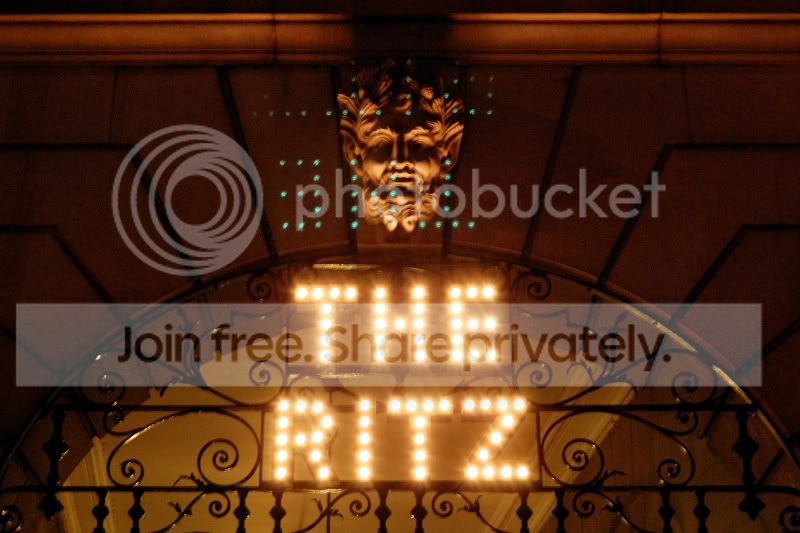
.Come to think of it, I've had a couple of such images myself, where there's been a partial reflection
. Luckily, neither of them were very important shots (oh yes, I like to shoot rubbish ).There's a bit of spurious blue over green in this one ...
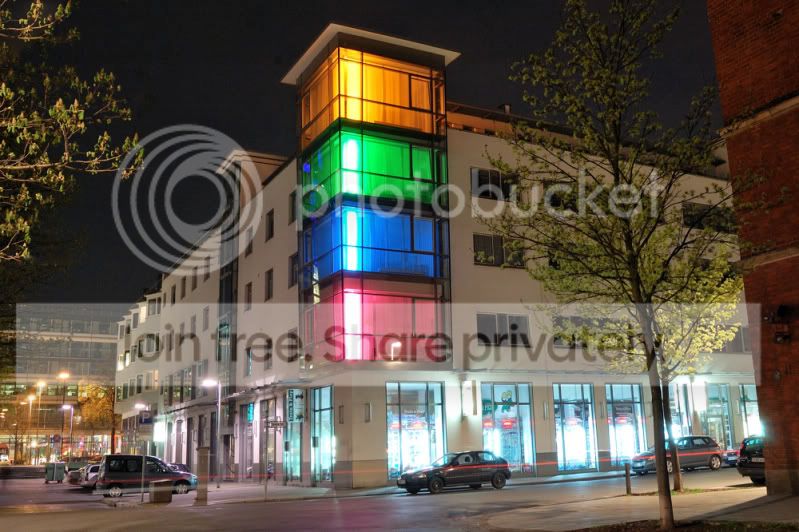
... and this one actually scared the b'Jesus out of me, as I didn't know that it was "flare" and thought that Beelzebub was trying to send me a message in illuminated brail
 .
.
Last question: Are "clear filters" (how pointless is that :shrug
just as bad from a flare point of view, or would one of those be more suitable for shooting through, if you had one on as general lens protection :shrug:?fascinating thread this guys, I'm really amazed at the effects in the example pics! Its pretty much convinced me not to get a UV filter for the lens I got last week.
but........
What about circular polorisers? Do they suffer/cause problems in the same way? And what are the benefits of using CPLs?
but........
What about circular polorisers? Do they suffer/cause problems in the same way? And what are the benefits of using CPLs?
HoppyUK
Suspended / Banned
- Messages
- 23,200
- Name
- Richard
- Edit My Images
- No
Any flat piece of glass placed in front of the lens will cause these effects - UV, plain, polarising, whatever. There are two flare effects going on here. The first is that any glass-to-air surface reflects a small percentage of the light falling on it. It is, in effect, a very poor mirror in this respect. Since there are no perfectly flat surfaces in a lens, these reflections fly off at all sorts of angles and while most of it is absorbed by the blackening of the lens barrel and the light baffling inside, some of it eventually gets through in scrambled form creating a slight fog over the image. This is sometimes called veiling glare.
The second effect is the mirroring of image elements, which is seen in the extraordinary examples posted here. When you fit a filter, basically what you have is two mirrors facing eachother - the surface of the sensor and the rear surface of the filter - and light just bounces back and forth between them.
But multi-coating is very effective, and if you use a high quality filter you are unlikely to see anything like this in everyday use. But if you are shooting bright lights, even with a very good filter you will get at least some image degradation. Usually it will be so slight that you don't even notice it, but sometimes you certainly will. And given that UV filters have no optical upside whatsoever, it makes sense not to fit one unless you really need the physical protection (eg sea spray, baby's fingers, dog's noses ).
Polarising filters are another question, but I use a CP a lot
The second effect is the mirroring of image elements, which is seen in the extraordinary examples posted here. When you fit a filter, basically what you have is two mirrors facing eachother - the surface of the sensor and the rear surface of the filter - and light just bounces back and forth between them.
But multi-coating is very effective, and if you use a high quality filter you are unlikely to see anything like this in everyday use. But if you are shooting bright lights, even with a very good filter you will get at least some image degradation. Usually it will be so slight that you don't even notice it, but sometimes you certainly will. And given that UV filters have no optical upside whatsoever, it makes sense not to fit one unless you really need the physical protection (eg sea spray, baby's fingers, dog's noses
).Polarising filters are another question, but I use a CP a lot
LiMPiNg
Suspended / Banned
- Messages
- 132
- Edit My Images
- No
What about circular polorisers? Do they suffer/cause problems in the same way?
You probably wouldn't experience such problems as you would be using the CPL in bright, sunny conditions with the sun high in the sky. You wouldn't be using the CPL in low light situations with bright light sources that would cause such things.
That being said, when it came time to get a CPL I didn't cheap out and went with the a Hoya Pro-1 as I have now seen what cheap filters can do in certain circumstances.
LiMPiNg
Suspended / Banned
- Messages
- 132
- Edit My Images
- No
I actually really like #3
joe
Ya, I kind of do too hehe.

huanjia
Suspended / Banned
- Messages
- 414
- Edit My Images
- No
Don't want to hijack the thread, but how does the canon nifty fifty work with a UV filter?
I bought nifty because it's cheap and I don't need to bother with fitting it with UV protector
Naboo32
Suspended / Banned
- Messages
- 3,278
- Name
- Andy
- Edit My Images
- Yes
Any flat piece of glass placed in front of the lens will cause these effects - UV, plain, polarising, whatever. There are two flare effects going on here. The first is that any glass-to-air surface reflects a small percentage of the light falling on it. It is, in effect, a very poor mirror in this respect. Since there are no perfectly flat surfaces in a lens, these reflections fly off at all sorts of angles and while most of it is absorbed by the blackening of the lens barrel and the light baffling inside, some of it eventually gets through in scrambled form creating a slight fog over the image. This is sometimes called veiling glare.
The second effect is the mirroring of image elements, which is seen in the extraordinary examples posted here. When you fit a filter, basically what you have is two mirrors facing eachother - the surface of the sensor and the rear surface of the filter - and light just bounces back and forth between them.
But multi-coating is very effective, and if you use a high quality filter you are unlikely to see anything like this in everyday use. But if you are shooting bright lights, even with a very good filter you will get at least some image degradation. Usually it will be so slight that you don't even notice it, but sometimes you certainly will. And given that UV filters have no optical upside whatsoever, it makes sense not to fit one unless you really need the physical protection (eg sea spray, baby's fingers, dog's noses
Polarising filters are another question, but I use a CP a lot
Thanks again for the info, HoppyUK
.I've decided to try and do without all of my UV filters, and if I do really feel the need to use one for protection, I'll make sure that it's my 77mm B+W MRC one, even though that will mean using step down adapters with most of my smaller lenses.
Actually, the Nikon "Clear" filter that I have was strongly recommended by Grays of Westminster, from whom I bought my D700/70-300mm VR combo, but maybe that was just blatent profiteering on their part :shrug:!?
As for most other types of filter, whatever the potential effects of flaring, I really can see the need/benefits for using those, so I won't be avoiding using them but will now be more alert to the potential problems and will attempt to re-shoot from another angle, if I notice any of this flaring in future :|.
Perhaps luckily (although not for my bank balance
 ), I chose to go with B+W filters, when I started purchasing my first filters a month ago. The four screw-in, 77mm ones that I've bought so far cost me over 300 quid, so they won't be going in the bin anytime soon . Just hope that they live up to thier reputation :|.
Still, I've bought them now and as long as I don't break/lose any, I don't think that I'll ever have to buy them again
 .
.
Naboo32
Suspended / Banned
- Messages
- 3,278
- Name
- Andy
- Edit My Images
- Yes
I bought nifty because it's cheap and I don't need to bother with fitting it with UV protector
 Win/win!