

You are using an out of date browser. It may not display this or other websites correctly.
You should upgrade or use an alternative browser.
You should upgrade or use an alternative browser.
Do people who shoot night photography...
- Thread starter Shutter
- Start date


swanseamale47
Suspended / Banned
- Messages
- 10,876
- Name
- wayne clarke
- Edit My Images
- Yes
Depends on the effect your after, if your shooting at dusk and you want to tone down a bright skyline you could do it I suppose.

Original Poster
Suspended / Banned
- Messages
- 1,118
- Name
- Chris
- Edit My Images
- Yes
Can't say I do either.

BandyQuill
Suspended / Banned
- Messages
- 1,839
- Name
- Chris
- Edit My Images
- Yes
never done it... ill give it a try this week to see if it makes any noticable difference... most of the time i shoot in either street light/pitch black so i dont think it would make much difference to my styles...

Mitzyboy
Suspended / Banned
- Messages
- 435
- Name
- Jon
- Edit My Images
- Yes
Cheers for the replies people!
I only really ask because of the amount of times I go out and find my shots are over exposed when trying to get star trails in when shooting over a city scape! Does that make sense?
Ta
I'll be interested to find out as I'm due up to Valencia shortly with our local club to take some night shots


- Messages
- 18,695
- Name
- LongLensPhotography
- Edit My Images
- No
Cheers for the replies people!
I only really ask because of the amount of times I go out and find my shots are over exposed when trying to get star trails in when shooting over a city scape! Does that make sense?
Ta
That doesn't make much sense really. Star trail photography is typically done in remote dark areas to avoid any light pollution. You would require extremely dark grad to do this towards a city. In a city light pollution is a major problem shooting anything but few brightest stars. On the other, hand city photography is best while there is still some ambient light left.... Don't forget you can blend different exposures and frames to create the effect you require.

lartamax
Suspended / Banned
- Messages
- 900
- Name
- John
- Edit My Images
- Yes
Have to agree with the post above. Star trails are done in remote areas to avoid pollution from cities, street lights etc.
try the url below for some tips.
John.
http://www.danheller.com/star-trails.html
try the url below for some tips.
John.
http://www.danheller.com/star-trails.html


AndWhyNot
Suspended / Banned
- Messages
- 1,402
- Name
- Andrew
- Edit My Images
- No
use a graduated filter upside down to reduce city lights and polution?
I tried it but too much flare as suggested - don't have a flare pic uploaded for easy reference but here's the potential result if you can avoid all light sources in frame.
This first one is straight from the cam + watermark. f/4, couple of minutes. Full dark- not twilight as the sky would suggest.

The failure (of the technique in general rather than the specific shot above) got me thinking about a different technique though and I now shoot urban star trails regularly without any concerns.
This is a stack of several consecutive jpgs with the final image converted to mono but otherwise unprocessed

So filters at night is possible but I found it very tough - even as a seasoned night shooter it's not only limiting compositionally but there's often not enough light around to get the filter set up by eye, so the couple of times I've tried it cost me twice as long manipulating the filter into position as I got to spend actually shooting.

- Messages
- 17,208
- Name
- Hugh
- Edit My Images
- Yes
There is a specialist filter you can buy that blocks out a lot of light pollution, designed for astrophotography - Astronomik CLS Light Pollution Filter, here's one that fits directly into the body of a Canon camera (not for use with EF-S lenses).
http://www.rothervalleyoptics.co.uk/astronomik-cls-light-pollution-eos-clip-filter_d3555.html
http://www.rothervalleyoptics.co.uk/astronomik-cls-light-pollution-eos-clip-filter_d3555.html
AndWhyNot
Suspended / Banned
- Messages
- 1,402
- Name
- Andrew
- Edit My Images
- No
There is a specialist filter you can buy that blocks out a lot of light pollution, designed for astrophotography - Astronomik CLS Light Pollution Filter, here's one that fits directly into the body of a Canon camera (not for use with EF-S lenses).
Unless I'm reading it wrong these filters are pretty limited in application and mainly intended for deep space work rather than urban nights/ star trails

Pete B
Suspended / Banned
- Messages
- 724
- Name
- Pete
- Edit My Images
- Yes
there is also making one from a glass blowers spectacles http://www.teralab.co.uk/Glass_Blowing/Glasses/Glasses_Page1.htm
I have a pair of better ones and on a ride home from the pub one night I wore em, really wierd, whole streets are dark not orange, no light from the (sodium)lamp posts.
I have a pair of better ones and on a ride home from the pub one night I wore em, really wierd, whole streets are dark not orange, no light from the (sodium)lamp posts.
Last edited:

mastertrinity
Suspended / Banned
- Messages
- 3,614
- Name
- Luke
- Edit My Images
- Yes
I don't use grads however I do use a normal ND filter when doing long exposures because street lamps especially seem to over expose and then it ruins the overall image
AndWhyNot
Suspended / Banned
- Messages
- 1,402
- Name
- Andrew
- Edit My Images
- No
I don't use grads however I do use a normal ND filter when doing long exposures because street lamps especially seem to over expose and then it ruins the overall image
Not sure I get this- is it just so you can work with longer exposure times?

Will-Gudgeon
Suspended / Banned
- Messages
- 334
- Name
- Will
- Edit My Images
- No
i have used a ND8 grad for night photography, but the right way up
works great for a full moon night, helps bring out a bit of foreground light before the moon over does it
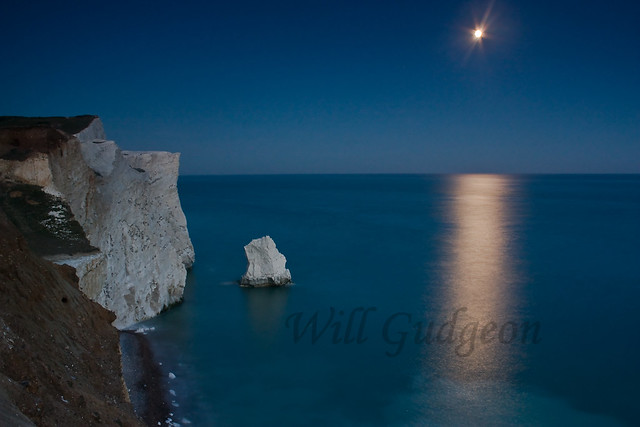
works great for a full moon night, helps bring out a bit of foreground light before the moon over does it
mastertrinity
Suspended / Banned
- Messages
- 3,614
- Name
- Luke
- Edit My Images
- Yes
Not sure I get this- is it just so you can work with longer exposure times?
Yeah as I like to do light trails and where there's cars there's street lamps and the lamps are terrible for creating bright starry effects and it distracts the image.
This is one of my images that has the trouble I mention, It's not as bad on computer but when they are printed it sometimes comes out with a weird tinge and the colours are just horrible in the lights.
http://www.flickr.com/photos/lukebrannon/5337274312/