Do I need a C stand

Nostromo

Suspended / Banned
Messages
6,236
Name
Dominic
Edit My Images
Yes
For anyone that's seen my photos on here, you'll know I mainly take still life type of images. These set ups tend to be fairly small and simple. I also like taking photos of the dogs, indoor portrait type of stuff.
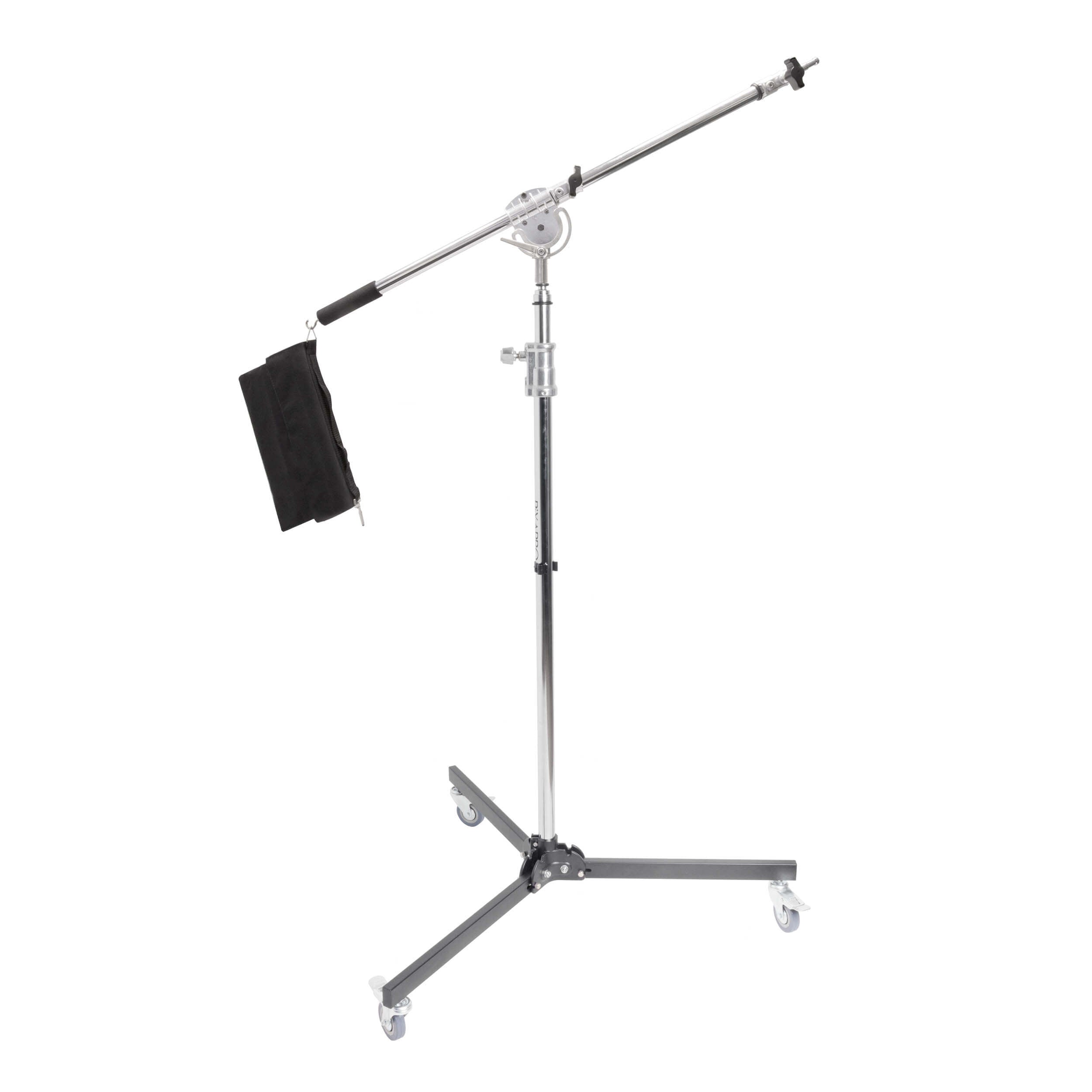
Up until recently I've been using speed lights on stands, with a 80x80cm soft box. I've now bought a mains powered studio light, which is obviously much bigger and heavier. I can use this on a standard light stand, but was contemplating getting a C stand with boom arm. Sometimes I would like to have the option to get my light above and pointing straight down or just to get the stand out of the way of the shot.
Now C stands aren't cheap (well not for me), so I'd like others opinions as to whether it would be a worthwhile expenditure for still life images, as these are my main genre of photography.
 
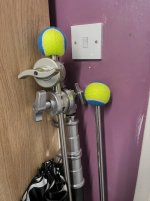
I keep looking but I'm limited on space, most C stands are fairly tall and bulky compared the standard stands, I'm using a smallrig with a boom at the minute.

In case it's of interest, I've been looking at these as their shorter than the ~3mtr tall versions.

Neewer C stand (Amazon)

(I use a 400w head with 100 Octa box on the Smallrig with boom.)

Edit - Smallrig stand
 
Last edited:
Personally, I avoid C stands - I view them as an American thing, all bling and bluster but without substance:)

They are far too heavy, they tend to have far too small a footprint to provide a stable support and most of them have a horrible chrome finish that reflects unwanted light on to the subject.

You might consider this as an alternative (other brands are available) https://www.lencarta.com/gb/neewer-90-160cm-tripod-boom-arm-with-sandbag
The only caveat is that these attachments absolutely need to be mounted on a really good, heavy-duty stand, such as this one https://www.lencarta.com/gb/lencarta-light-stand-265cm-pneumatic-air-damped
 
I bought one a long time ago now, wanting something solid, and solid they are.

Garry's synopsis is pretty spot on, with the caveat that the small footprint will depend on the modifier (in my experience). However you mention using a boom arm and I wouldn't want to do that with a heavy flash head and large modifier on mine. They are very heavy and if it were to tip it's likely it would break whatever was on it, and whatever it fell into. It has also drawn me a lot of wife aggro over the years because there is simply nowhere in our house to put it without it annoying her.
 
The arm on a C-stand is just long enough to get you into trouble. And the grip head/clamps on them are not well suited to adjusting position on the fly... I do like their versatility for uneven surfaces/odd placements.

IMO, the only good answer for this is a proper boom arm with a clamp style counter weight (bag style counter weights are more of a PITA). You also need weight bags to weigh down the base of the stand.
 
The arm on a C-stand is just long enough to get you into trouble. And the grip head/clamps on them are not well suited to adjusting position on the fly... I do like their versatility for uneven surfaces/odd placements.

IMO, the only good answer for this is a proper boom arm with a clamp style counter weight (bag style counter weights are more of a PITA). You also need weight bags to weigh down the base of the stand.
That's a tried and tested design that works really well when made in a better factory . . .

I don't think that the type of counterbalance weight matters much, but what really does matter is balancing the weight safely - using a combination of counterbalance and boom arm to achieve perfect, safe balance. The locking screw doesn't actually need to be used at all, and should never be used to stop the flash head changing height
 
I don't think that the type of counterbalance weight matters much,
The bag weights have to be added/subtracted to get the counterbalance correct as they clip to the end of the boom. The clamp weight you just slide to a new position to change it's leverage.
 
Boom arm is really what you need. That then needs to go on a stand of some sort

C stand is a reasonable option. They have quite high minimum height (1.5m or so) and they are nowhere near as stable as you think due to narrow leg spread. So that requires a sand bag full of steel or lead to really be secure. I filled my one with scrap metal. Just barely enough with ad600 and larger modifier.

You might get away with regular stand with small light and standard reflector or umbrella.

Most secure option would be one of those video centric riser stands £400 and up a piece
 
Thank you everyone that's replied to my post.
Some good food for thought, it looks like the best solution is not a C stand, but a heavy duty stand and boom arm, with counterweight.
 
if you want to get your light above a subject, maybe clamping to the horizontal bar of a backdrop system is an option?
 
Thank you everyone that's replied to my post.
Some good food for thought, it looks like the best solution is not a C stand, but a heavy duty stand and boom arm, with counterweight.
It is indeed if you are prepared to pay that much for one, and lug around well over 20 or 30 kg a piece. Wheels are a must, presuming you floor is smooth enough

I have wheel set for my c stand but to be fair I am too scared to use it due to stability issues. min height also goes up like +20cm
 
It is indeed if you are prepared to pay that much for one, and lug around well over 20 or 30 kg a piece. Wheels are a must, presuming you floor is smooth enough

I have wheel set for my c stand but to be fair I am too scared to use it due to stability issues. min height also goes up like +20cm
Good point about the necessity of wheels
 
Whether you need a C-stand or not does not depend on the type of photography you do, but on the type of accessory (light or other) you intend to use. Putting a heavy light with a large modifier on a stand that's just borderline capable of supporting it is playing with fire. In a quiet and very controlled environment like still life, where no one is likely to intrude upon you and you can avoid jerky, sudden movements, you can probably get away with it, until something unforeseen happens (Murphy's Law) and your heavy and costly light falls and breaks, perhaps breaking some other piece of gear and/or hurting you or someone else in the process.

C-stands (the serious ones made by Century (original make), Avenger, or possibly a Chinese knock-off by Neewer) are very sturdy and stable, they are used by professional crews on all serious shootings worldwide, including feature films, and are therefore nothing like bling and bluster. They are costly but the one you buy will be with you forever. They are heavy but as you're doing still lifes, you will not be lugging yours on a hiking trail. And they fold conveniently flat, which makes them easier to stow away. You can even take them apart very easily if you want to.

I have two C-stands, a regular one and a low-boy. I also have good quality "boom stands" (Manfrotto and Avenger), but those are not quite as reassuring as the C-stands. I would advise you to get one, which you can probably find secondhand somewhere. As they're virtually indestructible, a secondhand one should prove quite as trustworthy as a brand new one.
 
Whether you need a C-stand or not does not depend on the type of photography you do, but on the type of accessory (light or other) you intend to use. Putting a heavy light with a large modifier on a stand that's just borderline capable of supporting it is playing with fire. In a quiet and very controlled environment like still life, where no one is likely to intrude upon you and you can avoid jerky, sudden movements, you can probably get away with it, until something unforeseen happens (Murphy's Law) and your heavy and costly light falls and breaks, perhaps breaking some other piece of gear and/or hurting you or someone else in the process.

C-stands (the serious ones made by Century (original make), Avenger, or possibly a Chinese knock-off by Neewer) are very sturdy and stable, they are used by professional crews on all serious shootings worldwide, including feature films, and are therefore nothing like bling and bluster. They are costly but the one you buy will be with you forever. They are heavy but as you're doing still lifes, you will not be lugging yours on a hiking trail. And they fold conveniently flat, which makes them easier to stow away. You can even take them apart very easily if you want to.

I have two C-stands, a regular one and a low-boy. I also have good quality "boom stands" (Manfrotto and Avenger), but those are not quite as reassuring as the C-stands. I would advise you to get one, which you can probably find secondhand somewhere. As they're virtually indestructible, a secondhand one should prove quite as trustworthy as a brand new one.
Good point about Neewer, which has gone from a re-badge operation to a manufacturer in their own right with some excellent products.

The world has changed. The best boom arm I've ever had, branded Elinchrom although I have no idea who actually made it, and bought about 25 years ago, had a parallelogram action and was extremely heavy to move around and with a price to match, but was perfect. When I was with Lencarta, we had several different offerings, from what we called the Home Studio Boom, same design as the one linked by @sk66 but from a far better factory, we also had a heavy duty version, and a parrellogram, which was massive and which required a ceiling height of at least 4 metres.

But those days are gone. Why? They are far too large, heavy and expensive to import by air, and it takes a minimum of 6 weeks to get them by sea, which involves having the money tied up for another 6 weeks, which simply isn't viable in todays' economy, with very small profit margins. Also, far fewer people today have a studio, which means that they sell slowly and take up expensive warehouse space for a long time.

The cheap chrome-plated C stands have won the battle, because they are a compromise that suits most people, who have voted with their credit cards - a single product that does most things, but badly.

Any boom arm should be capable of being used with any flash head and any modifier, and isn't fit for purpose if it is restricted to lightweight items. I used to do a lot of fashion photography with a 70cm metal beauty dish, mounted on a large and heavy flash head, a good boom arm is essential for this, and I also used to use them all the time for product shots with a very large rectangular softbox, again fitted to a large and heavy flash head, and again a good boom are is essential for this, and I would never risk using a C stand, far too unstable with their small footprint, and with loads of "whip" which makes fine positioning impossible.

If you really want a C Stand, the only option IMO is to get one of the expensive ones that has an adjustable-height leg, perfect for uneven surfaces and which can also be used on stairs, and get one with a black finish, the chrome finish, which reflects unwanted light everywhere, is just crazy - the bling and bluster I referred to earlier - I'm just waiting for Donald Trump to produce a gold-plated one:)

I've gone into more detail in this tutorial https://www.talkphotography.co.uk/tutorials/which-lighting-stand.155/


 
For anyone that's seen my photos on here, you'll know I mainly take still life type of images. These set ups tend to be fairly small and simple. I also like taking photos of the dogs, indoor portrait type of stuff.
Up until recently I've been using speed lights on stands, with a 80x80cm soft box. I've now bought a mains powered studio light, which is obviously much bigger and heavier. I can use this on a standard light stand, but was contemplating getting a C stand with boom arm. Sometimes I would like to have the option to get my light above and pointing straight down or just to get the stand out of the way of the shot.
Now C stands aren't cheap (well not for me), so I'd like others opinions as to whether it would be a worthwhile expenditure for still life images, as these are my main genre of photography.
I would suggest saving up and getting a complete c-stand (knuckle+arm). They are so versatile - similar footprint as a master stand. If you want to use it as a boom - try and get a counter weight on the arm/ sandbag.
 
I'm doing a lot of table shots and still life lately. I have both light tripods and C-Stands available in my studio and use both. It depends mostly on what will be hanging off the stand. I also have a ceiling mounted lighting support system and frequently hang lights from above if the light will be directly above the subject, but my studio is small at 19' X 26' with only an 8' ceiling, so what I use depends on how I can best get the result that I want within the limitations of the studio ceiling height. Sometimes, "thinking outside the photography box" and coming up with DIY supports, etc. is the answer. Be open to thinking different ways when setting up your camera position as well as how you support your lights, and you will find new ways of achieving that special shot that is still in your head.

My studio was built with the desire to be able to use it for Portraits, Video, and Still Life type photoshoots, while attempting to make it as safe as possible for anyone in it. The ceiling mounted lighting support grid was a significant part of this. It's all DIY and in most shoots there are no light stands, power or signal cables on the floor at all. If one does ever get run on the floor, a light colored piece of carpet sample gets placed over it to reducer the chance of someone tripping over the cable. When I do use a light stand on the floor, it's because I will be moving the light around to achieve the desired result, but power in most cases comes from above, so there are still no power cables on the floor. I use LED light panels, arranged in a wide leg "U" shape around the shooting area to achieve a near shadow free area (like a NEWS room environment. There are 8 of these LED panels with 480 LEDs each, mounted as close to the ceiling as I can get them, so they can remain there, but turned off, while I do portrait and still life shoots using flash or constant lighting below them. Although there is only one power circuit feeding the ceiling grid, a remote control system has been installed with the ability to turn on and off the power to each kind of lighting wirelessly from the camera location. There are power outlets every 6" along both sides of this 10' wide ceiling lighting support grid, so power is available within 5' of anywhere that I should desire to hang a light from this grid. Lighting on stands on the floor are also powered from above, so again, no power cords on the floor. My 10' wide backdrops are also remote controlled from the camera location, so I can select and lower or raise any of the 6 backdrops that I have in this system using a wireless remote control. Black, gray, white, chroma blue, and chroma green, plus a pleated light blue backdrop are available on this system, so I can quickly change backdrops during a photo shoot, and usually without the model even knowing that the change was made. For "Still Life" I sometimes use one of these backdrops, but may use pieces of mat board clipped to the arm of a C-Stand behind the table. I have also used C-Stands with the arm extended horizontally to support black/white mat board with a round hole in it and a studio light above to produce a spot light effect. So which light stand gets used, depends on what it will be used for. Both have their benefits.

Charley
 
if you want to get your light above a subject, maybe clamping to the horizontal bar of a backdrop system is an option?
This works well if you want direct down light. Use a Manfrotto Superclamp (or knock off). It can be tricky to stop it spinning though.

That's a tried and tested design that works really well when made in a better factory . . .

I don't think that the type of counterbalance weight matters much, but what really does matter is balancing the weight safely - using a combination of counterbalance and boom arm to achieve perfect, safe balance. The locking screw doesn't actually need to be used at all, and should never be used to stop the flash head changing height
I've been through a few booms of that design. I imagine mine weren't from the better factory - they're not terribly robust. Usually the failure mode isn't catastrophic but the last one which died could have been really nasty - I won't get another.

I rely on one of these:


As Garry says, the footprint is too small but it's fine with a couple of sandbags attached to the centre column.

However - it is large, heavy and shiny. It suits me but then I don't do a lot of small scale product stuff.
 
C-Stands need to be used correctly. When using the arm, you need to clamp it so that weight hung from the arm will tend to tighten the grip head, rather than loosen it. They will hold a lot more extended weight when used this way, without the need for a counter weight. A sand bag on the tail end of the arm is still a good idea. Always add lights, etc. carefully to assure that it's weight will tend to tighten the grip heads, not loosen them. An Adorama video by Seth Miranda is on Youtube that explains the proper use of C-Stands very well.

View: https://www.youtube.com/watch?v=xoNVcSKd-oU


Charley
 
C stands are fine when used properly, but so are regular stands. A boom arm should just need a proper counterweight and you shouldn't have any issues.
The issue I have with a boom arm is the twisting.
I find balancing it safely s piece of cake, but because the arm is round, getting a grip on it is terrible.
 
The issue I have with a boom arm is the twisting.
I find balancing it safely s piece of cake, but because the arm is round, getting a grip on it is terrible.
Basically what I said in post 3 - badly designed.

A small diameter shiny rod with nowhere near enough surface area for a proper, secure grip:(
 
Back
Top