Digital camera's have no personality.

Only just seen this thread. I can see how a person might see a personality in their pet but not an inanimate item such as a camera. I understood that photography was about capturing pictures and in such a way to try to include the personality of the photographer.

Dave
My Fujifilm digital camera has a fun personality - it likes to play jokes on me, like changing from single-focus to manual, or adding exposure compensation without me noticing! :LOL:
 
I agree, but that "character" is mainly just nostalgia. Compared with today, most old lenses were extremely poor and were incapable of producing a sharp image at any aperture. The lenses for 5"x4" for example, usually needed to be stopped down to at least f/16. and some were so poor that they produced a specific and valued soft focus portraiture look, i.e., blurred.

We shouldn't be too nostalgic about old cameras either. The "Russian" cameras, actually made in a weapons factory in the Ukraine, were made down to the normal soviet standard, the Infamous Hasselblad copy, the Corfield 66, was made in Ireland, now very valuable becasue very few were sold and they all broke, the most memorable thing about it was the mirror system, which worked (very briefly) on a pulley system and a bit of twine. And there were the British Wray and Reid copies of old Leicas, again very rare and valuable for the same reason. The story at the time was that the factories were given copies of the Leitz blueprints, as part of the war reparations, but good old British companies couldn't be expected to work to foreign metric measurements, so they converted everything to imperial, and didn't work.



Good point, by my superb Nikon F90 is worth almost nothing on the second-hand market, probably too good and too reliable:)
My LF lenses have significantly higher resolution power than any of the lenses for my digital cameras. Additionally, the lenses for my Mamiya can have the same said of them. They lie between my "new" glass and the LF glass. When I want precision and sharpness I turn to film. That comes at a price, mind you. It takes considerable effort to achive focus correctly - first using the standards, then the aperture (yes!), and then a combination of lens and loupe. Frequently, the last glance I get of my subject will be a blur when I slide in the film holder. I will expect sharpness when I develop the sheet, though.

I absolutely don't get into the digital/analogue debate. I get too many superb photos, taken on smartphones, sent by my friends to even begin on that debate. The technology truly amazes at every turn. If historical events were happening in front of me I would certainly grab my Fujifilm for documentary reasons. But all of my deliberate work is taken on film. It may be me being cussed (not something which I can easily dismiss), or it may be nostalgia (something that is not in my nature). It may simply be inertia.
 
Last edited:
My LF lenses have significantly higher resolution power than any of the lenses for my digital cameras. Additionally, the lenses for my Mamiya can have the same said of them. They lie between my "new" glass and the LF glass. When I want precision and sharpness I turn to film. That comes at a price, mind you. It takes considerable effort to achive focus correctly - first using the standards, then the aperture (yes!), and then a combination of lens and loupe. Frequently, the last glance I get of my subject will be a blur when I slide in the film holder. I will expect sharpness when I develop the sheet, though.

I absolutely don't get into the digital/analogue debate. I get too many superb photos, taken on smartphones, sent by my friends to even begin on that debate. The technology truly amazes at every turn. If historical events were happening in front of me I would certainly grab my Fujifilm for documentary reasons. But all of my deliberate work is taken on film. It may be me being cussed (not something which I can easily dismiss), or it may be nostalgia (something that is not in my nature). It may simply be inertia.

I think it's because you bloody enjoy it too :)
 
Maybe people feel like digital cameras lack personality because the photos are free and so many pictures are taken without purpose or intent?

I would agree that the default look of an ILC camera can be a bit flat and it just takes a bit of time to get your pics looking less sterile - but the X100 showed that it’s possible to create a modern digital camera that feels like it has personality out of the box. But whatever you do with digital, it’s a lot less hassle than analog, and I love the aesthetic film - I just don’t have the patience for it.
 
Maybe people feel like digital cameras lack personality because the photos are free and so many pictures are taken without purpose or intent?
Are they?

I know why I'm pressing the button, every time - and I suspect that's true of most people, whether they're using film or electronic sensors...

Girls photographing P1011478.JPG
 
Oh dear, I have ventured into rather deep waters ... Different people have different tastes and approaches.

I am just a humble amateur. My LEICA DNGs (raws) are simply processed by DXO and resized by Photoshop Elements for tp.

A slight output variation is caused by different lens renderings of my M mount lenses from LEICA, VOIGTLÄNDER and ZEISS.

I have a rather purist - some might say simplistic - approach.

But nomen est omen : justpix ... :)
 
Oh dear, I have ventured into rather deep waters ... Different people have different tastes and approaches.

I am just a humble amateur. My LEICA DNGs (raws) are simply processed by DXO and resized by Photoshop Elements for tp.

A slight output variation is caused by different lens renderings of my M mount lenses from LEICA, VOIGTLÄNDER and ZEISS.

I have a rather purist - some might say simplistic - approach.

But nomen est omen : justpix ... :)

Don't worry about it. :)
 
My LF lenses have significantly higher resolution power than any of the lenses for my digital cameras. Additionally, the lenses for my Mamiya can have the same said of them. They lie between my "new" glass and the LF glass. When I want precision and sharpness I turn to film. That comes at a price, mind you. It takes considerable effort to achive focus correctly - first using the standards, then the aperture (yes!), and then a combination of lens and loupe. Frequently, the last glance I get of my subject will be a blur when I slide in the film holder. I will expect sharpness when I develop the sheet, though.

I absolutely don't get into the digital/analogue debate. I get too many superb photos, taken on smartphones, sent by my friends to even begin on that debate. The technology truly amazes at every turn. If historical events were happening in front of me I would certainly grab my Fujifilm for documentary reasons. But all of my deliberate work is taken on film. It may be me being cussed (not something which I can easily dismiss), or it may be nostalgia (something that is not in my nature). It may simply be inertia.
I disagree with what you say about LF lenses, certainly they're good enough for the purpose (minimal enlargement) but their superpower is their area of coverage, image circle, allowing camera movements, not their resolution.

Not that my opinion matters, what matters is that you're happy with them:)
 
I disagree with what you say about LF lenses, certainly they're good enough for the purpose (minimal enlargement) but their superpower is their area of coverage, image circle, allowing camera movements, not their resolution.
I agree.

Everything I know about lens resolution boils down to "the smaller the recording format the higher the required lens resolution". In general, a lens for 5x4 sheet film will give more than adequate quality if it hits 50 lines per millimetre. A lens for 35mm format needs to exceed 120 lines per millimetre for anything where resolution is important.
 
I disagree with what you say about LF lenses, certainly they're good enough for the purpose (minimal enlargement) but their superpower is their area of coverage, image circle, allowing camera movements, not their resolution.

Not that my opinion matters, what matters is that you're happy with them:)
Their resolving power is measured at thse higher levels I mention in MFT charts . I do a lot of architectural photography and really need that sharpness.

I get it - after quite a lot of work.

I should probably be clearer. Again, none of this is in any way a critique or a comparison of digital v analogue. My preference for analogues is entirely subjective and not something which I can form into any sort of technical argument in favour of one or the other.

I don't use autofocus on my digital gear. It is not accurate enough for my taste. It is my fear that modern lenses can be made so accurately in terms of manufacture that their abberations can be tolerated and 'eliminated' by processing. That, to me, hints at a shift away from purely optical considerations, or at best, toleration of predictable optical behaviour which can be processed away. We see this with fringing options in software. There's a hinterland between what the lenses offer, and what the ensors pick up where some variability is encountered.

My experience is that very simple lens setups, while requiring much greater input from the user, carry the potential for a better performance. Some of my digital lenses appear to actually feature corrective optics for problems created within the lens itself. Sophisticated, but now introducing additional variables. My mind is geared to the aim of completely understanding the mechanics and the optics of my gear - this requires that they be as basic as my ability to readily comprehend.

As you say, it's all about enjoyment!
 
I agree.

Everything I know about lens resolution boils down to "the smaller the recording format the higher the required lens resolution". In general, a lens for 5x4 sheet film will give more than adequate quality if it hits 50 lines per millimetre. A lens for 35mm format needs to exceed 120 lines per millimetre for anything where resolution is important.
It's a hellish topic to dive into. I'm pretty demanding of my LF lenses - mainly in the requirement for maintaining the sharpness edge-to-edge. Thankfully, the image circle is generally way beyond that required for the format - I think that any of my lenses can by used on 8 x 10 with barely any vignetting.

Many of these discussions really break down when the purpose of the kit is examined.
 
Their resolving power is measured at thse higher levels I mention in MFT charts . I do a lot of architectural photography and really need that sharpness.

I get it - after quite a lot of work.

I should probably be clearer. Again, none of this is in any way a critique or a comparison of digital v analogue. My preference for analogues is entirely subjective and not something which I can form into any sort of technical argument in favour of one or the other.

I don't use autofocus on my digital gear. It is not accurate enough for my taste. It is my fear that modern lenses can be made so accurately in terms of manufacture that their abberations can be tolerated and 'eliminated' by processing. That, to me, hints at a shift away from purely optical considerations, or at best, toleration of predictable optical behaviour which can be processed away. We see this with fringing options in software. There's a hinterland between what the lenses offer, and what the ensors pick up where some variability is encountered.

My experience is that very simple lens setups, while requiring much greater input from the user, carry the potential for a better performance. Some of my digital lenses appear to actually feature corrective optics for problems created within the lens itself. Sophisticated, but now introducing additional variables. My mind is geared to the aim of completely understanding the mechanics and the optics of my gear - this requires that they be as basic as my ability to readily comprehend.

As you say, it's all about enjoyment!

I understand and sympathise with your viewpoint completely. But if I wanted to be impolite - which I don't - I might think that you're a technophobe and simply avoid things that you don't understand:)

The simple fact of the matter is that digital photography is extremely demanding and requires excellent lens resolution, and the constant improvements to digital sensors keep raising that bar. At the same time, the lens manufacturers are constantly trying to reduce physical size, weight, manufacturing cost and so on and the general effect - usually applies to medication - applies here too, every effect has an unwanted side-effect so yes, unintended consequences and faults creep in. But, most unintended lens shortcomings can be cancelled out or at least dramatically reduced automatically by setting the lens profile in Photoshop.

And it was photoshop that demonstrated to me just how bad some of the "good" film lenses are - just scan the negs, and things like horrific barrel distortion just jump out and hit us.

Here's a very old photo of mine, it must be at least 20 years old, shot on 5"x4", which I developed and printed myself. I happened to find the print in a drawer, it needs a good wash, so everything's very mucky, ignore that. I scanned it, not with a photo scanner but with a genuine cheap office scanner, and even at this small size we can see that it's nowhere as sharp as it would be if I had used any DSLR . . .
pipe_print washed_red.jpg

None of which means that you're wrong:)
 

Attachments

  • old pipe_red.jpg
    old pipe_red.jpg
    205 KB · Views: 27
People are definitely fond of their old analogue cameras. And could also become fond of an older digital camera. But as sensor quality has been improving, it's easy to lose respect for the older digital camera that produces poorer quality results than the latest marvel. The camera seems to be less and less capable as time passes. Where analogue cameras don't lose quality, and might in fact improve with newer films. This difference will have a big effect on peoples thinking about their old gear.
 
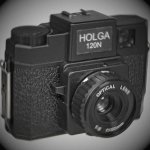
If you want personality then here's you camera. It has the personality of the vision of a drunk who has just had a pint of beer thrown in his eyes/face and then is falling forward of his stool ! They are fun though !

Holga.jpg
 
Last edited:
Reading through this thread makes wonder what everyone means by personality or character.

For me, cameras with character are the ones that, just by thinking about them, make me want to pick them up and make photographs. Not just because of how they look, but also by the way they handle and that sense of them just feeling right.

This doesn't mean they need to be perfect, but they need to positively contribute to the broader experience of making photographs, including feeling so comfortable to use that you can forget about it, and just concentrate on the photograph.
 
Reading through this thread makes wonder what everyone means by personality or character.
I read years ago, in connection with cars, that ascribing such terms as "personality" onto objects is a form of what some psychoanalysts call "object personification".

Despite being forced to read a textbook on psychology in the sixth form (please don't ask, as a loud scream in your ear can cause offence) I really don't know what psychoanalysts mean by the term. Then again, I'm not really sure that psychoanalysts know what they mean most of the time, anyway.

If you're still reading, you can always look at this article on personification...

 
I read years ago, in connection with cars, that ascribing such terms as "personality" onto objects is a form of what some psychoanalysts call "object personification".

Despite being forced to read a textbook on psychology in the sixth form (please don't ask, as a loud scream in your ear can cause offence) I really don't know what psychoanalysts mean by the term. Then again, I'm not really sure that psychoanalysts know what they mean most of the time, anyway.

If you're still reading, you can always look at this article on personification...

I don't think this is the context in which personality or character is being used in this instance. Certainly not by me.

I've never heard of anyone anthropomorphising camera gear.
 
My favourite film camera is a Nikon FM. It has a big ding at the top and large areas of brassing. It works perfectly, I love the feel of it and the character it has developed over the years. Mint condition? No thanks.
 
To me it’s more about the medium than ‘personality.’ I do own a film camera, but honestly the fully manual process makes me reluctant to carry it around. These days I end up shooting more with my phone or a digital camera. I feel like what really matters is whatever makes you want to take more photos.
 
But, do they have £20.00 a roll personality? :D
I have never ever paid anything like that for film. If the inference is that digital is cheaper, consider this, the proliferation of new cameras promising that it will be the nirvana and the answer to all your problems - at what cost? Individual films may seem expensive but the new cameras from the likes of Nikon, Canon, Sony, Fuji are just 'click bait' for the customer to splash out and buy.

For some these are well over £1000 and you can buy an awful lot of film for a grand! Then there is the printer, a decent printer can cost anything between £300- 1200 at the top end. and these keep cloning into a newer device with even more facilities and cost. Then don't even mention the cost of printer cartridges. For a full set of 10 for a Canon printer you could buy a couple of bottles of a good malt whiskey's and have change left over.

In 1991 I bought a new LPL colour enlarger for perhaps £200 or less. It is still in use regularly and the cost of running it for nearly 25 years has been a few bulbs and a rewire (by me) about 10 years ago. Equipment like this never goes out of date or becomes obsolete, and has cost me virtually nothing to run over those years. Printers have new models almost more often than cameras.

Apart from my 2nd hand F6 which was actually my most expensive camera ever at £590, When new, even after the advent of Digital was not far off £2000 That has not gone out of date and still works as well as when new. Even older, I have an F2a from around 1979/80 which is a delight to use.That too is not out of date. Then take my D800, even 'low milage' ones can be bought now for around £385/£400, how much were they when they were new? Still very usable but not same satisfaction when doing so. I get no feeling of having used any skill.

A roll of 35mm colour film individually they can be bought for £8.50 but bought in a 10 pack that goes down to around £8 each. B&W film can be bought for about 2/3rds the price of colour.

But each to their own I grew up with film and this has remained my passion, Digital is also very useful and that is used almost exclusively when I can get away on my motorcycle onto the continent, because I tend to take less with me, so less to carry. (a couple of SD card take up less space than 10 films)

P.S.


I have just checked and the price of a D800 when introduced in 2012 was £2,399 initially, but was increased to £2,599.99 following a tweak to correct an internal error.
 
Last edited by a moderator:
I have never ever paid anything like that for film. If the inference is that digital is cheaper, consider this, the proliferation of new cameras promising that it will be the nirvana and the answer to all your problems - at what cost? Individual films may seem expensive but the new cameras from the likes of Nikon, Canon, Sony, Fuji are just 'click bait' for the customer to splash out and buy.

For some these are well over £1000 and you can buy an awful lot of film for a grand! Then there is the printer, a decent printer can cost anything between £300- 1200 at the top end. and these keep cloning into a newer device with even more facilities and cost. Then don't even mention the cost of printer cartridges. For a full set of 10 for a Canon printer you could buy a couple of bottles of a good malt whiskey's and have change left over.

In 1991 I bought a new LPL colour enlarger for perhaps £200 or less. It is still in use regularly and the cost of running it for nearly 25 years has been a few bulbs and a rewire (by me) about 10 years ago. Equipment like this never goes out of date or becomes obsolete, and has cost me virtually nothing to run over those years. Printers have new models almost more often than cameras.

Apart from my 2nd hand F6 which was actually my most expensive camera ever at £590, When new, even after the advent of Digital was not far off £2000 That has not gone out of date and still works as well as when new. Even older, I have an F2a from around 1979/80 which is a delight to use.That too is not out of date. Then take my D800, even 'low milage' ones can be bought now for around £385/£400, how much were they when they were new? Still very usable but not same satisfaction when doing so. I get no feeling of having used any skill.

A roll of 35mm colour film individually they can be bought for £8.50 but bought in a 10 pack that goes down to around £8 each. B&W film can be bought for about 2/3rds the price of colour.

But each to their own I grew up with film and this has remained my passion, Digital is also very useful and that is used almost exclusively when I can get away on my motorcycle onto the continent, because I tend to take less with me, so less to carry. (a couple of SD card take up less space than 10 films)

You plainly are passionate about it, and good luck to you. But the last time I bought a roll of Ektar over the counter it was £18.00 then. So don't shoot the messenger.
 
Perhaps some of the camera manufactures new mirrorless cameras could have a limited edition run of retro style bodies.
There maybe a niche market for such camera, and perhaps they might sell well enough. I think the appeal is the dials, brushed look steel body panels, the click of the shutter ( I like the click of 7Dii, dislike the click of my R7 ) more metal less plastic is what I believe people my like.

Above there was a comment on old cars, well I had a XR2 Mkii which I tuned up the engine, and the suspension and really had a lot of fun driving. It maybe that when put my foot down the webber carb had that deep throaty roar, and the steering wheel felt alive in your hands. Though no airbags, no ABS, no AC, no turbo, no 6 speed box, and injection really does improve mpg ! !
 
There's more variety in film cameras I think. Also variation in film stock means the same camera can produce radically different results depending on which is used.

For digital cameras with character I'd think the Fuji x half with the lcd display on the back just to show what 'film' you have loaded is probably the only one I've seen that's genuinely different to every other digital camera out there. It's also vertical half frame which is again different to what everybody else has done.
 
I agree, but that "character" is mainly just nostalgia. Compared with today, most old lenses were extremely poor and were incapable of producing a sharp image at any aperture. The lenses for 5"x4" for example, usually needed to be stopped down to at least f/16. and some were so poor that they produced a specific and valued soft focus portraiture look, i.e., blurred.

We shouldn't be too nostalgic about old cameras either. The "Russian" cameras, actually made in a weapons factory in the Ukraine, were made down to the normal soviet standard, the Infamous Hasselblad copy, the Corfield 66, was made in Ireland, now very valuable becasue very few were sold and they all broke, the most memorable thing about it was the mirror system, which worked (very briefly) on a pulley system and a bit of twine. And there were the British Wray and Reid copies of old Leicas, again very rare and valuable for the same reason. The story at the time was that the factories were given copies of the Leitz blueprints, as part of the war reparations, but good old British companies couldn't be expected to work to foreign metric measurements, so they converted everything to imperial, and didn't work.


Good point, by my superb Nikon F90 is worth almost nothing on the second-hand market, probably too good and too reliable:)

One of the reasons is that after WW2 there was a shortage of raw materials that impacted on the ability to replicate the old German cameras. Zeiss had to basically redesign the Contax II & III post-war because they could not source the original metals. This is also why immediate post-war cars like the Fiat 500 and Citroen 2CV had canvas roofs to save on metal. Zeiss lost there whole R&D department in the Dresden bombings; plans, historical documents and spec's, everything. The heat rendered a prototype camera stored inside a metal desk to a molten heap.

The Soviet camera factories of which there were more than the one in Kiev were latterly staffed by orphans and political prisoners amongst others. Initially they had enough deportees taken by force from the German factories to make reasonable cameras. But as their numbers sadly dwindled as a result of the harsh conditions they were replaced by non-skilled, uninterested slave labourers. Each successive 'upgrade' on the KIEV, ZORKI, FED & other Soviet cameras was to make them more cheaply and quality declined with each successive model.

Anyway, back on topic; I prefer film cameras for their character and tactile feel. However, I bought an early noughties Contax TVS-D on a whim and absolutely love it. OK, it 'only' has 5Mp and no RAW facility, but the feel of the titanium body and the easy-peasy access to the important functions compared to my Leicasonic V-LUX Rubix cube of a camera makes it a pleasure to use.
 
Perhaps the use of the term 'personality' is incorrect. Object and items that are not alive and breathing, cannot really be said to have a 'personality'. Can they? Humans - yes, animals such as mammals - yes Trees and plants - no, other living creatures such as insects, snails and fish - open to debate, but inanimate objects - no. They can have little quirks such as a car refusing to start or a camera having a light leak.
 
Maybe people feel like digital cameras lack personality because the photos are free and so many pictures are taken without purpose or intent?

I would agree that the default look of an ILC camera can be a bit flat and it just takes a bit of time to get your pics looking less sterile - but the X100 showed that it’s possible to create a modern digital camera that feels like it has personality out of the box. But whatever you do with digital, it’s a lot less hassle than analog, and I love the aesthetic film - I just don’t have the patience for it.
theres definitely something in the understanding of what makes a good photo. As you say, these days photos are very disposable in that you can take many, and being able to save them digitally mean that they all just get buried. That coupled with the whole being vilified for suggesting someones photo isn't actually that good has led to a sea of bland "snaps" that end up masquerading as 'great' photos because they get 1000 likes and comments like 'you should do this professionally'. The actual great photos get diluted within this sea and end up being drowned out.
 
My Fujifilm digital camera has a fun personality - it likes to play jokes on me, like changing from single-focus to manual, or adding exposure compensation without me noticing! :LOL:
I'd swap 20Mp on mine for a locking button on the EV dial.
 
My Leica M8 ........Sigma DP3M ...............and Nikon D850.........all have their own, different personalities
 
The actual great photos get diluted within this sea and end up being drowned out.
One man's "great work of art" is another woman's "Ghastly waste of space" and of course, vice versa.

Some people think there should be a "Reichskulturkammer" (Government Chamber of Culture) but that didn't end very well for the Germans. Come to think of it, the "Narodny komissariat prosveshcheniya" (Commissariat of Enlightenment) didn't work all that well for the Russians either.

On the other hand, I've seen both German and Russian photographs that I've liked a great deal - it's all in the eye of the beholder.
 
One man's "great work of art" is another woman's "Ghastly waste of space" and of course, vice versa.
Thats just what poor photographer say to make themselves feel better about their mediocre work.

Once cliche and quotes are used as validation of originality then its already lost
 
Thats just what poor photographer say to make themselves feel better about their mediocre work.
One man's "mediocre work" is also another woman's "great art". ;)
Once cliche and quotes are used as validation of originality then its already lost
Everything that everyone does is based on what people have done before. One particularly honest ancient scholar wrote, long before Christianity appeared: "The thing that hath been, it is that which shall be; and that which is done is that which shall be done: and there is no new thing under the sun."

,,, or, as the late, great Tom Lehrer more succinctly put it: "Plagiarize - Plagiarize - Let no one else's work evade your eyes!" :naughty:
 
Perhaps the use of the term 'personality' is incorrect. Object and items that are not alive and breathing, cannot really be said to have a 'personality'. Can they? Humans - yes, animals such as mammals - yes Trees and plants - no, other living creatures such as insects, snails and fish - open to debate, but inanimate objects - no. They can have little quirks such as a car refusing to start or a camera having a light leak.
Maybe I’m more romantic than you, but I think trees clinging to rocks, vegetation springing up in the most dreary urban environment, old cars and cameras, houses and even China all can have ‘personality’.
 
Back
Top