I thought the graphics were cool

...DoF cannot be changed after the capture surely? The whole idea that when you inspect a print from varying distances the level of detail changes is also dictated by A) the print quality ( resolution plus paper stock etc), and B) the DoF of our own vision....
I understand viewing distance can have a massive impact over how the viewer can appreciate an image; in a typical magazine for example, the viewer is expected to read 10pt copy and look at an A3 image all in one go... it's never going to work but that's relative to the limitations of our eye, isn't it?
I know exactly where you're coming from

My view is that when you choose the camera settings and shooting position and then press the button the image is captured... DoF and all... and by "captured... DoF and all" I mean that how the image will look when printed at A5 and viewed from 18inches away or A3 and viewed from 2m away is decided when you set the camera up and take the shot.
Viewed like that you can't change the DoF after the image is captured. All you can do is display and view the image in different ways that either hide or make more obvious the inherent characteristics that were decided when you took the shot.
For example if I take a shot with thin DoF and print it out postage stamp sized no one will know that the DoF is very thin unless they examine it under a magnifying glass.
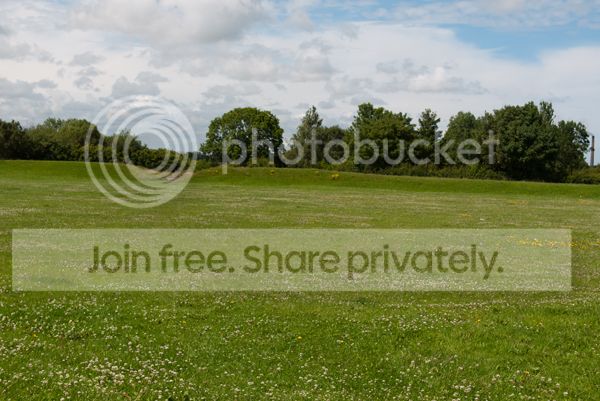
This shot looks like front to back DoF but in reality the point of focus is close to the camera and it only looks like front to back DoF because everything is small in the image. Print the image larger and the thin DoF will be immediately apparent.
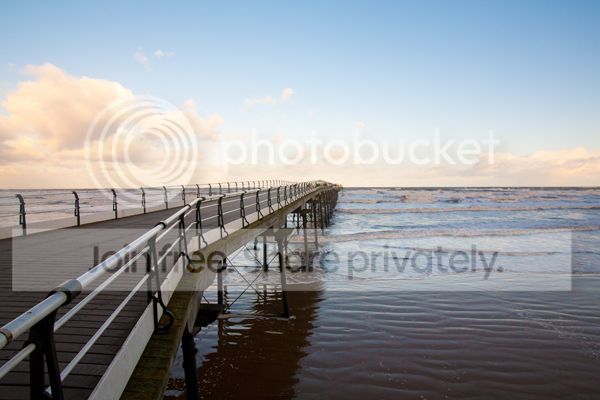
Other images like this next one are more obviously shallow DoF and the only way you'd be able to hide it would be to print it so small it'd be next to meaningless as an image.
In this last image there's front to back DoF under normal print and viewing and to make it appear less than front to back DoF you'd really have to print it quite large. So large in fact that IMVHO if you intended to print it that large you wouldn't have taken the shot with that gear and at those settings.
I disagree with how some people view this issue and the importance they give to DoF tables and especially the CoC. To me DoF tables are just a guide (anyone can make up their own) and the CoC is virtually an irrelevance (to me) as the manufacturers have made cameras and lenses that largely take care of the issue, ie. FF CoC=0.03, MFT CoC=0.015, see a pattern here?
MFT is a x2 crop format and needs to be magnified more than a FF shot to get the same sized final image.... however... even though it's a x2 crop it's easily possible to get perfectly good A3 images and the pixels are smaller and the lenses are sharper than FF pixels and lenses and even if they're not (I often use legacy lenses) it's still possible for the image to be magnified a little more and give a good enough final image at output sizes good enough for many people.
The only time I've ever had to think about CoC in over 40 years of taking pictures wasn't with a camera in my hand at all but when producing images for a stage play, people at the back needed to see a certain level of detail and they couldn't change their viewing distance. In circumstances like that your CoC may be... what? It depends upon the distance to the back of the stalls, 2 inches? three? In photography it's (the CoC) honestly never ever mattered to me. You have to know the basics and you have to keep in mind what output size you want and how you're going to view the images but as long as you choose kit that'll meet your needs you can then pretty much put the CoC on the back burner IMVHO.
What matters more to me than worrying about the science of CoC is aperture, focal length and camera to subject distance as I know that the gear I have (FF and MFT) is perfectly capable of producing an A3 image which is the largest I've ever made and that that image will be good enough to be viewed normally and indeed good enough to be examined quite closely by most people




 For really critical working, an awareness of (all) the contributing factors is all you need, then look it up on DoFmaster or your mobile phone app, or simply tweak it until it looks right.
 Note the table at the end that shows the full frame CoC as 0.029mm (usually rounded to 0.03) and the APS-C CoC as 0.019mm. The difference is the crop factor

 Only your eyes and acuity of vision have a set standard for DoF (eyes have an MTF rating too!) as stated earlier, though that obviously varies a bit from person to person.
