

You are using an out of date browser. It may not display this or other websites correctly.
You should upgrade or use an alternative browser.
You should upgrade or use an alternative browser.
D700 or D800
- Thread starter Badger8
- Start date

- Messages
- 12,654
- Name
- Gary
- Edit My Images
- Yes
No one actually meant that mate, what was actually meant/said is that the dynamic range of the D800 is at its very best at low ISO's up to 400, theres no disputing that fact, its also the same for every camera not just the D800I just laugh every time the same people post the same BS, this D800 only good to ISO 400, we've been over time and again As David has proven, it's one of the better cameras out there to push ISO with

Cagey75
Suspended / Banned
- Messages
- 17,146
- Name
- Keith
- Edit My Images
- No
I didn't mean you btw, but Achim, every now and then I see him posting that the D800 is only good to 400, just gets a bit old. I've used mine at 10K for gigs  With programs like Lightroom it's a few second job to clean up if needed.
With programs like Lightroom it's a few second job to clean up if needed.
Pookeyhead
Suspended / Banned
- Messages
- 11,746
- Name
- David
- Edit My Images
- No
theres no disputing that fact, its also the same for every camera not just the D800
Hence no sense in pointing it out just for the D800.. which seems to be the case. You don't get people saying that the 5D MkIII is only at it's best to ISO400.. or any other camera. Because of this, it's misleading to people who may not realise this, as they may well think it's just a "problem" with the D800. It's pointless, and misleading.
- Messages
- 12,654
- Name
- Gary
- Edit My Images
- Yes
To be fair he made a statement which was in fact correct, but it could have been misunderstood by some, to sum up, the D800 has the best DR of any camera but all cameras best DR is at low or base level ISO'sHence no sense in pointing it out just for the D800.. which seems to be the case. You don't get people saying that the 5D MkIII is only at it's best to ISO400.. or any other camera. Because of this, it's misleading to people who may not realise this, as they may well think it's just a "problem" with the D800. It's pointless, and misleading.

sk66
Suspended / Banned
- Messages
- 9,557
- Name
- Steven
- Edit My Images
- Yes
I made that conclusion without exif because that 6400 image looks like ISO 800-1600 on my D800 (@100%, "unprocessed" raw) and I'm not shooting in lower light than what you specified.It was 1/8th @ ISO6400 f8. It was pretty dark. Even at f2.8 I'd only have been at 1/60th. In other words, the kind of light you'd probably be shooting in if you needed ISO6400 to hand hold with a fast zoom lens. A fairly common scenario, and an ideal test for high ISO... which is why I did it, and why it's utterly relevant. I've no idea why you jumped to that conclusion without EXIF.
I know you know what you're doing, and I know what I'm doing. So something doesn't make sense...
These are "unprocessed:" ISO 1600, 1/500, f/8, 800mm (1200mm equiv.; handheld)... not a great shot, but one of the few examples of high ISO w/ the D800 I've kept.
100% crop, 100% quality jpeg (I couldn't get a larger crop area to be of a small enough file size to meet the upload restrictions without heavy jpeg compression)
View attachment 7726
Full frame (Downsized at 60% quality)... Original capture was in DX mode, but that makes no difference.
View attachment 7727
Last edited:
sk66
Suspended / Banned
- Messages
- 9,557
- Name
- Steven
- Edit My Images
- Yes
Yes and no... Yes all cameras drop off at higher ISO's, but they do not all drop off at the same rate.To be fair he made a statement which was in fact correct, but it could have been misunderstood by some, to sum up, the D800 has the best DR of any camera but all cameras best DR is at low or base level ISO's
SNR/DR/Color Sensitivity all fall rapidly at higher ISO's due to a lack of sensor saturation. This is due to a lack of light collected by each sensor site (individual pixel, not the sensor as a whole) and smaller pixels do worse.
By ISO 800 the D800 is only ~.5ev better than the D700 in DR and it keeps that relative (minor) advantage thru the available ISO range. SNR (ISO noise), Tonal Range and Color Sensitivity are very close thru-out the entire range up to ISO 6400 (w/ the D800 doing slightly better).
The only place the D800 has a significant advantage is up to ISO 400; after that the advantage over the D700 (D3) is slight. It's essentially matched to the D3s (behind in DR above ISO 1600) and behind the D4 everywhere above ISO 400. I would not generally consider these differences significant for most in most cases. But these differences are for "normalized prints" (same print size) where you are essentially "oversampling" with the D800 and then compressing all of the data. If you are going to get very similar or even slightly worse results, then why bother with the huge file sizes and other compromises?
I know David has "test results" that "contradict" what I've said (and DXO states); but my results back it up.
Last edited:
Pookeyhead
Suspended / Banned
- Messages
- 11,746
- Name
- David
- Edit My Images
- No
I made that conclusion without exif because that 6400 image looks like ISO 800-1600 on my D800
You've cropped in WAY tighter than I did on the test images BTW.. probably more than twice as much. At the same magnification, so far as I can tell from the JPEGs... I'm not seeing much difference. I think mine has more JPEG artefatcing than yours, but that's about it.
Other than that I'm not sure what else to say really.
Last edited:
Pookeyhead
Suspended / Banned
- Messages
- 11,746
- Name
- David
- Edit My Images
- No
Full frame (Downsized at 60% quality)... Original capture was in DX mode, but that makes no difference.
I'm sorry? It makes all the difference!! You've not onto cropped into the image more than I did, you've done so with one that's already cropped.
I'm sorry Steve, but of course your images looks noisier than mine. In fact.. considering you were only using part of the sensor, I'd say your image has very low noise indeed.
I've mapped out the DX sensor area you've used against my test image at ISO1600, then also measured how much you cropped and also mapped that area out as well.
ISO1600, no NR, no lens profile, straight from cam export from LR5.3

I've then cropped into my full frame image by the same amount as the inner crop mark to use the same amount of the sensor as you have with your crop....

I'd say that's roughly the same as yours.. in fact... yours seems slightly better, which is actually understandable, as you were in much brighter light than I was.
Using DX DOES make a difference Steve, as your crop is using a minuscule percentage of the frame. My crops were actually using approximately 250% more of the sensor than yours were. In fact, I'm surprised at you for suggesting it doesn't.
Last edited:
sk66
Suspended / Banned
- Messages
- 9,557
- Name
- Steven
- Edit My Images
- Yes
100% is 100% (1 pixel recorded displayed as 1 pixel). It doesn't matter how many pixels you start out with.
I simply opened into PS with no ACR adjustments, expanded the view to 100% and then cropped/exported the pixels without resizing or jpeg compression. Unless there's something I don't understand, that's a 100% crop.
The original image is 4800x3200.
What are you considering a 100% crop/view?
I simply opened into PS with no ACR adjustments, expanded the view to 100% and then cropped/exported the pixels without resizing or jpeg compression. Unless there's something I don't understand, that's a 100% crop.
The original image is 4800x3200.
What are you considering a 100% crop/view?
Pookeyhead
Suspended / Banned
- Messages
- 11,746
- Name
- David
- Edit My Images
- No
100% view in PS just means each pixel of the image is one pixel on the screen. A 100% crop on my screen is going to be vastly different from yours, unless you also have a 30" monitor. My crop was a screen grab of a 100% view in PS. The actual shape and size of crop is irrelevant. It's showing the image at 1:1, and it will show at 1:1 on yours... it will just appear a different size on yours due to a different pixel pitch on your screen.
You cropped in massively compared to me.
Here's the frame with DX mapped, your tiny crop in red, and mine in green.

As my above post shows, once cropped the same as yours, there's nothing to choose between the two. The last version was saved out from PS instead of the more compressed JPEGs I get from Snipping Tool, so seem crisper, but apart from that I'd say yours are actually better than mine when the same percentage of the frame is viewed... and that would be what I'd expect, as you had more light than I did. I'd also like to add that probably only the D4 or Df would actually show a visible improvement on either image, and even then, not by much.
I'd like to take you to task on that as well. Your sarcastic "quotes" seem to imply some kind of foul play Steve. Is that what you are suggesting?
I can shoot a new set of RAWs if you suspect anything is wrong with them. I won't be expecting anything different. I may re-save the images on that page with less JPEG compression though.. the noise pattern does look woolly.
You cropped in massively compared to me.
Here's the frame with DX mapped, your tiny crop in red, and mine in green.
As my above post shows, once cropped the same as yours, there's nothing to choose between the two. The last version was saved out from PS instead of the more compressed JPEGs I get from Snipping Tool, so seem crisper, but apart from that I'd say yours are actually better than mine when the same percentage of the frame is viewed... and that would be what I'd expect, as you had more light than I did. I'd also like to add that probably only the D4 or Df would actually show a visible improvement on either image, and even then, not by much.
I know David has "test results" that "contradict" what I've said (and DXO states); but my results back it up.
I'd like to take you to task on that as well. Your sarcastic "quotes" seem to imply some kind of foul play Steve. Is that what you are suggesting?
I can shoot a new set of RAWs if you suspect anything is wrong with them. I won't be expecting anything different. I may re-save the images on that page with less JPEG compression though.. the noise pattern does look woolly.
Last edited:
sk66
Suspended / Banned
- Messages
- 9,557
- Name
- Steven
- Edit My Images
- Yes
I've found the "difference." My crop is displayed as 581px X 415px and yours is 1454x1258. Mine displays at 100% here, and yours is resized by the forum unless expanded which I failed to notice/do.
I'm not insinuating anything... I'm just saying we have different opinions based upon our experiences/uses.
The use of the quotes wasn't intended to be "sarcastic." But I understand why you felt that way. I apologize for that. I will have to say I do trust DXO's empirical testing over other random tests I see on the web. Even if I don't agree 100% with how they do things, it is standardized and well controlled. I'm not intending to insinuate anything about your tests/result... I just don't know one way or the other.
I'm not insinuating anything... I'm just saying we have different opinions based upon our experiences/uses.
The use of the quotes wasn't intended to be "sarcastic." But I understand why you felt that way. I apologize for that. I will have to say I do trust DXO's empirical testing over other random tests I see on the web. Even if I don't agree 100% with how they do things, it is standardized and well controlled. I'm not intending to insinuate anything about your tests/result... I just don't know one way or the other.
Last edited:
Pookeyhead
Suspended / Banned
- Messages
- 11,746
- Name
- David
- Edit My Images
- No
I've found the "difference." My crop is displayed as 581px X 415px and yours is 1454x1258. Mine displays at 100% here, and yours is resized by the forum unless expanded which I failed to notice/do.
Ahhh... that would do it. The resizing will just reduce the image... and hence noise.
I do suspect my JPEG compression is a great deal higher than yours too. I'll re-save them with max quality later, and upload to same thread. It won't make much difference, but best rule it out.
Blank_Canvas
Suspended / Banned
- Messages
- 6,400
- Edit My Images
- No
100% view in PS just means each pixel of the image is one pixel on the screen. A 100% crop on my screen is going to be vastly different from yours, unless you also have a 30" monitor. My crop was a screen grab of a 100% view in PS. The actual shape and size of crop is irrelevant. It's showing the image at 1:1, and it will show at 1:1 on yours... it will just appear a different size on yours due to a different pixel pitch on your screen.
You cropped in massively compared to me.
Here's the frame with DX mapped, your tiny crop in red, and mine in green.
As my above post shows, once cropped the same as yours, there's nothing to choose between the two. The last version was saved out from PS instead of the more compressed JPEGs I get from Snipping Tool, so seem crisper, but apart from that I'd say yours are actually better than mine when the same percentage of the frame is viewed... and that would be what I'd expect, as you had more light than I did. I'd also like to add that probably only the D4 or Df would actually show a visible improvement on either image, and even then, not by much.
I'd like to take you to task on that as well. Your sarcastic "quotes" seem to imply some kind of foul play Steve. Is that what you are suggesting?
I can shoot a new set of RAWs if you suspect anything is wrong with them. I won't be expecting anything different. I may re-save the images on that page with less JPEG compression though.. the noise pattern does look woolly.
Pookey knows his onions. All good stuff !
Sent from my iPad using Talk Photography Forums

AchimT
Suspended / Banned
- Messages
- 340
- Edit My Images
- No
I don't know what I am doing wrong I keep trying to say that the D800 is a great camera everywhere but that within the parameters mentioned it has special magic no other camera equals. For all I know no other camera reaches the level of DR the D800 offers, especially not the Canons, and for that reason I find it important to use the D800 within those parameters. Or at least important to know what would be possible.
I keep trying to say that the D800 is a great camera everywhere but that within the parameters mentioned it has special magic no other camera equals. For all I know no other camera reaches the level of DR the D800 offers, especially not the Canons, and for that reason I find it important to use the D800 within those parameters. Or at least important to know what would be possible.
Pookeyhead
Suspended / Banned
- Messages
- 11,746
- Name
- David
- Edit My Images
- No
for that reason I find it important to use the D800 within those parameters.
Then you're compromising your photography. What you've done is spend £2000 on a camera that you only use between 100-400ISO and everything shot at f5.6. Why not just use whatever settings you need to get the shot. I've got a D800E, but if I need f16 and ISO800 then that's what I use. Sure... it will not be making the best use of the camera's ability, but then again that would be also true if I was using a 5D MkIII or a Leica M9, or a PhaseOne IQ180. If I needed it for the shot, then that's what I use. In fact, I'm working on a series of images right now where I'm deliberately destroying the quality to achieve the effects I want. That would set many people's OCD into overdrive... but it's what I need for what I'm doing. If I just spend all my effort trying to get the most sharpness and DR from my camera then my photography will just be sh1t.
I've already demonstrated that the D800 can produce awesome results at pretty much any ISO you set it to.. so stop being OCD about it
I also think that banging on about how the D800 is only at it's best up to ISO400 confuses people, that's why there's this debate. As no other camera thread even discusses this, it confuses people into thinking it's a problem with the D800 only and other cameras have better DR at higher ISOs... which they don't. Someone who doesn't fully understand how cameras work will think that the D800 is great for those that only shoot at low ISO, and if they need a high ISO camera will look elsewhere.... which would be criminal, as the images I posted on page 1 will attest to. It's a typically amateur obsessive discussion about something that doesn't actually matter, and will not improve your photography one iota.
Last edited:
AchimT
Suspended / Banned
- Messages
- 340
- Edit My Images
- No
Some amount of healthy neurotics has scientifically been proven to be a sign of good intelligence  and as for pros and amateurs, you are of course aware that amateurs can and often do pay more attention to detail and quality optimisation because they don't have to take time constraints and matters of cost efficiency into account
I just feel it's important and useful to know your tools and their strengths and weaknesses. It helps you get the most from then and avoid disappointments
and as for pros and amateurs, you are of course aware that amateurs can and often do pay more attention to detail and quality optimisation because they don't have to take time constraints and matters of cost efficiency into account I just feel it's important and useful to know your tools and their strengths and weaknesses. It helps you get the most from then and avoid disappointments
- Messages
- 12,654
- Name
- Gary
- Edit My Images
- Yes
But of course if someone only needs to use up to ISO 400 (studio/landscape) then why should they even consider shooting above that, exact opposite can apply to me as during winter months and during night games i rarely shoot below ISO 2500, you shoot at what your style and subject requires not at what is possible just because you can.

- Messages
- 20,926
- Name
- Steve
- Edit My Images
- Yes
I can't wait for my D800 to come. I know it has a terrific autofocus on it, but I am using a manual only ziess 21mm F2.8. Reckon I can start offering really BIG prints and they'll be sharp as a tack. Some will say no autofocus, no I must be crazy, but I'll be fine.
I wanted a second body, and Panamoz were selling at £100 more I paid for 610. So I have two cracking 35mm format DSLR's. ISO this or that, it'll perform as well as I can make it.
I wanted a second body, and Panamoz were selling at £100 more I paid for 610. So I have two cracking 35mm format DSLR's. ISO this or that, it'll perform as well as I can make it.
sk66
Suspended / Banned
- Messages
- 9,557
- Name
- Steven
- Edit My Images
- Yes
Someone who doesn't fully understand how cameras work will think that the D800 is great for those that only shoot at low ISO, and if they need a high ISO camera will look elsewhere.... which would be criminal, as the images I posted on page 1 will attest to. It's a typically amateur obsessive discussion about something that doesn't actually matter, and will not improve your photography one iota.
While I agree the D800 can do essentially as well as any other camera at high ISO's; it does not do any "better" IMO. (And, as I've said, IME the results can be worse due to the higher demands on "technique").
My "issue" with the D800 is that you have a camera that has a slow frame rate because it records huge files, which requires larger cards, fills the buffer more quickly, requires more power/time for processing and more storage, and which costs 2000£... all to (possibly) get very similar results as is achievable with a camera that can be purchased for 1/2 the money (or even less depending).
IMO, if you have a use for the very large file sizes (i.e. you print very large), and you can optimize the image capture for those larger print sizes, then it's a great choice. Maybe it's the right choice for you even if you only occasionally need the large file sizes... But for most, in most uses, I don't think the "costs" are worth it.
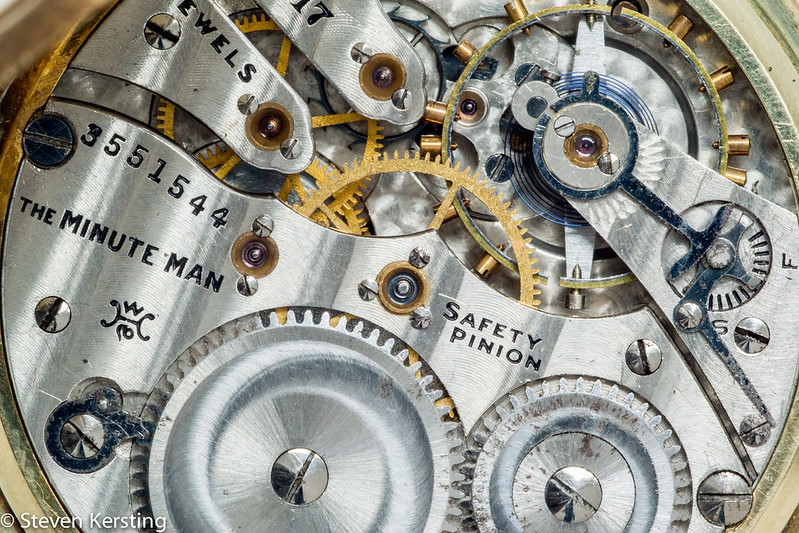
As an experiment, I decided to do a 1:1 macro. I did everything to the best of my ability (lighting, focus rail, aperture, ISO, etc etc) as I wanted to see just how amazing the results could be... It wound up requiring a 27 image stack which was over 8.5GB and PS couldn't handle well...so I had to go find a program that could handle the stack well and then try to learn to use it. I have a pretty beefy computer (2.7ghz i7, 16GB ram, 1GB video) and I could go for a smoke break during every processing step and get back before it was completed. The final jpeg is over 15MB. That's all pretty extreme, at least for me, so I decided to compare the results to my "preferred method" of shooting macro.
I used my Nikon V2 attached to my macro lens. I set an aperture well into diffraction (f/16) and a "poor" ISO for that camera (800)... Even at that I was able to get very similar results with just one image (and I could also do 2.7:1 with almost enough DOF). The only place the D800 image has a notable advantage IMO is if I were to print at a size that would require up-sampling of the V2 file.
Obviously, this is a rather extreme comparison of how "use" matters as to the tools chosen. But it applies to some extent to every decision of the D800 -vs- X. For me, when SS's approach 1/FL or ISO gets to ~1600 I'll usually choose not to use the D800 because I see no benefit. But I have multiple cameras and have that option. (I prefer to shoot using long lenses *handheld* for most of what I do). I work in those situation more often than not, so if *I* had to choose only one camera it would not be the D800.
If the only camera I have with me is the D800, then I'll use whatever settings are required up to the point I find the results unacceptable for my needs.... Too do otherwise is just silly IMO. I don't feel the images suffer significantly for it as compared to what I could achieve with a different body.
Pookeyhead
Suspended / Banned
- Messages
- 11,746
- Name
- David
- Edit My Images
- No
While I agree the D800 can do essentially as well as any other camera at high ISO's; it does not do any "better" IMO.
Rubbish. It's performs much better than some cameras at any ISO you choose, and there are a few that outperform it as well. You're suggesting that at high ISO all cameras are the same, which is patently untrue.
So if someone wanted a recommendation for shooting in low light you'd just say "get anything, they're all the same at higher ISO"?
(And, as I've said, IME the results can be worse due to the higher demands on "technique").
If your technique's crap, it will be crap with any camera. Plus... since when has that been a NEGATIVE aspect of any camera? Results can be worse with a 5x4 film camera if your technique is crap, does it make it a crap camera? If you can't use a camera properly what are you buying a £2000 camera for? Don't blame the tools for crap workmanship Steve.
My "issue" with the D800 is that you have a camera that has a slow frame rate because it records huge files, which requires larger cards,fills the buffer more quickly, requires more power/time for processing and more storage, and which costs 2000£... all to (possibly) get very similar results as is achievable with a camera that can be purchased for 1/2 the money (or even less depending).
IMO, if you have a use for the very large file sizes (i.e. you print very large), and you can optimize the image capture for those larger print sizes, then it's a great choice. Maybe it's the right choice for you even if you only occasionally need the large file sizes... But for most, in most uses, I don't think the "costs" are worth it.
So yours will be in the classified section soon then I take it? Cheap D800 coming soon folks
[/quote]As an experiment, I decided to do a 1:1 macro. I did everything to the best of my ability (lighting, focus rail, aperture, ISO, etc etc) as I wanted to see just how amazing the results could be... It wound up requiring a 27 image stack which was over 8.5GB and PS couldn't handle well...so I had to go find a program that could handle the stack well and then try to learn to use it. I have a pretty beefy computer (2.7ghz i7, 16GB ram, 1GB video) and I could go for a smoke break during every processing step and get back before it was completed. The final jpeg is over 15MB. That's all pretty extreme, at least for me, so I decided to compare the results to my "preferred method" of shooting macro.
I used my Nikon V2 attached to my macro lens. I set an aperture well into diffraction (f/16) and a "poor" ISO for that camera (800)... Even at that I was able to get very similar results with just one image (and I could also do 2.7:1 with almost enough DOF). The only place the D800 image has a notable advantage IMO is if I were to print at a size that would require up-sampling of the V2 file.
Any images Steve?
Your PC couldn't handle 27 200MB TIFFs in a layer stack, so you blame the camera? You're using a larger format camera and blame it because it's has no DOF at extreme macro magnifications?
This image used over 40 D800 TIFFs in the layer stack......

....and while it was demanding on the computer, I had no problems. Yes it took time for "File/scripts/load images into stack" to do it's job... around 10 minutes if I recall... so what? I spent much longer than that working on the image after that. What's the rush? It's not like you're taking press images that need sending ASAP.
I'm failing to see why any of this are negatives against the camera. What you're saying is that you want bigger, better cameras, with higher resolution, but don't want to upgrade anything else? RAM is cheap, hard drives are cheap... just whack another 16GB in there... it makes a world of difference.
If you're so fed up with the D800... just esll it. It's clearly not for you. I fail to see why any of what you say makes it a bad camera, or a problem. You're just bellyaching.
sk66
Suspended / Banned
- Messages
- 9,557
- Name
- Steven
- Edit My Images
- Yes
Now, you're putting words in my mouth. I didn't say "they are all the same." But I suppose I should have written "it doesn't do "better" than EVERY other camera."Rubbish. It's performs much better than some cameras at any ISO you choose, and there are a few that outperform it as well. You're suggesting that at high ISO all cameras are the same, which is patently untrue.
So if someone wanted a recommendation for shooting in low light you'd just say "get anything, they're all the same at higher ISO"?
I'm not blaming the tools. But the D800 requires greater stability or higher SS's due to the finer pixel pitch... I can't always give it that.Don't blame the tools for crap workmanship Steve.
Sure.Any images Steve?
27 image stack W/ D800. 15 MB file.

Inside Grandpa's Pocket Watch by skersting66, on Flickr
1 image from the V2. 6MB file (others/larger on my Flick'r)
_DSC1320.jpg by skersting66, on Flickr
(The difference in color is due to placement of the black and white v-flats...there's almost nothing "blue" inside this watch)
I'm not "blaming the camera" for anything. The things I mentioned are simply "considerations." You can say time/costs/storage/etc don't matter "for you," but they do (should) matter to many.I'm failing to see why any of this are negatives against the camera.
I'm not fed up with it and I'm not selling it, I just don't always choose to use it... But if I had to buy only one camera it would not be the D800.If you're so fed up with the D800... just esll it. It's clearly not for you. I fail to see why any of what you say makes it a bad camera, or a problem. You're just bellyaching.
Last edited:
Pookeyhead
Suspended / Banned
- Messages
- 11,746
- Name
- David
- Edit My Images
- No
Steve... how have you managed to get so much noise in the D800 image? I'm sorry.. but this is clearly not a valid comparative test.. there are some serious quality issues here with the D800 file. Sorry.. don't mean to be harsh, but that's really poor: Noisy, gritty. no blacks.. crushed dynamic range... fuzzy details.
100% crop
https://dl.dropboxusercontent.com/u/23953768/d800watch.JPG
I agree completely.. the V1 file is much better... but not because it's a better camera.
100% crop
https://dl.dropboxusercontent.com/u/23953768/d800watch.JPG
I agree completely.. the V1 file is much better... but not because it's a better camera.
Last edited:
sk66
Suspended / Banned
- Messages
- 9,557
- Name
- Steven
- Edit My Images
- Yes
Don't ask me how it happened because I don't know. All images were taken at base ISO (maybe 200). Massive tripod, massive head, strong rail, remote release w/ m-up and delay, etc etc... My only guess is its due to the stacking algorithm and my lack of skill with it (Helicon Focus, I tried several different algorithms and settings). You should have seen what PS did with the stack... And FWIW, due to the massive file size advantage I don't think the noise is apparent/worse for any given image size... remember that I used the V2 well into diffraction (f/16) and an ISO I consider rather noisy for the camera (800). I really wanted to be blown away by the D800 stack, because then I might have changed my typical approach to macro (of using a small sensor) for things I REALLY cared about.
But that's kind of my point. If you have the time/ability/desire/money/etc to use the camera well, and you put the effort required into extracting the most from it then great. But if not, then there might be a better choice. The macro stack vs DOF issue isn't really particular to the D800, but the detail possible w/ the D800 wasn't enough to overcome the issues (including my skill w/ the program).
You've asked me before about examples of the D800 not being "better" in use. And I told you I don't have any images available because i don't keep images I'm not happy with. But I kind of lied. I recently realized that I wrote THIS ARTICLE regarding MP's/Sensor Size/Contrast a while ago. There is a comparison between the V2, D800, and the D4 in a field use situation similar to what I often encounter. (I am fully aware that none of the images are great).
But that's kind of my point. If you have the time/ability/desire/money/etc to use the camera well, and you put the effort required into extracting the most from it then great. But if not, then there might be a better choice. The macro stack vs DOF issue isn't really particular to the D800, but the detail possible w/ the D800 wasn't enough to overcome the issues (including my skill w/ the program).
You've asked me before about examples of the D800 not being "better" in use. And I told you I don't have any images available because i don't keep images I'm not happy with. But I kind of lied. I recently realized that I wrote THIS ARTICLE regarding MP's/Sensor Size/Contrast a while ago. There is a comparison between the V2, D800, and the D4 in a field use situation similar to what I often encounter. (I am fully aware that none of the images are great).
Last edited:
Pookeyhead
Suspended / Banned
- Messages
- 11,746
- Name
- David
- Edit My Images
- No
Photoshop using File/automate/Photomerge: It works flawlessly every time I use it to focus stack and does no other processing to the image, and certainly adds no noise.
Can't see how that's relevant. The problem is clearly processing, and not the camera, and hence user error. The camera can't be blamed.
Steve, you ruined that shot with your processing. Nothing to do with the camera
You can't include your skill with a piece of software into this equation. It has nothing to do with it. You'd have the same skill level with the software regardless of the camera used. I don't even know why you're staking that image. Using a regular macro lens stopped well down and pulling back to include the entire watch would have yielded much better results than you actually got by trying to stack it. The ONLY reason the V1 image has yielded a better image is because you ruined the D800 image. Sorry.. but it's true. Having said that, the V1 image isn't exactly faultless either.
No idea what showing 3x 1024 pixel wide images is proving. I've also no idea why you felt you couldn't shoot at ISO3200 on the D800 as it would be perfectly happy at that (have I not already demonstrated how impressive the D800 can be at ISO3200?), just as happy as the D4 in fact. You seem to be setting your own limitations Steve.
remember that I used the V2 well into diffraction (f/16) and an ISO I consider rather noisy for the camera (800).
Can't see how that's relevant. The problem is clearly processing, and not the camera, and hence user error. The camera can't be blamed.
But that's kind of my point. If you have the time/ability/desire/money/etc to use the camera well, and you put the effort required into extracting the most from it then great. But if not, then there might be a better choice.
Steve, you ruined that shot with your processing. Nothing to do with the camera
The macro stack vs DOF issue isn't really particular to the D800, but the detail possible w/ the D800 wasn't enough to overcome the issues (including my skill w/ the program).
You can't include your skill with a piece of software into this equation. It has nothing to do with it. You'd have the same skill level with the software regardless of the camera used. I don't even know why you're staking that image. Using a regular macro lens stopped well down and pulling back to include the entire watch would have yielded much better results than you actually got by trying to stack it. The ONLY reason the V1 image has yielded a better image is because you ruined the D800 image. Sorry.. but it's true. Having said that, the V1 image isn't exactly faultless either.
You've asked me before about examples of the D800 not being "better" in use. And I told you I don't have any images available because i don't keep images I'm not happy with. But I kind of lied. I recently realized that I wrote THIS ARTICLE regarding MP's/Sensor Size/Contrast a while ago. There is a comparison between the V2, D800, and the D4 in a field use situation similar to what I often encounter. (I am fully aware that none of the images are great).
No idea what showing 3x 1024 pixel wide images is proving. I've also no idea why you felt you couldn't shoot at ISO3200 on the D800 as it would be perfectly happy at that (have I not already demonstrated how impressive the D800 can be at ISO3200?), just as happy as the D4 in fact. You seem to be setting your own limitations Steve.
Last edited:
- Messages
- 12,654
- Name
- Gary
- Edit My Images
- Yes
We all set our own limitations on what we shoot dont we, seriously, why shoot ISO 3200 if you only need to shoot ISO 400 and probably more importantly if we only want to, his camera his choice, my camera my choice, your camera your choice. Simples.You seem to be setting your own limitations Steve.
Pookeyhead
Suspended / Banned
- Messages
- 11,746
- Name
- David
- Edit My Images
- No
We all set our own limitations on what we shoot dont we, seriously, why shoot ISO 3200 if you only need to shoot ISO 400 and probably more importantly if we only want to, his camera his choice, my camera my choice, your camera your choice. Simples.
I know Gary, but this wasn't a random choice, it was advice given on his Photographic Academy, Photography school website.
He said he could only shoot up to 1600 due to the smaller pixel size of the D800.... "Also due to the pixel size I restricted the ISO to 1600 for noise "...he's instructing people that the D800 is not suitable to shoot over ISO1600, which is simply giving misinformation.



No bloody difference. I'm even giving the D4 a helping hand here by using 100% crops making the D4 image smaller, and there's still no difference.... except the D800 is noticeably sharper. These are tiny crops from a much larger image (see above). To suggest you limit the D800 to ISO1600 for noise reasons is just talking nonsense. It's incorrect, and misleading.
Last edited:
sk66
Suspended / Banned
- Messages
- 9,557
- Name
- Steven
- Edit My Images
- Yes
Once again, you're putting words in my mouth. I didn't "instruct" anyone to do anything. I said (essentially) "I chose to use.""Also due to the pixel size I restricted the ISO to 1600 for noise "...he's instructing people that the D800 is not suitable to shoot over ISO1600, which is simply giving misinformation.
The part you're missing is that for this kind of work a FF image is often going to require heavy cropping and then the noise levels at (closer to) 100% become a significant consideration. And I can't as freely use TC's with the D800 (or worse the V2) because the lens/TC combination drops the IQ (MTF) too far for the sensor (TC's in order to avoid hard cropping). I do use the TC's w/ the D800, but only in more ideal situations. (Here's an example if anyone cares). But then I am trading off FPS and for me it matters (it's not about taking 10FPS, it's about taking 2-3 frames in a fraction of a second to catch the optimum moment).
In a given situation I can often use a TC with the D4 (D700/D3/D3s) at a higher ISO and get a better result than I can using the D800 and cropping harder.
You're also ignoring the "requirement" for higher SS's (and thus ISO) for any given situation... this is also somewhat negated by downsampling/normalizing but not as well as ISO noise is. IME, for any given situatio I need to be ~ 1stop higher on ISO w/ the D800 and this largely negates its MP advantage (in less than ideal light w/o tripod).
A lot of people choose to use TC's, Crop Sensors, or the high MP cameras (D800) for the "crop ability." In fact, I do as well. But it's all trade-offs and no one answer is "best," as I indicated in the article.
If I had been able to get closer to the owl I would not have been "testing" in the first place, I would have been "working."
Last edited:
sk66
Suspended / Banned
- Messages
- 9,557
- Name
- Steven
- Edit My Images
- Yes
As I have learned, focus stacking demanding subjects is a specialized area and I can certainly include the program (costs/experience/knowledge) and other factors (tripod/technique/etc) as considerations because using the D800 *created the requirement* to stack. (I've done other stacks w/o issue using PS which is why I tried that first). Isn't the point of doing high magnification macro shots to get the magnification and detail? Pulling back and stopping down into diffraction would minimize/eliminate the requirement for stacking, but it also negates the whole point of shooting macro and would have required a higher/noisier ISO.Photoshop using File/automate/Photomerge: It works flawlessly every time I use it to focus stack and does no other processing to the image, and certainly adds no noise.
Can't see how that's relevant. The problem is clearly processing, and not the camera, and hence user error. The camera can't be blamed.
Steve, you ruined that shot with your processing. Nothing to do with the camera
You can't include your skill with a piece of software into this equation. It has nothing to do with it. You'd have the same skill level with the software regardless of the camera used. I don't even know why you're staking that image. Using a regular macro lens stopped well down and pulling back to include the entire watch would have yielded much better results than you actually got by trying to stack it. The ONLY reason the V1 image has yielded a better image is because you ruined the D800 image. Sorry.. but it's true.
Of course it's not, I stopped it down way into diffraction and used a "noisy" ISO (required by stopping down). The point of the exercise was to take two different approaches to see which would deliver better results. I could have combined the V2 DOF at a wider aperture/lower ISO AND a smaller/easier stack and I would have gotten even better results (and PS probably could have handled it).Having said that, the V1 image isn't exactly faultless either.
The point was to try to use the D800 "ideally" to get the maximum and make no compromises...No idea what showing 3x 1024 pixel wide images is proving. I've also no idea why you felt you couldn't shoot at ISO3200 on the D800 as it would be perfectly happy at that (have I not already demonstrated how impressive the D800 can be at ISO3200?), just as happy as the D4 in fact. You seem to be setting your own limitations Steve.
The full sized images are available on Flick'r if you feel the need to critique them.
I guess I'm done w/ this now... it seems entirely pointless.

boyfalldown
Suspended / Banned
- Messages
- 17,486
- Name
- Hugh
- Edit My Images
- No
Steven/David - get a room please gentlemen
Pookeyhead
Suspended / Banned
- Messages
- 11,746
- Name
- David
- Edit My Images
- No
The full sized images are available on Flick'r if you feel the need to critique them.
.
No need. I've posted enough in here to demonstrate that you are giving misleading and inaccurate infrmation on your website. I'm done.
- Messages
- 12,654
- Name
- Gary
- Edit My Images
- Yes
No he's not David, you really need to read it again, he's simply saying the settings he chose to use and gave valid reasons as to why he chose those settings, nowhere does Steven tell/advise anyone they should also shoot exactly the same settings.No need. I've posted enough in here to demonstrate that you are giving misleading and inaccurate infrmation on your website. I'm done.

Phiggys
Suspended / Banned
- Messages
- 3,848
- Name
- Phil aka Phiggys
- Edit My Images
- No
If its portraits and landscapes you mainly shoot the both the Fuji S3pro and S5pro can be had at bargain prices and they have a superb D.R. but not as high as the D800 I might add.
One of these will certainly make you become more disciplined as a photographer. its not all about fps with sports either !
One of these will certainly make you become more disciplined as a photographer.
its not all about fps with sports either !
- Messages
- 12,654
- Name
- Gary
- Edit My Images
- Yes
Especially if you're shooting the world standing still championships or the Olympic grass growingIf its portraits and landscapes you mainly shoot the both the Fuji S3pro and S5pro can be had at bargain prices and they have a superb D.R. but not as high as the D800 I might add.
One of these will certainly make you become more disciplined as a photographer.

OldCarlos
Suspended / Banned
- Messages
- 6,882
- Name
- Carl
- Edit My Images
- Yes
Especially if you're shooting the world standing still championships or the Olympic grass growing


Diving Pete
Suspended / Banned
- Messages
- 1,998
- Name
- Pete
- Edit My Images
- No
Especially if you're shooting the world standing still championships or the Olympic grass growing
Gary,
You forgot:
The World Snail racing Championships held in Escargo - think its West of Paris - lol..
- Messages
- 12,654
- Name
- Gary
- Edit My Images
- Yes
Those slimey bleeders can be quite quick, especially if theyre skiingGary,
You forgot:
The World Snail racing Championships held in Escargo - think its West of Paris - lol..
Diving Pete
Suspended / Banned
- Messages
- 1,998
- Name
- Pete
- Edit My Images
- No
I'd forgotten about the Snail Skiing competitions 