Crazy idea related to my hobby... what do you think?

Am I crazy thinking about buying a medium format film camera?


  • Total voters
    43

pjm1

Suspended / Banned
Messages
4,155
Name
Paul
Edit My Images
Yes
I love my photography hobby (and it's just that - I'm never going to make money from it, I just enjoy whiling away time taking photos)...

I've been snapping away since January and although I'm still a beginner, my progress has been really enjoyable. I've been through the phase where it's all about quantity of photos and now I'm really enjoying taking each one. I do still suffer from clicky finger syndrome occasionally and do have quite a few wasted shots, but the beauty of digital is that's ok, as long as the decent shots (well, better shots) are still there when you slow down a bit. I have found DSLRs are great for learning exposure triangle, developing your own in-built light meter and really seeing "live" the effects of aperture, motion blur etc. My current area of "learning" is much more about light and understanding how best to capture the right kind of light doing the things I want to the scene in front of me. I suspect this part will never end because this is the essence of the technical side of photography.

There is nothing I'd really look to buy for my camera apart from perhaps a new focusing screen for when I want to do more manual focusing (macro and some product stuff) - I have a viewfinder magnifier coming soon and I'm looking forward to using that for MF antics.

But... I do have a hankering after something:

A "proper" medium format film camera. Given my state of inexperience, I think I'd rather get one with a light meter for security, especially in the first few months of using it. Which obviously means it'll be a bit more expensive... so I really don't know whether I'm just chucking money away on something I'll rarely use.

But the appeal of having something slightly cumbersome, heavy and the complete opposite of "point & shoot", perversely, really appeals. The idea of being limited to a roll of 120 and thinking so much more about each exposure is something that strikes a powerful chord for me.

I think it's the sort of thing I'd use very specifically: I'd love to use it for easy-to-access landscape shots (which I have a lot of here in Scotland). I'd really like to see the sort of candid indoor family shots I could get with a roll of Tri-X 400 B&W. I'd also like to take something resembling "old school" studio shots where I get my lighting right and some test shots with the DSLR and then switch to MF and really concentrate on slowing down the interaction between camera/photographer and the subject.

Am I mad? Is it just a whim and should I just stick to learning how to use what I currently have? Or am I already half way to owning an RZ67?

I've deliberately not posted this in the film subforum as I know what the answer will be there! I'm just curious what your opinions are, so I've stuck a quick poll up...
 
Since most of your negatives (excuse the pun) are cost related I'd not worry about that. If you buy used and clever you'll be able to sell what ever you buy for what you paid for it, old film kit has in most cases had a decade to depreciate. And don't get one with a light meter, learn to use an external meter you'll save a big wedge of money.
 
I'm definitely in the "suck it and see" camp - I love shooting landscape stuff on film, but it's not necessarily for everyone. If you DO buy a decent MF camera, and by the sound of it, if you want one with metering, you'll be buying something a little more than an ancient £40 6x9 folder (though that COULD actually be an interesting thing for landscape stuff in itself!), then remember, they've pretty much done their depreciating now... so, if you don't damage anything in using it, and end up with a bunch of pictures that prove it work well, you will probably be able to sell it for what it cost you or pretty close to it.

So it then comes down to processing costs - which can be mitigated somewhat if you're working in B&W by processing your own film (maybe £50 for the chemicals/tanks) and scanning your own (a second hand Epson v500 - around £100, but again, it'll sell for what you paid for it)

I think really to get the most out of shooting film, you pretty much need to embrace the extra layers of faffing involved and process/scan and maybe even wet print your own stuff - don't think of it as extra work, think of it as extra time you can spend on your hobby, which doesn't need a pass-out of the house...

If that kind of thing isn't for you... and I freely acknowledge it's not for everyone - lots of photographers, especially people who are of the vintage where there was no digital option, have no ambition to go back to all the shoot then wait hours/days/weeks before actually seeing the result.
 
Since most of your negatives (excuse the pun) are cost related I'd not worry about that. If you buy used and clever you'll be able to sell what ever you buy for what you paid for it, old film kit has in most cases had a decade to depreciate. And don't get one with a light meter, learn to use an external meter you'll save a big wedge of money.

Thanks Steve - the light meter idea is so obvious... clear case of me not seeing the wood for the trees there - thank you.

I'm definitely in the "suck it and see" camp - I love shooting landscape stuff on film, but it's not necessarily for everyone. If you DO buy a decent MF camera, and by the sound of it, if you want one with metering, you'll be buying something a little more than an ancient £40 6x9 folder (though that COULD actually be an interesting thing for landscape stuff in itself!), then remember, they've pretty much done their depreciating now... so, if you don't damage anything in using it, and end up with a bunch of pictures that prove it work well, you will probably be able to sell it for what it cost you or pretty close to it.

So it then comes down to processing costs - which can be mitigated somewhat if you're working in B&W by processing your own film (maybe £50 for the chemicals/tanks) and scanning your own (a second hand Epson v500 - around £100, but again, it'll sell for what you paid for it)

I think really to get the most out of shooting film, you pretty much need to embrace the extra layers of faffing involved and process/scan and maybe even wet print your own stuff - don't think of it as extra work, think of it as extra time you can spend on your hobby, which doesn't need a pass-out of the house...

If that kind of thing isn't for you... and I freely acknowledge it's not for everyone - lots of photographers, especially people who are of the vintage where there was no digital option, have no ambition to go back to all the shoot then wait hours/days/weeks before actually seeing the result.

Thanks Mark, good point from both you and Steve re: depreciation already having (mostly) happened. Most of my DSLR gear was bought second hand so that's not an issue for me.

The idea of processing myself is not a show stopper but being realistic, I'd probably look to external processing for a while. I have spent countless hours learning lightroom (and PS) processing so don't have an issue doing the same for darkroom.

For me it's not faff... it's a different type of photography which for some odd reason really appeals. Thanks for the comments!
 
I'm a film photographer so biased towards film and away from digital. That said...

If you're happy with the technical quality that you get from your current equipment, then there's no point in changing if you can exercise a modicum of self discipline in the use of it. On the other hand, if you're not driven solely by the results and are concerned with the process, then it's a different matter, and may well come down to your temperament. I find that using a camera at eye level doesn't give the amount of detachment I need to think objectively about the image - it concentrates my mind on the subject as it is, rather than as it will appear (if that makes sense). I lack the necessary self discipline to use an eye level effectively, and using a camera that breaks the conection between eye and image makes everything much easier for me. Others I know feel exactly the opposite.

You may well find using a tripod and slowing down will give you the same benefits pictorially.

If pushed, I'd say try it - you shouldn't lose much money over it. And get a manual camera. The RB67 or RZ67 would be fine, but try a waist level finder (no metering) and use a separate meter. It will teach you a lot about appreciating the differences in light levels, and the exposure latitude of film (the amount by which you can get exposure wrong and still get a good or acceptable result) will probably suprise you. You could even forego a meter and print out the "sunny 16" rule and stick with that outdoors with no real problems.
 
I'm a film photographer so biased towards film and away from digital. That said...

If you're happy with the technical quality that you get from your current equipment, then there's no point in changing if you can exercise a modicum of self discipline in the use of it. On the other hand, if you're not driven solely by the results and are concerned with the process, then it's a different matter, and may well come down to your temperament. I find that using a camera at eye level doesn't give the amount of detachment I need to think objectively about the image - it concentrates my mind on the subject as it is, rather than as it will appear (if that makes sense). I lack the necessary self discipline to use an eye level effectively, and using a camera that breaks the conection between eye and image makes everything much easier for me. Others I know feel exactly the opposite.

You may well find using a tripod and slowing down will give you the same benefits pictorially.

If pushed, I'd say try it - you shouldn't lose much money over it. And get a manual camera. The RB67 or RZ67 would be fine, but try a waist level finder (no metering) and use a separate meter. It will teach you a lot about appreciating the differences in light levels, and the exposure latitude of film (the amount by which you can get exposure wrong and still get a good or acceptable result) will probably suprise you. You could even forego a meter and print out the "sunny 16" rule and stick with that outdoors with no real problems.

Thanks Stephen... to be completely honest, photography started out for me as a technical challenge (learning the theory etc.) and is now evolving into something quite different. Sure, I am very much enjoying the technical challenges (lighting of product type shots, macro, portrait lighting) but I don't want that to become the sole focus - I love some images I see which are technically fine (perhaps with small theoretical flaws) but emotionally and visually stunning. As the viewer, that's fine and dandy, but as the photographer that's still focusing on output (as you mention) and missing out the whole creation aspect of photography - the process of actually composing and pressing the shutter release, through to eventual image appearing quite possibly weeks further down the line...

More honesty: I simply really struggle with the discipline part of digital photography. Even using a tripod and switching to manual just to force myself to think about the exposure I want to achieve, I still end up chimping and deciding to change stuff, often unnecessarily. So I end up with half a dozen photos, nearly identical with tiny tweaks to composition or exposure settings... and I delete 5. This wouldn't be an option with film and is part of the appeal.

The waist-level finder is another really exciting concept for me - something I'd really like to try and I do genuinely think it would make a big difference mentally with how I treat photography. I also think it would be great for indoor candids of the kids when they're just sitting there playing with their lego etc. It would make the camera less "camera like", I think.
 
If budget allows, why not go the whole hog and get large format? That will be a totally new learning curve and the versatility that large format movements add to your photography will open up totally new horizons.
 
Do it.... best thing I ever did. It has improved my photography and more importantly improved my attitude and technique. I'm still pretty carp but I'm definitely better than I was.
I used to machine gun an image until something good came out but now I know I've only got a certain amount of shots (12 on most of my medium format cameras) I take time and really think about the shot. Often I don't bother taking it and move on.
It will cost you more, although I now dev myself which brings the price per shot down tremendously, but I believe you will find a satisfaction from shooting film that you don't get from digital. (y)

And medium format negatives can produce really stunning images even when scanned and digitised.
15466875527_d8019dd31c_b.jpg
 
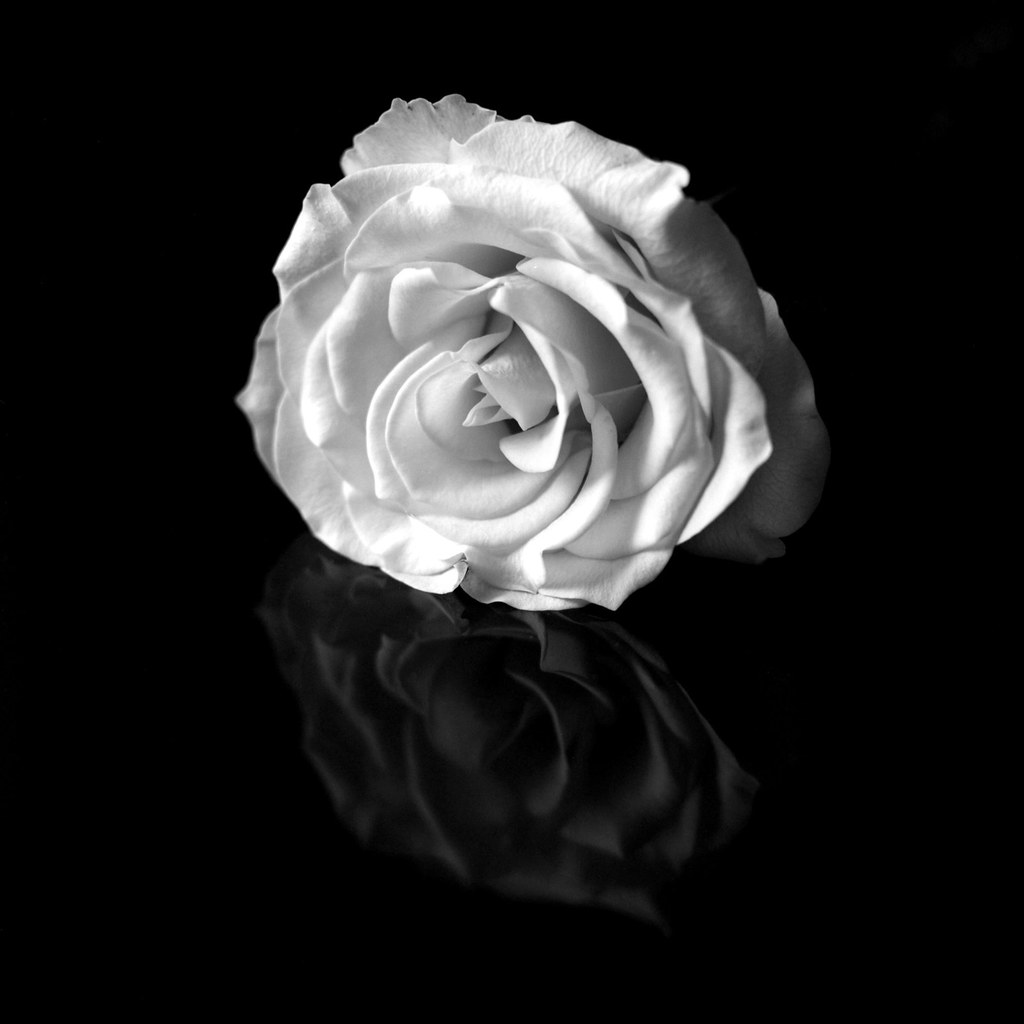
@Andysnap ... do you know that your rose photo above (which I first saw on the B&W photo thread) was actually the thing which started me looking at film cameras!! So it's technically all your fault ;)

@Garry Edwards ... large format is a step further again, I guess. The appeal of being able to use 120 film probably means I might be better of sticking with MF as that first step? Not sure I'm quite ready for sheet film yet!
 
You can always get a roll film back for a large format camera and use 120 film. More expensive as a package than just getting a medium format camera, but more versatile. For what it's worth, my RZ67 with a shift lens is far bigger and heavier than a Wista DX with lens (which is both shift and tilt on a LF camera).
 
Nope, not crazy, medium format is one of the big plus points for sticking with film. If you're going to be sticking the camera on a tripod all the time then large format may even be an option.
 
@Andysnap ... do you know that your rose photo above (which I first saw on the B&W photo thread) was actually the thing which started me looking at film cameras!! So it's technically all your fault ;)

Sorry..... :coat::D
 
Last edited by a moderator:
Do it. They're relatively cheap now. If you're going medium format, go 6x7... quality is so much better than 6x4.5.

Don't worry about getting something with a light meter. Get a hand held incident meter like the Sekonic L308. Cheap as chips, and brilliant. I've had the same L308 for 20 years... never let me down, and decent incident readings are more accurate than reflective (in camera) readings any way.

Mamyia RB6x7... cheap on Ebay. Brilliant workhorse of a camera. There's a Mamiya RB6x7 SD Pro-S on ebay in brilliant condition with a £295 buy it now price. That's with a 90mm standard lens.

You'll learn a great deal shooting film. Don't be disheartened at first though. You'll probably realise you're not as good as you think you are. Digital flatters you, whereas film shooting takes no prisoners. Stick with it though. It will make you a better photographer.
 
Last edited:
There is a thread here

http://www.talkphotography.co.uk/threads/advice-needed-what-mf-camera.566254/

answering a lot of questions from someone in a similar situation. Pop over and have a look, the RB67 is discussed as well as a few other options... with pictures as well....:woot:

To be honest... quality of film images once put on the web are at the mercy of the film scanning, and most that I see is definitely NOT making the best of the quality available from 120 film. Web sized images give you little idea of the quality available, and nor do the majority of flat bed scanned images.
 
Do it. They're relatively cheap now. If you're going medium format, go 6x7... quality is so much better than 6x4.5.

Don't worry about getting something with a light meter. Get a hand held incident meter like the Sekonic L308. Cheap as chips, and brilliant. I've had the same L308 for 20 years... never let me down, and decent incident readings are more accurate than reflective (in camera) readings any way.

Mamyia RB6x7... cheap on Ebay. Brilliant workhorse of a camera. There's a Mamiya RB6x7 SD Pro-S on ebay in brilliant condition with a £295 buy it now price. That's with a 90mm standard lens.

Thanks David, it does feel like the right answer... I am very tempted!

Stephen & Lloyd: I've looked briefly at large format and really do think it's a step too far for me at the moment. I could see it taking me an hour to set up to get a shot... I'm all for slowing down, but I think that might be taking it a bit far :)

As others have said, I can probably recoup most of the cost if I ever wanted to sell it and in the mean time I can have a lot of fun.

@Andysnap ... that's helpful and has more suggestions on specific cameras so I'll definitely have a good read through. I guess my initial question was "am I being daft" wanting to give it a go, but it does sound as if the outlay isn't really prohibitive... at least at first ;)

(Now I need to pop into the film section to see where's good for processing and scanning rolls of 120...)
 
To be honest... quality of film images once put on the web are at the mercy of the film scanning, and most that I see is definitely NOT making the best of the quality available from 120 film. Web sized images give you little idea of the quality available, and nor do the majority of flat bed scanned images.

True but not having a darkroom means its the only way I can get them enlarged, one of these days I'll send away a load and get them drum scanned or get down my local community darkroom.
 
There's a steeper cost involved with 5x4 though. With colour 5x4 film shooting past £60 a box of 20 sheets for some, and B&W heading towards £40 a box, it's not something I would recommend learning with. You've then got the issues of movements, incredibly narrow depth of field, bellows extension calculation for close work, understanding the scheimpflug principle and focal plane adjustments in order to get the best from it.. it's a very steep curve for some. This is real photography... and it's a far cry from digital.

Stick with 120 until you're used to using film, and decide you want to invest further.
 
Last edited:
Yeah medium format is quite a change of pace compared to 35mm (which is also a change from digital anyway!), so if slowing down is what you want then MF is fine. 6x6 or 6x7 would be my choice, and as @Pookeyhead says, a built in meter isn't essential. My Pentax 67 has one but I tend to use my handheld one (also a Sekonic L308s) more often since it's faster and less of a hassle.
 
To be honest... quality of film images once put on the web are at the mercy of the film scanning, and most that I see is definitely NOT making the best of the quality available from 120 film. Web sized images give you little idea of the quality available, and nor do the majority of flat bed scanned images.

You are correct, however what they do show is twofold. Firstly what some medium format cameras look like and their size and secondly that film shots are in a lot of cases the equal of digital (and some times better) even when scanned in. They are of course even better when properly printed. (y)
 
I found 6x7 neither here nor there. I love 6x6 (as I'm sure I have mentioned before :naughty:) but 6x7 didn't work for me, 6x9 though is a different kettle of sardines.
 
I found 6x7 neither here nor there. I love 6x6 (as I'm sure I have mentioned before :naughty:) but 6x7 didn't work for me, 6x9 though is a different kettle of sardines.
Strange, I found the opposite. I've had my share of sq formats - Rolleis, Hassles etc but invariably found myself having to crop them to the shape of my 6 x 7 RZ:) Horses for courses
 
It just felt that the difference between square and 6x7 was so minimal that it made no difference whereas 6 x 9 felt perfect for landscapes.

I still prefer squares though.:D
 
It just felt that the difference between square and 6x7 was so minimal that it made no difference whereas 6 x 9 felt perfect for landscapes.

I still prefer squares though.:D

I always went for 6x4.5 or 6x7 for my own use,as those used up to 16x20 film at work,it was a big rail camera :D
 
Hi Andrew... good idea re: lenses but sadly my Pentax lenses are all crop sensor lenses so wouldn't even work on an old full frame without vignetting. (Although if I got a Pentax 67 I might be able to get a converter to use its lenses on my K5?)

I reckon I will be taking the plunge... it's more a question of when. Also, I will need to break the habit of just having my photos on a LR catalogue and instead get used to having and looking after the negatives... Who knows, I might even start to get some photos actually printed, you know, on paper and stuff. Although maybe that's going a bit too far, eh? ;)
 
I've shot digital for a few years, and earlier this year decided to buy a medium format film camera. Hands down it's the best photography related decision I've ever made. A second hand Mamiya TLR (there are loads of MF cameras out there, but as I use a Mamiya C220, that's why I'm using it as an example!) will cost less than £200, which in terms of digital photography is the same price as a second hand middle-of-the-road lens. If you decide you don't like it then you can sell it on for little to no loss, and you're only out of pocket for what you've paid for film.

You said you went from taking loads of photos to taking less photos but spending more time getting them right. Times this by 100 for MF film work. A roll of 120 film will get somewhere between 8 and 16 shots (12 for my 6x6 MF camera), and I'll use about a roll on an outing. It's usual for me to spend a good ten minutes taking a single photo as I try to make each shot as good as I can get it. If the shot's not worth using 1/12 of a roll for, then I don't take it. This forces me to slow down, take my time and think about each shot, which has done a lot for my photography.

I hardly ever use my 5DmkII DSLR now, and some times I think about putting the film camera away and shooting digital again, but then when I look at a beautiful scene through the ground glass on the waist level finder and I get goosebumps and don't miss digital at all :D
 
Also I have to add, the chaps in the film section of this forum are incredibly friendly and really helpful. They've helped me a lot since I started shooting film, so if you do take the plunge make sure you check that area out!
 
^^^^ Too true, too true. But you forgot handsome and talented....;)
 
Thanks Carl... interesting to read about someone else who's done the same recently. Definitely being forced to slow down is a bit draw for me.

Although it's also a bit sad that I'm not able to do it myself with my current camera!
 
Am I mad? Is it just a whim and should I just stick to learning how to use what I currently have? Or am I already half way to owning an RZ67?

No, you're definitely not mad.

A "proper" medium format film camera. Given my state of inexperience, I think I'd rather get one with a light meter for security, especially in the first few months of using it. Which obviously means it'll be a bit more expensive... so I really don't know whether I'm just chucking money away on something I'll rarely use.

I think you'd really be limiting your choice of camera if you required a light meter. Besides, some of these cameras are 20, 40, 70+ years old—would you really trust the old light meters in some of those cameras?

You can use a light meter with any camera you own, film or digital, and I think a good light meter is a necessity if you're going to get into film. That said, if you're shooting negative film, there's loads of room for error (it's hugely forgiving of overexposure, in particular) and you can definitely get away with estimating your exposures based on sunny 16 if you needed to:

UK-Film-Lab-Exposure-and-Film-Stock-tests_0001.jpg


But the appeal of having something slightly cumbersome, heavy and the complete opposite of "point & shoot", perversely, really appeals. The idea of being limited to a roll of 120 and thinking so much more about each exposure is something that strikes a powerful chord for me.

I think it's the sort of thing I'd use very specifically: I'd love to use it for easy-to-access landscape shots (which I have a lot of here in Scotland). I'd really like to see the sort of candid indoor family shots I could get with a roll of Tri-X 400 B&W. I'd also like to take something resembling "old school" studio shots where I get my lighting right and some test shots with the DSLR and then switch to MF and really concentrate on slowing down the interaction between camera/photographer and the subject.

I can't really say that I switched to film explicitly because of the discipline, but I enjoy working hard to get my photographs all by myself with no distractions from funny menus, fidgety electronics, or malfunctioning autofocus. If I take a good shot, it's all down to me and if I fail, then it's all down to me as well, start to finish.

I enjoy using medium format cameras for everything, from landscapes here in Scotland and abroad to candid street or family photographs.

Medium format film is simply different than digital, not better or worse, so you'll need to figure out if it's for you, ultimately. Not much to lose in trying it though.
 
Last edited:
Cheers for that RJ... I'm just west of Glasgow so we have some great stuff to photograph on our doorstep. My kit wishlist has now grown:

RB67 with the SD (120) back and 90mm lens (that will do me for a few months I think)
Sekonic L308 lightmeter
Epson V500 scanner (seem to be under £80 on fleabay at the moment, so will quickly work out cheaper than having negs scanned by the developers)

First two are essentials so I reckon I'm looking at a shade over £300 to get started. Oh, and some film - I think I'll be sticking to B&W for a while. Maybe a few rolls of Tri-X 400 as well for indoor work... oh and a PC sync cord if I want to use my flash(es).

Lots more research still to do!
 
Scanner will pay for itself in a few films once you start paying for decent quality scans from the pro labs.
 
As everyone else has said, I think you should go for it. I reckon you might be able to pick up an RB67 (a superb camera) for cheaper than £300 too. If you can't find anything on ebay (unlikely) I could have a look in my local shop in Newcastle. They have loads of m/f stuff at reasonable prices. I think that personally I would go for 6x6 or 6x7 as you can always crop a 6x7 to 6x6 or 6.45. The only problem is that if you like the film process, you might end up buying a large format camera, which is a whole new ball game.
 
Thanks @Nguss and Steve... the £300 was including the lightmeter as I don't have one of those and it's going to be needed with a full manual, no lightmeter camera. I know I can use sunny 16 when outside to a point (especially if shooting on very forgiving B&W) but for other stuff and indoors/flash etc. I'm going to need a light meter. I could probably do with one for my flash setups with my DSLR anyway - better than chimping away.

I just need to get this pass the boss indoors... at the same time as we're thinking about buying a new house. Oh well, I guess the cost of this is lost in the rounding then :)
 
Cheers for that RJ... I'm just west of Glasgow so we have some great stuff to photograph on our doorstep.

Yep, there's plenty to photograph around here!

RB67 with the SD (120) back and 90mm lens (that will do me for a few months I think)
Sekonic L308 lightmeter
Epson V500 scanner (seem to be under £80 on fleabay at the moment, so will quickly work out cheaper than having negs scanned by the developers)

Others may disagree with me, but I think it's best to start with C41 film (colour negative process) and have a lab professionally process and scan your film. This way it's easier to address any problems that might arise with 'new' equipment (e.g., light leaks, faulty shutters, etc.), manual light metering, or anything else, as you get your feet wet. If you're developing or scanning your own photographs, I think there can be too many variables in play at one time to identify any issues that might arise. Once you know that the equipment is okay and exposures look good, then slowly start to introduce those other variables, such as doing your own developing and/or scanning.

Scanning is a bit of a dark art in itself, so it's also good to see what a pro lab can produce with your film as a point of comparison when you start scanning your own.

Keep in mind that traditional B&W is cheap and easy to develop at home on your own, but it is the more expensive option if you choose to use a lab for developing. If you want to shoot B&W, but can't develop it yourself, there are several B&W films that use the C41 colour negative process (e.g., Ilford XP2 and Fuji Neopan 400CN), so it's cheaper and any high street lab can do it.

Personally, I typically develop and scan my own black and white, but send away my colour negative film to a lab for developing and scanning. There's no right or wrong way to approach this though, so do whatever works best.
 
Yeah, you're right when you explain it like that. I think the things which are making me want to start off with B&W are:
1. I prefer B&W photographs!
2. One of the real draws of film is the crazy latitude you get with B&W in particular - I love very high contrast B&W images
3. I'm actually less of a fan of the "look" of a lot of the colour film shots I see... ok, I do like Velvia but don't really want to be shooting slide for reason #2 (I may as well be shooting digital... almost)

Does that make sense or am I missing half the picture as per usual?
 
Back
Top