Confused about flashes

chrisfowler

Suspended / Banned
Messages
85
Name
Chris
Edit My Images
No
I've recently bought a new camera set up that included two flashes. The last owner seemed good with his kit as everything was well kept and the owner's guide to the body contained details of all the equipment and relevant serial numbers.

With the camera and lenses were two flashes:

Sunpak auto 240
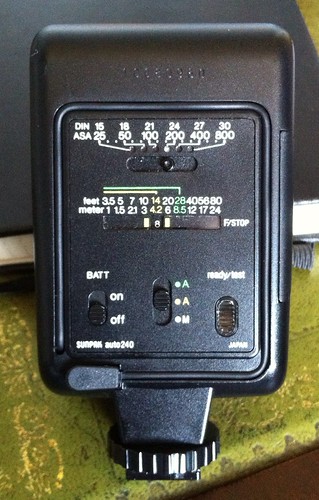
9390709121_a52f8ab713.jpg


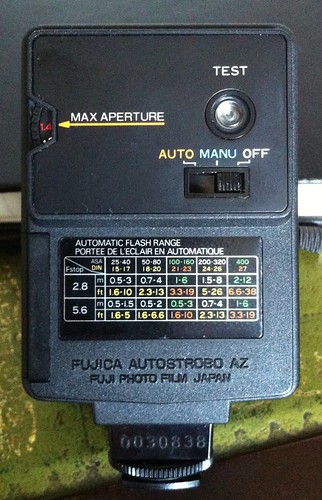
Fujica Auto Strobo AZ
9390710639_502ebbbf75.jpg


I understand that the Fuji flash is the specific model intended for the camera (Fuji AZ-1) but why would the original setup have needed the Sunpak flash? The Auto Strobo is picked up automatically by the camera, which then forces the shutter to 1/60 and fires the flash. The Sunpak doesn't force the camera into 1/60 so perhaps that was the reason? I bought the whole setup from a second hand shop so couldn't ask the original owner.

Can anyone shed any light on why these two flashes might have both been required? I'm new to film photography and to be honest I don't really see myself using the flash as it seems you need to be quite strict about the exact distance to the camera etc.

Cheers, Chris
 
Last edited:
They probably used one of them off camera via a sync cord? Either that or one of them was brought previously to the other or was more powerful... the possibilities are endless. Either way both of them are 'auto' flashes where you just set the camera to the appropriate aperture (for the maximum distance indicated) and the light sensor on the flash takes care of the rest (I have a Vivitar 285 which was probably the best flash ever made before TTL flash metering and the auto setup really does work very well).
 
Both these flash units work from a sync cable, the Sunpak has the cable built in.Why the seller had two units is a question that unless you ask the seller can never be answered.

Set your film Asa.

The Sunpak is very easy to explain Auto blue, slide your f stop to the blue colour and it will tell you the aperture required, set you lens to that and the flash will sync to your camera flash speed, whatever that my be take your indoor shot, these are not auto for infill work.

Auto yellow gives you more options but the same process applies.

Manual is based on you deciding the flash parameters, based on the conditions and the type of light that is or is not available, the setting can be calculated from the blue setting to start with and using the flash power that is available.

The Fuji works on the same method, but, it flash parameters are a little more limited and would only sync at two apertures based on the distance from subject. You can of course use other settings to test, but, film is expensive.
 
Thanks- I think your last comment is the most applicable ... I haven't used a flash before so this might be an expensive way to learn!
 
Both these flash units work from a sync cable, the Sunpak has the cable built in.Why the seller had two units is a question that unless you ask the seller can never be answered.

Set your film Asa.

The Sunpak is very easy to explain Auto blue, slide your f stop to the blue colour and it will tell you the aperture required, set you lens to that and the flash will sync to your camera flash speed, whatever that my be take your indoor shot, these are not auto for infill work.

Auto yellow gives you more options but the same process applies.

Manual is based on you deciding the flash parameters, based on the conditions and the type of light that is or is not available, the setting can be calculated from the blue setting to start with and using the flash power that is available.

The Fuji works on the same method, but, it flash parameters are a little more limited and would only sync at two apertures based on the distance from subject. You can of course use other settings to test, but, film is expensive.

Err... if you look at pictures of both those flashes they have the neccessary light sensor for auto flash and both are also hot shoe flashes, they don't need sync cords. The Sunpack is slightly different to how you describe it though, you set the film speed at the top and then from that you have an option of two settings to use. If the flash is in the yellow mode then you get less range but a smaller aperture (hence more depth of field) and in the green mode vice versa. Either way, anything up to the prescribed range will be correctly exposed but you need to set the camera to the sync speed (You can also use the manual setting where you simply choose the correct aperture for the distance).

The Fujica is similar, but you set the maximum aperture of the lens with the wheel on the side and then you can use any aperture on the lens but obviously range will differ so check the chart on the back.

You can see how to use it in the instructions here (about half way down under 'Taking Automatic Flash Pictures with the Fujica Auto Strobe AZ':

http://www.butkus.org/chinon/fujica/fujica_ax-1/fujica_ax-1-2.htm
 
Depends on the camera used.
 
Depends on the camera used.

Which part? The auto flash setting (on the Sunpack anyway, not the Fujica as that only works with the proper Fuji cameras) will work on any camera as it is entirely separate from the camera with the light sensor on the front doing the work, you just literally set the camera to the X sync speed, set the aperture to one the flash dictates for that ISO and setting (yellow or green in this case) and it does the job plain and simple so long as your within the maximum prescribed distance for the setting. The camera has nothing to do with how the auto flash works anyway.

If your referring to the hotshoe or sync cord, whilst it does depend on the camera being used as to whether it supports the hotshoe, in the case of the Fuji AZ-1 that he has this point is moot as it supports hot shoe flash.
 
Back
Top