Beginner Composition Advice

Ste320

Suspended / Banned
Messages
2
Name
Steven
Edit My Images
Yes
Hi, new to the forum and would like to learn about composition and making my shots better, Im no expert but I know the basics of camera control and how to apply it, but my biggest problem is composing a shot, ie my shots tend to lack originality and that "stand out" touch. Here is a classic example.

At a Steam Festival I wanted some good shots of the Steam Engines, but I simply had no idea of how to photograph them as a photographer and get some different looking shots, rather than a snap shot like the one below. but whilst getting a good view of the whole engine. How would you experienced Photographers approach this....I have not edited them in anyway except a crop...
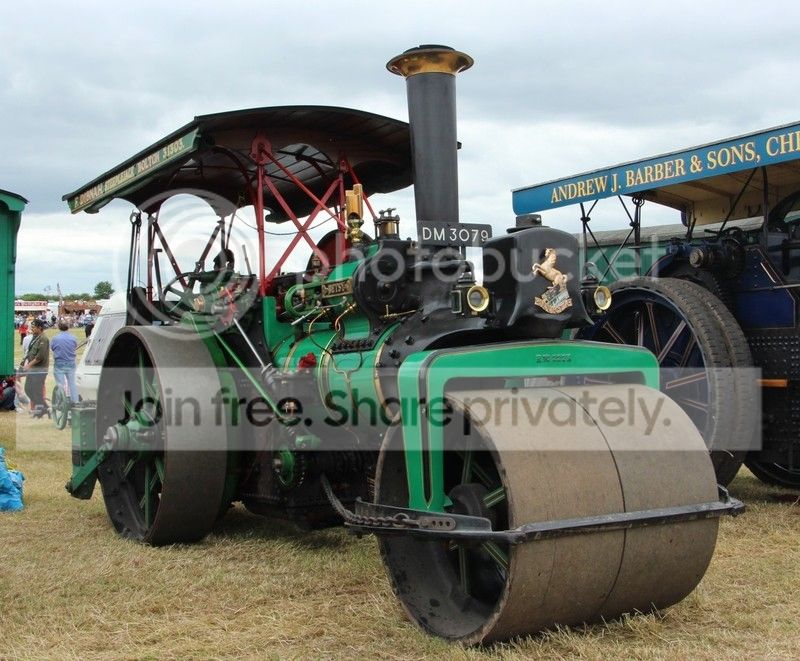

Fred1_zpslwdmmoox.jpg
 
The issue is the context the engine is shown in. No operator, lack of motion, limited angle possibilities, background muddle, half of another engine and to top it all, a dull day with flat light. Under such conditions, I'd say it would be very difficult to get anything more than a snap if you want to maintain realism. If the subject is "dead", give it life in another way. If you see what I mean.

I'd try to do something like a side on profile and get it technically perfect, level on all planes, correct distortion, then edit everything else out except the engine. Set it against a totally black background and stylise it a bit. Something like that.
 
Last edited:
I'd have gone in close with a wide angle bringing the viewer's eye level close to the front wheel, or used a longer lens and isolated interesting details.

You'd struggle to make a straight shot of the whole engine interesting.
 
Some easy things to consider...
Most snappers put their camera up to their eye when they are standing and just take a shot.
The obvious change is to move. Try a low shot, lay down on the ground and look up. Stand on something to get a high shot.

Look around the frame and see what is in the shot apart from the subject. You have included something blue on the ground beside the back right wheel.
All you had to do was pan to the right a bit to remove it from the frame.
What was the view like from the other direction?

Take some detail shots if you can't isolate the subject.

There's not much you can do about the weather.
 
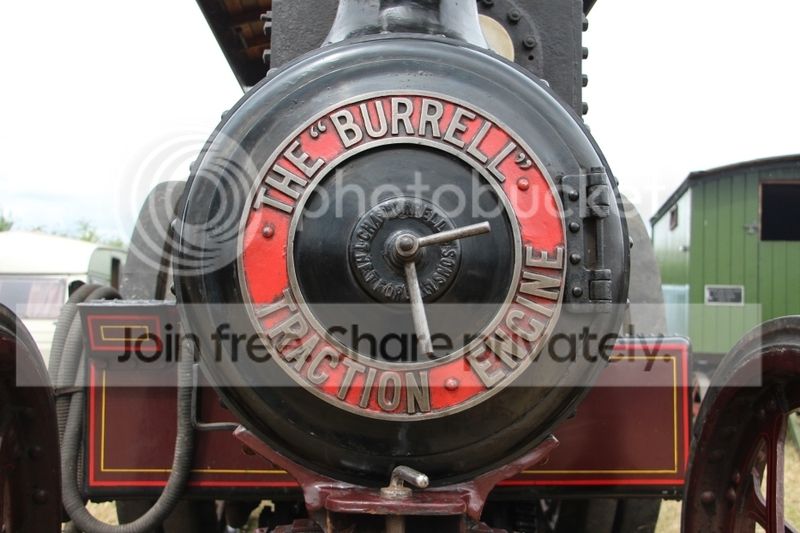
great advice chaps, to get the whole engine in the shot I had to include the engine next to it, as they are all lined up, so a full side on shot was not available, I did take some detail shots....again I havent edited the in PS yet, I do have ideas on a B&W change with just the RED circle left in colour etc etc. but my main problem is the above one.

steam1_zpsyjcnaooe.jpg
 
Last edited:
Some easy things to consider...
Most snappers put their camera up to their eye when they are standing and just take a shot.
The obvious change is to move. Try a low shot, lay down on the ground and look up. Stand on something to get a high shot.

Look around the frame and see what is in the shot apart from the subject. You have included something blue on the ground beside the back right wheel.
All you had to do was pan to the right a bit to remove it from the frame.
What was the view like from the other direction?

Take some detail shots if you can't isolate the subject.

There's not much you can do about the weather.

What he said.
 
I can see dozens of different photo possibilities there mostly close up shots of various parts of the engine - the prancing horse at the front, the lamps at the front, the nameplate etc.

All of these separate items would have made decent photos.
.
 
This will probably seem like nit picking of the highest order and wouldn't have made your picture great, but it would have improved it a little within the limitations imposed on you by the circumstances.

By taking a step or less to your right you would have avoided the meeting of the two engines indicated by the arrow, which would have increased the visual separation of the two. It would have been similar to the edit below. Paying attention to details like this, where foreground and background objects intersect, can make surprisingly big differences to pictures. It's all about perspective, and how objects relate to each other on the picture plane.

The frequent use of zooms makes us lazy in this respect and we forget that moving the viewpoint even slightly can have a big effect how pictures look and succeed.


View attachment 41664

View attachment 41665
 
great advice chaps, to get the whole engine in the shot I had to include the engine next to it, as they are all lined up, so a full side on shot was not available, I did take some detail shots....again I havent edited the in PS yet, I do have ideas on a B&W change with just the RED circle left in colour etc etc. but my main problem is the above one.

steam1_zpsyjcnaooe.jpg

Hope you don't mind a relative newbie commenting but that photo would have been better if you'd have thrown the green wagon out of focus by using a shorter depth of field. Alternatively, crop it square.
 
I'd have gone in close with a wide angle bringing the viewer's eye level close to the front wheel, or used a longer lens and isolated interesting details.

You'd struggle to make a straight shot of the whole engine interesting.

Exactly. Why do you want a shot of the whole engine? What story do you want to tell or response do you want to provoke in your audience (which may just be you)?

If it's showing off the drama and power of the machinery, get lower, maybe wide angle. Maybe try to capture it in motion. If it's demonstrating the complexity and engineering, try details. If it's to be a documentary record, then the previous suggestion of getting square on and finding an angle which cleaned up the background could work. For me it would have to be the relationship between man & machine; I'd want a human in it somewhere.

As already intimated, one of the things which stops the image being great is the flat light/sky. Some folk would try bracketing & combining exposures to bring out the detail. @Delta Skies found some interesting light in this fab image: https://www.talkphotography.co.uk/threads/traction-engine-driver.594671/#post-6953064
 
At a Steam Festival I wanted some good shots of the Steam Engines, but I simply had no idea of how to photograph them as a photographer and get some different looking shots, rather than a snap shot like the one below. but whilst getting a good view of the whole engine. How would you experienced Photographers approach this....I have not edited them in anyway except a crop...
Why do you want a view of the whole engine?
  • If you're primarily a traction engine enthusiast you probably want a shot of the whole engine and close-ups of interesting details.
  • If you're approaching the subject as a photography enthusiast you look for the interesting image regardless of how much or what part of the engine is featured.
Which point of view are you genuinely coming from? - if you understand this about yourself you'll understand whether you want to take a better photograph to record the engine or to take a better photograph.

If you patiently waited until there was no one in the frame to press the shutter then getting the record of the engine was probably foremost in your mind, if you instead found yourself intent on capturing a moment of human engagement with the subject you were looking for the interesting shot. Each has their place, but don't always expect a record shot to be the interesting one.

Have a look at some of the photography of Colin Gifford for inspiration.
 
A well prepared photographer always carries a bottle of whiskey and a bucket of coal everywhere. Get the driver happy, get some steam up, and off you go!

Joking aside, find and talk to the owner or driver. They are often keen to show off their pride and joy. It's much easier then to ask them to pose in front of it. or in the drivers seat. And if they are old, have a beard and are covered in coal dust or oil, all the better.
 
Last edited:
I recently watch this video and liked it. You may find it interesting as well.

View: https://www.youtube.com/watch?v=OtcD84l9eUw


Typical misunderstanding of Punctum going on there. You can't stand there telling the audience "This is the punctum in this shot". Punctum is personal. There is no definitive punctum in an image. It's personal to the viewer and everyone will find something that resonates with them depending on what has meaning to them. This is the danger of reading one thing and thinking you're an expert. If you read Death of the Author by Barthes, he discusses this quite eloquently.
 
Typical misunderstanding of Punctum going on there. You can't stand there telling the audience "This is the punctum in this shot". Punctum is personal. There is no definitive punctum in an image. It's personal to the viewer and everyone will find something that resonates with them depending on what has meaning to them. This is the danger of reading one thing and thinking you're an expert. If you read Death of the Author by Barthes, he discusses this quite eloquently.
It's over two hours long so only finding one thing you disagree with is a win considering. Surely the op can find something of use from the other hour and 45 minutes of it.
 
Some easy things to consider...
Most snappers put their camera up to their eye when they are standing and just take a shot.
The obvious change is to move. Try a low shot, lay down on the ground and look up. Stand on something to get a high shot.

Look around the frame and see what is in the shot apart from the subject. You have included something blue on the ground beside the back right wheel.
All you had to do was pan to the right a bit to remove it from the frame.
What was the view like from the other direction?

Take some detail shots if you can't isolate the subject.

I agree with what Kendo says. If you shoot at eye level, you will get the 'everyday view' that the average person sees. A lower or higher viewpoint provides the unusual. For children and animals you should (nearly) always get down to their level.

For things like traction engines, an isolated detail is something people don't to get to see normally - it could be a wheel, a whistle, a name plate (yours could have been even closer?), or anything that grabs your attention.

For other shots, consider the foreground, middle- and backgrounds. Do you need something in each (not always)? Is there a balance between all three, or possibly a startling IMbalance that makes people think?

Think about what you're saying with the shot, the story in other words. There doesn't have to be a story of course, but the viewer appreciates knowing what you saw, that stopped you and made you want to take a picture.

Learn the 'rule of thirds' so that at the least, you can break it with awareness of what you're doing!

And if all else fails, take a snapshot. We all do and there's nothing wrong with that - as long as you are aware of the difference between a snapshot and something beyond that.
 
Back
Top