Completely New To DSLR

Bradlad

Suspended / Banned
Messages
6
Name
Neil
Edit My Images
Yes
Hi, I have had a look through previous threads and being honest there are thousands.. even using the search function I couldn't find specifics so hope noone minds me starting a new thread to pick brains..

Firstly, I went out on Friday and bought myself a new Pentax K-X, it came with the 18-55 and 55-110 lenses.

I have spent the weekend playing ( apologies if the term " playing " upsets the purists ) and worked out how a lot of it works, however I have come across a couple of questions I haven't either been able to work out myself or find answers to on the net..

Macro pictures; I love getting in very close.. to the point of seeing the pollen in flowers etc, however the 18-55 will not focus at very close range, what lens would anyone recommend for the K-X to get in close? I have seen some 50mm K type lenses but they only go down to f2 whereas even my 55mm stops down to 3.5.

Zoom lenses, there are thousands of them out there... I am aware the manual mode on the KX allows the use of 35mm SLR lenses however there are that many on the market it is a minefield to actually go out and buy one, is there a formula for working out the magnification? being honest " 800mm focal length " means nothing to me.. however if there was a conversion to " 800mm = 100x magnification " that would tell me much more..

I sincerely apologise if these questions get asked 12 times a week but I did look for the answers myself and nothing sprung to view.
 
Last edited:
Hi Neil,

I used to be a Pentax owner (K20d).

Think about extension tubes (if you can get them in Pentax fit) to let you get in very close (and cheaply with no loss of optical quality)

The human eye equates, on 35mm cameras, to about 50mm therefore a 200mm lens, for example, will give 4 times magnification. (On your camera a 200mm lens becomes 300mm - see below)
Also, bear in mind, that the size of the sensor on your camera causes the focal length of your lenses to become a bit greater in terms of their 35mm equivalent (read up on crop factor). E.g. a 300mm lens on your Pentax will be the same as a 450mm lens on a 35mm camera and give 9 times magnification compared with the human eye.
BTW the pentax 55 - 300mm (actually a Tamron lens with a Pentax badge) is a super performer.
 
Hi Neil,

Welcome to tp, you seem to be confused on a couple of points so let's see if I can explain them in a way that makes sense.


Macro pictures; I love getting in very close.. to the point of seeing the pollen in flowers etc, however the 18-55 will not focus at very close range, what lens would anyone recommend for the K-X to get in close? I have seen some 50mm K type lenses but they only go down to f2 whereas even my 55mm stops down to 3.5.

You are confusing the focusing distance with the F-stop. The F stop in the largest aperture the lens will go to (the smaller the number the bigger the aperture and the more light the lens can let into the camera for a set shutter speed). Lenses have differing close focusing distance with dedicated macro lenses being able to focus the closest allowing 1:1 magnification of the subject on the sensor. You can use extension tubes or close up filters on your current lenses as a cheaper alternative but, of course, you lose some of the sharpness.

Zoom lenses, there are thousands of them out there... I am aware the manual mode on the KX allows the use of 35mm SLR lenses however there are that many on the market it is a minefield to actually go out and buy one, is there a formula for working out the magnification? being honest " 800mm focal length " means nothing to me.. however if there was a conversion to " 800mm = 100x magnification " that would tell me much more..

I sincerely apologise if these questions get asked 12 times a week but I did look for the answers myself and nothing sprung to view.


The focal length is an angle of view. Hold your arms out in front of you slightly apart, the view between your hands is about 50mm, put your hands closer together and you are zooming in, widen them out and its like a wider lens. You can not talk about a magnification because the objects close to you will be bigger then the object far away on any lens.

Have a look at this link it is a good beginners guide.

:thumbs:
 
Many thanks to both of you, those replies are very helpful and have given me some great pointers.

I think I understand now, I was reading the info I had as the F stop allowing close in focus with putting everything behind out of focus, but I think I get it now.

One more question if you don't mind, which is best; Telephoto or zoom lenses?

The price of lenses can make buying multiples prohibitive so I'm suspecting a zoom would be better due to it's adjustability, however I have read that quality can be better with telephoto.

Any suggestions would be appreciated.
 
Many thanks to both of you, those replies are very helpful and have given me some great pointers.

I think I understand now, I was reading the info I had as the F stop allowing close in focus with putting everything behind out of focus, but I think I get it now.

If you shoot at a lower aperture, the depth of field is smaller. So at F2.8 zoomed in to 100mm at someting 2 metres away, the stuff within 3cm front to back of what you focus on will be sharp, the rest will be out of focus. At F18 it is roughly 20cm either side of the focus point.


One more question if you don't mind, which is best; Telephoto or zoom lenses?

The price of lenses can make buying multiples prohibitive so I'm suspecting a zoom would be better due to it's adjustability, however I have read that quality can be better with telephoto.

Any suggestions would be appreciated.

They are the same thing, prime lenses have no zoom, telephoto is what longer zoom lenses are referred to.

What is best?

Depends what you want to do, primes are usually sharper and faster (lower minimum f-stop) but have less flexibility.

Beginners usually end up buying a 50mm 1.8 as this tends to be the cheapest way to get a really sharp, fast lens.
 
Last edited:
Thanks for that Pete, I suspect the 50mm prime is what I am lacking, as both the lenses my set up came with are adjustable " zoom " type.

I think I'll have a trip down to my camera shop tomorrow.
 
Hi Bradlad - just something you need to consider, when you say you can't get close enough with the lenses you have (to do macro type shots) a telephoto won't get you any closer as your minimum focusing distance will increase.
There are some lenses that will do both telephoto and macro, look at the Sigma range.
If you want to stick with what you have, then extension tubes will allow you to focus much closer, just be aware the depth of field (max and min focus distance) gets very thin.
One final point, a telephoto lens is not a zoom lens but a long focal length lens usually any fixed focal length above 80mm or so.
some examples:- a 200mm F2.8 would be a telephoto lens (at f2.8 quite a good one)
a 50 to 85mm f2.8 would be a medium zoom (on 35mm or full frame)-quality can vary
a 70 to 300 F4 -f5.6 would be a zoom telephoto lens of medium quality.
The Sigma 70 - 300 will do macro(close focus) as well, as will the 105mm and 150mm
I know we are throwing a lot of information at you, keep at it, all will become clear with time.
 
Cheers for that Howi, I will have a look at the sigma option. :thumbs:
 
Hi Neil - welcome to TP :wave:

For Macro I heartily recommend the Raynox 250 close up lens. It is a lens that you clip onto the front of either of your main lenses ( I use mine with a 55-200mm zoom and sometime with the kit lens) - it comes with a universal adaptor so will work with any of your lenses.

Linky

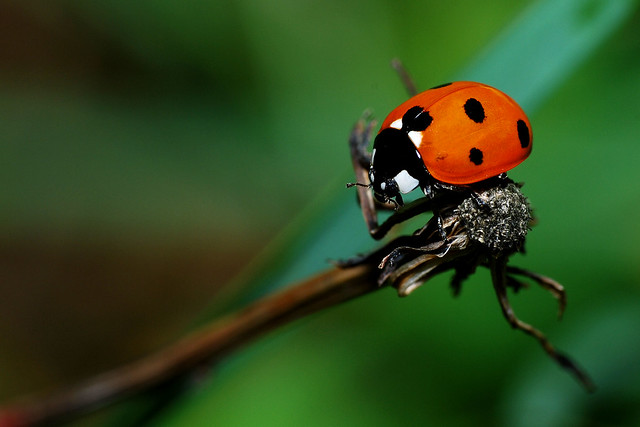
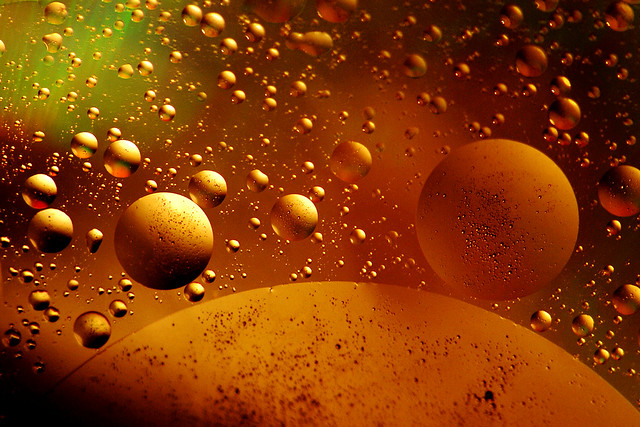
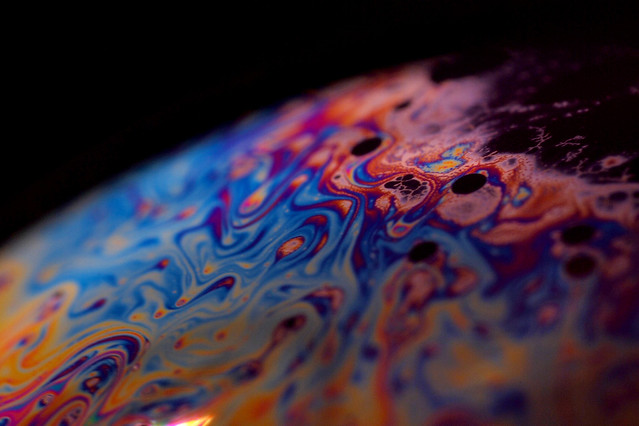
It is a very cheap way of getting a taste of macro - mine has done me well for a couple of years and it is only now that I've decided to get a dedicated macro lens. To give you an idea of what you could do with the Raynox these are a few of my pics (and there are much better examples if you search the macro forum for "raynox 250"):

Bugs:


Seven Spot Ladybird by Daysleeper40, on Flickr


Backlit Moth by Daysleeper40, on Flickr

Oil & Water:


DSC_0383 by Daysleeper40, on Flickr

Surface of a bubble:


DSC_0126 by Daysleeper40, on Flickr

It is a great bargain - you won't regret buying it :thumbs:
 
Last edited:
It does seem a bargain at that price Daysleeper, and those photo's are fantastic, exactly the sort of thing I am wanting to try.

Many many thanks for that info.
 
that raynox 250 looks great...might be just what i'm after. Anyone know if it would suit a tamron 17-50 / nikon d5000 combo? Thanks
 
Back
Top