Coloured Filters

Barney

Suspended / Banned
Messages
3,043
Name
Wayne
Edit My Images
No
I have been messing about, I do a lot of that lately, with some old digital images and performing single click BNW conversion.

I have noticed a couple of things regarding colours in the images,

Bricks (Accrington type) seem to covert to a mid grey tone
Anything yellow converts to white
blue sky converts to white but some blue paints go a darker grey than bricks
Green converts to a place somewhere between the bricks and black
red paint is grey somewhere between the bricks and green paint

What effect would filters have on those colours ? Ie. does a yellow filter make the yellow darker and not white or lighter or does it not even act on the yellow?
 
Does this help :)

Probably. :)

but \I want real world user experience not theoretical , mumbo jumbo or bo lacks fro reddit and you tube.

For some strange reason I trust the members here and not all the self promoting advertising laden rubbish.
 
Last edited:
@Barney

The colour of the filter will make that ‘colour’ appear white (or lighter) in the image

ie reds will appear white or lighter with a red filter

The filter acts on colours at the other end of the spectrum, ie a red filter will make blues darker (as well as reds lighter), and do darken skys

A yellow filter will very slightly darken the skies but only make reds a shade lighter (at the expense of turning yellows white)
 
Probably. :)

but \I want real world user experience not theoretical , mumbo jumbo or bo lacks fro reddit and you tube.

For some strange reason I trust the members here and not all the self promoting advertising laden rubbish.
Don't think Ilford are going to mislead you or are even advertising in the link.
 
Ilford's information on that page is very much real-world, and I would be inclined to thank @Gav for linking you to a very helpful article from the people who make film. That was rude.

It doesn't matter whether you put a filter in front of the lens or use it in post, the effect is the same (but more controlled in post with digital - you get what you're given if you use a physical filter). How they work - What @Mr Perceptive said.

An example (obv done post):

Black and white vine by Toni Ertl, on Flickr

By using different colour filters you can make different coloured parts of the scene brighter or darker. Filters also have density and will subtract light, so you may need to increase exposure *if metering off the camera & not through the lens* by the amount indicated on the filter information.
 
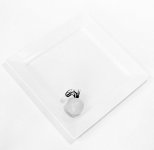
As @Mr Perceptive says, a coloured filter pretty much turns its own colour to white/pale grey. The shot below was my entry for Minimalist in FPOTY and shows the result of shooting a red tomato through a red filter. The plate and background were both white.

img244-copy-4.jpg-tp-v2.jpg
 
Good thread, as I am now doing some film with my SLR, I am happy with the camera and the process of using it, I am happy with the results, but the clouds look like just grey dishwater.
My Question is, if I use my digital camera to shoot black and white, and I take notes as I do it, will putting a filter on give me a good example of what I will get when using film.
Its just so I don't go out and shoot a roll of film and pay to get it developed, when in fact it would be a waste of film and money.
I have a yellow filter and a red one is on the way.
And what about a ND variable filter is that any use for B&W film photography?
 
Last edited:
Good thread, as I am now doing some film with my SLR, I am happy with the camera and the process of using it, I am happy with the results, but the clouds look like just grey dishwater.
My Question is, if I use my digital camera to shoot black and white, and I take notes as I do it, will putting a filter on give me a good example of what I will get when using film.
Its just so I don't go out and shoot a roll of film and pay to get it developed, when in fact it would be a waste of film and money.
I have a yellow filter and a red one is on the way.
And what about a ND variable filter is that any use for B&W film photography?

You should be able to see the effect of a yellow or red filter just looking through the viewfinder of your film camera, obviously not the colour, but the way they change the density of the clouds.

An ND filter is only ever useful if you want to reduce the amount of light entering the lens, regardless of film or digital, and it has a similar effect on both.
 
Last edited:
Thank you so much, might try this afternoon or tomorrow.
Things are very overcast here at the moment.
 
Last edited:
It's also worth looking at and investing in a circular polariser filter, especially for colour film shooting - you'd be amazed at the difference it makes to clouds and sky in particular.
 
WILL also give a slight ND filter effect which can be handy from time to time.


My bold. Any polarising filter will give a 1 to 3 stop reduction in light transmission (depending on make etc..) The factor is usually stated somewhere on the filter's packaging.
 
Back
Top