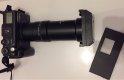
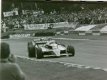
Depending on the size of the light source built into the lid there's nothing stopping you scanning strips of negatives side by side at the same time. The software (Viewscan/Epson Scan/Silverfast etc) will then just invert the whole scan so you end up with a contact print style image.
I have done this using a cheap all-in-one printer-scanner, with a set of 6*9 black and white negatives that I found amongst my old negative envelopes, from a folder I bought, only used once and then forgot all about. It worked pretty well for what it was. It's troublesome getting the negatives (or strips) lined up, but for the OP's purposes it might be appropriate. I'd strongly recommend finding some way to associate the scanned file names with the envelopes; I invented a systematic file naming scheme (including the rough year, film type and a clue about contents), then wrote the file names on the negative envelopes.
Results for colour negatives are likely to be much less successful than black and white, because of the orange colour of the underlying film base. A simple inversion won't give a good result, but will at least enable you to tell what the subjects are, so as to work out which films to scan later.
In my own case, I decided quite early on that I was interested in the whole set rather than cherry picking, and I scanned everything from 1967 to about 1980, and then did some cherry picking after that (holidays and travel etc, rather than every stage of my kids growing up). I would quite like to fill in the gaps but the initial push has faded as I do new films. I started in March 2011 and finished the bulk of it (134 films) by November that year, with a few more bursts later as I found more, interesting sets.