Catching the Milkyway

Steve Wallace

Suspended / Banned
Messages
13
Name
Steve
Edit My Images
Yes
Hi all

I'm new here, photography is a hobby and passion, I post my pics @ www.500px.com/stevewallace (not uploaded last nights pics yet) , I've recently upgraded my Sony A55 to the full frame Nikon D750 which I absolutely love with Nikon 24-300 F3.5 lens.

My problem is im in need of help with trying to capture the Milky way, I've tried a few times to capture it and done alot of research BUT it's still illudes me?

Last night was a new moon so headed up Birling Gap on beachy head (official dark area) on coast East Sussex, the skies were clear, and lots of stars in sky, using Stellerium app i knew where the milky way should be and I was there from 9:30-11:00 pm freezing in 2 degrees but nothing no milkyway anywhere to be seen???

I of course didn't let it be a wasted journey so snapped away minus the milky way.

I used F3.5, iso 3200, 20secs, manual focus, shutter release remote, mainly.

Can you please please help and advise what I'm doing so wrong?

Thanks in advance
 
Last edited:
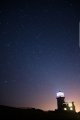
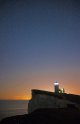
These are what I ended up getting last night was so cold otherwise I would possibly of done star trails ...
 

Attachments

  • Screenshot_20170427-131731.jpg
    Screenshot_20170427-131731.jpg
    82.7 KB · Views: 85
  • 3272017132839.jpg
    3272017132839.jpg
    93.5 KB · Views: 86
Last edited:
Not staying out late enough (or early enough, whichever way you like to look at it). Before dawn you would probably have got it (and frostbite!). This time of year the Milky Way is still very low in the evening sky. If you want to shoot it in the evening wait till later in the year. Although it does run through Auriga and Gemini it's not that dense. Photograph it through Cygnus, Lyra and Scutum, when it'll be obvious visually. Your images are not showing amd I'm sorry but I don't click links so I can't tell which direction you were pointed in. Your settings look okay to start with. Personally I use an f2.8 lens (Tamron 17-50mm - use the wide end of yours) 800 iso and probably 30 sec or longer, but I do that because I'm working off a driven mount and my camera doesn't cope well with high iso noise.
 
Ok thanks for such a informative answer appreciated, I'm not sure how to upload a pic on here, tried from mobile but says to large and PC can only seem to attache image URL? Im also not sure how to delete the above post with failed uploads?

Thanks
 
Great post I've an idea I'd like to try out with the milky way above a tent and some light painting I'm looking to go to the Cromer area of Norfolk. I would love to get the sea in the background and milky way above it. Will it be best to go late summer even with the later nights?
 
If I'm right about where you were pointed then you've got the skyglow from the lighthouse right where the MW is in that direction, so your chances of seeing anything have gone from remote to non existant. Personally I wouldn't go to a 'dark area' and work right next to a lighthouse, far less try to get it in shot. As an astronomer I'm not really interested in having a foreground to my shots, but Dave's tent or light painting is a good idea. You might want to think about achieving success with the MW first, then add foreground. But - this time of year, early hours of the morning and east: August, evening and south. It shows really well from my garden in the summer, but the further you are from any lights the better.
 
Great post I've an idea I'd like to try out with the milky way above a tent and some light painting I'm looking to go to the Cromer area of Norfolk. I would love to get the sea in the background and milky way above it. Will it be best to go late summer even with the later nights?

It's in the southern sky so I don't think you will see it above the sea at cromer...August and September are good times of year to see it in the evening a couple of hours after sunset.
 
Last edited:
Just to echo the other points here, you are way to close to the lighthouse with the amount of light its putting out its going to wash the night sky @ 3.5 - The Galactic Core which is the brightest part of the milky way can be seen rising from the southern horizon between 2 am and 4 am obviously the morning light is breaking earlier and earlier, so the amount of time you have to capture it becomes less and less as we move into the summer months. Even though you were at your location for 21:30 you need to take in to account for ambient light, Civil, Nautical, and Astro . Looking at last night, the Milky Way would have only been just visible on the Eastern horizon at around 12 to 1 am so you you would have had a wait :)

Wiki has a good article on the phases of light
https://en.wikipedia.org/wiki/Twilight

Id also recommend that you double check that Stellarioum is calibrated for the time and date plus your location.
You may also wish to check out http://app.photoephemeris.com which will aid you in your quest :)

Regards
Geoff
 
Last edited by a moderator:
It's in the southern sky so I don't think you will see it above the sea at cromer...August and September are good times of year to see it in the evening a couple of hours after sunset.

Ah that's a shame, may have to rethink my location. Gonna stick with the idea of tent but maybe move to a hill somewhere, Yorkshire dales/Lincolnshire wolds maybe.
 
Thanks all, great info and advice, I won't give up but it does seem to be getting the better of me :(
 
I would love to have a crack some Astro photography.

Best options i have at the moment are a
Sigma 10-20mm f4 - 5.6
Nikon 35mm f1.8

Neither are that great at the job!
 
Thanks all, great info and advice, I won't give up but it does seem to be getting the better of me :(

Hi Steve I've found the key ingredients to be as follows

1. A wide angle lens that is sharp wide open. Maximum light gathering power, ideally 24 / 1.4 or so. Without this it's endless messing about and ultimately less than satisfying results. Consider manual lenses as they are much cheaper.

2. Timing has to be flexible. On clear nights with no moon I set the alarm as needed. E.g. Last week that meant getting up and out at 2am and back by 5am.

3. Need to scope out suitable locations in advance so you know exactly where to go and no messing about in the dark. ideally with a good landscape and little street lights etc.

Hope this helps

Tim
 
I would love to have a crack some Astro photography.

Best options i have at the moment are a
Sigma 10-20mm f4 - 5.6
Nikon 35mm f1.8

Neither are that great at the job!

The 35 /1.8 will be the far better choice I think even if it means stitching panorama afterwards as is has so much more light gathering power.
 
I might give this a crack, problem is I'm too lazy to drive to a place with no light pollution or know where in the sky to point the camera at or what time of year or month is best.

I recently bought a 20/1.4 so that'll work, also have a 16-3/2.8 if I need wider or 24/1.4 for narrower.
 
I might give this a crack, problem is I'm too lazy to drive to a place with no light pollution or know where in the sky to point the camera at or what time of year or month is best.

I recently bought a 20/1.4 so that'll work, also have a 16-3/2.8 if I need wider or 24/1.4 for narrower.

Many people have said the same to me about being too lazy etc. so you're in good company! Frankly I don't understand - it's such an amazing sight I can't imagine not wanting to go see it....but it's probably good that we're all different :)
 
Hi Steve I've found the key ingredients to be as follows

1. A wide angle lens that is sharp wide open. Maximum light gathering power, ideally 24 / 1.4 or so. Without this it's endless messing about and ultimately less than satisfying results. Consider manual lenses as they are much cheaper.

2. Timing has to be flexible. On clear nights with no moon I set the alarm as needed. E.g. Last week that meant getting up and out at 2am and back by 5am.

3. Need to scope out suitable locations in advance so you know exactly where to go and no messing about in the dark. ideally with a good landscape and little street lights etc.

Hope this helps

Tim

Wow thanks for that, point 3 I defo do, before a shoot I look at Moon phase, weather (cloud) , wind and use Stellerium for location and time to know exactly where the MW is! I did do this for the above but as above explains the MW isn't viable in the south at late eve at Mo so will wait till August. There is another location I've visited at night it's actually herstmonceux observatory so will likely try that next with the big dome telescope as foreground?

My lens isn't perfect I know at F3.5 28mm but may look into a new lens.

Thanks again
 
Many people have said the same to me about being too lazy etc. so you're in good company! Frankly I don't understand - it's such an amazing sight I can't imagine not wanting to go see it....but it's probably good that we're all different :)

I took my first Astro shots last year and was amazed when I spotted the Milky Way. I had a look for it last week, but it was way to early in the evening. I'm going to be trying again in the summer when I'm up and Scotland :)
 
Not been able to find any decent and detailed reviews on the Samyang 20mm especially with regards how it handles coma. I know the older Samyang 14mm is still classed as one of the best though for lowlight/astro. but the amount of reports I have read of de-centred lenses and having to return several copies before getting a decent one, really puts me off. Currently using an old Sigma Super Wide 2 @ 2.8 24mm - Do have an urge for a 1.4 lens though :)


Hunting Welsh Dragons
by Geoff Moore UK, on Flickr
 
I took my first Astro shots last year and was amazed when I spotted the Milky Way. I had a look for it last week, but it was way to early in the evening. I'm going to be trying again in the summer when I'm up and Scotland :)

Scotland in summer..............Not the best of places to try to photograph the Milky Way. Depends on where in Scotland you are but in Wester Ross where we go it doesn't really get dark in summer, and further north it doesn't get dark at all.
 
Scotland in summer..............Not the best of places to try to photograph the Milky Way. Depends on where in Scotland you are but in Wester Ross where we go it doesn't really get dark in summer, and further north it doesn't get dark at all.

Thanks JF. I'm quite lucky I stay at the boundary to the Galloway Forest and there is a Dark sky park 10 minutes away. I know what you mean though :)
 
Many people have said the same to me about being too lazy etc. so you're in good company! Frankly I don't understand - it's such an amazing sight I can't imagine not wanting to go see it....but it's probably good that we're all different :)

The problem for me is say something new, besides capturing the milkyway, I want it to be a story, as opposed a "nice shot" of the sky.

Until I have an idea of a photo, as opposed to just point the camera at the sky, I am not going to bother. Weird I know.
 
This is where the location, landscape and foreground come into play I guess.
 
Thanks JF. I'm quite lucky I stay at the boundary to the Galloway Forest and there is a Dark sky park 10 minutes away. I know what you mean though :)

We stayed in Garlieston on the Galloway House estate 6 or 7 years ago & even though it was mid Summer, I was gobsmacked at how dark it was without any pollution ............. & that sky, wow! :cool:
 
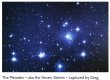
Slight side question , if you look at the darker image without light polution on left there is a tight cluster of stars?

Any idea what that is called or what that is?

Thanks

Steve
 
Slight side question , if you look at the darker image without light polution on left there is a tight cluster of stars?

Any idea what that is called or what that is?

Thanks

Steve

I'm sitting in the sun on my iPad so it looks dark but looks like Pleiades to me.
 
Last edited:
Slight side question , if you look at the darker image without light polution on left there is a tight cluster of stars?

Any idea what that is called or what that is?

Thanks

Steve

It was a bit hard at first to get my head round the patterns as the light pollution was messing with the star brightnesses, but I think it's the Beehive Cluster (Messier 44) in Cancer. I did manage to pick out Gemini down and to the right of it, but it took me a while.
 
Back
Top