Canon 7D And The 100-400L

  • Thread starter Thread starter CT
  • Start date Start date

CT

TPer Emeritus
Suspended / Banned
Messages
26,617
Edit My Images
Yes
I finally got to do some testing with the 100-400L on the 7D after satisfying myself that the lens calibration is OK and doesn't need any micro adjustment.

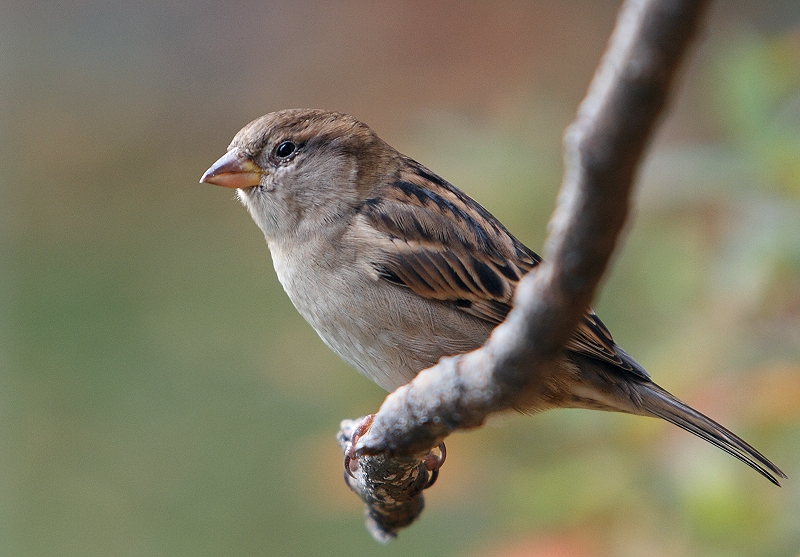
This first shot is full frame at 400mm and f8, 1600 ISO, at a range of about 8 feet, tripod mounted with gimbal head. It's just been resized to 800 pixels with normal sharpening for the reducion in size.

4015984481_48a65fe6b0_o.jpg


A full frame 1:1 crop from the above image.

4016746936_4f1b7f9f8c_o.jpg


Pretty impressive I'd have to say - just lacking the absolute sharpness you'd expect when you'd really nailed the focus with a fast prime lens, but a very usable image.

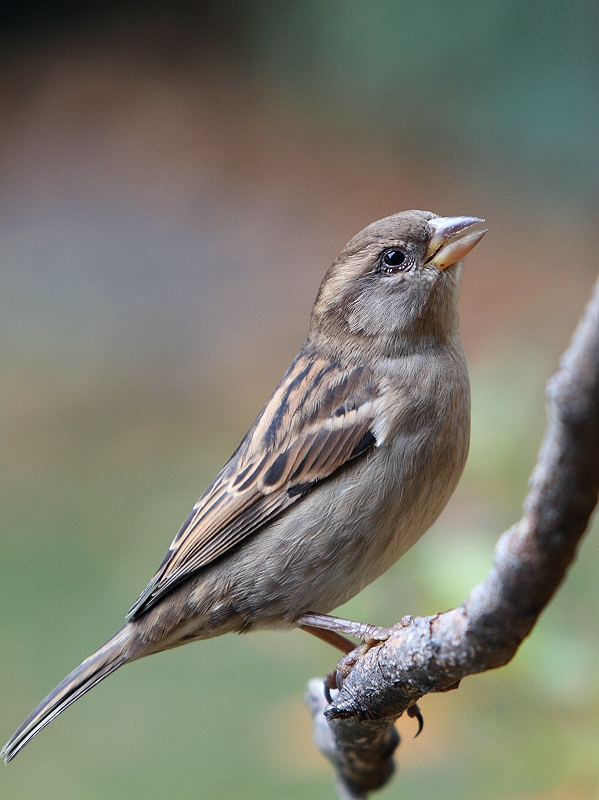
Another full frame shot at a more realistic range of about 25 feet. Again it's at 1600 ISO and has just had normal sharpening for the downsizing.

4016747060_727794ca7c_o.jpg


Again - a sharp very usable image I think.

A full frame 1:1 crop from the above image.

4015985043_86ee01b1f8_o.jpg


Very acceptable I think given the increased range.

What I have noticed is that the lens definitely benefits from stopping down now, which I never found to be the case before, but in all fairness, the last time I really used the lens in anger was with the 40D, and the 7D represents a near doubling of the pixels which is bound to show up any minor focusing errors, and obviously a prime lens will exploit those extra pxels far better than a zoom.

So good news I think? Don't let currently using a 100-400L for your shots put you off getting a 7D, with the proviso that you'll need to stop down a little for optimum results. It's a great lens now being challenged a little by these huge pixel counts, but still up to doing the job. :thumbs:
 
super :thumbs: Would be interested to see how your 70-200 fairs as well.
 
CT Nice images and very valuable info. Thanks for the :thumbs: for the
100-400L on the 7D. Makes me even more eager to get one!!

What does it need to be stopped down to in your view?
 
What does it need to be stopped down to in your view?

I was getting crisper images at f7.1 so not a lot I'd say. F8 should be fine. Obviously with moving wildlife images keeping the shutter speed reasonably fast would mean you wouldn't want to stop down much more unless the light was really good.
 
I was getting crisper images at f7.1 so not a lot I'd say. F8 should be fine. Obviously with moving wildlife images keeping the shutter speed reasonably fast would mean you wouldn't want to stop down much more unless the light was really good.

:thumbs:Thanks
 
super :thumbs: Would be interested to see how your 70-200 fairs as well.

Good call!

Taken with the 7D and 70-200 f2.8L IS at about 8 feet. 400 ISO and wide open. It's about a 50% crop.

4019275482_54d6fbecb5_o.jpg


Identical settings and distance, but this time stopped down to f4. Again it's about a 50% crop.

4018514415_a987032e2f_o.jpg


Like the 100-400L. it does benefit from being stopped down, but for all practical purposes it's impressive even wide open, and clearly deserves the reputation it has.

This is my least -used lens, I think I should use it more often. :cuckoo:
 
Great captures.
 
CT These captures just make it so hard to resist the canon 7D
 
CT try backing off the zoom to about 350 or 375mm. The 100-400 is a bit soft at full 400 but sharpens up a lot at just off the full zoom.

The slight difference in magnification is made up for the improvement in sharpness
 
CT These captures just make it so hard to resist the canon 7D

It could be an expensive move for you Alan! Great camera, but I'd give it a lot of thought in your position.The way Canon and Nikon see-saw, either one of them is only ever 12-18 months off pole position. ;)
 
CT try backing off the zoom to about 350 or 375mm. The 100-400 is a bit soft at full 400 but sharpens up a lot at just off the full zoom.

The slight difference in magnification is made up for the improvement in sharpness

Cheers -I'll give that a go. :thumbs:
 
Taken with the 7D and 70-200 f2.8L IS at about 8 feet. 400 ISO and wide open. It's about a 50% crop.

Hi CT, thanks for taking the time to post these :thumbs: You gotta love the bokeh on the 70-200 too :)
 
Thanks CT :) Very interesting tests :thumbs:

If you're in testing mood, I would love to see side by side comparisons between an image with a TC/extender vs a straight enlargement.

BTW, what shutter speed were you using? At ISO1600 I can't imagine it was slow but with the 'effective' focal length effect of all the combined magnification factors, it's got to be well into four figures to get anything like optimum sharpness, IS notwithstanding I guess.

Thanks again. Invaluable info. Astonishing quality, from a really very affordable package :)
 
Thanks CT :) Very interesting tests :thumbs:

If you're in testing mood, I would love to see side by side comparisons between an image with a TC/extender vs a straight enlargement.

Well assuming you mean the 100-400L Hoppy, you're asking the wrong person as either converter with the 100-400 means manual focusing, so I never use use them with that lens as you'd you'd need a very co-operative and static bird to hang around while you manually focused.
BTW, what shutter speed were you using? At ISO1600 I can't imagine it was slow but with the 'effective' focal length effect of all the combined magnification factors, it's got to be well into four figures to get anything like optimum sharpness, IS notwithstanding I guess.

The sparrer shot with the 100-400 was 1/160th at f7.1 and 1600 ISO, but that was tripod mounted and using a gimbal head with IS 'ON'. (I almost never hand hold bird shots). I regularly get sharp shots at that speed and less, so I don't think a faster shutter speed wouild have made any appreciable difference tbh.
Thanks again. Invaluable info. Astonishing quality, from a really very affordable package :)

We are being ultimately picky, and as you say, for a zoom lens it's pretty damned good.

I use converters a lot with the prime lenses, but pretty well never with the zooms, preferring to switch to a prime if I need more reach. However just for the sake of interest here's a couple of shots with the 70-200 f2.8L IS with the 2X TC, wide open at an effective f5.6.

Both full frame and taken tripod mounted with a gimbal and IS ON, at 1600 ISO...

4021629599_63240e01fc_o.jpg


4022389830_3a7254d154_o.jpg


They don't look at all bad, but this is filling the frame with the subject at pretty well the minimum focusing distance of the lens, so it doesn't get much better than that. IQ would obviously drop off somewhat as the shooting range increased and there were less pixels actually under the bird. Still - not bad and usable at a pinch at close range, although I do see a drop in contrast with the converter too.

Looking at a 1:1 crop though, we see the true story, which isn't so impressive...

4022390300_5cd79a2411_o.jpg


So no surprises really Hoppy - the fact that the results are as good as they are is testament to the quality of the lens and converter, but it just re-affirms the fact that converters are best used behind prime lenses.
 
Thanks again Cedric. You have some very cooperative sparraz :)

The question I'm driving at is, faced with a reach problem when out birding (which is mostly the case I guess) would the better IQ come from simply enlarging the 7D image, or by using an extender?

I'm guessing the former, because the 7D has so much inherant sensor resolution that it can stand it, and without the inevitable optical imperfections that the extender brings, amongst other things.
 
Thanks again Cedric. You have some very cooperative sparraz :)

The question I'm driving at is, faced with a reach problem when out birding (which is mostly the case I guess) would the better IQ come from simply enlarging the 7D image, or by using an extender?

I'm guessing the former, because the 7D has so much inherant sensor resolution that it can stand it, and without the inevitable optical imperfections that the extender brings, amongst other things.

By enlarging the image I guess you mean by interpolation? That's a very good question actually, I instinctively dislike interpolation, but I don't' like sticking converters behind zooms either. The short answer is I don't know although I suspect you may be right.

What I have noticed since I first got the 50D is increased reach such that I'm using converters less, and even more so now with the 7D.
 
By enlarging the image I guess you mean by interpolation? That's a very good question actually, I instinctively dislike interpolation, but I don't' like sticking converters behind zooms either. The short answer is I don't know although I suspect you may be right.

What I have noticed since I first got the 50D is increased reach such that I'm using converters less, and even more so now with the 7D.

By enlarging the image I guess you mean by interpolation? That's a very good question actually, I instinctively dislike interpolation, but I don't' like sticking converters behind zooms either. The short answer is I don't know although I suspect you may be right.

What I have noticed since I first got the 50D is increased reach such that I'm using converters less, and even more so now with the 7D.

I think you've pretty much answered my question in your last sentence. But I don't mean interpolation because I don't think it's necessary.

What I mean is that, maybe, digital zoom is a 'new feature' of the 7D. I'm actually thinking that it potentially opens up new areas of long lens photography by exploiting the sensor's extraordinarily combination of high pixel count and high pixel density, combined with low noise. In other words, you can put an amazing number of pixels over small subjects at distance, without using mega long lenses and/or extenders and tele converters, and still get decent f/numbers that retain AF and give high shutter speeds.

As always, the starting point must be a super sharp lens, but something like a Canon 300L 4 IS is incredibly sharp. It is also small, light and affordable. So for example, put that lens on a 7D and you have 300mm at f/4 over 18mp. OR, by enlarging the image in post processing, you have 420mm at f/4 over 9mp, or 600mm at f/4 over 4.5mp. 4.5mp is enough to give a very presentable A4 print.

If you accept the theory, that is a phenominal spec. Question is, does it work?
 
I think you've pretty much answered my question in your last sentence. But I don't mean interpolation because I don't think it's necessary.

What I mean is that, maybe, digital zoom is a 'new feature' of the 7D. I'm actually thinking that it potentially opens up new areas of long lens photography by exploiting the sensor's extraordinarily combination of high pixel count and high pixel density, combined with low noise. In other words, you can put an amazing number of pixels over small subjects at distance, without using mega long lenses and/or extenders and tele converters, and still get decent f/numbers that retain AF and give high shutter speeds.

As always, the starting point must be a super sharp lens, but something like a Canon 300L 4 IS is incredibly sharp. It is also small, light and affordable. So for example, put that lens on a 7D and you have 300mm at f/4 over 18mp. OR, by enlarging the image in post processing, you have 420mm at f/4 over 9mp, or 600mm at f/4 over 4.5mp. 4.5mp is enough to give a very presentable A4 print.

If you accept the theory, that is a phenominal spec. Question is, does it work?

It absolutely does work - yes. I learned a painful and expensive lesson intitially when I found the 20D returning better subject size and definition than the 1DMK2n.The 40D, with it's modest 2 mp increase raised the game again, but the 50D with it's 5mp increase was totally unexpected and was heaven- sent for me.

Who'd have thought that so soon after the 5D, Canon would introduce a jaw-dropping 18mp sensor with the 7D, raising the crop advantage even further?

I've seen the unquestioned benefit from each mp increase with each of these cameras, and as I've said for ages now, my ideal camera would be a 1 Series with a 1.6X crop sensor, but the 7D is just that as near as damn it, at a great price, and with an AF system which makes it an even more capable camera for BIF shots.

I know I keep posting this Kingfisher example, but it really does tell you all you need to know about the crop advantage...

3887949307_03df0402b9_o.jpg


So rather than a new feature Hoppy, I think the 'digital zoom' in the 7D is the latest in a line of cameras which have exploited the feature, but taking it to new levels and with improved noise performance to match. I honestly think the 7D is in a class of it's own for bird photograhy, and with an unrivalled reach advantage over anything else out there.. How long for is another matter entirely. :D
 
I always thought that it was as simple as multiplying the MP by the crop factor to give the number of MP for a given FOV. For example (based upon a 1.6 FOV)...

7d, 18MP, 1.6 crop, 18 MP equiv ((18/1.6)*1.6)
50d, 15.1MP, 1.6 crop, 15.1MP equiv ((15.1/1.6)*1.6)
5d2, 21.1MP, 1.0 crop, 13.1875 equiv ((21.1/1.0)*1.6)
40d, 10.1MP, 1.6 crop, 10.1 equiv ((10.1/1.6)*1.6)
1d3, 10.1MP, 1.3 crop, 8.2 equiv ((10.1/1.3)*1.6)

Therefore making the 5d2 better than a 40d for reach per MP based upon my maths. CT, are your kingfisher examples based upon actual photo's, and if so what are the reasons behind it?
 
The Kingfisher examples are based on an actual photo taken by me with the 50D, 500mm f4L, and 1.4X TC at a range of about 60 feet, producing a cropped picture which was just about usable. The reason behind the series was to show that there simply isn't another Canon camera in the range which could have produced an acceptable image at the same distance, with the same lens and converter, other than the 7D which was just announced, but not actually available at that time.

Given that the Kingfisher will be reproduced on the sensor of each camera at the same size, all you need to know is the maximum file size (1:1 or 100%) output from each camera, to assimilate the result from each of them with the same lens at the same distance.
 
You need to divide by 1.6 x 1.6, i.e. 2.56, for FF.

I.e. 5D2 at 21.1MP would give a 1.6x crop at 8.24MP.
 
Cheers guys.

I've read (probably from 5d2 owners) that the number of pixles that the 5d2 has, allows sufficent cropping to negate the advantage of the crop sensor. Dividing by the square of the crop factor makes sense.
 
I always thought that it was as simple as multiplying the MP by the crop factor to give the number of MP for a given FOV. For example (based upon a 1.6 FOV)...

7d, 18MP, 1.6 crop, 18 MP equiv ((18/1.6)*1.6)
50d, 15.1MP, 1.6 crop, 15.1MP equiv ((15.1/1.6)*1.6)
5d2, 21.1MP, 1.0 crop, 13.1875 equiv ((21.1/1.0)*1.6)
40d, 10.1MP, 1.6 crop, 10.1 equiv ((10.1/1.6)*1.6)
1d3, 10.1MP, 1.3 crop, 8.2 equiv ((10.1/1.3)*1.6)

Therefore making the 5d2 better than a 40d for reach per MP based upon my maths. CT, are your kingfisher examples based upon actual photo's, and if so what are the reasons behind it?

The mathematics of pixel density is one thing, but if that was all there is to it we'd all be fitting long lenses on compacts. And sure, you get the magnification that way (eg digiscoping) but the image quality is very poor.

It's the combination of lots of factors that makes the theory work in practise. Until very recently, high pixel density and low noise have been fundamentally at odds. Likewise, very high lens resolution combined with good retained contrast is extremely difficult, and not what most current lenses are designed to do but some telephotos like L primes are still pretty good at it.

The result is that we now have an alternative to huge long telephotos, that are not only impractical a lot of the time, but cost upwards of £5k. And an affordable camera that will focus with deadly accuracy and rattle along at 8 fps. Sure, bigger will always be better in these affairs, but now there is a realistic alternative which opens up new possibilities for affordable long reach, in an easy handling package, that produces good quality results :)
 
I'm pretty confident in these results Nick. I was posting real world comparisons here between the 1DMK2n and the 20D when I had both cameras and between the 40D and 20D - 40D and 5D - you'll probably find them with a search.

I posted the Kingfisher example on another forum where one guy rather glibly dismissed my findings, saying he would "just get closer". It's an absolute nonsense of course as this shot was from a hide, so getting closer just wasn't possible, and in many real world situations getting closer just isn't as easy as many would have you believe. ;)
 
Just to show the real advantage of primes over zooms, these are with the 300mm 2.8L IS at the same range as the earlier shots, both are substantial crops.

7D, 300mm 2.8L IS, 1600 ISO.

4033870611_ee981140f9_o.jpg


4034624606_32e06a8cee_o.jpg


Good job you all love sparrers. ;)
 
Just to show the real advantage of primes over zooms, these are with the 300mm 2.8L IS at the same range as the earlier shots, both are substantial crops.

7D, 300mm 2.8L IS, 1600 ISO.

Good job you all love sparrers. ;)

Impressive as ever CT. Thanks :thumbs:

That depth of field is crazy :eek:

Wouldn't it be easier if you just trained those sparrers to perch on your lens hood, and shoot with a macro?
 
Impressive as ever CT. Thanks :thumbs:

That depth of field is crazy :eek:

Wouldn't it be easier if you just trained those sparrers to perch on your lens hood, and shoot with a macro?

LOL. I just recently sold my macro lens. :shrug:

Actually the perch they're on is right under the fatball feeder, so it's effectively the waiting room to get onto the feeder. It's a bit like shooting fish in a barrel, but it's handy for testing purposes. :D
 
LOL. I just recently sold my macro lens. :shrug:

Actually the perch they're on is right under the fatball feeder, so it's effectively the waiting room to get onto the feeder. It's a bit like shooting fish in a barrel, but it's handy for testing purposes. :D

That would be a rubbish test.
 
That's mighty impressive for 1600 iso! Were you wide open with the 300 2.8?
 
That's mighty impressive for 1600 iso! Were you wide open with the 300 2.8?

Yep - wide open at f2.8 Lee. Actually, I should have said they're not 1:1 pics. These are a full frame version and a 1:1 cop from the second shot.

4035838598_e61bedbf81_o.jpg


4035838478_fbe3575c66_o.jpg


The 7D sensor produces mental amounts of definition, but the 300 2.8 is a corking lens without a doubt.
 
blinkin' blimey bloody ell......... :eek:

Everytime I look at theses shots CT its like Wowwsers!

I want I want I want...........

Me stares at 350d ... :razz:
 
Yep - wide open at f2.8 Lee. Actually, I should have said they're not 1:1 pics. These are a full frame version and a 1:1 cop from the second shot.

4035838598_e61bedbf81_o.jpg


4035838478_fbe3575c66_o.jpg


The 7D sensor produces mental amounts of definition, but the 300 2.8 is a corking lens without a doubt.

Got to say CT that is MUCH better than my MKIII at 1600 iso, in fact I wouldn't use my MKIII at 1600 iso! I'd like to see some shots with the 300 2.8 at f8!
 
I'd like to see some shots with the 300 2.8 at f8!

I'll see what I can do. The problem is keeping the shutter speed up enough for these manic little boogers!
 
Back
Top