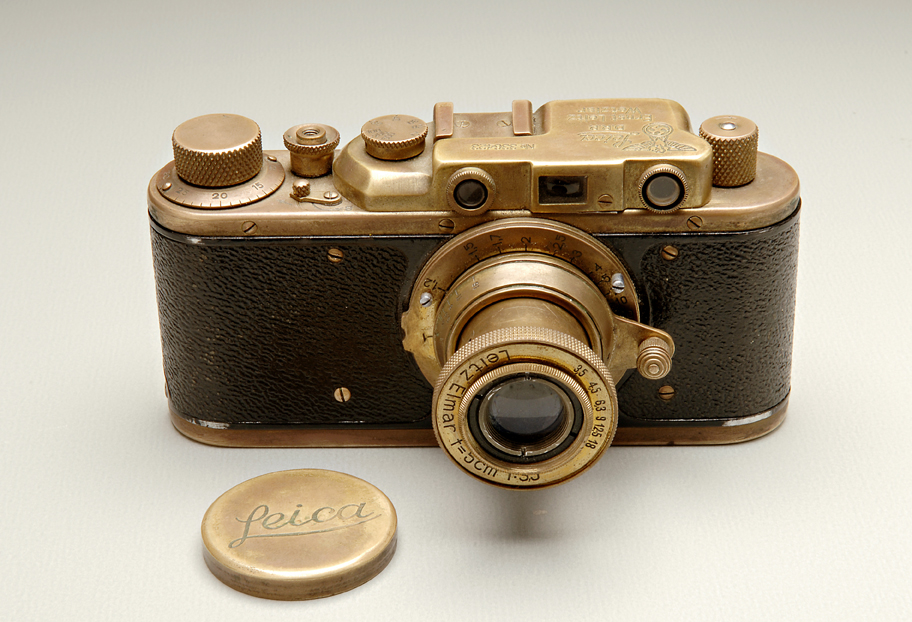
Can you trust what is written on the lens?

excalibur2

My F4's Broken...
Suspended / Banned
Messages
12,294
Name
Brian
Edit My Images
Yes
Wearing glasses it's not easy to focus on subjects that are closer and try to get dioptres for the viewfinder for my favourite cameras and it doesn't help that my left eye is better than my right.
So a few years ago did a test using an old tak 55mm f1.8 and measured the distance from camera to subject ( wasn't macro distance), then two shots one using my eye to focus and the other the distance written on the lens and o_O of course it's a very old lens and well used and more modern or any other lens could be accurate and I suppose I could repeat with other lenses when I'm bored unless someone wants to see if their lenses are accurate.

My eye focus erm still a bit out.
7iqop7K.jpg


using the distance on the lens
AohzW3H.jpg
 
Last edited:
I think I prefer the second one... :)
Is it possible that the lens scale has slipped?
 
For fear of stating the obvious as I understand it......?

If you are physically measuring the focusing distance it is not from the front element of the lens but needs to be done from the focal plane of the film or sensor to the subject. NB i have not bothered to look or even notice for a while but all SLR, dSLR and likely mirrorless with have the 'datum line' denoting that film/sensor plane. (Query present on many/any smaller compact cameras?)
 
Last edited:
As Box Brownie said, you need to measure from the datum line. Also, if you are using an old film camera lens on a digital camera via an adaptor, you cannot be sure that the adaptor maker has maintained the flange to sensor distance correctly. A small distance out here equates to a much larger subjet to datum distance.
 
I think I prefer the second one... :)
Is it possible that the lens scale has slipped?

Maybe, it was a test for something to do as I've always focus from the viewfinder.
 
For fear of stating the obvious as I understand it......?

If you are physically measuring the focusing distance it is not from the front element of the lens but needs to be done from the focal plane of the film or sensor to the subject. NB i have not bothered to look or even notice for a while but all SLR, dSLR and likely mirrorless with have the 'datum line' denoting that film/sensor plane. (Query present on many/any smaller compact cameras?)

IIRC I chose a subject about 5-6ft away so there must be a minimum distance when the datum line on the camera is irrelevant.
 
IIRC I chose a subject about 5-6ft away so there must be a minimum distance when the datum line on the camera is irrelevant.

IMO if you are relying on a physically measured out the camera to subject distance the datum line is vital and saying the subject was about 5-6ft away falls into the category of "how long is a piece of string" that DoF will never compensate(?) for.
 
IMO if you are relying on a physically measured out the camera to subject distance the datum line is vital and saying the subject was about 5-6ft away falls into the category of "how long is a piece of string" that DoF will never compensate(?) for.

Well I'll do it again on a sunny warm day, but using the datum line on the camera to measuring the distance for a subject half a mile away would be interesting ;)
 
Well I'll do it again on a sunny warm day, but using the datum line on the camera to measuring the distance for a subject half a mile away would be interesting ;)

You said 5-6ft and focusing on infinity should not present the same issue you opened with :LOL:

For greater distances than a tape measure will be suitable for, you can always get yourself a stereoscopic rangefinder or a coincidence rangefinger or perhaps a parrallax rangefinder. Plenty of GAS toys out there to solve any problem ;)
 
Last edited:
Also a very small angular displacement (for example: is parallax introducing the error, are you reading the focus scale square on) when using the focus distance ring can have a large impact in the plane of focus, particularly at the shorter end... Or have I talked myself into that? :confused:
 
Wearing glasses it's not easy to focus on subjects that are closer and try to get dioptres for the viewfinder for my favourite cameras and it doesn't help that my left eye is better than my right.
So a few years ago did a test using an old tak 55mm f1.8 and measured the distance from camera to subject ( wasn't macro distance), then two shots one using my eye to focus and the other the distance written on the lens and o_O of course it's a very old lens and well used and more modern or any other lens could be accurate and I suppose I could repeat with other lenses when I'm bored unless someone wants to see if their lenses are accurate.

My eye focus erm still a bit out.
7iqop7K.jpg


using the distance on the lens
AohzW3H.jpg
Brian, I think there's a market out there for the bokeh in the second shot, so list the lens on eBay as a "bokeh monster" at a suitably inflated price. (y)
 
You said 5-6ft and focusing on infinity should not present the same issue you opened with :LOL:

For greater distances than a tape measure will be suitable for, you can always get yourself a stereoscopic rangefinder or a coincidence rangefinger or perhaps a parrallax rangefinder. Plenty of GAS toys out there to solve any problem ;)

https://www.dofmaster.com/dofjs.html for 6ft have about 1ft depth of field increasing DOF for distance..but as you know there is only one distance in true focus, so DOF results are near enough for your average photos.
 
https://www.dofmaster.com/dofjs.html for 6ft have about 1ft depth of field increasing DOF for distance..but as you know there is only one distance in true focus, so DOF results are near enough for your average photos.

Based on your lens 55mm @ f1.8 and 6 ft to subject the DoF is 0.36 ft i.e. approx 4.5inches!
 
Based on your lens 55mm @ f1.8 and 6 ft to subject the DoF is 0.36 ft i.e. approx 4.5inches!

Well yes but rarely use a lens wide open (but maybe I did) and would have set the lens @ f5.6 or f8 so you would think when I chose the distance on the lens, the DOF (for the shot) would be more in focus.
Anyway I'll do it again sometime and will revive the thread on an update, unless anyone want to play with a lens in the meantime to see how their old lens performs.
 
Last edited:
"Can you trust what is written on the lens?"

Not always :)

00Md8A-38634384.jpg

 
"Can you trust what is written on the lens?"

Not always :)

00Md8A-38634384.jpg


..and who decided on the F numbers and were all cameras the same for the amount of light reaching the film..looked on Wiki and of some interest:-
The modern lens aperture markings of f-numbers in geometric sequence of f/1, 1.4, 2, 2.8, 4, 5.6, 8, 11, 16, 22, 32, 45, 64, 90, etc. was standardized in 1949
 
..and who decided on the F numbers and were all cameras the same for the amount of light reaching the film..looked on Wiki and of some interest:-
The modern lens aperture markings of f-numbers in geometric sequence of f/1, 1.4, 2, 2.8, 4, 5.6, 8, 11, 16, 22, 32, 45, 64, 90, etc. was standardized in 1949

The F number isn’t an arbitrary figure across all lenses/makers, it’s in relation to the size of the aperture opening as a percentage of the focal length (correction). [emoji1303]
 
Last edited:
The F number isn’t an arbitrary figure across all lenses/makers, it’s in relation to the size of the aperture opening as a percentage of the front element size. [emoji1303]

H'mm never bothered to look at my lenses, so you are saying e.g. f5.6 with a massive front element would look smaller than say f5.6 on a very small front element (which would be larger)?
 
The F number isn’t an arbitrary figure across all lenses/makers, it’s in relation to the size of the aperture opening as a percentage of the front element size. [emoji1303]
You mean focal length? The larger front element is a consequence of requiring more light to enter the front of the lens for the larger aperture at the back.

f is the focal length... The aperture is a proportion of it f/5.6 (not f5.6)
 
Last edited:
You mean focal length? The larger front element is a consequence of requiring more light to enter the front of the lens for the larger aperture at the back.

f is the focal length... The aperture is a proportion of it f/5.6 (not f5.6)

Sorry yes, I meant focal length (I shouldn’t post while also watching films!)
 
H'mm never bothered to look at my lenses, so you are saying e.g. f5.6 with a massive front element would look smaller than say f5.6 on a very small front element (which would be larger)?

Sorry Brian, typo on my part. The diameter is a calculation based on the focal length, not element size, as I put.
 
Leaving aside this strange and confusing discussion about f numbers, Brian was basically asking about zone focusing! My first camera was a Werra 1, no focusing aids at all. Just look at the subject, mentally assess the distance, set on the lens (read the film box for exposure guidance, assess the light, set exposure), shoot! I did get quite a few OOF images (ignoring the entire roll shot at the Acropolis focused at about 8 feet!), but probably no more than I get nowadays with a SLR and increasingly poor eye-sight! Maybe the lens being f/2.8 helped; DOF was never razor thin at the sort of reasonable distances I'd usually shoot at!

I think something has gone very wrong with your second image, Brain. It's not just a bit out, it's not even in the ball park!
 
Of course, the particular lens that Excalibur is using might have been "repaired" at some point by an amateur. A reassembled lens needs to be collimated to check infinity focus as the last step in a repair.
 
Leaving aside this strange and confusing discussion about f numbers, Brian was basically asking about zone focusing! My first camera was a Werra 1, no focusing aids at all. Just look at the subject, mentally assess the distance, set on the lens (read the film box for exposure guidance, assess the light, set exposure), shoot! I did get quite a few OOF images (ignoring the entire roll shot at the Acropolis focused at about 8 feet!), but probably no more than I get nowadays with a SLR and increasingly poor eye-sight! Maybe the lens being f/2.8 helped; DOF was never razor thin at the sort of reasonable distances I'd usually shoot at!

I think something has gone very wrong with your second image, Brain. It's not just a bit out, it's not even in the ball park!

Shame I don't to B\W dev anymore as I could have redone the test, indoors or outdoors, and seen the results in about 1.5 hrs. Have some Vista in my Minolta x-700 to be used, but don't know how accurate the results would be using the M42 adapter, same for the M42 adapter for my Nex 3 (if it finally arrives from China after a month waiting :().
 
Given the amount that that test was obviously out on the focusing, can't you just focus manually and then look at the resulting position on the focusing scale to see if actual and written match up? No film required.
 
Given the amount that that test was obviously out on the focusing, can't you just focus manually and then look at the resulting position on the focusing scale to see if actual and written match up? No film required.

That's an idea, I'll wait till the sun comes out as the view finder on a S3 is not the brightest. As when you are older the light gathering capabilities of the eyes are worse compared to when you are young, and a very small cataract doesn't help. e.g from the net:- people in their 60s need three times more ambient light for comfortable reading than those in their 20s.
 
Last edited:
Back
Top