Camera suggestion please

reddwarf4ever

Suspended / Banned
Messages
38
Name
Steve jones
Edit My Images
Yes
Hello
i have a cool pix S700, which has provided reasonable photos over the past few years, I asked on this forum 7 years ago for suggestions for a new camera, I never did take the plunge, but think I’m ready now. I need something, which performs well without having to adjust settings. My eyesight isn’t what it was, and the only way I can manage is to keep changing glasses, which is not ideal. The good thing is, price is not a concern at all. I used to have a canon super zoom many years ago, which again gave very reason result, but technology has moved on a lot since then.
is there any obvious choices that spring to mind

thank you
 
Steve, many cameras have an automatic mode often marked Auto or shown as a green square on the selection dial so I don't think you'll have a problem finding something to suit. I think all my cameras have this.

It's nice to know that money isn't an issue but maybe bulk and weight could be? So, maybe it'd be an idea to say what sort of gear you might be happy with and what you'd like to take pictures of. You can still get super zoom and bridge cameras, maybe you'd like another one of these?
 
Steve
if I may suggest you set a price limit to include memorey cards and at least one lens if the camera takes different lenses. Far too easy to look at a list and think the next one up the list is better but cost more
SO what I have done is

1 =set a price limit
2= check out different manufacturers within that limit
3= pick out say 3 you may well be interested in
4 =go into a camera shop and check out how easy it is for you to use menu access etc and hand comfort
5 =compare lens prices the same way
6 =add in cost of any extras like memory cards tripods etc
7 =I should not really say this but go on the internet and compare prices for what your seriously thinking about getting
8 = then there is the used market or the "grey" market ( not official retailers but same items at a lower price as they are not regulated by the manufacture RRP (warranty my be different)

this link may help


YGpSlr5.jpg

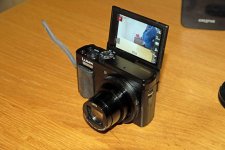
my panasonic DC-TZ95 cost around £380. menu takes a bit of getting used to like any new camea but start in program mode first. fantastic video as well as 4k picture/ 4K video , as you can see flip up screen or using eye viewer has dioptic adjustment. actually the menu has far more than you will ever need but it is there if wanted. Only issue is like any camera is wind noise across the built in microphone. Also has 3 settings you can program into so you don't have to search every time in the menu


taken with this camera unedited exif available

30-6-2022.JPG
part of exif data
Standard Information
Make: Panasonic
Model: DC-TZ95
Software: Ver.1.1
ImageSize: 5184x2920
ExposureTime: 1/60"
Aperture: F5.1
MaxAperture: F5.1
CircleOfConfusion: 0.005 mm
Flash: Auto, Fired
ISO: 160
WhiteBalance: Auto
FocalLength: 19.0 mm
FocalLength35efl: 19.0 mm (35 mm equivalent: 115.0 mm)eneType: Directly photographed

NoiseReduction: Standard
Contrast: Normal
Saturation: Normal
Sharpness: Normal
 
Last edited:
I need something, which performs well without having to adjust settings. My eyesight isn’t what it was, and the only way I can manage is to keep changing glasses, which is not ideal.

You probably do need to go to a camera shop to try out how different camera suit your vision.

Electronic viewfinders have improved vastly in recent years and that may help.

Some viewfinders are better for glasses wearers than others.

Some have diopter adjustments in the eyepiece that may mean you don’t need glasses or don’t need to change them.

Some viewfinders take interchangeable eyepiece lenses.
 
Good tips already on the thread. One more question - what are you looking for in a new camera that your current one is not delivering on?
 
Better image Quality, that’s all, I use the camera in doors and sometimes at family functions BBQs so it’s 90% people, not always stationary, my present camera results are rather lack lustre, good question
 
In door family functions and bbqs are not the easiest environments to capture inspiring photos. In my experience it takes a lot of effort to have good compositions, capturing fun moments with interesting lighting. I’d also look into technique for these types of images too as well as updating your camera.
 
I also have the glasses problem, I can't see a distant subject and the camera screen with the same glasses.
Sometimes I don't worry about seeing the scene clearly, and wear reading glasses so that I can see the main camera screen, and adjust the viewfinder so that it is in focus.
However, cameras with an electronic viewfinder (I changed from Canon to Panasonic M43 at the end of last year) have a huge advantage for me, in that you can see everything that is shown on the main screen in the viewfinder, so I adjust the viewfinder for my "driving" glasses, then I can see the camera settings and the scene with the same glasses.

This is what I have now, copied and pasted from another thread on here:-


"
I have the S5 but tend to pick my G9 up most of the time, it's just lovely in the hand. I've purchased a GX9 to take to Disney next year and had a play with it a couple of times and it's pretty good also (imo).

My daughter has a G9 also and loves it.

I'm finally going out to a national trust tomorrow so will be taking a camera and I'll bet it's the G9.


I can understand that, I commented before that the G9 has brought the spark back into the hobby for me.
Hand held shots with an 800mm eq lens at 1/25, the ease of use of the lighter weights, the quality of the lenses, and another big point is cheap back up or other purpose cameras, that can use the same lenses. For example I use a G3 (less than £40) just for photospheres, and a G80 (just over £200) when I might come across "unfavourable" conditions, or just practising at home and locally.

And yes, the costs are less, the G9 can be found from £450 upwards (Mine was well under 600 with the L 12-60) and are about 1199 new from Panasonic.

I also do not like noise, however, I have not had noise get in the way with the G9, and found that the dual stabilisation allows me to use a slower shutter speed ans so lower ISO most of the time. Of course there are times when that can't be done. It is a technical fact of the smaller sensor. which although often mentioned in that context, haven't seen it mentioned much in actual use.

But then you can't have everything at one time :)

With your budget, and maybe a bit of patience, you could get a G9, 7-14 lens, 14-140 lens and a 100-400 lens :) (I could weigh the items if that was a needed feature)

Have a look here to get an idea of image quality and noise. Change the ISO and RAW/JPEG of the first one (top left) and move the rectangle around the to different colours or detail, and at the top just above the image on the right the COMP out of the FULL COMP PRINT must be selected https://www.dpreview.com/reviews/im...=1&x=0.6739354395604398&y=-1.0167946358899258


I also have the 20mm 1.7 lens that is quite good indoors, is nice and compact, and a very reasonable price.
I have a GF3 that with the 20mm 1.7 lens is the same size as a medium size compact, that being small works very well indoors for photos and HD movies.

I find micro four thirds as a system does what I want, is light and with the range of cameras, many at very low prices, a very flexible system.

It doesn't suit everybody of course, and it doesn't meet everyone's requirements, but worth considering.

 
Hello
i have a cool pix S700, which has provided reasonable photos over the past few years, I asked on this forum 7 years ago for suggestions for a new camera, I never did take the plunge, but think I’m ready now. I need something, which performs well without having to adjust settings. My eyesight isn’t what it was, and the only way I can manage is to keep changing glasses, which is not ideal. The good thing is, price is not a concern at all. I used to have a canon super zoom many years ago, which again gave very reason result, but technology has moved on a lot since then.
is there any obvious choices that spring to mind

thank you
Are you wanting a fixed lens compact/bridge camera or are you looking at getting an interchangeable lens camera?

If it's the former then a 1 inch type camera would be your best bet as they have a much larger sensor than your S700 and so image quality should be that much better. Cameras like the Sony RX100 and RX10 series fit into this category, as do cameras like the Canon G7x and G5x. The Sony's have a better lens though so image quality is likely to be a bit better than the Canon equivalents.

If you want an interchangeable lens camera then it's a minefield and I could recommend many different camera and lens combos.
 
Thanks everyone, I don’t think I need interchangeable lenses.

Fair point but if, for example, you were looking at bridge cameras with a 1” sensor you might find that, say, an M43 or aps-c with a zoom gave you better options for your viewfinder problems and so on at a similar size overall.

Just because a camera has an interchangeable lens doesn’t mean you have to change it and it does confer the advantage of being able to clean the sensor if it becomes necessary.
 
Fair point but if, for example, you were looking at bridge cameras with a 1” sensor you might find that, say, an M43 or aps-c with a zoom gave you better options for your viewfinder problems and so on at a similar size overall.

Just because a camera has an interchangeable lens doesn’t mean you have to change it and it does confer the advantage of being able to clean the sensor if it becomes necessary.


Yes that makes sense, but find lens sizes very confusing. Will do some research
 
I also have the glasses problem, I can't see a distant subject and the camera screen with the same glasses.
Sometimes I don't worry about seeing the scene clearly, and wear reading glasses so that I can see the main camera screen, and adjust the viewfinder so that it is in focus.
However, cameras with an electronic viewfinder (I changed from Canon to Panasonic M43 at the end of last year) have a huge advantage for me, in that you can see everything that is shown on the main screen in the viewfinder, so I adjust the viewfinder for my "driving" glasses, then I can see the camera settings and the scene with the same glasses.

This is what I have now, copied and pasted from another thread on here:-


"


I can understand that, I commented before that the G9 has brought the spark back into the hobby for me.
Hand held shots with an 800mm eq lens at 1/25, the ease of use of the lighter weights, the quality of the lenses, and another big point is cheap back up or other purpose cameras, that can use the same lenses. For example I use a G3 (less than £40) just for photospheres, and a G80 (just over £200) when I might come across "unfavourable" conditions, or just practising at home and locally.

And yes, the costs are less, the G9 can be found from £450 upwards (Mine was well under 600 with the L 12-60) and are about 1199 new from Panasonic.

I also do not like noise, however, I have not had noise get in the way with the G9, and found that the dual stabilisation allows me to use a slower shutter speed ans so lower ISO most of the time. Of course there are times when that can't be done. It is a technical fact of the smaller sensor. which although often mentioned in that context, haven't seen it mentioned much in actual use.

But then you can't have everything at one time :)

With your budget, and maybe a bit of patience, you could get a G9, 7-14 lens, 14-140 lens and a 100-400 lens :) (I could weigh the items if that was a needed feature)

Have a look here to get an idea of image quality and noise. Change the ISO and RAW/JPEG of the first one (top left) and move the rectangle around the to different colours or detail, and at the top just above the image on the right the COMP out of the FULL COMP PRINT must be selected https://www.dpreview.com/reviews/im...=1&x=0.6739354395604398&y=-1.0167946358899258


I also have the 20mm 1.7 lens that is quite good indoors, is nice and compact, and a very reasonable price.
I have a GF3 that with the 20mm 1.7 lens is the same size as a medium size compact, that being small works very well indoors for photos and HD movies.

I find micro four thirds as a system does what I want, is light and with the range of cameras, many at very low prices, a very flexible system.

It doesn't suit everybody of course, and it doesn't meet everyone's requirements, but worth considering.

However, cameras with an electronic viewfinder is this referring to the m43 ?
 
However, cameras with an electronic viewfinder is this referring to the m43 ?

M43 is Micro Four Thirds.

These mirrorless cameras equipped with EVF's were brought out by Panasonic and Olympus. They have a sensor which is 4:3 aspect ratio and is smaller than APS-C sensors but larger than the 1" sensors in some compact and bridge cameras.
 
However, cameras with an electronic viewfinder is this referring to the m43 ?
As above electronic viewfinders (EVF's) are what have taken over the traditional viewfinder and can be found on a whole host of camera. With compact cameras they're not too essential imo as you tend to compose and shoot a lot using the rear LCD screen, however they are useful in situations where it's difficult to see the rear screen due to strong sunlight.

Most mirrorless (compact system cameras) have EVF's, and some compact cameras have them too, such as the Sony RX100 (from Mark III onwards), Canon G5x II, and Panasonic TZ100/200. All of these compact cameras mentioned have the larger 1" type sensor.
 
Thanks, can I ask a slightly unrelated question, with my current camera, it has an auto iso, or iso range, have always used it on auto, and never paid attention to it, in my back garden on a sunny bright day on auto range 125 to 800 it’s taking shots at 800, wonder if it should be doing this ? I took some photos indoors, very bright at 125 iso of my grand daughter and were quite blurry, thanks
 
Thanks, can I ask a slightly unrelated question, with my current camera, it has an auto iso, or iso range, have always used it on auto, and never paid attention to it, in my back garden on a sunny bright day on auto range 125 to 800 it’s taking shots at 800, wonder if it should be doing this ? I took some photos indoors, very bright at 125 iso of my grand daughter and were quite blurry, thanks
The Coolpix S700 is from 2007 as I understand so it’s likely almost any current camera should be more capable under ‘extreme’ conditions.
 
Just looked at the manual for that cool pix S700 and it is very basic which may well suit some people but leaves most for the camera to work out.. basically it is a point and shoot and hope for the best type. I had the same with the Sony AX-53 camcorder the camcorder left no options outside what was the pre determined setting allowed, which is why i got shot of it.
Ask 100 people and you will get 100 different replies, from me included.
 
Last edited:
I would like to suggest another alternative, reading your recent post.
Something like the Panasonic TZ60 as a starting point for your upgrades.
They give fantastic results, no lenses to change but they have a wide zoom range.
EVF on which you can see the settings the same as on the screen, and the same menu structure as the Panasonic M43 cameras (the Panasonic menu structure is considered to be one of the best and easiest to use)

It could well be all you need for around £70, and if not, it will enable you to see where you want to go.
 
sony RX10 iv
(NOT the RX100 IV as thats a lil compact camera)
Why, the OP has a compact now and just wants to upgrade the image quality. The RX10 and RX100 will have the same image quality, just different body and zoom ranges (y)
I would like to suggest another alternative, reading your recent post.
Something like the Panasonic TZ60 as a starting point for your upgrades.
They give fantastic results, no lenses to change but they have a wide zoom range.
EVF on which you can see the settings the same as on the screen, and the same menu structure as the Panasonic M43 cameras (the Panasonic menu structure is considered to be one of the best and easiest to use)

It could well be all you need for around £70, and if not, it will enable you to see where you want to go.
I'd disagree with this, the TZ60 still has the 1/2.3" sensor so IQ won't be much different (y)
 
Why, the OP has a compact now and just wants to upgrade the image quality. The RX10 and RX100 will have the same image quality, just different body and zoom ranges (y)

I'd disagree with this, the TZ60 still has the 1/2.3" sensor so IQ won't be much different (y)
The issue here is the bigger the sensor usually goes with a bigger camera and at a higher price point which more than likely includes getting different lenses for it as well. As we don't know his price range it leaves us only to guess
 
Why, the OP has a compact now and just wants to upgrade the image quality. The RX10 and RX100 will have the same image quality, just different body and zoom ranges (y)

I'd disagree with this, the TZ60 still has the 1/2.3" sensor so IQ won't be much different (y)
Fair comment, however having owned and used both, and still using the TZ60 and a TZ70, I find the 8 years difference in age and 8 years of advancing technology actually makes a huge difference :)
 
Just looked at the manual for that cool pix S700 and it is very basic which may well suit some people but leaves most for the camera to work out.. basically it is a point and shoot and hope for the best type. I had the same with the Sony AX-53 camcorder the camcorder left no options outside what was the pre determined setting allowed, which is why i got shot of it.
Ask 100 people and you will get 100 different replies, from me included.
Yes I know it’s rather basic, wish I’d never said, price is not an issue some cameras are many £thousands. I guess if I’m honest £1000 would be the max, based on how much I use it. Need to sift through the suggestions and find something, comfortable to hold, that gives excellent pictures. I hate reviews that say, the pictures are god for the price, I never know what that means exactly.
 
I'd disagree with this, the TZ60 still has the 1/2.3" sensor so IQ won't be much different (y)
The first point is that Steve has made clear his needs and experience ...
I need something, which performs well without having to adjust settings. My eyesight isn’t what it was, and the only way I can manage is to keep changing glasses, which is not ideal.
So: he's looking for good quality with the minimum of interaction. The Panasonic Travel Zooms are capable of good results in most situations. I use an old TZ70 some of the time and it's reliable, proven technology. I've had several other cameras in the range and the small sensor TZs are extremely useful, especially as they fit in a large pocket.

The other point he makes is that he wants something to do the job and ...
The good thing is, price is not a concern at all.
Even so, the TZs have always been extremely good value and I suspect that the latest model in the series (the TZ90) will meet his needs as stated.

I have several cameras, using various format sensors, which receive regular use, so I'm not recommending the TZs for partisan reasons.

Some TZ images...

Pigeons kissing in silhouette TZ70 P1030357.JPG
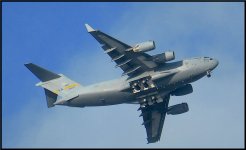
C17 Globemaster over Swindon Panasonic TZ40 1010968.JPG
Austrian coach driver discussion Seefeld Austria TZ40 1010051.JPGDidcot cooling towers TZ4 1000529.JPG
 
Last edited:
I posted the wrong model for my current camera, I have a cool pix S7000, not S700, sorry was a typo on my OP….released in 2015.
 
Last edited:
We may be barking up the wrong tree here. I have a cool pix S7000, not S700, sorry was a typo on my OP….released in 2015.
I had actually guessed that, hence my recommendation.

The TZ 90 will give you twice the focal range of the S7000 - wider angle at the short end and more magnification at the long end. It's bulkier than the S7000 but not immensely so and it has a built in eye level finder, which can be very helpful on sunny days. The rear screen also tilts up, which is useful in a variety of situations.

Take a look at this review for more detail ... https://www.ephotozine.com/article/panasonic-lumix-dc-tz90--zs70--review-31018
 
I had actually guessed that, hence my recommendation.

The TZ 90 will give you twice the focal range of the S7000 - wider angle at the short end and more magnification at the long end. It's bulkier than the S7000 but not immensely so and it has a built in eye level finder, which can be very helpful on sunny days. The rear screen also tilts up, which is useful in a variety of situations.

Take a look at this review for more detail ... https://www.ephotozine.com/article/panasonic-lumix-dc-tz90--zs70--review-31018
And from past experiences, the Panasonic will give far better images
 
Fair comment, however having owned and used both, and still using the TZ60 and a TZ70, I find the 8 years difference in age and 8 years of advancing technology actually makes a huge difference :)
Agreed technology has moved on, however you can't beat physics and with the TZ60/70 having the same size sensor as his current camera image quality is not going to be a huge difference imo. A bit better sure, but not huge.
The first point is that Steve has made clear his needs and experience ...
He has and his response was "better image quality, that's all".

As this is his main priority, but wishes to stay with a fixed lens and a zoom, then the only way (imo) to get a significant improvement in image quality is to go for a compact or bridge camera with a bigger sensor.

I can understand changing a 1/2.3" compact camera for a newer 1/2.3" one for new features etc, but not in the hope for a significant improvement in IQ.

I would suggest that our ideas of what better image quality is are different, but hopefully we've given Steve some ideas and he can go away and look into whether or not the TZ's mentioned are good enough for him, or whether he wants to look for something better (y) All these cameras mentioned have full Auto mode so no problems there (y)
 
Last edited:
Trying to look through all the ideas, the Panasonic TZ range look good, but until the 100 the sensor is small 1/2.3 the same as my current camera, it seems this is crucial to get the best IQ, Amazon TZ200 for £600, am I going in the right direction, or going to far ? Thanks
A 1" sensor has a surface area of about 116mm². A 1/2.3" sensor has an area of about 28mm².
 
Trying to look through all the ideas, the Panasonic TZ range look good, but until the 100 the sensor is small 1/2.3 the same as my current camera, it seems this is crucial to get the best IQ, Amazon TZ200 for £600, am I going in the right direction, or going to far ? Thanks
A 1" sensor has a surface area of about 116mm². A 1/2.3" sensor has an area of about 28mm².
IMO it is, along with the lens of course. But this is where it becomes difficult because the micro 4/3 have a bigger sensor still, APS-C even bigger, full frame even bigger etc etc. but of course you're getting bigger and bigger cameras with bigger lenses.

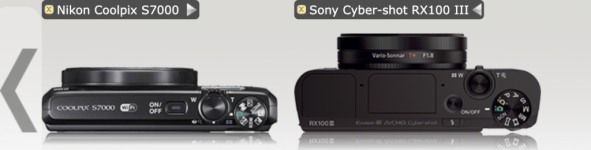
This is why I suggested the 1" type sensor compacts as they offer better image quality without being too much bigger and heavier. Here you can see the size difference between what you have now and the RX100. The S7000 is 161g vs 290g for the RX100

Screenshot 2022-07-26 at 19.31.47.png


I would say this is a significant difference over what you have now, but of course nowhere near as much as going for an interchangeable lens camera. The RX100's don't zoom as much as your S7000, but the Mark VI and Mark VII versions do offer a 24-200mm equivalent range, the S7000 having 25-500mm range.

The reason that I keep going back to Sony is that in the 1" type compact market they do have the best lenses and therefore better image quality. The only negatives with the RX100's is they are very expensive, especially the Mark VI and Mark VII, and there's no grip so they're not as good ergonomically as some of the others such as the Canon G7x. That being said you can buy a stick on grip for the RX100's

Of course, this is all just my opinion (with some facts along the way) and others clearly have other ideas and advice and these should not be discounted, it is important that you consider everything so that you can make the right choice (y)

For reference this shows you the difference in sensor sizes, I've highlighted the 1" type vs 1/2.3" type.


48005798356_47db922d75_o by Toby Gunnee, on Flickr
 
Last edited:
I recently took my old TZ30 out and got way better results with it than when it was my main camera about 10 years ago. Why? All the experience and practice in between with many other cameras that have improved technique. I guess I'm repeating the point I made earlier. I'm with @snerkler on this, for pure technical image quality it needs to be a bigger sensor. But without working on technique that can be done with the current camera in any case, the results are still likely to be disappointing and frustrating for the OP.
 
Thanks, can I ask a slightly unrelated question, with my current camera, it has an auto iso, or iso range, have always used it on auto, and never paid attention to it, in my back garden on a sunny bright day on auto range 125 to 800 it’s taking shots at 800, wonder if it should be doing this ? I took some photos indoors, very bright at 125 iso of my grand daughter and were quite blurry, thanks
ISO is the sensitivity of the sensor to light, and along with aperture and shutter speed will dictate your exposure. Outside on a bright day it should be choosing the lowest ISO to give the best image quality, and it should be bright enough that shutter speed is high enough so that you do not get motion blur.

The opposite is true for indoors, it will usually require a higher ISO to keep the shutter speed high enough to stop motion blur. Obviously if the room indoors is bright enough you might still be able to use a low ISO and still get a high shutter speed.

To muddy the water even further some of the cameras mentioned (mainly RX100 Mark III to Mark V and the Canons) have wide aperture lenses (f1.8-2,.8) meaning they let more light in allowing you to use lower ISO and faster shutter speeds. The only issue with these cameras is the relatively limited zoom giving a range of 24-70mm or 24-105mm, compared to the 24-200mm and 25-500mm as per my last post.
 
I recently took my old TZ30 out and got way better results with it than when it was my main camera about 10 years ago. Why? All the experience and practice in between with many other cameras that have improved technique. I guess I'm repeating the point I made earlier. I'm with @snerkler on this, for pure technical image quality it needs to be a bigger sensor. But without working on technique that can be done with the current camera in any case, the results are still likely to be disappointing and frustrating for the OP.
You're right, the person behind the camera makes the biggest difference for sure (y)
 
Trying to look through all the ideas, the Panasonic TZ range look good, but until the 100 the sensor is small 1/2.3 the same as my current camera, it seems this is crucial to get the best IQ, Amazon TZ200 for £600, am I going in the right direction, or going to far ? Thanks
A 1" sensor has a surface area of about 116mm². A 1/2.3" sensor has an area of about 28mm².
The argument about sensor size is based on misconceptions regarding the similarity between film and digital technology,

With film, there's only so many crystals that can be embedded in the gelatine substrate. Hence, the smaller the piece of film you expose, by using a smaller camera, the less information you can record. This shows up as an effect called "grain". The more grain, the less sharp the image, so a big camera is generally better, all other things being equal, than a small camera.

A digital sensor is entirely different. A sensor consists of an array of photo sites, which together capture the data to construct the image. Here's the important point: If a sensor's physical area is 24mm x 36mm and it has 20 million photo sites, it will capture exactly the same image data as a sensor with an area of 6.17mm x 4.55mm that also has 20 million photosites. That's simply how it all works.

Where there is a difference is that the 20 million photosites on the bigger sensor can, if properly designed, capture more information about the level of the light than the 20 million photosites on the smaller sensor. However, the shapes captured by the smaller sensor will be the same as the shapes captured by the bigger one.

What complicates all this is that a lot more small sensors are sold than big ones and in digital electronics, quantity is king, which is why much more research goes into designing and fabricating small sensors. Also, the smaller the sensor, the greater the yield per wafer, which also dictates profit. This is one reason why big sensor cameras tend to be much more expensive than small sensor cameras in the digital world.

Another point is this: smaller sensors mean physically smaller lenses, which are cheaper to make and can have far greater zoom ranges without sacrificing image quality.

The bottom line is this: If you spend a lot of money and know what you're doing, then you may get more pleasing results from a bigger sensor camera. If the small sensor camera is a newer design, though, the difference in perceived quality will be far less.

So: read the reviews and make up your own mind from those which camera will suit you best.
 
Last edited:
The argument about sensor size is based on misconceptions regarding the similarity between film and digital technology,

With film, there's only so many crystals that can be embedded in the gelatine substrate. Hence, the smaller the piece of film you expose, by using a smaller camera, the less information you can record. This shows up as an effect called "grain". The more grain, the less sharp the image, so a big camera is generally better, all other things being equal, than a small camera.

A digital sensor is entirely different. A sensor consists of an array of photo sites, which together capture the data to construct the image. Here's the important point: If a sensor's physical area is 24mm x 36mm and it has 20 million photo sites, it will capture exactly the same image data as a sensor with an area of 6.17mm x 4.55mm that also has 20 million photosites. That's simply how it all works.

Where there is a difference is that the 20 million photosites on the bigger sensor can, if properly designed, capture more information about the level of the light than the 20 million photosites on the smaller sensor. However, the shapes captured by the smaller sensor will be the same as the shapes captured by the bigger one.
Whilst true the smaller the sensor the higher the pixel density (for a given number of megapixels) which is more demanding on the lens. Each pixel can’t gather as much light leading to more noise and lower dynamic range.

A big cause of image degradation which often gets overlooked is how much an image has to be enlarged to be viewed. An image from a 1/2.3” sensor has to be enlarged many more times compared to a 1” type sensor resulting in a bigger loss of image quality.
 
Back
Top