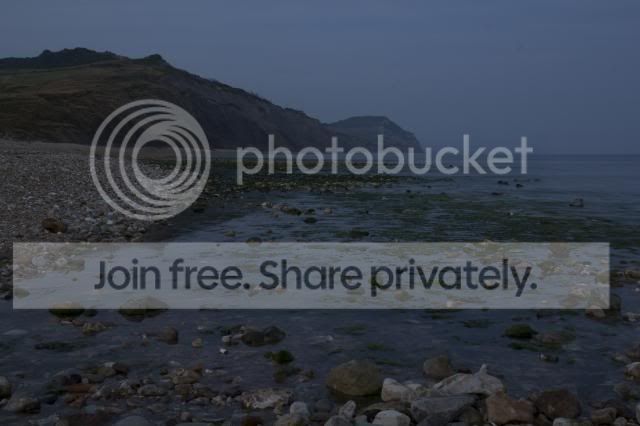
Bright landscapes at night?

CaveDweller

Suspended / Banned
Messages
1,946
Name
Paul
Edit My Images
Yes
I've seen quite a lot of landscape shots done on a night that look like it's nearly daylight. How are these types of shots done exactly? Is it just moonlight or am I asking a stupid question? and if it is moonlight, what sort of WB setting would be needed for it? It's something I have never tried but would love to learn. Any tips would be appreciated.

There's some examples here https://www.facebook.com/groups/289179744489671/
It was the winning shot by Colin Cameron that caught my eye, and a link to his page but that picture in the link above is not on it. https://www.facebook.com/ColinCameronPhotography
 
Last edited:
Very long exposure I'd suggest;) See the movement in the waves and clouds.

Think you'll get a bollocking for posting someone else's pic tho. Should be a link I believe.
 
Last edited:
You should be linking to Colin's original work not copying it and hosting it via your own Flickr, your violating both his copyright and also terms and conditions of your Flickr account...

As to the exact details I'd be guessing we a looking at an image that was shot with some moon light illumination plus the benefit of a high ISO it and reasonable sized aperture, I would be guessing f/2.8-5.6 roughly and more than likely a 1600+ ISO and about a 20-25 second exposure
 
Last edited:
Very long exposure I'd suggest;) See the movement in the waves and clouds.

Think you'll get a bollocking for posting someone else's pic tho. Should be a link I believe.
I'll change it;)
 
Sorry didn't know, I just gatherd it would be ok if I said who it was etc. Changed it now.
 
You can see partial EXIF information for Cameron's shot on his Flickr - 30 seconds at 1600 ISO.

As for tips, there's nothing special really, use a tripod I suppose. ;)

For exposing purely by moonlight, the 4-4-4 rule is the kind of "sunny-16" of the night. For a landscape shot under a full moon; 4 minutes at f/4 and 400 ISO is a good starting point.

The moon reflects daylight; so there's your answer for white balance (close enough anyway).
 
You can see partial EXIF information for Cameron's shot on his Flickr - 30 seconds at 1600 ISO.

As for tips, there's nothing special really, use a tripod I suppose. ;)

For exposing purely by moonlight, the 4-4-4 rule is the kind of "sunny-16" of the night. For a landscape shot under a full moon; 4 minutes at f/4 and 400 ISO is a good starting point.

The moon reflects daylight; so there's your answer for white balance (close enough anyway).

Cheers. It's something I want to try. I'm still waiting for a clear night to have a go at star trails. My list of "to do's" is getting bigger and bigger:)
 
I think this is the only shot like that (or even similar!) that I've got online. As you can see, most of the garden's in shade from the moonlight but there's still some detail. The warmer light on the left side of the tree is from a streetlight. I deliberately left it looking cold because it was! 6s, f/10, IO 1600.


GPN_2684
by gpn63, on Flickr
 
Tripod and a remote release is all that's needed. This shot was just that. 30 seconds and 800 ISO with the lens stopped down a bit to get the starry effect around the streetlights. The exposure was a tad too long as the stars have trailed a bit.
It was getting on for 6am on a Sunday morning with almost full moon.


Moon lit landscape
by MrLeebert, on Flickr
 
As a general rule, the light reflected from the moon is about 1/1,000,000 of the direct light from the sun.

That's twenty stops.

So if you use the sunny 16 rule, the moony 16 rule for a full moon on a cloudless night would be the sunny 16 setting plus twenty stops.

Trying an example, sunny 16 for ISO 100 is 1/125 at f16.
Keeping ISO and aperture the same, the shutter speed will increase to 128 minutes, or two hours!

Increase the ISO to 1600 and the shutter speed reduces to eight minutes.

Open up the aperture to f5.6 and the shutter speed gets to a more reasonable one minute.

For exposing purely by moonlight, the 4-4-4 rule is the kind of "sunny-16" of the night. For a landscape shot under a full moon; 4 minutes at f/4 and 400 ISO is a good starting point.

That works out only one stop different to my method which is very close really. Close enough to be useful.


Steve.
 
Last edited:
I've had a go at doing it in PP. I did it like this because I wanted to get the silky water effect (didn't quite work) but I haven't got a 10 stopper and as I was out for the sunset I gave this a go.

RAW
Canon 60D
Tamron 17-55mm @ 29mm
Shutter 13secs
Apature f/16
ISO 100
_MG_7417_zps74771d92.jpg


After PP
4.jpg
 
Last edited:
Back
Top