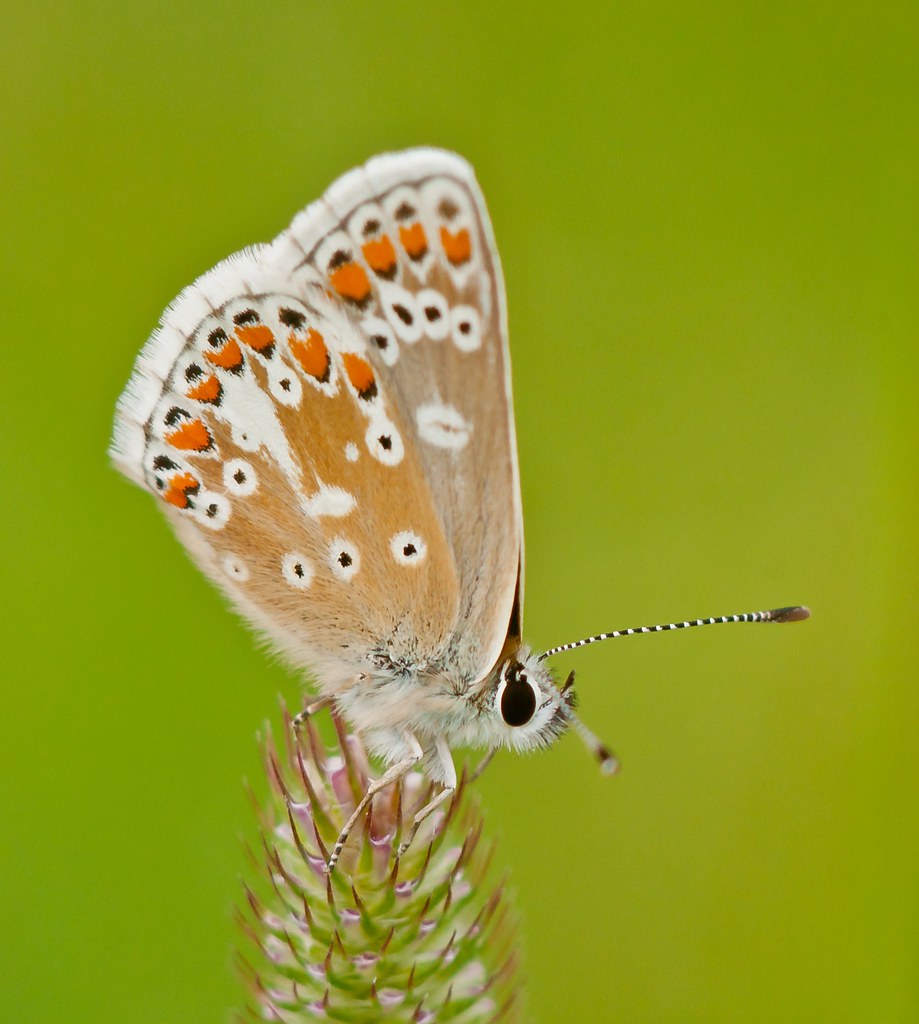
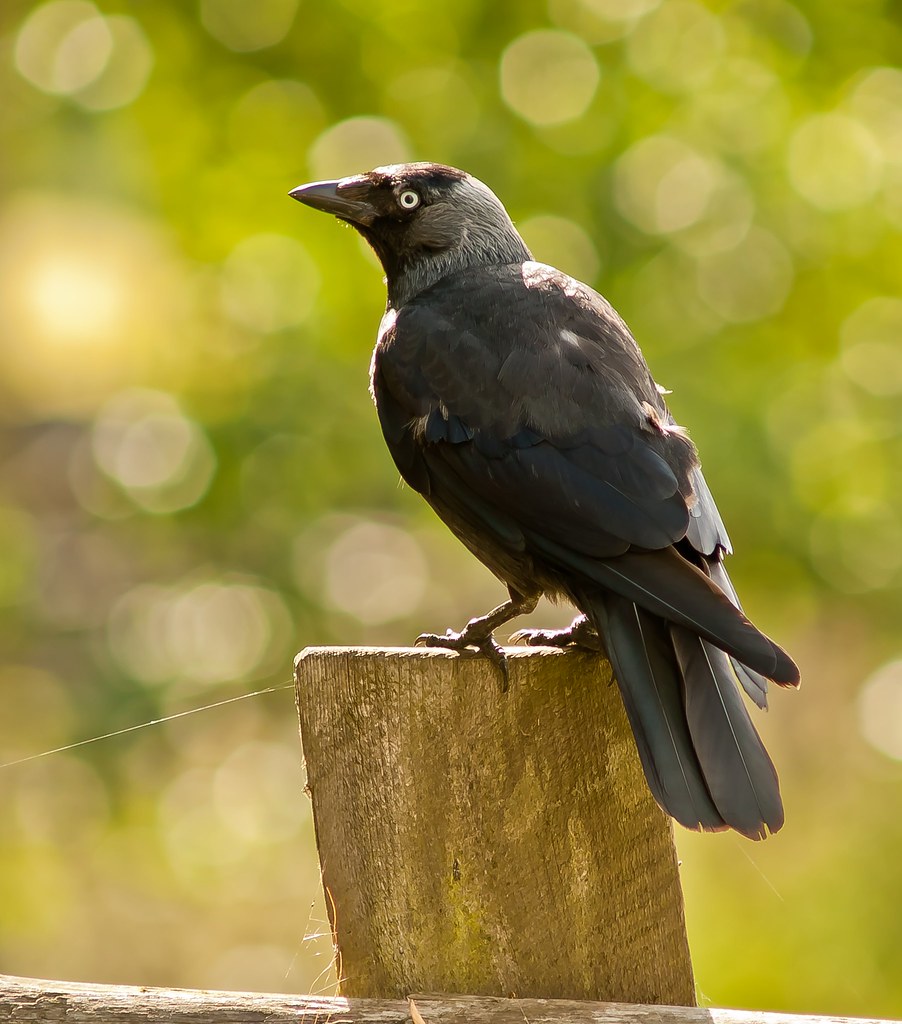
Blury back ground, clear subject

Jo3y3oy

Suspended / Banned
Messages
25
Name
Joey
Edit My Images
Yes
Hi guys not sure what it's technical name is. But
I have seen a few pictures where the back ground is blury and the subject or object is clear in the picture.

Just woundered what lens and appature and iso settings I need to do these pictures

Hope some one can help or point me in the right direction many thanks
 
Cabbie88 said:
Hi guys not sure what it's technical name is. But
I have seen a few pictures where the back ground is blury and the subject or object is clear in the picture.

Just woundered what lens and appature and iso settings I need to do these pictures

Hope some one can help or point me in the right direction many thanks

When you see the background out of focus its also called 'bokah' :-)
 
Cabbie88 said:
Hi guys not sure what it's technical name is. But
I have seen a few pictures where the back ground is blury and the subject or object is clear in the picture.

Just woundered what lens and appature and iso settings I need to do these pictures

Hope some one can help or point me in the right direction many thanks

Basically the lower aperture (smaller number) the shallower the depth or field will be (the more the background will be blurred).

ISO doesn't really have anything to do with DOF (depth of field) unless your shooting in low light and want a greater DOF, in which case you would increase your ISO on order to increase your aperture (less blurry background, more of the image in focus)

Have a play with aperture setting on your camera and look at the results. .
 
Thanks for your help guys couldn't of put it any clearer..

Can this be done with any lenses??

I have a kit lens 20-50mm witch. Come with the camera and I have just purchased a 16 f2.4 lens
 
DoF can also be determined buy the size of the cameras sensor, I am assuming you have a Samsung NX camera which I believe are APS-C size so you should be okay..

slap you 16mm 2.4 on, leave it wide open(2.4) and go from there, that IMO will be a good starting point for you to get to grips with what you are trying to achieve.
 
there is a DoF app for android which might be handy
also out of field blurriness isn't called Bokeh is it? but that's how you describe the slightly rounded hexagonals which are pleasing. they're called Bokeh
/pedantic
So bokeh isn't a blurry background....but a nice blurry background can/does exhibit bokeh of varying quality depending upon the optics of the lens
http://en.wikipedia.org/wiki/Bokeh
 
DoF can also be determined buy the size of the cameras sensor, I am assuming you have a Samsung NX camera which I believe are APS-C size so you should be okay..

slap you 16mm 2.4 on, leave it wide open(2.4) and go from there, that IMO will be a good starting point for you to get to grips with what you are trying to achieve.


the variables I think are
effective focal length (sensor effect/crop x focal length of the lens)
aperture of course
distance from the subject

so if you're at a wide focal length, doing a landscape at f2.8, then the blurriness of items surrounding your subject will be less evident than if you did the same thing but focussed on someone's face only 2ft from your lens
 
Here is a pretty good guide IMO, as to what "bokeh" (Japanese for "blur") is.

http://photographylife.com/what-is-bokeh

Bokeh need not consist of hexagonal shapes, it can also be perfectly smooth, and it is not always down to the quality of the lens, but the shape of the aperture diaphragm and the number of petals.
 
there is a DoF app for android which might be handy
also out of field blurriness isn't called Bokeh is it? but that's how you describe the slightly rounded hexagonals which are pleasing. they're called Bokeh
/pedantic
So bokeh isn't a blurry background....but a nice blurry background can/does exhibit bokeh of varying quality depending upon the optics of the lens
http://en.wikipedia.org/wiki/Bokeh

Bokeh is Japanese for "blur", and refers to any out of focus background (or foreground, or maybe a combination of the two).:)
 
I disagree :) (/pedantically again)
Bokeh means blur...okay in direct translation. but it doesn't refer to the blur but a quality that the blur exhibits.
from your link
Basically, bokeh is the quality of out-of-focus or “blurry” parts of the image rendered by a camera lens – it is NOT the blur itself or the amount of blur in the foreground or the background of a subject. The blur that you are so used to seeing in photography that separates a subject from the background is the result of shallow “depth of field” and is generally simply called “background blur”. The quality and feel of the background/foreground blur and reflected points of light, however, is what photographers call Bokeh. Confused yet?
 
Here is a pretty good guide IMO, as to what "bokeh" (Japanese for "blur") is.

http://photographylife.com/what-is-bokeh

Bokeh need not consist of hexagonal shapes, it can also be perfectly smooth, and it is not always down to the quality of the lens, but the shape of the aperture diaphragm and the number of petals.

Bokeh is Japanese for "blur", and refers to any out of focus background (or foreground, or maybe a combination of the two).:)

From your own link

Basically, bokeh is the quality of out-of-focus or “blurry” parts of the image rendered by a camera lens – it is NOT the blur itself or the amount of blur in the foreground or the background of a subject.

So no, not all OOF areas are considered as Bokeh, only the ones pleasing on the eye

EDIT: Matt beat me to it :lol:
 
Last edited:
I suggest gentlemen, that you go to point#6 in the link and look at the examples which he quotes as being "great examples of bokeh", because they have no points of light, no circles or hexagons.
If you look at some of the fine images posted on this forum, in portraits and birds for instance, you will see some excellent examples of Bokeh which are creamy smooth.
 
I suggest gentlemen, that you go to point#6 in the link and look at the examples which he quotes as being "great examples of bokeh", because they have no points of light, no circles or hexagons.
If you look at some of the fine images posted on this forum, in portraits and birds for instance, you will see some excellent examples of Bokeh which are creamy smooth.

And no one is suggesting that either

What we are saying is that it is the quality of the OOF area, just because something is OOF does not instantly make it Bokeh

Bokeh needs to be pleasing on the eye

If you took a portrait of someone and got it totally out of focus, would you say that is Bokeh then :shrug:
 
The following are both examples of bokeh, though very different

5957808442_d3f65bcffb_b.jpg


5871614785_69b5cd71c4_b.jpg
 
And no one is suggesting that either

What we are saying is that it is the quality of the OOF area, just because something is OOF does not instantly make it Bokeh

Bokeh needs to be pleasing on the eye - That is down to personal opinion as is any form of art

If you took a portrait of someone and got it totally out of focus, would you say that is Bokeh then :shrug:

Your last point is not even worth replying to.
 
Your last point is not even worth replying to.

Why, you appeared to be trying to make out anything OOF was Bokeh, and it quite clearly isn't as pointed out above

But yes i will agree that it is very much a personal opinion, but some OOF will always be ugly (as in my point above)
 
Why, you appeared to be trying to make out anything OOF was Bokeh, and it quite clearly isn't as pointed out above

I never said that or implied it.
Would you like to post some shots of your own which you regard as having bokeh, because I have posted a couple. I have also stated that "good" and "bad" bokeh is simply a matter of taste. I also clearly stated in a previous post that the OOF background/foreground/possibly both COULD be classe as bokeh (assuming that the photographer knows how to achieve the effect), I said nothing about the subject matter being OOF, you simply added that - possibly as a sarcastic remark - who knows:cuckoo:
 
Bokeh is an invented word, *******ised from a rough Japanese translation. I can't see any need for anyone to ever use it. Photographs were described for an awful long time before this word popped up. (I've still only ever seen it online, yet to hear a photographer use the word in the real world - thankfully).

EDIT, since when is *******ise a swear word?
 
Bokeh is concerning the out of focus areas. However, bokah and bokkeh are something else. :)
 
Bokeh is an invented word, *******ised from a rough Japanese translation. I can't see any need for anyone to ever use it. Photographs were described for an awful long time before this word popped up. (I've still only ever seen it online, yet to hear a photographer use the word in the real world - thankfully).

That's only because no one knows how to pronounce it :lol:

Andy, i'm not going to argue any more, there were 2 people who obviously misread/mis-interrupted when you said (myself being one of them)

Bokeh is Japanese for "blur", and refers to any out of focus background (or foreground, or maybe a combination of the two).

If you had made it clear that Bokeh refers to any pleasing on the eye OOF foreground or background, i think that would have been closer to what most people refer to as Bokeh
 
That's only because no one knows how to pronounce it :lol:

Andy, i'm not going to argue any more, there were 2 people who obviously misread/mis-interrupted when you said (myself being one of them)


If you had made it clear that Bokeh refers to any pleasing on the eye OOF foreground or background, i think that would have been closer to what most people refer to as Bokeh


In photography, bokeh (Originally play /ˈboʊkɛ/,[1] play /ˈboʊkeɪ/ BOH-kay — also sometimes heard as play /ˈboʊkə/ BOH-kə,[2] Japanese: [boke]) is the blur,[3][4] or the aesthetic quality of the blur,[5][6][7] in out-of-focus areas of an image. Bokeh has been defined as "the way the lens renders out-of-focus points of light".[8] However, differences in lens aberrations and aperture shape cause some lens designs to blur the image in a way that is pleasing to the eye, while others produce blurring that is unpleasant or distracting—"good" and "bad" bokeh, respectively.[3] Bokeh occurs for parts of the scene that lie outside the depth of field. Photographers sometimes deliberately use a shallow focus technique to create images with prominent out-of-focus regions.

Bokeh is often most visible around small background highlights, such as specular reflections and light sources, which is why it is often associated with such areas.[3] However, bokeh is not limited to highlights; blur occurs in all out-of-focus regions of the image.
 
There is a japanese lady at my work who told me bokeh means idiot! Lol!
Maybe japanese photographers invented the word to make fun of us!
A part of me hopes this is true! Haha

:D
Very close, apparently "idiot" in Japanese is "baka":lol:
 
Lol that is suspiciously close in my opinion!
"Change the spelling a bit and the idiots will never know!"

I remember back in the late seventies, when my prize possesion was a Praktica LTL3 and a Zeiss Tessar 50 f2.8, I read in a camera magazine about "throwing the background OOF" for close subjects. So, using Kodachrome 64, I shot a whole 36 film, and ended up with two decent shots, the best one was a pink Peone seemingly floating on a darkgreen sea of OOF leaves.
I heard the term "bokeh" for the first time on this forum.;)
 
Wait until you try to wrap your head round tilt shift lenses and its effects on focal plane.
 
Back
Top