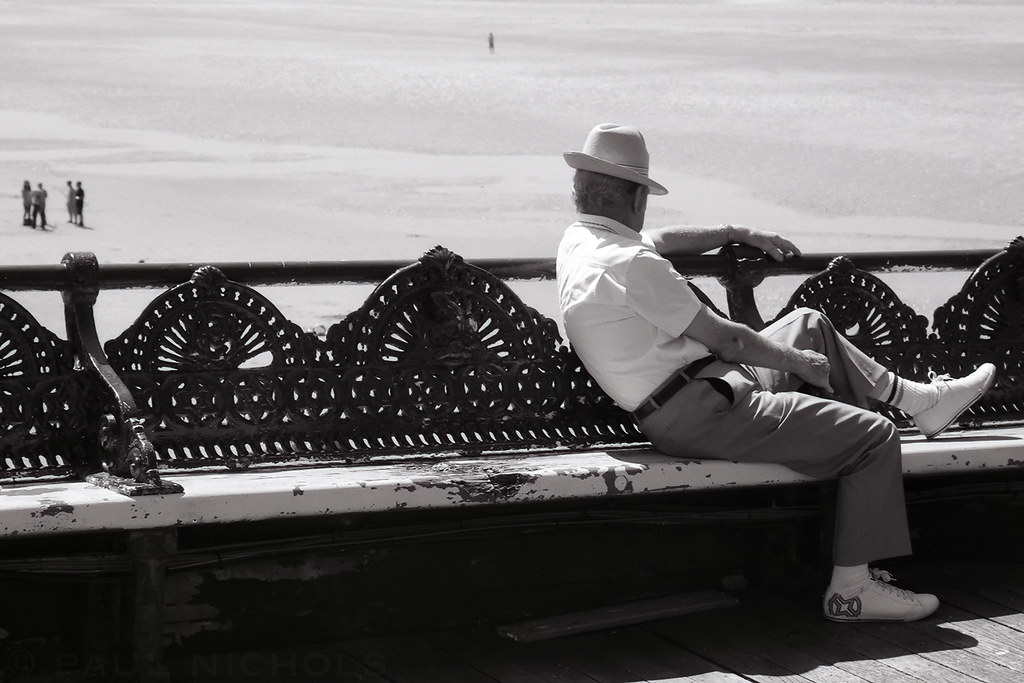
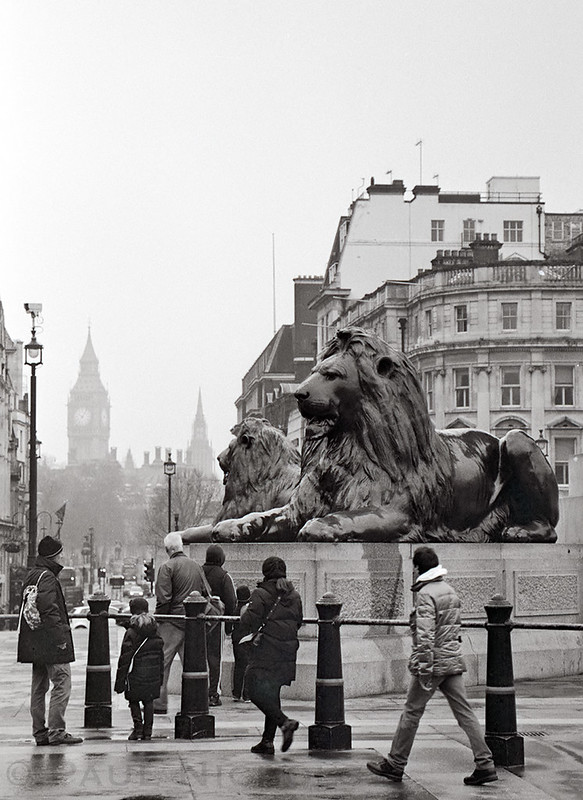
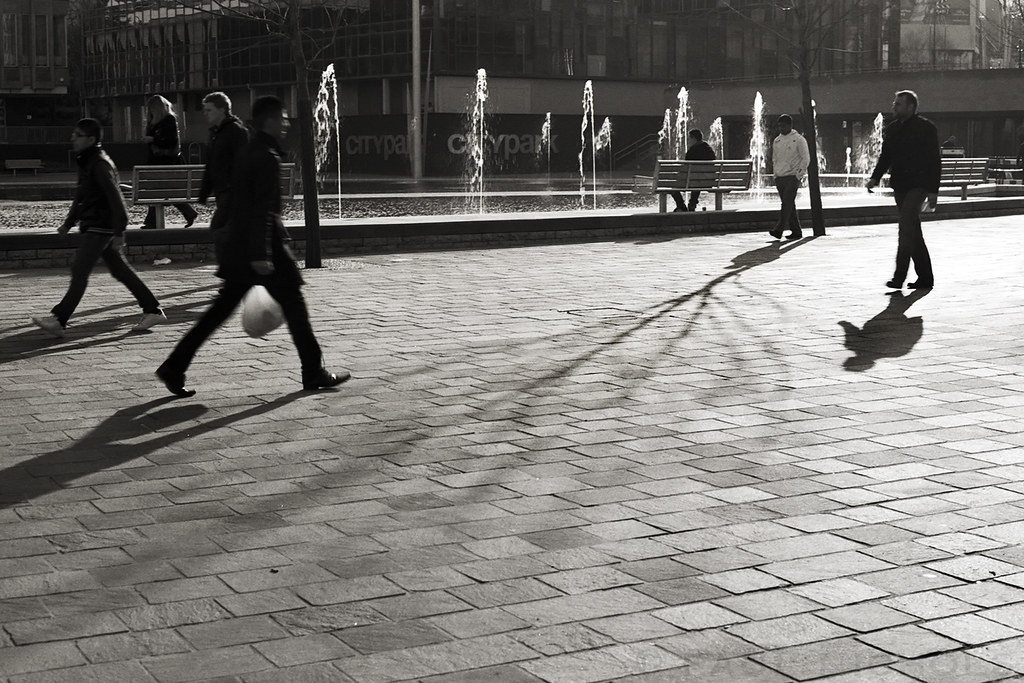
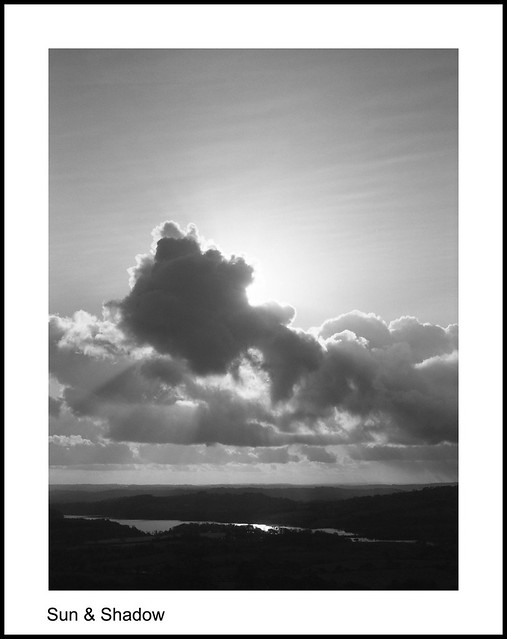
Back to film, and what to shoot to expand your photographic skill-set.
The ideal of shooting in B&W to make you 'think' in B&W, is all about thinking.... really.
Most things will photo in mono-chrome. Its just a matter of how well you translate what you see to line and tone devoid of colour.
The 'lesson' in shooting B&W then is in the discipline of thought, and actualy assessing a scene in detail, and considering how it will translate to image, before you shoot it.
It is a good lesson, but like many its what you take away from it.
You can apply the same discipline of though to colour photography... and in fact probably should!
It is, as has been mentioned though, a great way to reduce and simplify an image, and like selective focus, concentrate viewers attension on something, and in a more subtle way, rather than just the subject or composition, it can emphasise expression or texture or line.
But you dont HAVE to shoot B&W to learn it! But it can help!
BUT, easier to remove than to add... you can crop a photo or convert to black and white after capture... rather harder to expand a tight crop to get stuff you didn't have in frame, or add colour to a B&W neg after capture!
And, if scanning to digital.... doing B&W conversion is easy way to take B&W photo's... and have a second chance in colour, if your translation didn't quite work. Also easy to do post-process filtering, and see what you might have got using red, green, yellow filters for B&W.
And in my dark-room days, I would often make B&W prints from Colour Negs.
Its not ideal, and there is a quality loss. Colour negatives have an orange cast. This is a colour correction mask, a 'pre-filter' to compensate for natural blue cast in colour printing paper. That alone means that from colour negs or even C41 'process' B&W films; you dont get the same tonal range or contrast. Full Blacks and full Whites will always be held back a bit by that filter, and colour film has three stacked layers of emulsion; for Red, Blue and Green; which means that you get a slight diffusion from each layer and pictures that are never going to be as 'sharp'.
But its a minor quibble, until you are concerning yourself with ultimate IQ and exhibition quality B&W prints.
So, while B&W can help you develop your craft as a photographer, shooting colour and converting to B&W to get to the same place, can have a lot of advantages.
Something I always found though is the irony of Serendipity, or that bludy Murphey fellows law of clod!
Garantee, if all you have loaded is B&W.... you will come accross the most colourful scene imaginable!
I would generally then have two cameras; one loaded with B&W one with colour, if I was shooting B&W, even if the colour camera was just my 35mm point & shoot compact.
So there's really no question B&W or Colour... there is both, and circumstance dependant, objective dependant, you can use both!
If I had to deny myself one or other... definitely be B&W, as colour it is simply more convenient, and I can still make B&W pictures from it.
So all options open really..... what do you want to learn, and what do you want to capture?
As said; to get into home processing; go shoot film you can waste learning to process, where you dont care about the images too much.
To learn to see in B&W and to aquire the discipline of scene assessement, B&W can be useful, if not essential... but even where you do shoot in B&W for that reason.. if you ONLY shoot B&W, you dont have colour comparis on to see what you saw when you took it.... do you?
So if you want to develop your B&W 'eye'... double shooting on both film types, or using colour & converting is still gong to be helpful.
B&W will only really come into its own, when you know how things will translate to mono, and you are shooting for it to be mono, and that extra sharpness and tonal range is adding to that and being exploited.