Black and white or colour?

davecatt861

Suspended / Banned
Messages
32
Name
David
Edit My Images
No
I'm having thoughts on what to use, b&w or colour. I think I understand the concept of using b&w for impact and detail, but wonder does b&w work with landscapes, skyscapes, wide angle etc? If that makes sense could I have some thoughts, guidance and ideas of more experienced photographers.

Dave
 
Black and white works for everything! Remember, that's all there was at one time. If you are unsure about black and white for landscapes I would suggest looking at some of the work of Ansel Adams :)
 
For developing yourself, then black and white is place to start as it is much easier.
 
Black and white works for everything! Remember, that's all there was at one time. If you are unsure about black and white for landscapes I would suggest looking at some of the work of Ansel Adams :)

This.

If anything, B&W has more impact in certain situations (including some landscapes etc) than colour. It's about choosing the right film for the thing you are trying to achieve. :)
 
I think that's were I am struggling, choosing the right film.
 
The thing is, choosing the right film is the easy part if it's only a decision between B&W and colour. Choosing what you want to achieve? That's the hard part and takes the most thinking.

If however you want to just go out and roam the landscape for example, then colour neg might be the best choice as at least this can be converted to B&W later.
 
I have just done some B and W in Saltare and waiting for them to come back from Peak I think it also ages the pictures and I also went to great lengths to omit cars and modern items, can't wait .
 
Mike,

At the moment it's getting the basics right, then move onto home processing, so eventually it'll be B&W most of the time.
 
The thing is, choosing the right film is the easy part if it's only a decision between B&W and colour. Choosing what you want to achieve? That's the hard part and takes the most thinking.

If however you want to just go out and roam the landscape for example, then colour neg might be the best choice as at least this can be converted to B&W later.

Absolutely on the first part... but the second part wouldn't work for me most of the time. I really need to know I'm shooting black and white rather than colour. It's a real change of brain and approach...

(That's as opposed to "I wonder if this colour shot would look good in mono?".)
 
I'm in the "less is more" camp. There are images that wouldn't work in black and white because they depend on the colours. But I'm not sure that there are many.

Black and white as a medium is more flexible because you can use it in all types of lighting, unlike colour where you can run into difficulties.

There's more room for the personal stamp, because you can change tonal values and contrast siginficantly in black and white and still achieve a natural looking result. You can't get away with this in colour, and so lose a lot of control over the final result.

I could amplify all these points, but I'm being brief.

Using colour negative film rather than black and white if you're going to scan and print digitally has certain advantages - you can apply filters after the event without the cost of a filter factor or any chance of degrading the image. And you can apply different coloured filters selectively to different parts of the image. Colour negative film is also the easiest to scan.

The downside is the lower resolution of colour films, and the inability to compensate for unusual subject brightness ranges by adjusting exposure and development.

I'm not convinced about the "really needing to know" argument, because even when I have a black and white film in the camera, the image is still coloured in the viewfinder. Yes, you do need to know what you're going to produce, because that affects the composition and lighting; but that doesn't depend on the unrelated information as to what the film will natively record.

I normally use FP4 or Fuji Acros in 5x4, and Pan F and FP4 in 120. I do also use a small amount of colour negative film with the idea of using Photoshop to supply flexible filters.
 
I don't think I'd have so much of a problem using colour film and firmy thinking of it as black and white that just needs a post-processing step. But "roaming the landscape" with a colour film, without a prior intention to treat it as mono... some shots colour, some mono... I don't think I could switch my black and white brain into gear quite like that! But this is quite possibly because my visual imagination is still insufficiently developed.
 
It's not easy, and I don't do it myself either. I always "see" in black and white and imagine the end result, but when I come across something that does need colour I can manage it.

I do have the advantage of using a medium format camera for colour, and have two film backs so I can easily swap, but generally I'll take a colour film out for black and white work. I'm still experimenting to see if using Photoshop for filters works for me; but I have been disappointed with the lower resolution of colour film.

I know it's very off topic, but I have the same problems of visualisation when swapping between 5x4/6x7 on the one hand and 6x6 on the other where the shape of the frame alters. I get more worried about wasting film area with the smaller format.
 
Hi David,

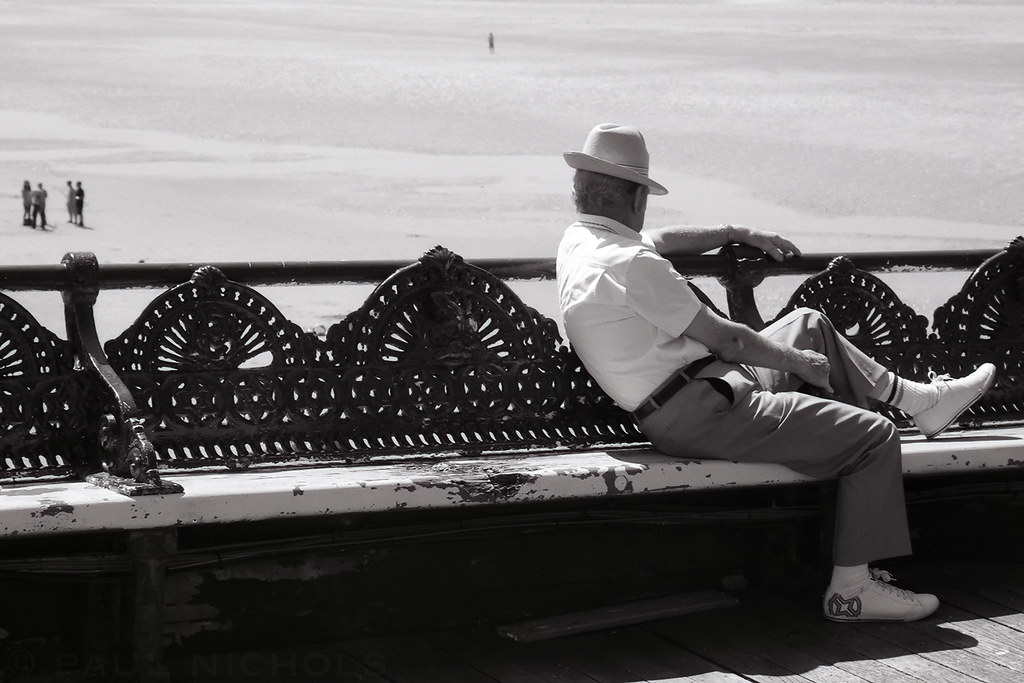
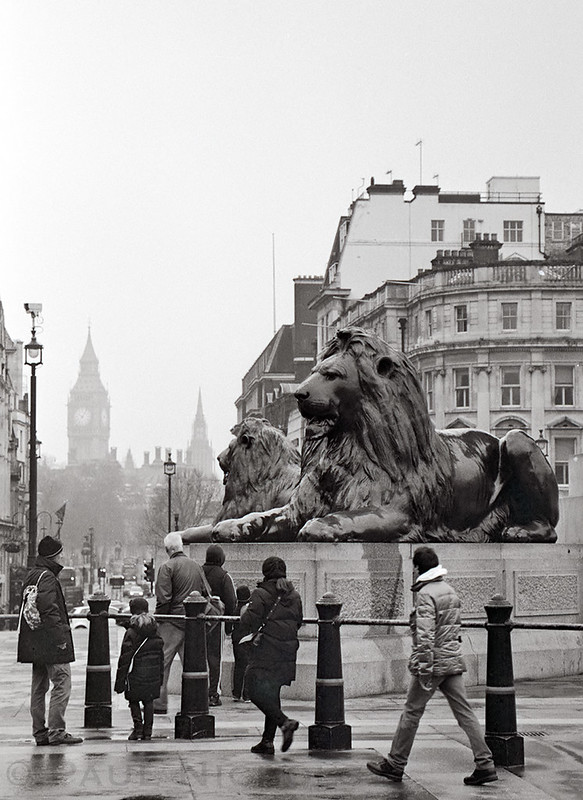
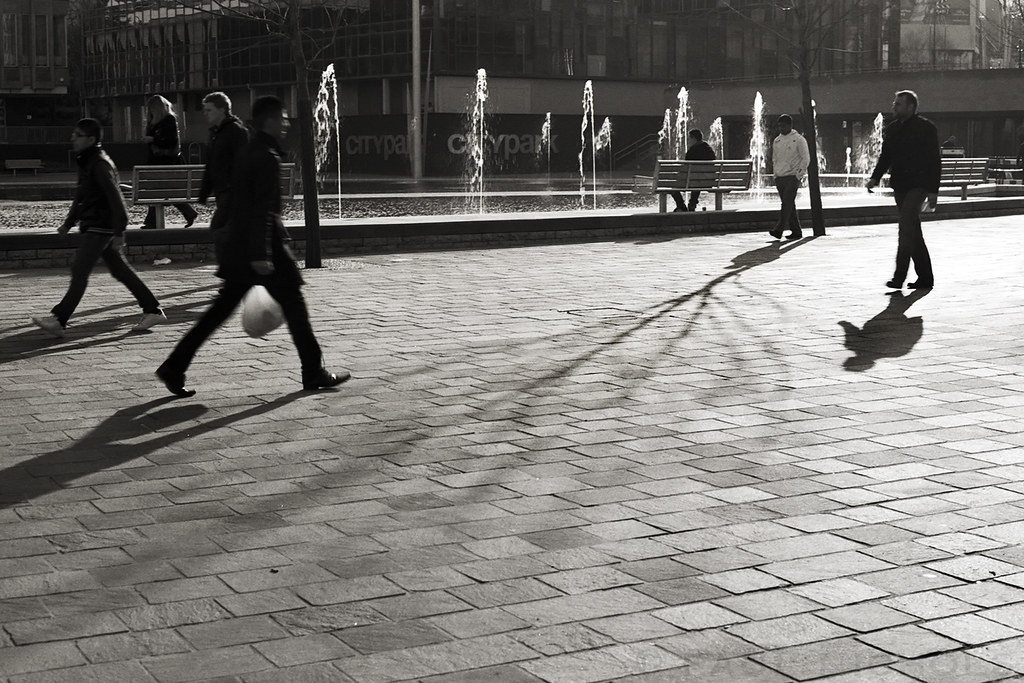
Black and white serves a very simple purpose for me - it simplifies what I'm trying to show. Colour in an image is something else the viewer has to process and make sense of, black and white images are very undemanding to view which is why personally I think such images often come across as more striking and bold than they might in colour. Probably the best thing to do is simply have a fiddle with a few different films on varying types of subjects and see how you get on with them. Ultimately everything can be shot on either colour or black and white, which one you choose really depends on how you feel about what you're trying to show.

Just to try give a couple of examples of black and white simplifying things, here are a few of mine which I think are examples of it. I've tried to imagine these shots in the true colour with which I saw them at the time I took them and in every one I think colour would have just messed things up! They're very very simple images; there's nothing complex or clever about them but to me they're good examples of where colour simply wouldn't have worked. :)


Untitled by Paul Nichols, on Flickr


Untitled by Paul Nichols, on Flickr

Untitled by Paul Nichols, on Flickr
 
Last edited:
Wow! Thanks for all the discussion, I think it's a case of getting out there and having a go. It's interesting to read all the different viewpoints, hopefully I'll have some examples on here soon to get some more guidance.
 
OK; As far as home processing goes; Film Developing first.

Developing film, is 'nice' and easy to get into. Just to fix the image on your film, you dont need a full dark room or even much kit to do it; you can do it in the kitchen or bathroom.

You need a 'light trap' developing tank & spiral; costs about £20. This is about the only bit of 'specialist' equipment you need. Rest can be improvised.

To get the film out of the canister and into the dev-tank; you need a changing bag; it's like a black T-Shirt with elasticated arms; the kneck stitched closed and a zip accross the bottom. You put film, a bottle opener; your dev-tank and reel in the bottom & zip it up; then stick your arms in the sleeve holes, to fiddle with the film and wind it onto the spool. No idea how muchj these are these days, probably about £15-20. But... at a rock-gig, with a film wound off the end of a cartridge? I HAVE litterally used a black T-Shirt in a dark corner!

OK... after that, you need to mix your chemicals, and have something to put them in. If you buy a 'kit' you'll often get a small graduated measuring cylinder for any fine measurements you need; other wise bottles are often marked on the sides, and you can get away with a 49p kitchen measuring jug for most mixing! Then just some-where to put the solutions.... for storage between developing sessions, you really need light-tight storage or 'concertina' bottles you can expell excess air from before capping... but what the heck, to get started, old milk-bottles, pop bottles whatever, cleaned first of course, will do the job.... just make sure you have enogh films to develop that you will exhaust the developer by the end of the sesssion & throw it away!

Once developed, you need to hang your film to dry, and while drying clips are nice... when I have run out.... bit of string and two drawing pins into a door-frame and cloths pegs will suffice!

And it is SHEAR MAGIC.... when you open the tank and see not just your first, but ANY images emerge from the water!

OK... film types....

B&W is the 'easy' one that gets you started. Film & Prints, are both a 'cold' or room temperature, two-shot & wash process, that's reletively robust, and fairly 'cheap'.

But, colour developing, isn't THAT much of a leap from B&W; and once you have the knack of winding your film from can to spool in a changing bag; learned how to mix and manage your solutions; doing three-bath E6-slide or C41-Colour-Print, is no big deal; you just have to keep your tank warm in a washing up bowl of water, with a thermometer in the light trap, and keep closer eye on your timings.

And I HAVE to say; thanks to volume market, these days C41 colour Print is PROBABLY as cheap to process as anything! 1l kit costs about £18, aprox half equivilent E6 slide kit; and should do about a dozen films. £1.50 a film? That's cheap film-photography!

B&W; maybe a tad cheaper; it's only a two shot process, but the developer doesn't really go any further, and you are looking at about £12 for the chemicals to do a dozen films.

Once you have the film out the camera and through the dev-tank, though you then probably want to view it, and these days, easiest and most convenient way is probably to scan straight to digital.

Seperate topic, I suspect; Scanning is always the weak-link; but while oft ridiculed, cheaper £50 ish web-cam based scanners, if you look for the basic ones with a higher sensor resolution rather than fancy preview LCDs or such, can do a half decent job. £1 a film on top of D&P at the mini-lab, you dont have to do many films to get your money back, and you will probably get better scans to boot.

And its a lot cheaper and a lot more convenient than trying to set up a dark room.... but if you want to head down that road, I would strongly advice checking out local colleges and camera clubs, see if you can do a course. Great way to get familiar with the dark-room, and get to know what you need for one, before spending any big money or wrecking the bath-room with MDF and black-out material!

Home printing? Well you will need an enlarger. B&W you can do in open trays under safe light, and due to the lower sensitivity of the paper, you dont have to be AS critical in you dark-room black-out, as with colour. (I have printed B&W in the kitchen at night with just the lights off & curtains closed!) Colour, you have to have big light-tight tanks, often like large film tanks, to do your prints, and you have to work totally dark, from opening the paper bag to putting it in the tank. You also have more to worry about making your prints, getting the filtration for colour casts right, as well as exposure; and its slow, laboriouse and challenging.

B&W, if you want to make chemical prints; it MAY ultimately be cheaper than commercial D&P; but only really if you get a bit slick at it. Learning you have all the kit to invest in, then a big overhead of stuff that will be destined for the bin while you get it sussed. And then, it will only start making sense when you start making bigger enlargements.

Colour-Printing? At home? Pretty major investment in kit and space to do it, but mostly in time. Especially for the ametuer. Steep learning curve, and you have to keep in practice doing it regularly to not waste so much in set-up and test every time; its not something ever likely to be done for 'ecconomy'!

Thats where you are heading with the idea of Home Processing.

If you want to dabble; Go for it. I'd say get some Cheap B&W film, a dev-tank and chemicals, and give it a crack. It's not expensive or hard to get started, and doing a couple of films in the kitchen takes about as long as it would to bake a cake! About as difficult as well. Just follow the recipe! And make sure you mop up and wash up after!

But I would also suggest... you dont go looking for 'good' photo's to give yourself something to develop!

Just go 'waste' a couple of rolls of film shooting 'stuff', that really doesn't matter if you fog it up!

Likewise if you decide to give Colour-Print or Slide a crack. You REALLY dont want to risk ruining photos you might regret, finding out after the event your tank was too warm or you put the chemicals in in the wrong order!

So that takes care of that bit of your query... getting 'into' processing.
 
Back to film, and what to shoot to expand your photographic skill-set.

The ideal of shooting in B&W to make you 'think' in B&W, is all about thinking.... really.

Most things will photo in mono-chrome. Its just a matter of how well you translate what you see to line and tone devoid of colour.

The 'lesson' in shooting B&W then is in the discipline of thought, and actualy assessing a scene in detail, and considering how it will translate to image, before you shoot it.

It is a good lesson, but like many its what you take away from it.

You can apply the same discipline of though to colour photography... and in fact probably should!

It is, as has been mentioned though, a great way to reduce and simplify an image, and like selective focus, concentrate viewers attension on something, and in a more subtle way, rather than just the subject or composition, it can emphasise expression or texture or line.

But you dont HAVE to shoot B&W to learn it! But it can help!

BUT, easier to remove than to add... you can crop a photo or convert to black and white after capture... rather harder to expand a tight crop to get stuff you didn't have in frame, or add colour to a B&W neg after capture!

And, if scanning to digital.... doing B&W conversion is easy way to take B&W photo's... and have a second chance in colour, if your translation didn't quite work. Also easy to do post-process filtering, and see what you might have got using red, green, yellow filters for B&W.

And in my dark-room days, I would often make B&W prints from Colour Negs.

Its not ideal, and there is a quality loss. Colour negatives have an orange cast. This is a colour correction mask, a 'pre-filter' to compensate for natural blue cast in colour printing paper. That alone means that from colour negs or even C41 'process' B&W films; you dont get the same tonal range or contrast. Full Blacks and full Whites will always be held back a bit by that filter, and colour film has three stacked layers of emulsion; for Red, Blue and Green; which means that you get a slight diffusion from each layer and pictures that are never going to be as 'sharp'.

But its a minor quibble, until you are concerning yourself with ultimate IQ and exhibition quality B&W prints.

So, while B&W can help you develop your craft as a photographer, shooting colour and converting to B&W to get to the same place, can have a lot of advantages.

Something I always found though is the irony of Serendipity, or that bludy Murphey fellows law of clod!

Garantee, if all you have loaded is B&W.... you will come accross the most colourful scene imaginable!

I would generally then have two cameras; one loaded with B&W one with colour, if I was shooting B&W, even if the colour camera was just my 35mm point & shoot compact.

So there's really no question B&W or Colour... there is both, and circumstance dependant, objective dependant, you can use both!

If I had to deny myself one or other... definitely be B&W, as colour it is simply more convenient, and I can still make B&W pictures from it.

So all options open really..... what do you want to learn, and what do you want to capture?

As said; to get into home processing; go shoot film you can waste learning to process, where you dont care about the images too much.

To learn to see in B&W and to aquire the discipline of scene assessement, B&W can be useful, if not essential... but even where you do shoot in B&W for that reason.. if you ONLY shoot B&W, you dont have colour comparis on to see what you saw when you took it.... do you?

So if you want to develop your B&W 'eye'... double shooting on both film types, or using colour & converting is still gong to be helpful.

B&W will only really come into its own, when you know how things will translate to mono, and you are shooting for it to be mono, and that extra sharpness and tonal range is adding to that and being exploited.

 
Interesting thread as I have struggled with this one myself and although I use both most of mine are B&W. I just never seem to "feel" the colour in the same way. Recently I was inspired by Osh's Velvia masterpieces and have bought a couple of boxes but still seem to struggle.

I have also started to take some shots in both colour and B&W to compare and I keep a back loaded with each just incase. Pushing that a little further I have taken some photos of things that just should obviously have been better in colour (a very red Ducati, my wife in a field of sunflowers in Umbria) and still I usually prefer the B&W.

Horses for courses but I think I prefer B&W

Mark
 
This.

If anything, B&W has more impact in certain situations (including some landscapes etc) than colour. It's about choosing the right film for the thing you are trying to achieve. :)

Photographer of the year snob.:D
 
Start with colour it shows more deficiencies in your Technic which you can then adjust accordingly.

Once you are happy which your own personal requirements, then move the B&W, which without doubt is more difficult to use for a good photograph.
 
Back to film, and what to shoot to expand your photographic skill-set.

The ideal of shooting in B&W to make you 'think' in B&W, is all about thinking.... really.

Most things will photo in mono-chrome. Its just a matter of how well you translate what you see to line and tone devoid of colour.

The 'lesson' in shooting B&W then is in the discipline of thought, and actualy assessing a scene in detail, and considering how it will translate to image, before you shoot it.

It is a good lesson, but like many its what you take away from it.

You can apply the same discipline of though to colour photography... and in fact probably should!

It is, as has been mentioned though, a great way to reduce and simplify an image, and like selective focus, concentrate viewers attension on something, and in a more subtle way, rather than just the subject or composition, it can emphasise expression or texture or line.

But you dont HAVE to shoot B&W to learn it! But it can help!

BUT, easier to remove than to add... you can crop a photo or convert to black and white after capture... rather harder to expand a tight crop to get stuff you didn't have in frame, or add colour to a B&W neg after capture!

And, if scanning to digital.... doing B&W conversion is easy way to take B&W photo's... and have a second chance in colour, if your translation didn't quite work. Also easy to do post-process filtering, and see what you might have got using red, green, yellow filters for B&W.

And in my dark-room days, I would often make B&W prints from Colour Negs.

Its not ideal, and there is a quality loss. Colour negatives have an orange cast. This is a colour correction mask, a 'pre-filter' to compensate for natural blue cast in colour printing paper. That alone means that from colour negs or even C41 'process' B&W films; you dont get the same tonal range or contrast. Full Blacks and full Whites will always be held back a bit by that filter, and colour film has three stacked layers of emulsion; for Red, Blue and Green; which means that you get a slight diffusion from each layer and pictures that are never going to be as 'sharp'.

But its a minor quibble, until you are concerning yourself with ultimate IQ and exhibition quality B&W prints.

So, while B&W can help you develop your craft as a photographer, shooting colour and converting to B&W to get to the same place, can have a lot of advantages.

Something I always found though is the irony of Serendipity, or that bludy Murphey fellows law of clod!

Garantee, if all you have loaded is B&W.... you will come accross the most colourful scene imaginable!

I would generally then have two cameras; one loaded with B&W one with colour, if I was shooting B&W, even if the colour camera was just my 35mm point & shoot compact.

So there's really no question B&W or Colour... there is both, and circumstance dependant, objective dependant, you can use both!

If I had to deny myself one or other... definitely be B&W, as colour it is simply more convenient, and I can still make B&W pictures from it.

So all options open really..... what do you want to learn, and what do you want to capture?

As said; to get into home processing; go shoot film you can waste learning to process, where you dont care about the images too much.

To learn to see in B&W and to aquire the discipline of scene assessement, B&W can be useful, if not essential... but even where you do shoot in B&W for that reason.. if you ONLY shoot B&W, you dont have colour comparis on to see what you saw when you took it.... do you?

So if you want to develop your B&W 'eye'... double shooting on both film types, or using colour & converting is still gong to be helpful.

B&W will only really come into its own, when you know how things will translate to mono, and you are shooting for it to be mono, and that extra sharpness and tonal range is adding to that and being exploited.


Thanks Mike that's fantastic, and thanks for taking the time, it must have taken ages.
 
Oh, that's just a quick note from Mike.:D
 
B&W all day. Colour is for family holiday snapshots!

Find me a link to a nice sunset shot in black and white then?


i dont think there is a simple answer to the question. All depends on the subject matter. I did a rape seed field shot the other week and it had a single poppy in it as the main subject, its posted in the shots thread somewhere. That simply wouldn't of worked in b&w. Equally i did some landscapes from cornwall out on the cliffs that wouldnt of worked in colour due to the pallete of the landscape itself and the weather conditions while some shots i took up in the lakes had to be in colour for the same reasons.

Horses for courses :)
 
Last edited:
Find me a link to a nice sunset shot in black and white then?

I just put "Black and White Sunset Photography" into Google images and there are some fabulous shots.

Including, bizarrely, a Ducati Monster at sunset which made me smile as it is similar to my S2R - the one I mentioned shooting in both B&W and colour in my earlier post :D

Mark
 
Find me a link to a nice sunset shot in black and white then?


i dont think there is a simple answer to the question. All depends on the subject matter. I did a rape seed field shot the other week and it had a single poppy in it as the main subject, its posted in the shots thread somewhere. That simply wouldn't of worked in b&w. Equally i did some landscapes from cornwall out on the cliffs that wouldnt of worked in colour due to the pallete of the landscape itself and the weather conditions while some shots i took up in the lakes had to be in colour for the same reasons.

Horses for courses :)

Agree......does anyone prefer a B/W tv or computer monitor screen, or will only go to a cinema if the film is in B/W :) after spending my early life with B/W (even my clothes were mainly B/W as colour material was in short supply e.g. to make shirts)........I was glad to get away from it.
 
Last edited:
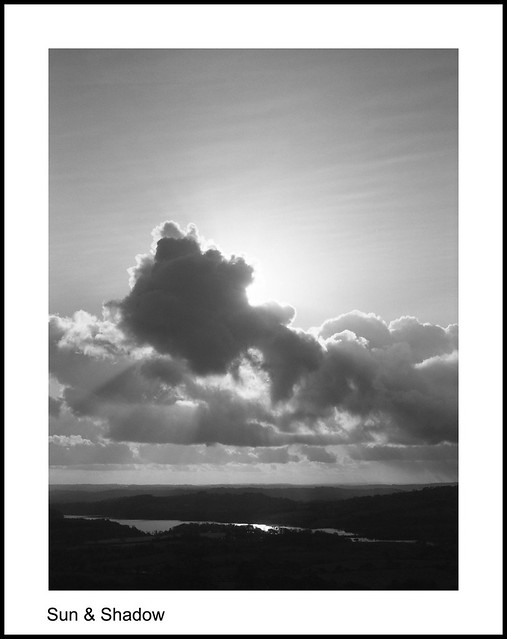
Not technically a sunset but not far off.


Sun-&-Shadow2 by andysnapper1, on Flickr

I understand the point and generally for this kind of shot colour works better but it isn't a hard and fast rule in my opinion.

Andy
 
I understand the point and generally for this kind of shot colour works better but it isn't a hard and fast rule in my opinion.

Andy

:thumbs:
 
Agree......does anyone prefer a B/W tv or computer monitor screen, or will only go to a cinema if the film is in B/W :)

Many mistery/thriller movies are better in B&W, also many directors prefer film their movies in B&W, ask Alfred Hitchcock. :)
 
Many mistery/thriller movies are better in B&W, also many directors prefer film their movies in B&W, ask Alfred Hitchcock. :)

When my parents used to take me to the cinema it was a pleasure to see films in colour like Snow white and wizard of Oz out of a mass of B/W films, so must have affected me mentally for the future :suspect:
H'mm In Psycho....... red or dark grey blood, I would guess today, people would like lashings of red..the full 8 pints :wave:
 
Love it, but not my boxes, it is a brilliant shot of a seascape not a sunrise or set brilliant shot.

In my humble opinion of course.

I knew someone would say that! :lol:

To me it's a sunset shot but taken in a way that specifically works in black and white. The point being there's hardly anything that point blank won't work in colour or black and white, it just depends on how you as the photographer choose to shoot it.
 
Back
Top