Bird photography tips!

BlackDogPhoto

Suspended / Banned
Messages
121
Name
Bob
Edit My Images
No
I’ve recently discovered a deep respect for bird photography, having never really appreciated the effort that goes into it!

I have new camera OM 3, with a 40-150 f2.8 lens, and a 1.4x teleconverter. Taking into consideration the 2x magnification from using micro four thirds body I’ve got up to 420mm f4(full frame equivalent).

I was at Stocks reservoir recently as I’d planned on doing some landscape but ended up sitting in one of the hides there and found it quite relaxing- although I saw nothing other than a duck on the water!

I realised my tripod could be improved so I have ordered a second hand Manfrotto 055 CX Pro3 with a 486 RC2 ball head (£100 bargain!)

Anyhow i’d appreciate any bird photography tips, whether time/dates/seasons, or technical advice.

Also are there any dos/donts ie spreading bird feed to encourage birds etc.
 
Last edited:
Hi, please don't take this the wrong way but you will only get from bird photography what you are prepared to put into it, loads of videos from so called expert Wildlife/Bird photographers on YouTube. From me I would always suggest the highest shutter speed you can get, forget about ISO up to around the 12,000 mark as there are so many good applications to deal with it,
You mention being in a hide at Stocks reservoir, set up your own bird feeding station in the back garden and buy a portable one man hide, Nitehawk offer a one man hide with chair included I have one and use it often even out in woodland or the edge of fields (with permission). Russ.

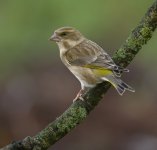
Female Greenfinch 10 Nov  2025.jpg

 
All good advice above.....

Perhaps the Lancashire WT reserves might also be good places to visit

 
Which duck was it that you saw? There are, allegedly, 22 different species in the UK. :)

Seriously, if you learn more about birds, their habitat, feeding methods, migration etc. you begin to appreciate them more and get interested in them.
Photographing them then becomes something you enjoy and you spend more time playing at taking pictures of them and anticipating what they may do.
RSPB reserves are usually good and if you look at the individual websites they often list recent sightings or what you may expect to see.
 
If taking a photo of a duck and it doesn't come out right, Don't quack up over it
 
My first tip would be (tongue in check here), don't, it's a rabbit hole and once you're in it, you ain't coming out. ;)

Seriously, it's a very rewarding genre of photography (one of the most), be ready though for far more fruitless outings than fruitfull ones.

There's paid hides of course although, whilst not knocking them, the resulting images can feel a little hollow as you've not done all the work. Just to double down, I'm not knocking paid hides.

If you can use a hide in your garden, a pop up or even a shed that allows you to see out, will get you good results and is probably one of the easiest routes to getting images, particularly of garden birds. Put some feeders out, and one or two perches nearby and photograph the birds on the perches as they queue to feed, or return to it to eat.

This principle can be used out in the field too, to varying degrees, with a pop up hide, or my favourite, scrim and a chair, merged into the vegetation.

Fieldcraft, you'll need that.

I tend to target a species and learn as much as I can about it. For me, it's been Kingfishers for 6 years now and I have watched them, listened to them and photographed them with some decent results. Key here is learning the routines and habits of a species.

I'm moving on now from Kingfishers, I need a change and my next target will be Barn Owls. It's a new project that's only just begun but I will have to learn about the species and also, it's habits on the site I've located.

Above all, have fun, enjoy being outdoors and in nature, that's as satisfying as when you do get an image and it should be. Images are a bonus. Also, 'be in it to win it' is a mantra I've used. I sometimes have to push myself, and you will too, as images won't come by being sat in the house.

Good luck.
 
There's paid hides of course although, whilst not knocking them, the resulting images can feel a little hollow as you've not done all the work. Just to double down, I'm not knocking paid hides.
Whilst they are a great way to learn bird photography, you have to work harder to get 'unique' shots... When you take part in club competitions it's sometimes easy to recognise actual set-ups. Not just birds, but you always know when someone will have gone to the Hawk Conservancy or The British Wildlife Centre..
 
Back
Top