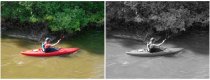
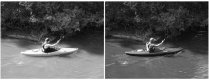
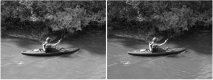
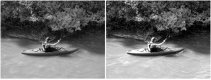
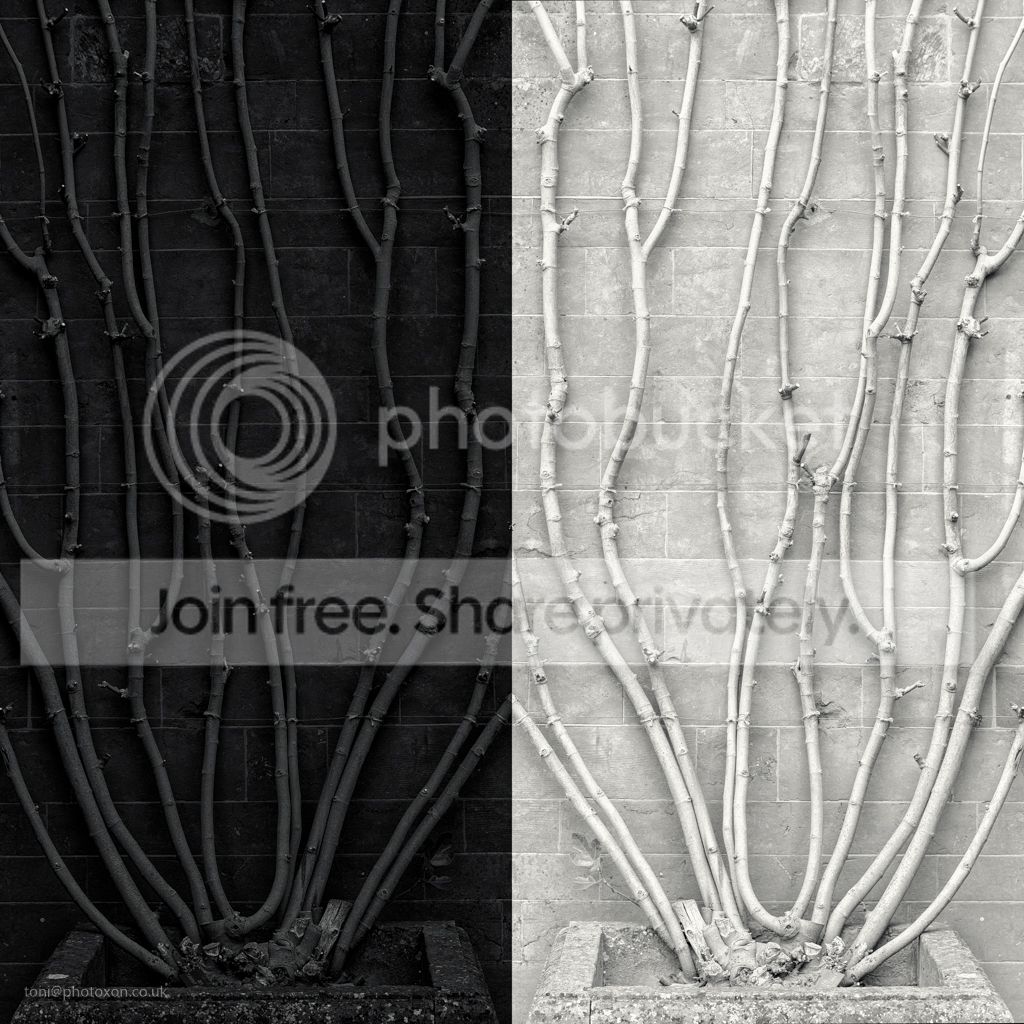
Given that I don't "do" sports, wildlife etc., I'd go with any photograph (and not just a black and white landscape) should be the result of a conscious decision; first to decide to actually make a photograph, and secondly to determine how best to arrange the elements. The third part is ensuring that you'll have the best starting point for the final image - and the final step in the chain would be getting from that starting point to the end.
I don't believe that in most cases you can ever make a print without having to make some adjustments. I know that people using slide film have limited choice post exposure, but slides have the advantage of a greater tonal range as projected over a print, albeit at the expense of having a lower subject brightness range that they can record compared to negative film.
With that out of the way, it seems to me that it comes down to determining how to get the best starting point. As far as colour negative versus black and white negative film goes, whichever you have in the camera the viewfinder will still be in colour, and it makes no difference at the taking stage which it is. You still have the mental adjustment to make. Colour does have the advantage, as I said above, that you can selectively filter areas. If you look at the canoe photo I posted above, you should be able to see that the "filtration" which was applied globally has effects on the shadow areas - a red filter will always absorb more light in the shadows when the sky is blue, since the shadows are blue. If you are likely to have problems with blocked shadows and don't want to increase the exposure to compensate, starting with a colour image could be best.
Given that it makes no difference at the taking stage whether the film is colour or black and white, I can't readily see why it should make a difference in digital. But then, when I use a digital camera, I don't use the screen on the back to check the result, and treat it as a film camera.
There are black and white viewing filters made (dark brown, and very expensive) which work by temporarily forcing us to see in monochrome, although we soon readjust. You can get the same effect using a strong red filter, although that will affect the tonal balances.
I personally find it easier post exposure to have a black and white image as my starting point. Possibly it's just force of habit, but I haven't any problem in looking at a scene and seeing the final black and white image; but once change "scene" to "screen" and put me in front of a colour image I have problems.
Finally - one I got wrong. I should have foreseen it and used a filter. If it had been a colour image I could have rescued it.
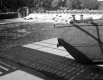
The rusted boat (at Naburn Locks, York) was clearly differentiated from the water behind. But, like the red roses and green leaves, the difference was lost in (unfiltered) black and white.