Back to basics

jonbeeza

Suspended / Banned
Messages
9,388
Name
Jon
Edit My Images
Yes
Rather than lusting after another camera like I have been doing, I am going back to basics for a little while. I like one or two others possibly, think buying another camera will improve our photography. The only thing that has improved, is the image quality. The badly composed shot, that lacks interest is still present. Just looking at some of my old photos, and they are reasonably good, for me at least they are. I am talking about digital here and not film, some of you will have seen my miserable attempt at the return to shooting film, I made a complete hash of things.

I am getting out my old digital camera, to see if I can spot any good photo opportunities. I did not have to think too much, with the old digital camera, there was not much on there that you could alter, other than the ISO.

So, going to charge the little old digital camera in a moment, and will pop out for a short while. See if I come back with anything of interest.

PS

The idea is, with less fiddle and faffing about with the camera, the more time to look for things. Back to basics, as in point and shoot. lol
 
For me, moving back to an older camera would be as bad as getting a new one.

I think that the camera should not be a consideration, just something you can pick up and use without thinking about it, only then can you put all your effort into getting the shot.
 
I suppose we're at a point now when the gear is very mostly easily good enough but I wonder how many times in the past people have thought the exact same thing.

Thinking back to my Canon DSLR's the best was the original 5D but I wouldn't like to "go back" to that. Compact wise I have a very cheap Medion which is frankly rubbish and a Canon Ixus which is better but very very limiting by todays standards so I wouldn't like to go back to either of those. I also had a couple of Panasonic LXx's which were pretty close to the top of the heap in their day but I wouldn't like to go back to those. I also wouldn't like to go back to either the Panasonic GF1 or G1 I had as by todays standards they too are again limiting. For example they only go to ISO 3200 and they need care at it.

All in all I wouldn't like to go back to anything I've had before but I could stick with what I have until it becomes limiting because some new kit has genuinely moved the game significantly on and offers real advantages. The one thing I can think of is a global shutter but there could be other stuff too. Who knows?
 
Last edited:
I'd just try going out with a prime, 1 focal length makes you think about composition a lot more.
I agree. Zoom lenses can encourage us to be lazy. Using our feet as the zoom control slows things down, requires more thought and more effort.
 
I'm not sure taking a camera out and about and then seeing what you find is the right way to go about it.
For example, I really only use my camera if I have a photo I want to take. I'll go for a trip to the local woods, with the sole intention of photographing mushrooms and toadstool, if I see something else of interest while out, I'll probably take a photo of that too. But aimlessly walking around hoping to see something interesting, just so you can use your camera is (to me) a bit pointless.
 
IMG_0038.JPG


IMG_0040.JPG


Out with the tiny little camera this morning, trying close up stuff.
 
IMG_0044.JPG

And far distant things, well about three miles away.
 
Quite enjoyable to use, don't have to worry about dropping it. Weighs less than a pack of ciggies, and worth even less than a pack of ciggies.
 
I know I should move on :D but foot zoom... There's no such thing. Yes you can sometimes walk closer to the subject, although equally sometimes you just can't, but even if you can you've completely changed the perspective and it'll be a different picture to one you'd have taken from the same position with a zoom set to a longer focal length.

As for slowing things down, any number of things can do that but slowing things down can again lead to a different picture as things move in and out of the frame or the light changes.
 
Last edited:
I'm not sure taking a camera out and about and then seeing what you find is the right way to go about it.
For example, I really only use my camera if I have a photo I want to take. I'll go for a trip to the local woods, with the sole intention of photographing mushrooms and toadstool, if I see something else of interest while out, I'll probably take a photo of that too. But aimlessly walking around hoping to see something interesting, just so you can use your camera is (to me) a bit pointless.
Depends. I've had plenty of good ideas which I've developed when wandering aimlessly with a camera and an open mind. Other times I never take a shot, or delete everything.
 
From what I can gather from the numerous threads that @jonbeeza has posted is that he wants to improve his composition, the first thing that springs to mind, is that while you often get the target subject in the field of view, you are not taking into account all the things you don't want in the field of view (ie distractions)

For example how much better (different) would the first shot be, if the distracting empty twigs were not there, of the path was more or less seperated from the target branch. In the second shot, why have two half flowers on the edge of the frame, if they were not there you attention would be more focussed on the main subject.

This all takes time, and is harder on cameras that don't provide near 100% viewfinder coverage, but practice makes better.
 
But aimlessly walking around hoping to see something interesting, just so you can use your camera is (to me) a bit pointless.
Each to their own. I see all sorts of interesting things when I just trundle around with a camera in my hand...

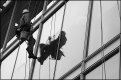
Absailingwindowcleaner3.jpg

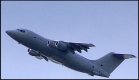
BAE 146 over Exeter DSC00825 2.JPG

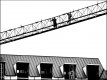
Building workers on crane arm Exeter _1050386.JPG
 
From what I can gather from the numerous threads that @jonbeeza has posted is that he wants to improve his composition, the first thing that springs to mind, is that while you often get the target subject in the field of view, you are not taking into account all the things you don't want in the field of view (ie distractions)

For example how much better (different) would the first shot be, if the distracting empty twigs were not there, of the path was more or less seperated from the target branch. In the second shot, why have two half flowers on the edge of the frame, if they were not there you attention would be more focussed on the main subject.

This all takes time, and is harder on cameras that don't provide near 100% viewfinder coverage, but practice makes better.

One thing I'm conscious of is that I don't like cropping as I seem to see having to crop as some sort of failure, but why? I don't know. If I/we could free ourselves from fear of cropping and maybe aspect ratios too we could crop our pictures for best effect and as long as they still end up big enough for use then all's well and possibly better then before as we can crop out stuff that detracts from the picture we want.
 
I'd just try going out with a prime, 1 focal length makes you think about composition a lot more.

I was going to say that !!! :D

I fact, its what I do every month or more - like yesterday in fact :)

My only add to this, is to also choose an Aperture BEFORE heading out and NOT changing it throughout the day either - again yesterday I was on a 50mm at f1.8 only - defo makes you think more

Dave
 
I know I should move on :D but foot zoom... There's no such thing. Yes you can sometimes walk closer to the subject, although equally sometimes you just can't, but even if you can you've completely changed the perspective and it'll be a different picture to one you'd have taken from the same position with a zoom set to a longer focal length.
As for slowing things down, any number of things can do that but slowing things down can again lead to a different picture as things move in and out of the frame or the light changes.
And that's the whole point of zooming with our feet. There can only be one ideal position from which to take a photo, and when we have to use our feet we are far more likely to find it. Also, the "standard" focal length produces a natural perspective - not always but often the ideal - but a zoom lens always either compresses or expands perspective.

Also, when using a long lens, shooting from a different height usually makes little difference to the result. Shooting with a standard lens can make a massive difference, which allows us to tilt the camera up or down when needed.
 
As a photographer of about 60 years I feel I can say that if you do not want to worry about camera settings put it on Auto or P and just concentrate on getting the camera in the right position.
Regarding zooming with your feet, it changes the perspective - unless you have an infinite number of primes you cannot always get the shot you want. You can easily show this by using a door as a frame to your picture, as you move towards it the outside view changes.
 
And that's the whole point of zooming with our feet. There can only be one ideal position from which to take a photo, and when we have to use our feet we are far more likely to find it. Also, the "standard" focal length produces a natural perspective - not always but often the ideal - but a zoom lens always either compresses or expands perspective.

Also, when using a long lens, shooting from a different height usually makes little difference to the result. Shooting with a standard lens can make a massive difference, which allows us to tilt the camera up or down when needed.

Well, walking about to get the right picture is a different thing from foot zooming.

I don't agree with the highlighted section at all. Take a long lens... they are sometimes said to compress but they don't. Take a shot at 300mm and from the same position retake at 28mm and if you could crop the 28mm shot to give the same framing you'd see that the "compression" is exactly the same. Compression is nothing to do with the focal length of the lens other than it allowing you to frame the shot as you want. Perspective is about where you stand.

This may not apply to you but when I read people taking about foot zooming I begin to wonder if they really understand what's going on and the effect that changing position has on the final picture.
 
One thing I'm conscious of is that I don't like cropping as I seem to see having to crop as some sort of failure, but why? I don't know. If I/we could free ourselves from fear of cropping and maybe aspect ratios too we could crop our pictures for best effect and as long as they still end up big enough for use then all's well and possibly better then before as we can crop out stuff that detracts from the picture we want.

I wasn't suggesting cropping, but perhaps working the scene to get an alternate composition.
 
Two quick tips:

Always look at the edges of the frame for unwanted intrusions.

Always check the background - you can 'clean up' some backgrounds by shifting your viewpoint (even a few millimetres can be enough) to hide distractions behind closer objects.
 
Each to their own. I see all sorts of interesting things when I just trundle around with a camera in my hand...
Yes, but you are a proficient photographer, who can see things that maybe others can't. The op is struggling with this (well mainly the composition). So going out with, without a clear objective and no subject to concentrate on, is not helping (well in my view anyway).:)
 
Taking time to get everything right is fine if the circumstances allow but it very much depends on what you are shooting ... in this fast-moving world, by the time you have steup the perfect composition, the subject may have gone! :)
 
From what I can gather from the numerous threads that @jonbeeza has posted is that he wants to improve his composition, the first thing that springs to mind, is that while you often get the target subject in the field of view, you are not taking into account all the things you don't want in the field of view (ie distractions)

For example how much better (different) would the first shot be, if the distracting empty twigs were not there, of the path was more or less seperated from the target branch. In the second shot, why have two half flowers on the edge of the frame, if they were not there you attention would be more focussed on the main subject.

This all takes time, and is harder on cameras that don't provide near 100% viewfinder coverage, but practice makes better.

I know I am failing to see things that others would see, things that would ruin a shot for example. Yes I am also failing to compose the scene that looks pleasing to the eye, and just looks messy. I know I should be moving about the scene, to get the best vantage point, so things look right. But for some reason, out on the street I just can't manage it.
 
I just can't seem to work the scene, but there is always tomorrow. I just don't know if I will ever be able to crack it. But I will probably always be very bad at taking photos, probably just keep to taking happy snaps then. My trouble also is that I don't have a relaxed mind, my mind is always racing. When out and about I am thinking of loads of things, so when I am taking a photo, I am also thinking of lots of other stuff also, I can never seem to switch of fully. I know it is not a very good excuse for taking bad photos, but hey ho there we go.

I will probably pop out again tomorrow, and try some more getting back to basics. :)
 
Last edited:
I just can't seem to work the scene, but there is always tomorrow. I just don't know if I will ever be able to crack it.
The more you do it, the more aware you will become. And then you will find it much easier..
 
I just can't seem to work the scene, but there is always tomorrow. I just don't know if I will ever be able to crack it.

I suppose it depends what you want to achieve but you could always be happy with where you are and the results you get.
 
I will probably pop out again tomorrow, and try some more getting back to basics. :)

You could always delay 'random' and set out with a 'target', e.g. inside of a church or other public building, where you might get more opportunity. :)
 
I think I will have to stop making threads whinging about things, and I think I will have to get out more, and look properly. Oh well, here's till the next whinge. :-)
 
So going out with, without a clear objective and no subject to concentrate on, is not helping (well in my view anyway).:)
I am always on the lookout for things to record. If something catches my attention I look at it through the camera and take a shot. If that doesn't strike me as enough I may shift position, change the focal length or make some other change - then record another image. The point to note is that I throw away more images than I keep but I came to the conclusion early on that, even with film, the value to me of my photography is enhanced by what I discard.

I could well be wrong but I have formed the impression that Jon may benefit from that approach.

Anchor Inn High Street Sidmouth interior fisheye P1210550.JPG

Beacon at junction of Exe and Exeter Ship Canal P1010236.JPG

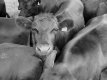
Black bullock in herd P7150016.JPG
 
Last edited:
And that's the whole point of zooming with our feet. There can only be one ideal position from which to take a photo, and when we have to use our feet we are far more likely to find it. Also, the "standard" focal length produces a natural perspective - not always but often the ideal - but a zoom lens always either compresses or expands perspective.

Also, when using a long lens, shooting from a different height usually makes little difference to the result. Shooting with a standard lens can make a massive difference, which allows us to tilt the camera up or down when needed.
Well, walking about to get the right picture is a different thing from foot zooming.

I don't agree with the highlighted section at all. Take a long lens... they are sometimes said to compress but they don't. Take a shot at 300mm and from the same position retake at 28mm and if you could crop the 28mm shot to give the same framing you'd see that the "compression" is exactly the same. Compression is nothing to do with the focal length of the lens other than it allowing you to frame the shot as you want. Perspective is about where you stand.

This may not apply to you but when I read people taking about foot zooming I begin to wonder if they really understand what's going on and the effect that changing position has on the final picture.
What you say is technically correct, but a 300mm lens magnifies nearly 11x as much as a 28mm lens and few people would think it OK to crop out and bin 91% of the image area. In the real world, the perspective is dramatically changed by changing focal length (or zooming) combined with standing closer or further away to facilitate the use of that lens.
There can only be one ideal position from which to take a photo
I think that's a claim too far.
Let's not nitpick. Like many other people, I tend to write in shorthand sometimes but, if I must, I'll expand on the snip that you quoted. "There can only be one ideal position from which to take a photo, although there may be any number of other positions that can produce different but good results."
 
"There can only be one ideal position from which to take a photo, although there may be any number of other positions that can produce different but good results."

Ideal to the one who takes it yes, to everyone else though, generally no :)

Not easy this perfect photography lark :D

Dave
 
I might pop out this afternoon, and have another look. Just having a bit of lunch and will have another little walk, I need the exercise anyway.
 
But aimlessly walking around hoping to see something interesting, just so you can use your camera is (to me) a bit pointless.
That's an odd way of seeing the matter. It's not aimless at all, is it, if the aim is to see something that translates into a photograph. It might be revealing that you seem to be talking in terms of the portrayal of 'things'. Does photography stop there? At an extreme, cannot light and shade themselves be subjects?
 
That's an odd way of seeing the matter. It's not aimless at all, is it, if the aim is to see something that translates into a photograph. It might be revealing that you seem to be talking in terms of the portrayal of 'things'. Does photography stop there? At an extreme, cannot light and shade themselves be subjects?

Totes :agree: - I do it all the time as it helps me 'see' differently :)

Dave
 
Just use the camera and get out whenever you can. Aim to improve from the last outing, scene, whatever. I wasn't fully happy with a woodland composition last month, so I went back the following week and done it properly! In my eyes at least.

Train yourself to look at the edges of the frame, if the horizon or something cuts the subject in half, how the light is falling, if sunrise would be better than sunset....

I do most of my photography with an A7 and 40/1.2 with a cpl. I like to keep things pretty simple. At a push, I'll use the 85mm if the scene will look better that way. I do have a 21mm too but often I prefer the look of a panoramic with the 40mm if I know it'll work.
 
Back
Top