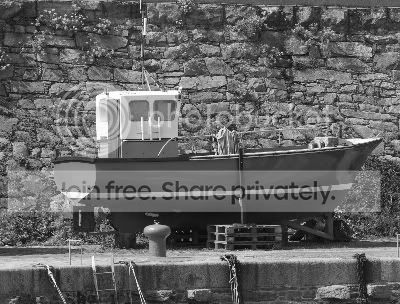
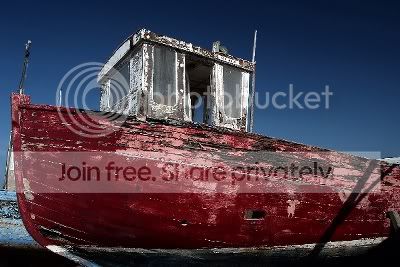
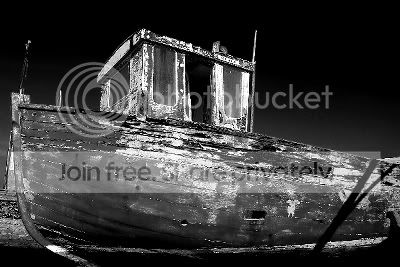
B/W..a state of mind ?

joxby

Suspended / Banned
Messages
8,782
Name
John
Edit My Images
No
Can you learn to shoot B/W ?
Do you need to ?
Does anybody care...

So, I was wondering, how many of us here shoot B/W.
For a while now I've come round to the idea that many of the greatest B/W photos are seen as B/W before the camera leaves its bag.
That is to say, a fundemental change in approach and observation takes place in a togs eye when in "B/W mode".
The image captured was B/W at conception ?
Ofcourse, theres many a good B/W been created during a Photoshop International Rescue mission, but how many were shot with the sole intention of converting to B/W ?
Does it cheapen the art (if there is such a thing) of B/W, to convert it as an afterthought or a rescue ?

These are just thoughts I mull over because...I have no life:lol:
I do know I find it much harder to see a banging B/W through the viewfinder than a colour one, and a banging colour rarely converts to a banging B/W.
I'm certain I've caught myself using different tools in my allready overstretched head, when I have no choice, when all I have is B/W film.

I suggest, B/W is more a state of mind...than a photoshop filter.

I fancy some jaffa cakes:)
 
I didn't bother reading all of that because I should really be doing all that.
But basically, when something doesn't look good in colour, usually its because one (or more, if you're really unlucky) of the colours is off.
When converting to B+W, you only have 2 colours (or more if you want to be pedantic :)) to get wrong!
 
ooh... foodpoison are you in for a whipping :nono:

There are extremist bipolar groups in this genre and those in between. Most of us do a bit of both.

I like B/W for some portraiture it lends a level of interestingness to some shots that colour doesnt give. You also get to play more with grain. Colour grain generally looks poop, but B/W grain can be good.

Horses for courses
 
As preparation for getting a film camera, I took a few B/W landscapes yesterday, and got home to find that they all looked pants. Seems like I have a lot to learn about B/W.
I think you have a valid point in that it takes a different approach in many ways. I did not see the picture in B/W as I should have done, and I will repeat the pictures at different times of day, and with more thinking to see if I can improve on them - hell, if I get a decent one, I might even post both the first failed attempt and the more successful one..
Bet you can't wait - might even help you, joxby, to get a life....
 
Steve
as I recall you're a Canon man
I'm sure you can set B/W so you can chimp in b/w
saves waiting 'til you get home to find the shot "needs a tweak"
 
Mike - correct, but the detail seen in the screen is not really up to much, especially when the sun is bright, and my pupils are small (purely due to the sunlight, I must add..)
It was only on the monitor that I could see that the pictures looked flat, I was seeing the colours, not the shapes and shadows, or lack of..
 
mebbe you do have to "think in b/w" after all to be able to see how a pic will look
 
You can buy quite cheaply a very dark green filter gel that when you look through it gives you a good impression of what the scene would look like in black and white.
 
Steep - any idea where from ?
Might need to make up some 'sun glasses' with it..
 
buy a box of quality street the coloured plastic foils make great cheapo filters.
and you get to eat the chockies first :thumbs:

I've had great fun putting various ones over my flash head and using it for infill flash.
You need a few layers (2-3) to get good colouration, but that just means eating more chockies
 
I would say shooting black and white comes with experience and knowing when to do it. I refer to it as a when to do it thing, as you can think black and white but shoot colour. If you get one of those flat grey skies the UK is prone to, then go into b/w mode and start to underexpose by 1/2/3 stops, especially if you are using fill flash.

Of course it is also about seeing things that transpose to the medium so well, like city/street work with shafts of light, fumes, that kind of thing.

It is worth learning what filters affect black and white to, especially when shooting portrait. They can be very flattering.

Pete.
 
I suggest, B/W is more a state of mind...than a photoshop filter.

Of course it is. I've spent the past 18 months with my 30D set to high contrast red filtered b&w. All the images I see on the display are in b&w, just as I like it. Its the best thing they've done imho. It helps you work in b&w because its quite different to colour. You can hide things, show hints of things, play with shadows and light. But imho you need to do all that at the scene not back in PS.
 
Does it cheapen the art (if there is such a thing) of B/W, to convert it as an afterthought or a rescue ?

I think it does yes.

I always like to work on the basis of seeing the finished shot in my head before the camera gets involved at all.

Seeing in B&W is different to seeing in colour but it's no different to leaning what makes you tick, compositionally speaking. The more you do it, the better you get. :)
 
I wouldn't have thought b&w filters would have any affect at all on a digital sensor, in determining the outcome of a b&w shot?

A good experiment to try maybe?
 
I wouldn't have thought b&w filters would have any affect at all on a digital sensor, in determining the outcome of a b&w shot?

A good experiment to try maybe?

Of course they do. If you remove ALL of the red and green light from a shot with a blue filter then the sensor can't record any red or green can it?

If you want to use filters for BW on the scene then you can. Alternatively use RAW, usual rules, take colour and faf at home for very similar results.
 
Well, I don't eat chocolates, so have ordered the gizmo Steep suggested - Cheers Mister !
 
I wouldn't have thought b&w filters would have any affect at all on a digital sensor, in determining the outcome of a b&w shot?

A good experiment to try maybe?

Of course it does Steep. Anything you put in the light path affects the light and how it is recorded. Substituting film for a sensor is only changing the recording device.

I use a yellow one, it helps in the visualisation and works really well with a polariser.:)

Ali
 
B&W certainly is state of mind... to me anyhow. I believe you have to think B&W and try to see the picture you want in B&W. It's all about contrasts, tones, textures. When shooting for my B&W landscape course, I developed an 'eye' for what would and wouldn't work. It's strange how you think differently between colour and B&W.
I'm sure there are people who only see B&W as a way to rescue a bad shot - if all else fails, just covert to mono. I love the beauty of B&W, and if I'm honest, I think I'd rather shoot B&W instead of colour.
 
minimeeze - can you tell me a little about your B/W landscape course - maybe point me towards any books that might help ?
Thanks,
Steve
 
I'm sure there are people who only see B&W as a way to rescue a bad shot - if all else fails, just covert to mono. I love the beauty of B&W, and if I'm honest, I think I'd rather shoot B&W instead of colour.

Totally. Desaturation is not B&W, nor is converting to b&w. You have to know whether its better in green, blue, yellow, or red and such.
 
minimeeze - can you tell me a little about your B/W landscape course - maybe point me towards any books that might help ?
Thanks,
Steve

It was just part of my A level photography course I did last year - all shot on B&W film :love:
 
I like this guys stuff, Micheal Kenna
I cant imagine them in colour, often his landscapes are so stark, foggy or at night, that there probably was no colour to capture.
Maybe thats a short-cut, choose a scene that doesn't actually contain colour in the first place:)
I dont believe that^.
This guy shoots a 5D and converts, so he did have colour capability unlike Kenna who shoots film, but I think its obvious they both see their shots as B/W from the beginning.
Processing aside...

Kenna is from Bolton, now living in NewYork.......don't they all
 
The beauty of b&w too is that who cares if its overcast?
 
I'm not sure if I would advise shooting using the camera's B&W modes unless you're as absolutely certain of the result that you are after and that the settings you are using are the best way to achieve it. Otherwise all you are doing is throwing away a wealth of tonal information that might be useful later or that could just as easliy be disgarded in Photoshop.

Think in B&W mode at the scene by all means- but shoot in RAW colour. Any in-camera B&W 'effects' can be easily bettered in Photoshop later.

Avoid using straight foward greyscale conversions or de-saturation in Photoshop unless you are after an even toned effect. Colour channel splitting is way better at getting good B&W effects and is an instant way of simulating the old B&W film filters (eg. red/orange/yellow/green).

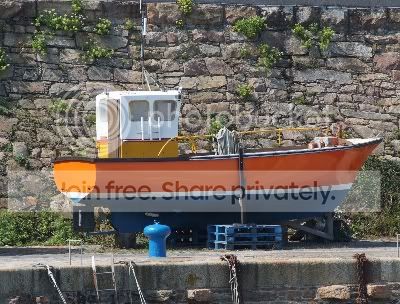
Take this boat photo as an example with it's bold, varied colour content it's difficult to predict what it would look like in B&W:
DSCF0260.jpg


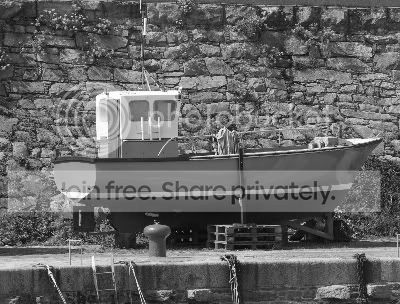
The 'in camera' or straight greyscale B&W conversion:
DSCF0260-greyscale.jpg


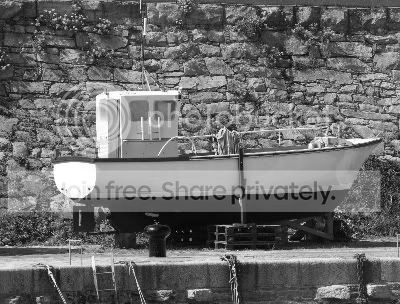
Blue colour channel.
DSCF0260-blue.jpg


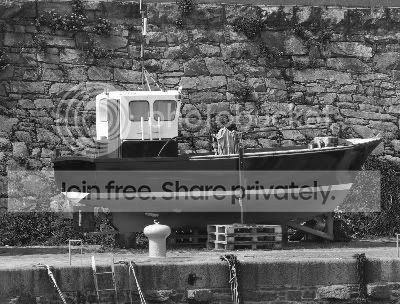
Red colour channel.
DSCF0260-red.jpg


Green colour channel.
DSCF0260-green.jpg


So depending on the results you want- you can acheive much more in Photoshop if you have all the colour information to play with.

In some cases the decision is more obvious- take this boat photo with strong red & blue content:
DSCF0641.jpg


Easy Photoshop decision- pick the red channel!
DSCF0641-redcontrast.jpg


Sorry for the extended tutorial.

If you're a true B&W purist then a film camera loaded with Kodak Technical Pan film and a Wratten Gel 92A deep red filter used to be the stuff of choice. Incredibly fine grain and fantastic contrast, with sensitivty extending into the near infra-red. Sadly it was discontinued in 2004 and I've long used up my last rolls.
 
If im shooting photos that I know will be b&w i shoot with the parameters set to b&w and usually a red filter.

Im still shooting raw so all the colour info is still there, it just means im looking at the screen with black and white so I have a better idea what the shots will look like.
 
Sadly it was discontinued in 2004 and I've long used up my last rolls.

The demise of Tpan, whilst far far less publicised was actually a much darker day than the loss of Velvia 50. :'(

Of course it doesn't help that Tpan didn't come back either.
 
I'm not sure if I would advise shooting using the camera's B&W modes..

Shoot RAW, it retains all colour info as mole2k said. Its only to aid you at the scene so you can check you got the light right.
 
:thumbs: for Laser Jock :thumbs:
it's one thing to hear the theory,
but a picture is worth ........
 
So what I think I really need now is a good tutorial on how to do mono conversions using the channel mixer. I know it depends on what you start with etc, etc, but a starter for ten would be good.

I just play with the sliders, but I'm sure there must be a better way!
 
The demise of Tpan, whilst far far less publicised was actually a much darker day than the loss of Velvia 50. :'(

Of course it doesn't help that Tpan didn't come back either.

I think the problem with Tech Pan was that it was a real 'niche' film and not used by that many photographers. The main problem was that you needed special HC100 high contrast developers to get the most from it. No comercial labs used this process so you had to do all the developing at home.

I'll see if I can dig out some old Tech Pan negatives later and scan them in.
 
So what I think I really need now is a good tutorial on how to do mono conversions using the channel mixer. I know it depends on what you start with etc, etc, but a starter for ten would be good.

I just play with the sliders, but I'm sure there must be a better way!

Basically yes, but ... one quick google and...

http://www.13dots.com/forum/index.php?showtopic=16296
http://www.pixalo.com/articles/Converting-photos-to-black-and-white-using-Photoshop.php
http://www.dcmag.co.uk/Colour_to_mono.YX55vXRo39cnPg.html

(there's lots more)
 
Can you learn to shoot B/W ?
Do you need to ?
Does anybody care...


I suggest, B/W is more a state of mind...than a photoshop filter.

Yes.
Yes!!
Me.
Absolutely!

I shoot a lot of b+w (XP1) I use green or light amber filters to lighten foilage. Yellow or red to darken skies
Then I often tint them for emotion!
 
Back
Top