b.i.f photography

bledyn125

Suspended / Banned
Messages
708
Name
bleddyn
Edit My Images
Yes
ok the last few weeks i have been trying some b.i.f photography with little success.i have been useing a sigma 150-500 and a canon 60d.

i have tried loads of different settings but im not realy getting anywhere at the moment.

i tried shooting a couple of skylarks yesterday and a buzzard but they where either soft or oof.

has any body used a sigma 150-500 for b,i.f photography before that have got any tips to share.

getting frustrated with it now as im missing some loveley shots

bleddyn
 
Being frustrated with birds in flight is unavoidable I'm afraid.
I see plenty of people using the lens your on about & get good results.
Practice practise practice & then practise some more. You'll still be frustrated but maybe you'll have a couple if good ones in your back pocket.
 
yeah your probably right i think i will try shooting in m mode tommorow as when i try in tv at 1/1600 it shoots at f/6.3 or f/7.1 but my lens is much better at f/8.

i will try harder tommorow :lol::lol:

bleddyn
 
There are no real hard and fast rules Bleddyn. It varies so much depending on what size of birds, distance, background etc

I tend to use AV mode. Unless the light is dire f8 should give you a reasonable depth of focus - forgivable if you miss the bullseye. If the resulting shutter speed is a bit low then up the ISO.

Tracking the birds in AI Servo, centre point focus with surrounding AF assist points on works best for me.

Spot meter if it's against the sky, you may need to dial in a bit of over exposure. Get the light behind you or over your shoulder. To retain the shutter speed don't be scared to push the ISO in favour of shooting wide open.

Keeper rates are still low but that's 'birds in flight' for you - it's what I've found works best for me - others may choose a different approach.

PS - the above is how I approach 'birds in flight' - which for me means tracking them travelling through the sky.

For birds launching / landing / hovering by a perch I tend to to pre focus on the perch select an aperture to give me an area of dof (infront or behind the perch depending on what I'm waiting for the bird to do), turn the AF off, set shutter speed and ISO to correctly expose and then fire off as the bird moves in the hope that I catch the bird as it moves through my pre set area of dof.
 
Last edited:
thanks phil i will give it a go in av mode today and see if thats any better


bleddyn
 
Don't get too hung up on the mode your camera is in.

At the moment the light is bright and constant, so once you have some settings that work you can just keep using those in manual mode on the camera. In strong sunlight you should be good for 1/1600th F8 ISO400.

Set your autofocus to AI servo, and then centre point focus. If the background is clear/clean you can try all points focus for tracking a bird.

Don't change the zoom on your lens while you are focusing. This will put the focus out and make it work harder to restore focus. Remember in AI servo the camera does not wait for focus lock, so you need to track the bird for a little while first.

Also, practice on bigger / closer stuff to nail your technique. Gulls, pigeon and ducks make good practice subjects.
 
thanks for the tips chaps but ive yet to get a nice sharp in focus image.

i think i wil leave it for a while and try again in a couple of weeks.


bleddyn
 
Thanks for the tip s guy's helpful for me as well
I've always struggled with birds in flight but think it s my reactions are a bit slow
Going to try again this weekend:)
With puffins tho ,determined to get one :)
 
thanks for the tips chaps but ive yet to get a nice sharp in focus image.

i think i wil leave it for a while and try again in a couple of weeks.


bleddyn
With this hot weather the atmosphere can be pretty turbulent and dirty (think heat haze and also dust/pollen in the air), so rather than throwing long glass at a distant subject try shorter focal lengths on closer ones.

Also try shooting at around 400mm instead of 500, as you may find that the lens sharpens up and will be easier to handle, and practice on subjects close enough to pretty much fill the frame - e.g. gulls picking up titbits where ducks are being fed at a local lake/pond.

If you can plan to shoot with clear(ish) skies and the sun and wind at your back you should improve your chances of success. e.g. this one is with my 7D at 400mm, 1/1000, f/8, 400 ISO and no edits other than cropping. BIF photography is not impossible - just difficult - but practice and good conditions of lighting and wind will help.

20120729_091131_5029_LR.jpg
 
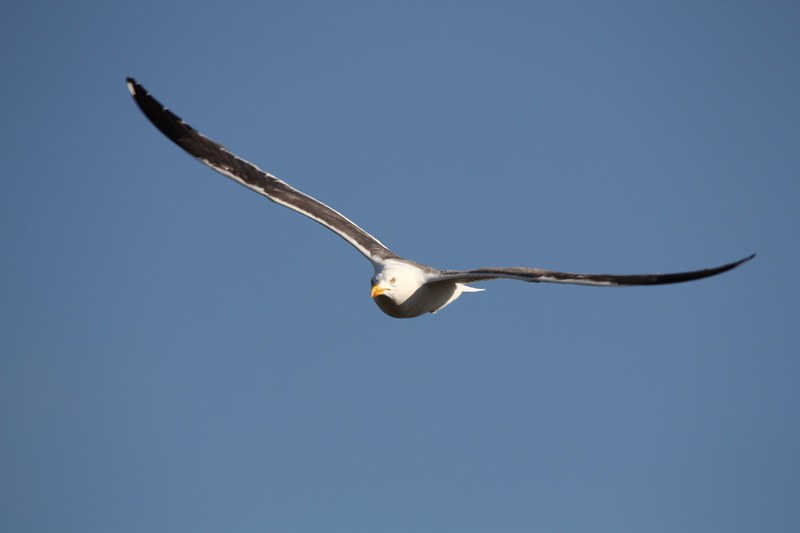
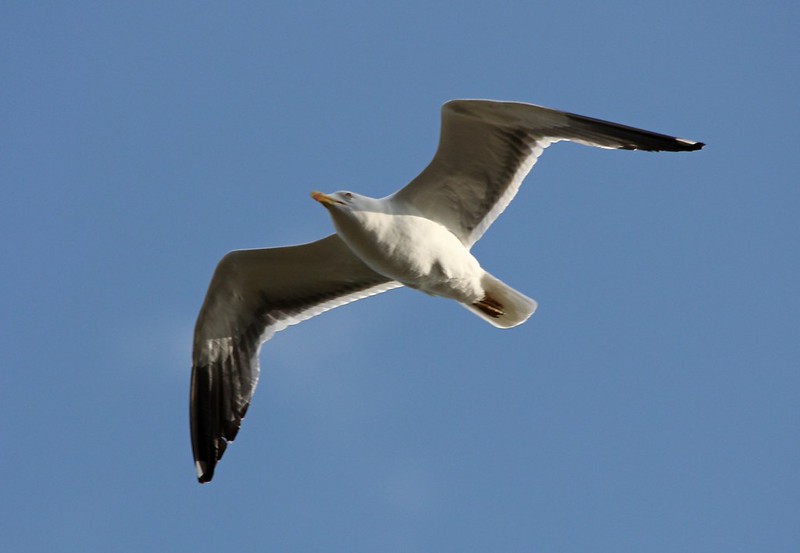
well ive been trying to get a decent shot of a seagull for ages now and its still not happening they are all out off focus or to far away.i just cant get the focus correct i must e doing something wrong.

i have been useing the af-on button on my 60d for focusing but i think i need to set something else up but i havent a clue what.

these are the best out of todays feeble attempt:bang:


010 by bledd125, on Flickr


021 by bledd125, on Flickr


bleddyn
 
i have been useing the af-on button on my 60d for focusing but i think i need to set something else up but i havent a clue what.


bleddyn

It may sound obvious, but this is something I forgot to do. Have you altered the custom settings so that the shutter button only locks the exposure. Also remember it takes a second for the OS to kick in.

TBH most of the time I shoot in manual, set aperture to F8 ISO to 400 and see what shutter speed I get. if its too slow, I up the ISO, If I get a fast shutter speed, I'll try lowering the ISO. The 60D handles ISO pretty well, from what I've read better than the 7D :-). I've managed to get keepers up to ISO 1600.
 
+1

Not sure about the 60D, but setting back-button focussing (using AF-ON button) on the 7D doesn't turn it off of half-pressed shutter... so you have to set shutter to metering & shutter only.
 
I found my 60D focussed quickest and most reliably with just the centre focus point, when using any others it seemed to struggle much more.

I tend to use M with auto ISO if the light is changing. I've also found that using a slightly shorter focal length helps the little beggars over the correct focus point (that could just be ageing reflexes!!).
 
Back
Top