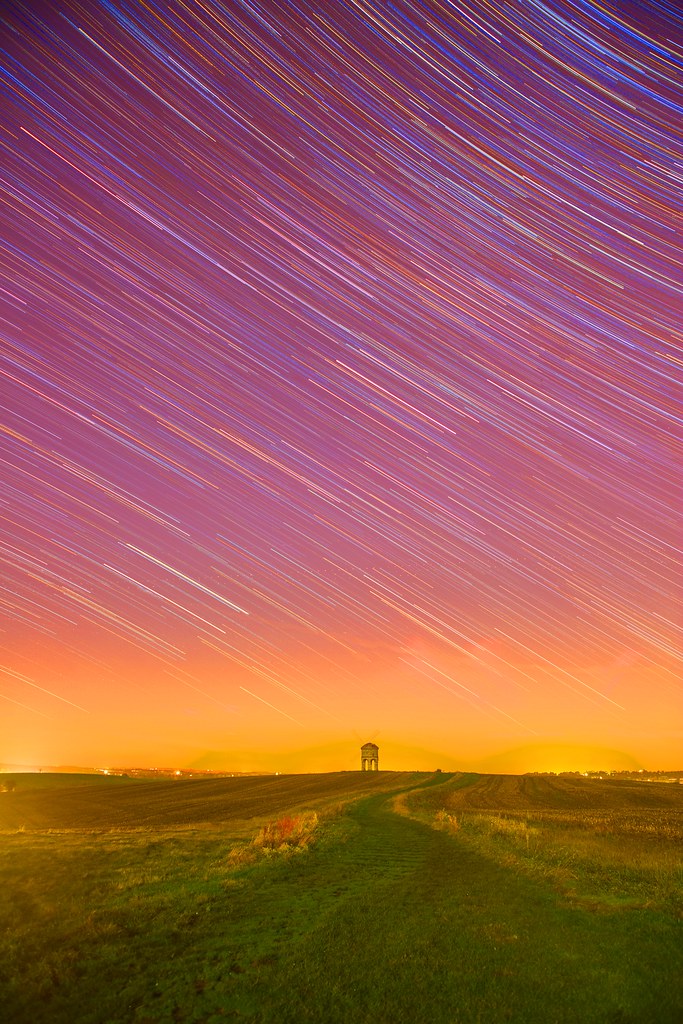
Australian star trails

Willid1

Suspended / Banned
Messages
1,969
Name
David Williams
Edit My Images
No
Way too much for my liking.


We do see colours like that.. it's the same sky :) You just need the long exposures a dark sky site offers. Plus, they've been post processed very heavily.

The ones in the second link are a little less in your face.
 
Not sure what I expected to see, but I do completely agree with that ^^^
I think it's a great example of successful trails, but the colours distract, the quantity of stars obscure all sky and I think that's what makes a lot of it.

If you wanted something similar in the UK, then head out somewhere remote and snap away, point in the general direction of London if you want a yellow hue on the horizon :D
 
could someone explain to me why some of the trails in the same frame ,seem to straighten out and then start to go in the other direction ? i would have thought that they would all go in the same direction . ta
 
All I can say is that having lived a large portion of my life there....the night sky does NOT generally look like that!
 
could someone explain to me why some of the trails in the same frame ,seem to straighten out and then start to go in the other direction ? i would have thought that they would all go in the same direction . ta

It's just the exaggerated perspective of a very short lens, where things appear stretched towards the edge of the frame. They are going in the same direction really... the wide lens distorts the perspective due to wider field of view.
 
Surely the direction of the trails depends which way you're looking. With a wide enough lens could you start to see stars going the other way, just as the stars near the pole are very tight circles, and those near the equator are almost straight lines.

These aren't even very dark skies. He's just down the road from a city and couple of towns. You can get proper dark skies down here, you just have to travel a lot further inland.
 
Er, no it's not. Don't recall ever seeing the Southern Cross in the skies over the UK, and I'm pretty sure you'd struggle to get an image of the Great Bear from Australia.

About half the stars are the same (just upside down) and it's fair to say the rest (for photographic purposes) are pretty similar. :D
 
could someone explain to me why some of the trails in the same frame ,seem to straighten out and then start to go in the other direction ? i would have thought that they would all go in the same direction . ta

You can do that from the UK - any stars above Orion's belt will curve one way and any stars below Orion's belt will curve the other way.
Basically its because Orion's belt is the celestial equator and the stars above it rotate around Polaris and those below it around the Southern Cross.
Its also helped by a wide angle lens to exaggerate the view.
 
Why do we not see the star trail colours like this in the UK??

Taste? The colour temperature slider can make a big difference, as can turning the saturation up past 10...

It's just the exaggerated perspective of a very short lens, where things appear stretched towards the edge of the frame. They are going in the same direction really... the wide lens distorts the perspective due to wider field of view.

Not really- see below.

You can do that from the UK - any stars above Orion's belt will curve one way and any stars below Orion's belt will curve the other way.
Basically its because Orion's belt is the celestial equator and the stars above it rotate around Polaris and those below it around the Southern Cross.
Its also helped by a wide angle lens to exaggerate the view.

^ This.
 
Well, sort of that! Of course, the stars don't actually rotate...
 
Well, yes!
 
could someone explain to me why some of the trails in the same frame ,seem to straighten out and then start to go in the other direction ? i would have thought that they would all go in the same direction . ta

Surely the direction of the trails depends which way you're looking. With a wide enough lens could you start to see stars going the other way, just as the stars near the pole are very tight circles, and those near the equator are almost straight lines.

And if you shoot a 360° panorama of star trails, you can see stars rotating about both of the celestial poles. Check out this amazing image from APOD..
 
Back
Top