ATTENTION ALL CAT/DOG OWNERS

If that works it requires the animal to lie still for quite a while.

I'll stick with the tool I got from my vet:-

http://www.otom.com/

Works perfectly in a few seconds and gets the head out.
 
I would have thought using that method there is a risk of the body snapping off and leaving the head in where it will continue to grow.
 
Agree with arclight and galaxy. I would also have thought that by rubbing in a circular motion on the part of its body that stores all the gunk it has sucked out of you and whatever else its bitten would stimulate it to barf it all back into the host you are trying to remove it from thus putting said person / animal at risk from Lymes disease.

They can also be bought from the Lymes Disease website,

http://www.lymediseaseaction.org.uk/shop/index.htm

there are also some really lovely leaflets you can read about them on there as well!
 
I would have thought using that method there is a risk of the body snapping off and leaving the head in where it will continue to grow.

If you are talking about the Otom tool, Mal, then I can only reiterate that it works a treat. Seems to be the twisting motion that does the trick. Hook it on then 2 or 3 turns between thumb and forefinger is all it takes (although the tool looks like a mini claw hammer that is not how it is used. Doing that would leave the head in).

I have also used that tool to remove ticks from myself.

I have tried tweezers etc. and rarely does that get the head out with the result that infection usually follows and a small lump remains for ages.
 
If you are talking about the Otom tool, Mal, then I can only reiterate that it works a treat. Seems to be the twisting motion that does the trick. Hook it on then 2 or 3 turns between thumb and forefinger is all it takes (although the tool looks like a mini claw hammer that is not how it is used. Doing that would leave the head in).

I have also used that tool to remove ticks from myself.

I have tried tweezers etc. and rarely does that get the head out with the result that infection usually follows and a small lump remains for ages.

Dougie, I use the otom tool as well on our two dogs:thumbs:, I was referring to the op's posted method.
 
Another vote here for the otom tool - it really does work very well.
 
20 ticks a year, he's lucky, ours get that a week in the summer. Good old finger and thumb method here.
 
My black lab is nearly 6 and she had 2 ticks last summer after we stayed on a sheep farm, never seen one before and through our ignorance we thought it was a little growth, then we found the second one and did a google search and managed to remove them both in tact. we were unsure if we had done the right thing and still ended up with a vets bill for getting her checked out !!:bonk:

Dean
 
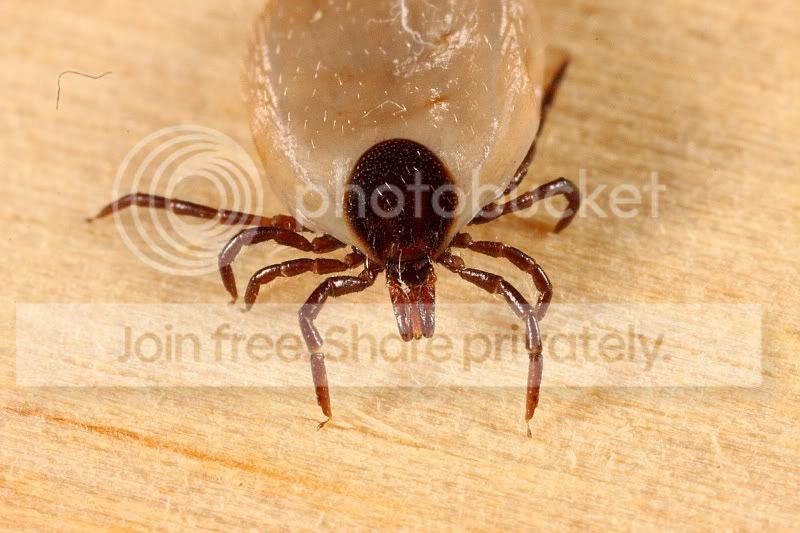
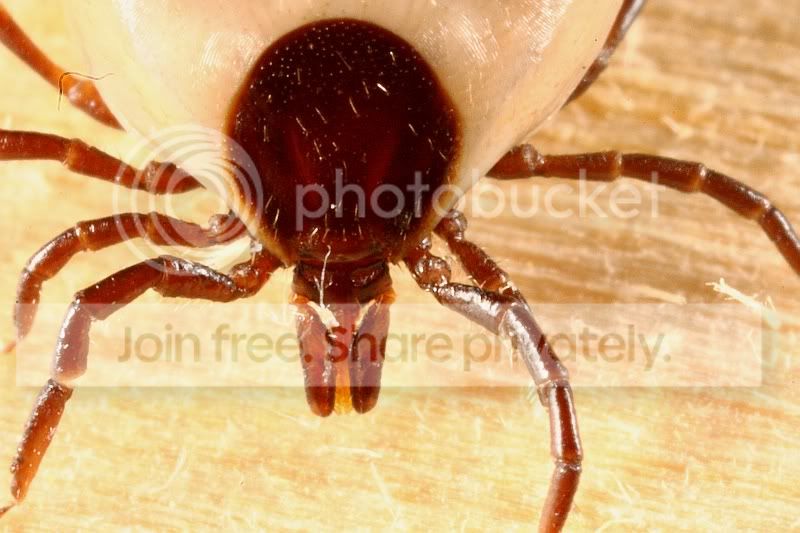
Here's a couple of MP-E shots of one of the little buggers a couple of weeks ago.....attached itself to a friends left testicle :gag:
The shots were after its removal :thumbs:
Tick_body.jpg


Tick_closeup.jpg
 
Our cats used to get a lot of these every Summer when we lived in Germany. The following procedure usually worked. Light a fag, apply fag to rear end of tick. Count to three and flick it with your fingers.

I don't think our five cats have had a tick in the last ten years which is a good thing as I don't smoke any more.
 
Dougie, I use the otom tool as well on our two dogs:thumbs:, I was referring to the op's posted method.

Cheers.

The tick problem has got worse. I got my first Lab nearly 40 years ago and he never got a tick all his life. Current Lab is a year old so has not had a full year of adult exercise, but has had 5 ticks. Most recent one was on his head last week. That is quite late in the season.
I run a comb through his coat before going back into the house after a walk. That sometimes catches ticks before the have attached themselves. They can move quickly.
 
For our brown lab and our cat for that matter we use the vaseline method failing that fingers and thumb

The danger with the finger and thumb method is that it can force the tick to disgorge the contents of it's body into the animal and if it happens to be carrying Lyme disease there is a high risk of the host developing that illness.
 
Back
Top