Astrophotography

JohnnyC

Suspended / Banned
Messages
2
Edit My Images
No
Got a DSLR canon 550D love it, it's great, but I like the idea of taking astronomy pics like the Milky Way and such, done a few of the moon on F/11 iso of between 100 and 400 and they came out fantastic, but not having so much luck on star lit skies, any ideas? Cheers
 
The moon is a completely different animal, it's mad bright, so you need fast shutter speeds, or to be stopped down. f/11 sounds odd though, but whatever works!

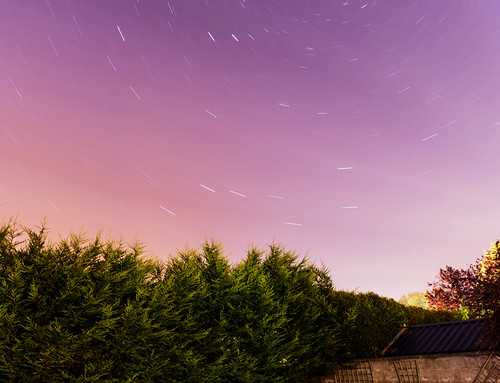
I attempted some star trails the other night , just out in the back yard. Had to switch the house lights off [down stairs at least, or the kids would have freaked!] to avoid light pollution, so it was pitch black out there. I was getting best results around the 10 minute mark. Tripod, wireless remote, wide angle set to infinity [could see a damn thing through the VF to focus anyhow] - tried some various settings. Kept the ISO low, aperture 2.8 - f/4, different lengths.


Stars 4 by Cagey75, on Flickr

As bright as this one looks, it was pitch black out there to my eyes, the light is stray light from other houses faintly illuminating the trees and wall over the time.

To capture the milkyway you may want much shorter captures.
 
Last edited:
For star-filled skies you need to be somewhere truly dark and make a big ask of your equipment in terms of good high-ISO performance and lens sharpness while wide open.

Start with your widest angle lens to minimise issues with focusing and try to include a foreground element such as a tree or structure. Restrict your exposures to 30sec or below and start at ISO800 f/2.8.

> If your lens doesn't open that wide, go to f/4 and ISO1600 etc.
> If the exposure's too bright, you need to move somewhere darker or you're not going to achieve the star filled look.
> If the exposure's too dark, firstly increase the ISO and try again. Repeat. Open up the aperture beyond f/2.8 only if you reach the limit of your ISO.

Even in areas of low light pollution stars are always fewer in number and less clear as you get closer to the horizon so try to aim high (bearing in mind the foreground element suggestion above).
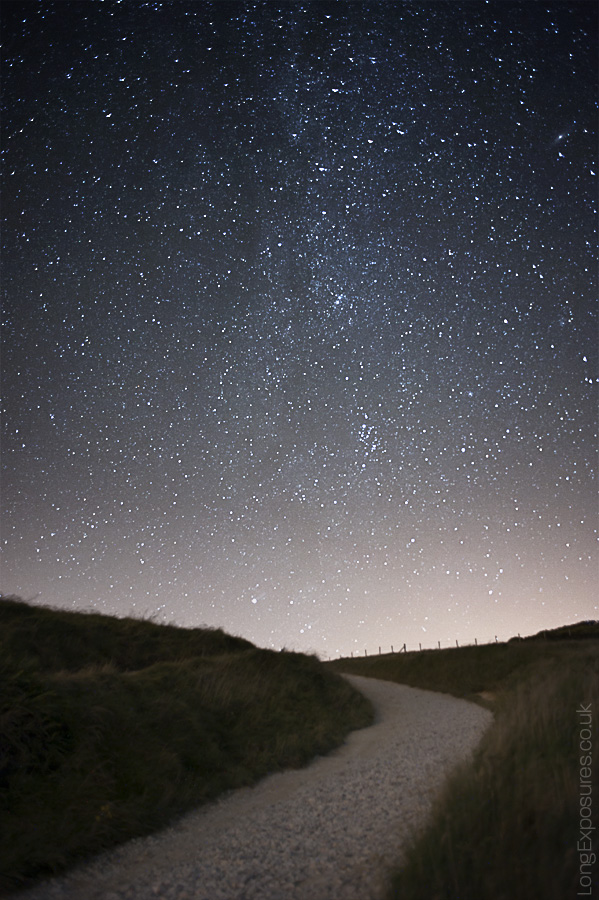

Imagine if you could just keep on walking...

For startrails you can either fire a bunch of consecutive shots from the same camera position then merge them all in StarStaX (free software), in which case you can work in almost any ambient light conditions...
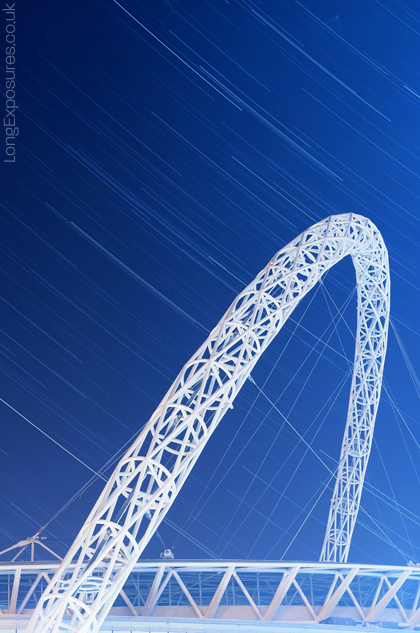

Arch Rivals

...or you can set yourself back to your dark site and work backwards from your high-ISO settings to see what's the longest you can expose at lower ISOs. For instance, 30 seconds at ISO3200 and f/2.8 becomes 16 minutes at ISO200 and f/4 - that's plenty long enough to capture some movement in the sky. (This was a single 26 minute exposure at ISO200 f/2.8 - it's really, really dark down there.)
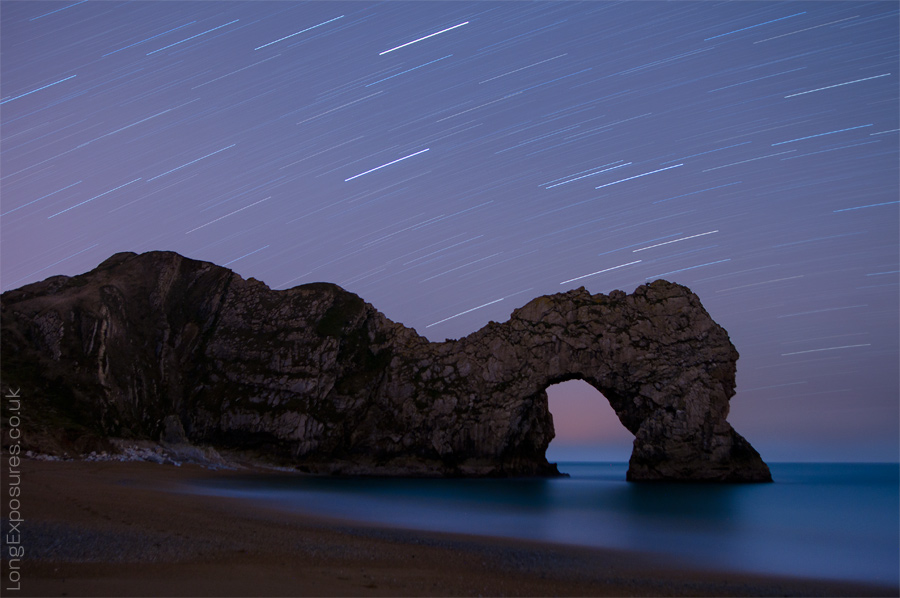

Time
 
  • Like
Reactions: 33L
This thread is great, fantastic advice!

I'm gonna be trying something soon with my 500D, I got Keiths Image Stacker on my computer now so I'm gonna try some stuff!
 
Even in areas of low light pollution stars are always fewer in number and less clear as you get closer to the horizon so try to aim high

This is not true for a genuine dark sky site. Genuinely dark skies are rare in the UK though. Look at the light pollution calculator in the thread I linked to in the post above.
 
Last edited:
This is not true for a genuine dark sky site. Genuinely dark skies are rare in the UK though. Look at the light pollution calculator in the thread I linked to in the post above.

It's not simply about light pollution. The same refractive, brightness-consuming qualities of the earth's atmosphere that make the sun seem dimmer at sunrise/ sunset also apply when you're looking along the horizon to see stars.

Even pointing your camera out to sea, where there's a clean, light pollution-free horizon, will record a vertical transition from no stars/ few stars to many stars of optimum brightness.
 
It's not simply about light pollution. The same refractive, brightness-consuming qualities of the earth's atmosphere that make the sun seem dimmer at sunrise/ sunset also apply when you're looking along the horizon to see stars.

Even pointing your camera out to sea, where there's a clean, light pollution-free horizon, will record a vertical transition from no stars/ few stars to many stars of optimum brightness.


Been to true dark sky sites so many times now, I can assure you, the horizon is just as dark as the zenith except for Earth Glow, which is actually quite rare. What you describe is merely the amount of lower magnitude stars being less at the horizon due to a greater amount of air to pas through.
 
Been to true dark sky sites so many times now, I can assure you, the horizon is just as dark as the zenith except for Earth Glow, which is actually quite rare. What you describe is merely the amount of lower magnitude stars being less at the horizon due to a greater amount of air to pas through.

You're right, that is what I describe. At no point have I said otherwise or suggested that the horizon is brighter or not dark, just that there are fewer visible stars low down. (y)
 
You're right, that is what I describe. At no point have I said otherwise or suggested that the horizon is brighter or not dark, just that there are fewer visible stars low down. (y)


Sorry dude... misread. My bad.
 
Some good advice in here. Since getting another 7d I've been wanting a go at star trails & Milky Way photography!
Is there any resource to find dark spots in my local area?
 
One question, what white balance setting do you use for astrophotography?
Silly question probably so apologies in advance.
 
Usually around the kelvin setting and set it between 3000-3500
 
One question, what white balance setting do you use for astrophotography?
Silly question probably so apologies in advance.

Usually around the kelvin setting and set it between 3000-3500


Shoot raw.... then it doesn't matter. You can set it in post. You need to be shooting raw for astro any way, due to the high amount of global processing adjustments usually needed to bring out detail.
 
Thanks both of you.
I normally shoot in raw+jpeg so I guess I am okay then.
 
Back
Top